
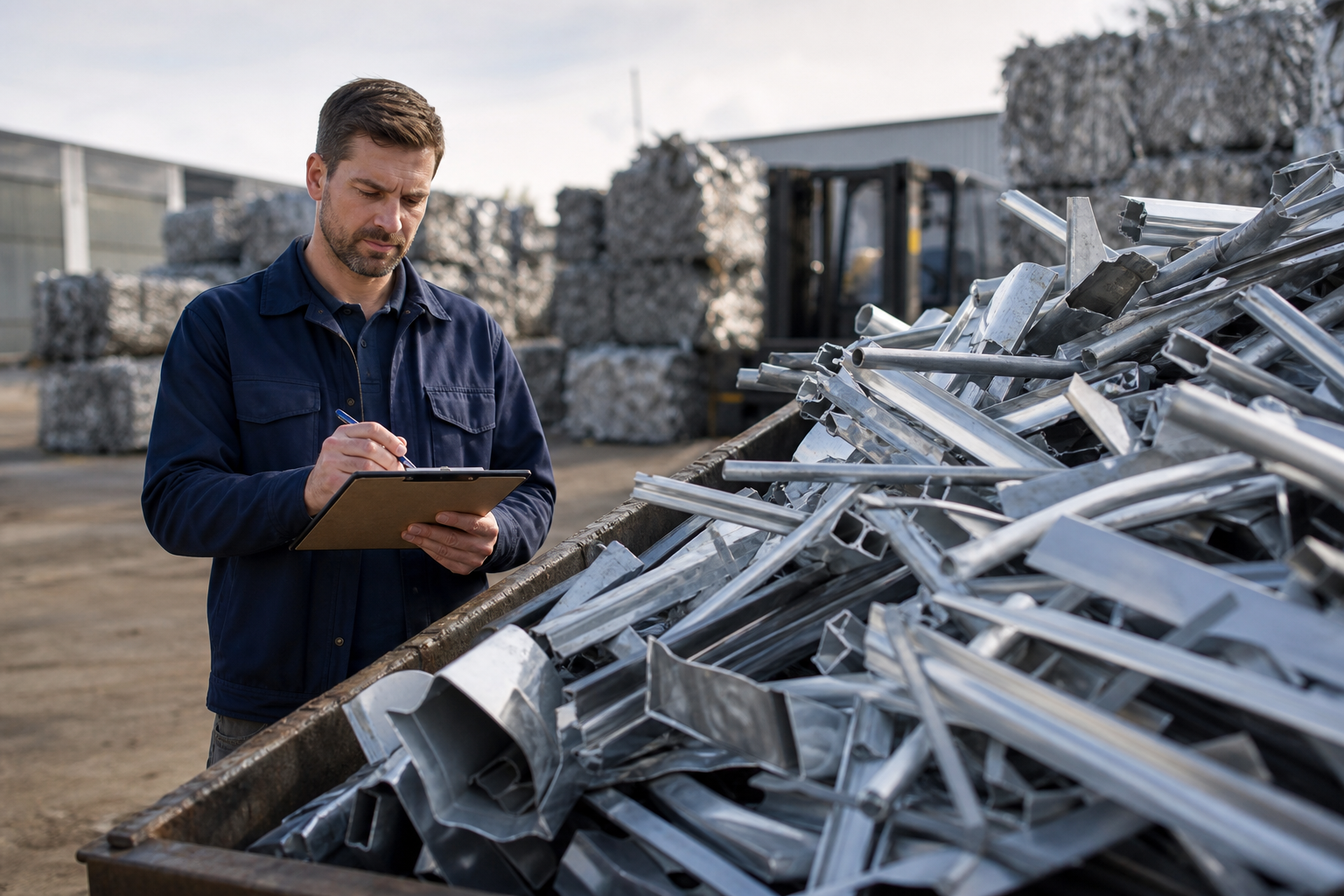
Selling aluminum to a local buyer can turn clutter into quick cash, but offers vary widely. This checklist helps homeowners, tradespeople, and small contractors in Etobicoke and the GTA ask the right questions, spot evasive answers, and prepare common aluminum items so you get a fair, smooth payout.
Quick checklist: nine questions to ask before you sell
Use these nine questions every time you call or visit a yard. Each item shows what a good answer sounds like and a short red flag to watch for.
1) Do you buy this form of aluminum?
Why ask: Yards differ on what they accept. Some buy clean extrusion, siding, or cans, while others will not accept heavily painted, alloyed, or contaminated pieces.
Good answer: A clear list of accepted forms, for example clean extrusion, radiators, siding, cans, or window frames, with exceptions noted.
Red flag: The attendant says they buy “anything” without specifics or contradicts themselves about a form you described.
2) How do you price it and will you explain the weight categories?
Why ask: Price depends on how the yard grades aluminum and whether they use separate categories for clean, mixed, or alloyed material. Ask how weight translates to pay and whether deductions apply.
Good answer: A clear explanation of categories, a statement that they will print the scale ticket, and a line‑by‑line breakdown of any deductions.
Red flag: Vague talk about rates, refusal to show the weight, or a claim that they always estimate by eye rather than weigh.
3) Do you pay cash on the spot or by another method?
Why ask: Payment method affects convenience and trust. Many yards pay cash, some issue cheques, and others use electronic transfer. Know where and when payment is made.
Good answer: A definitive statement of payment method and that payment is made at the pay window when the scale ticket is printed.
Red flag: Unclear payment terms or pressure to accept a partial cash payment without paperwork.
4) What ID or proof of ownership do you require?
Why ask: Laws and yard policies often require ID for certain transactions, and high value items like catalytic converters or vehicles usually need proof of ownership.
Good answer: A clear list of acceptable ID and any paperwork required, for example government photo ID plus vehicle ownership transfer documents for scrap cars.
Red flag: Staff asking for unusual personal information not usually required, or offering no receipt after payment.
5) Can I separate metals for a better payout and do you charge sorting fees?
Why ask: Clean, sorted aluminum typically receives a better classification and higher price. Some yards charge for on‑site sorting or deduct for contamination.
Good answer: Confirmation they accept separated loads, an explanation of any sorting or cleaning fees, and that segregated material will be evaluated and paid at a higher category when appropriate.
Red flag: A blanket fee for any separation without explanation or insistence they estimate weight without weighing.
6) Do you accept mixed appliances or e‑waste and how are hazardous parts handled?
Why ask: Appliances and electronics can contain oils, refrigerants, batteries, CRTs, and PCBs. Ask how these items are handled so hazardous components are removed and recycled responsibly.
Good answer: A clear policy on refrigerants and batteries and a statement that hazardous components are removed and processed according to regulation.
Red flag: The yard accepts hazardous items without discussing safe removal, handling, or documentation.
7) What are your hours, peak times, and expected wait times?
Why ask: Timing affects whether the trip is practical. Some yards offer extended weekday hours and Sunday opening but can be busy at peak times.
Good answer: A clear statement of hours, recommended arrival times to avoid queues, and an estimated wait time for trailers or trucks.
Red flag: Conflicting or evasive statements about opening hours or an inability to estimate wait times for heavy loads.
8) Do you offer pickup for large loads and what are the fees?
Why ask: Pickup can be cost effective for very large loads or scrap vehicles, but it is not universal and usually requires booking.
Good answer: A description of pickup availability, booking lead time, any minimum load sizes, and clear fee ranges or how fees are calculated.
Red flag: No pickup options explained or a demand for a large nonrefundable deposit without a written agreement.
9) Can I get a written receipt and a weight ticket?
Why ask: A printed scale ticket and receipt are your proof of weight, price, and payment and are essential if a dispute arises.
Good answer: The attendant prints a scale ticket showing tare, gross, and net weight, plus a receipt showing price paid and payment method.
Red flag: Staff refuses to provide a printed ticket or offers only a verbal statement of weight or price.
How aluminum pricing usually works and what a fair explanation sounds like
Pricing is driven by measured weight, how the yard grades the aluminum, and market conditions. The standard sequence is gross weighing, removal of vehicle or trailer tare, grading by material type, and issuing a net weight ticket. Ask the attendant to show the live scale read and to print a ticket before payment. Industry checklists advise asking for a line item explanation of any deductions so you understand exactly how the final amount was calculated.
For background on common weight categories and preparation that affects value, review resources such as the aluminum scrap value guide provided by local yards. For general consumer precautions about metals transactions, public guidance recommends preparing questions before transacting and checking a buyer’s reputation.
Prepare aluminum for the best payout: what to separate, strip and clean
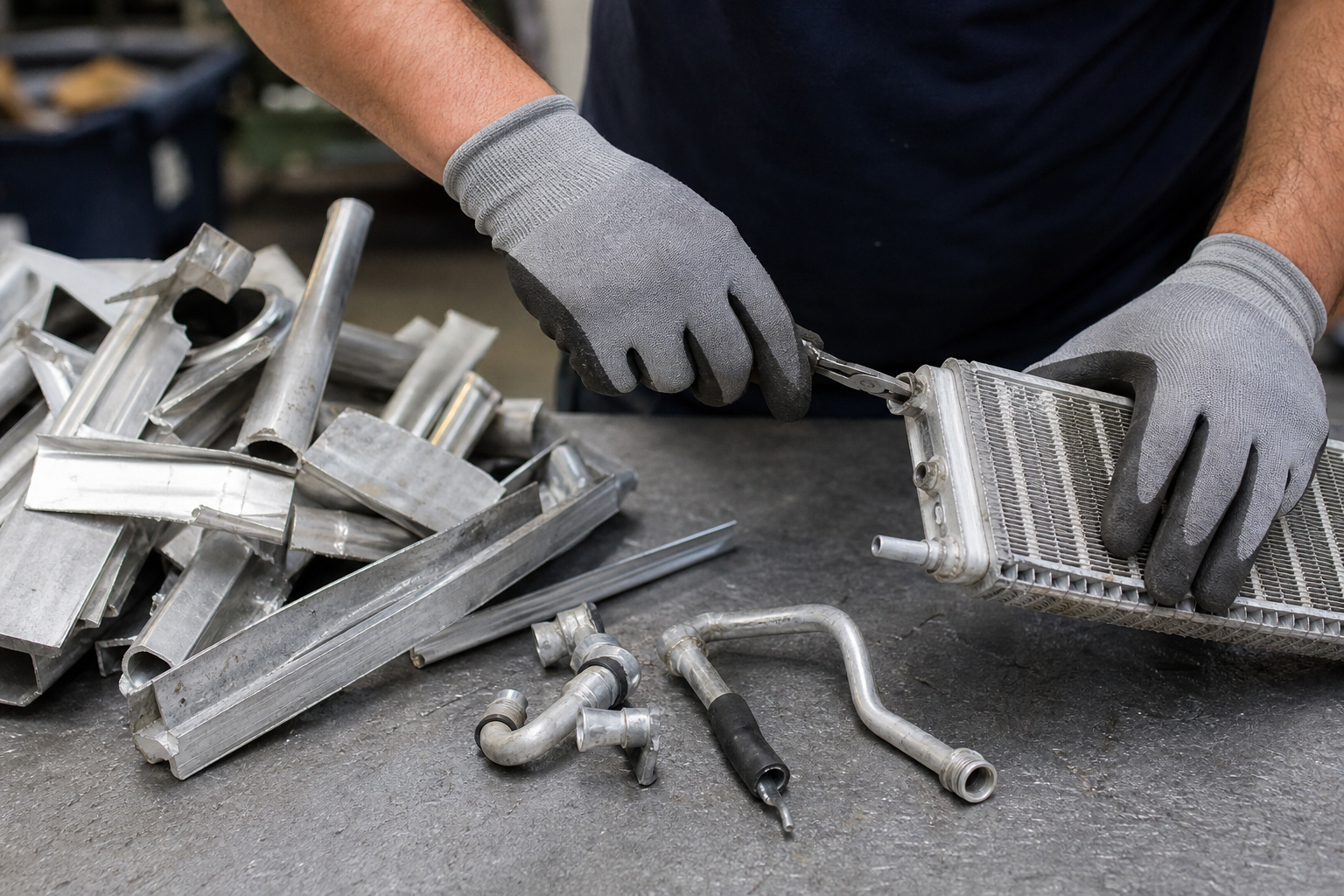
Preparation improves grading and reduces deductions. These practical steps are common across Ontario yards but always call ahead because acceptance policies change.
- Cans and thin sheet — Flatten cans and remove non‑metal liners or plastic tops to reduce contamination.
- Extrusions and clean scrap — Remove rubber, wood, weather stripping, and fasteners where safe to do so and separate extrusions from mixed scrap.
- Siding and gutters — Remove non‑metal trim and bundle long runs for easier handling; do not burn paint or coatings to remove them.
- Radiators and motors — Drain fluids safely and remove attached non‑metal parts; do not attempt repairs that could release hazardous materials.
Industry and supplier guides also advise calling ahead to confirm a yard’s acceptance policy and whether the site has capacity for large or specialized aluminum loads.
Trust signals: how to verify a local buyer and what to document
Confirm practical trust signals and document the transaction. Start by checking online reviews and how the business responds to complaints. Consumer guidance suggests checking references and comparing at least two buyers before a large sale.
On site, insist on a printed scale ticket and a receipt that shows net weight, price per category if applicable, and the payment method. If a staff member refuses these items or cannot explain how they graded the scrap, pause and compare other yards. For vehicle or high value parts, ask about required proof of ownership and verify the buyer’s business address and published hours.
Yard logistics you must ask about before you drive there
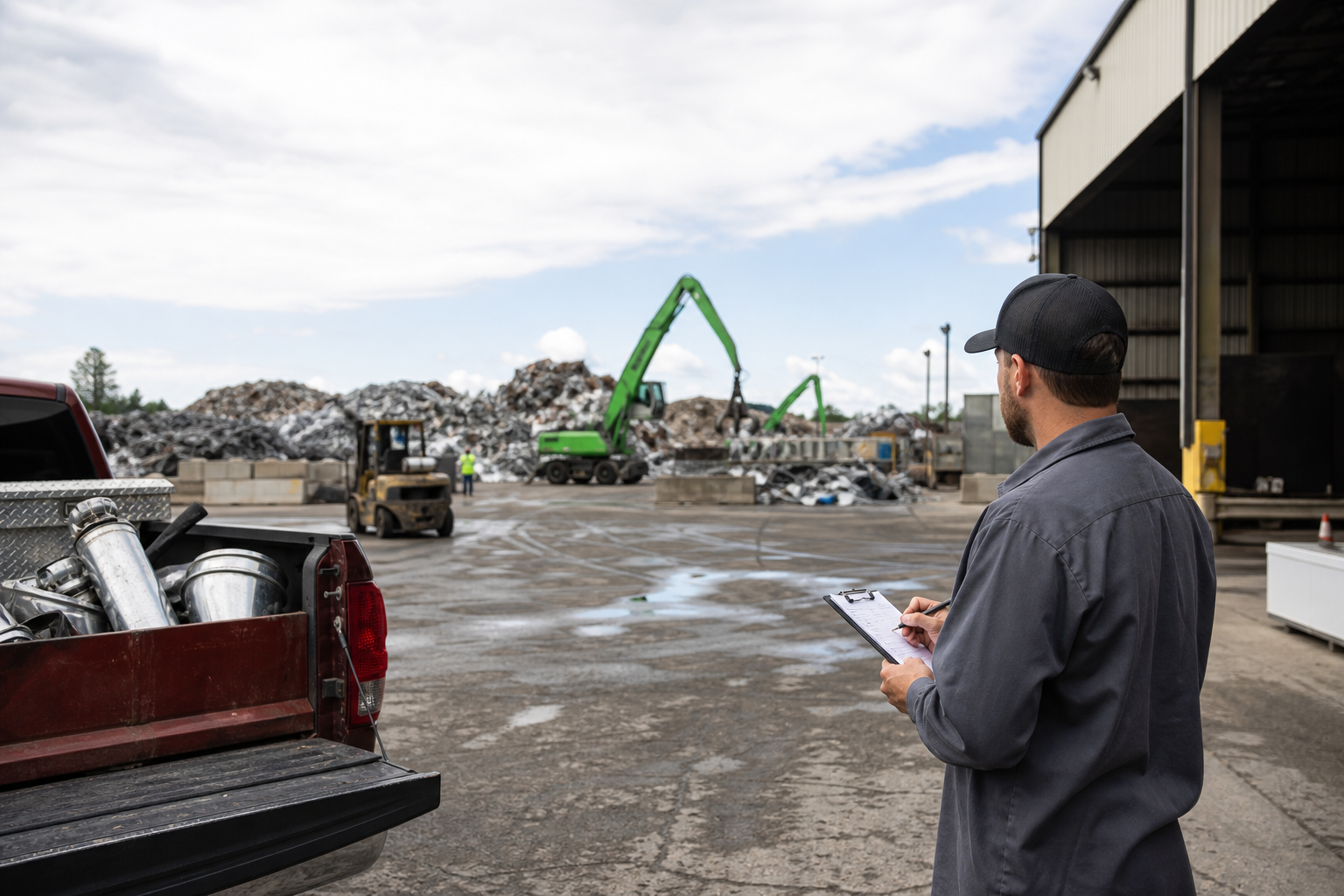
Operational details determine whether a stop is worth your time. Confirm the yard’s hours and ask about trailer or ramp access, scale lane configuration, and traffic flow on site. Quick Scrap Metal’s Etobicoke location advertises extended weekday and Sunday hours to improve convenience, but hours can change, so call ahead. Ask whether staff can assist with unloading if you have a trailer and whether different lanes exist for cars and heavy trucks.
Environmental and e‑waste questions when aluminum is mixed with appliances or electronics
Appliances and electronics often contain hazardous materials. Ask whether the yard accepts appliances with refrigerants and how they manage oils and batteries. If the yard accepts printed circuit boards or CRTs, ask what steps they take to handle PCBs and other hazardous parts. Remove batteries and drain fluids when it is safe to do so and ask for documentation that hazardous components were handled responsibly.
If a yard cannot explain safe disposal steps, choose a facility that can provide clear procedures and paperwork. Consumer protection resources recommend comparing companies and confirming handling practices before you deliver hazardous material.
How to handle disputes and a simple decision rule for accepting an offer
If a payout seems low, ask for the printed scale ticket and a breakdown of how the material was graded. If staff refuse to show the scale or give a written receipt, walk away and compare offers from other yards. A concise decision rule is this: accept an offer only when you have a printed scale ticket showing net weight and a receipt listing the price paid and payment method. If any of the core nine questions have evasive answers, request clarification or decline and compare at least two other buyers.
FAQ
What should I bring when I sell aluminum to a yard in Etobicoke
Bring government photo ID, proof of ownership for vehicles or large equipment, your sorted aluminum, and any safety equipment you need for unloading. If you are selling appliances or electronics, remove batteries and drain fluids when it is safe to do so and ask the yard about handling hazardous components.
How is aluminum weighed and how can I verify the weight
Yards typically use a gross and tare weighing process. Ask the attendant to show the live scale read and print a scale ticket that shows gross, tare, and net weight. Keep the printed ticket as your record and compare it to the receipt at payment.
Do scrap yards accept painted or alloyed aluminum
Some yards accept painted or alloyed pieces but may grade them differently or apply deductions. Call the yard before you go and describe the items. If the yard publishes an aluminum policy or a value guide, review it first to understand classifications and exceptions.
Do yards offer pickup for large aluminum loads and what does it cost
Pickup policies vary. Many yards offer pickups for large loads or scrap vehicles but require a booking, minimum load sizes, or fees. Ask for a written quote and pickup terms before accepting any on‑site scheduling.
Will I get a receipt or weight ticket when I sell aluminum
Yes. A printed scale ticket and a separate receipt showing the price paid and payment method protect you if a dispute arises. Decline to accept payment without them.
Key takeaway: Use the nine questions above every time you call or visit a local buyer offering cash for aluminum near me. Ask for clear answers, printed scale tickets, and receipts. If answers are evasive, compare other yards.
Further reading and official consumer guidance: Canada’s Office of Consumer Affairs recommends checking references and comparing companies before significant transactions. For a short checklist on seller questions relevant to physical metals, see the U.S. CFTC advisory on metals transactions. Local preparation tips and accepted forms are frequently listed on yard pages, for example the aluminum scrap value guide.
Quick Scrap Metal — call ahead to confirm acceptance, hours, and any special instructions before you drive.