
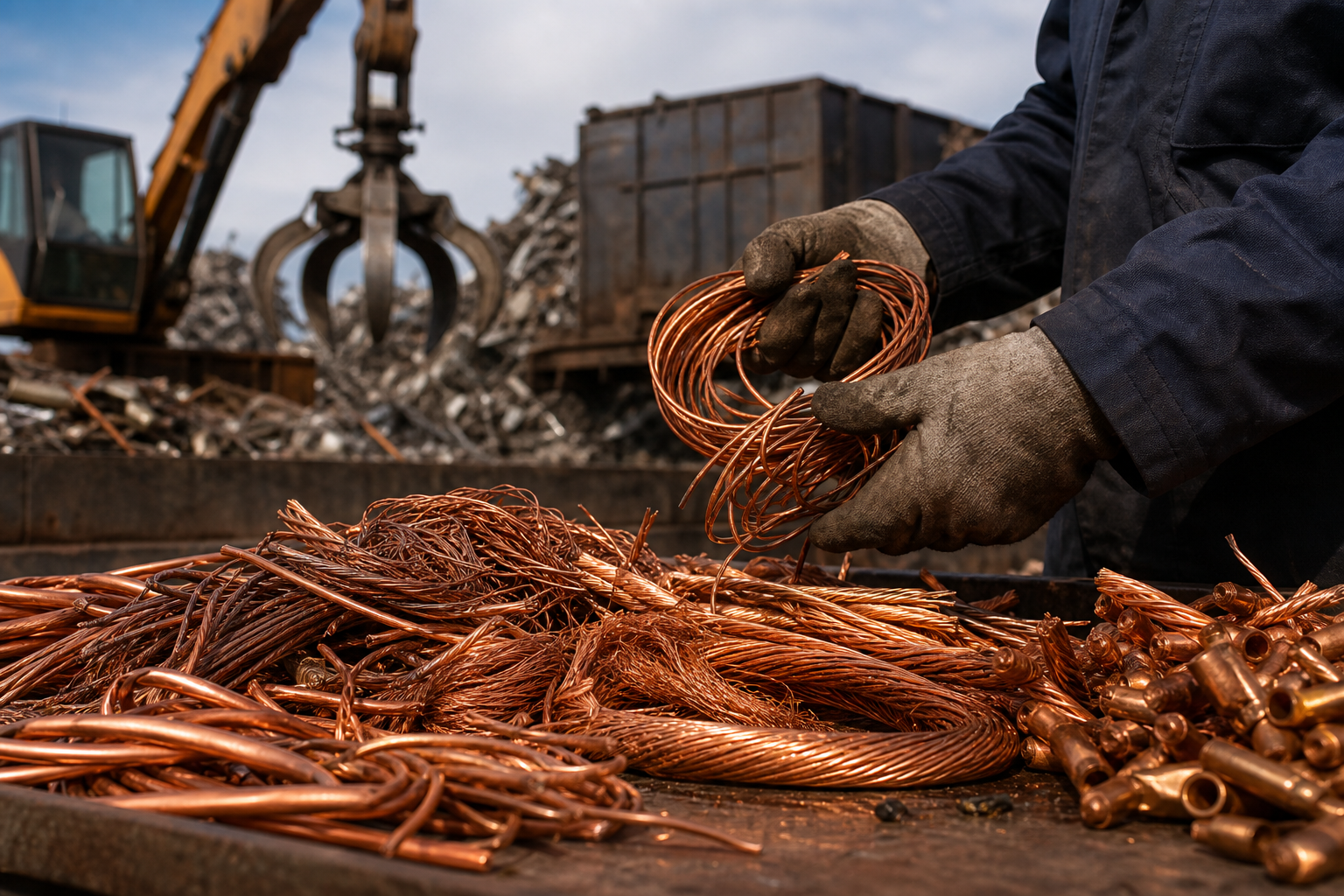
Short answer and 30-second checklist
Short answer: scrap copper value depends on grade, cleanliness, and the local market price per unit weight. Clean, unalloyed copper (bare bright) earns the highest rate, while insulated, soldered, or mixed copper scores lower. For a live local quote, check Quick Scrap Metal’s scrap copper prices page and then follow this quick checklist before you go.
- Check current local scrap copper prices.
- Sort and label by grade: bare bright, #1, #2, insulated wire, tubing, radiators, or cable.
- Perform safety stops: isolate power, remove batteries, and do not handle refrigerants yourself.
- Weigh by grade or keep items visibly separated for the yard to weigh.
- Bring photo ID, secure the load, and use an appropriate vehicle for transport and weight.
Step-by-step: from pile to cash
Follow these ordered actions with explicit stop points so you never go beyond safe limits. Each step ends with a clear decision or action.
Step 1: identify the grade of copper you have
Sort your material into the categories yards expect. Use these quick checks to label material correctly before weighing.
- Bare bright: bright, uniform copper with no paint, solder, plating, or alloy. Common sources: stripped solid copper wire and clean plumbing tubing. This grade commands the highest payout.
- #1 copper: mostly clean but with light surface staining, small fittings, or minor solder. Examples: short plumbing sections with small solder spots.
- #2 copper: heavily oxidized, painted, alloyed, or with brass fittings and significant solder. Old plumbing and demolition scrap often fit here.
- Insulated wire and cable: wire with intact insulation. Yards price insulated wire differently; large volumes may justify stripping.
- Radiators and motors: assemblies that mix copper with steel or aluminum. Separate these from clean wire or tubing.
Quick Scrap Metal publishes guides on copper grading and cable assessment on their website; consult those pages for photographic examples and finer grading rules.
Step 2: safety stop and pre-checks before you handle material
Do not work past these safety limits. Stop and call a professional where indicated.
- Always unplug and isolate power on electrical equipment. If wiring may be live, contact an electrician rather than attempting to disconnect it yourself.
- If an appliance may contain refrigerant, oil, or other controlled fluids, do not puncture or drain it. Licensed refrigerant recovery is required; either bring the unit intact and declare its condition or call a certified servicer.
- Remove batteries and store them separately. Batteries require separate recycling channels and may not be accepted with bulk copper.
- If you find suspected hazardous items such as PCBs, mercury thermostats, or asbestos, stop and follow municipal hazardous-waste guidance. Do not mix these with copper loads.
Step 3: separate, clean and prepare the copper for weighing
Organising material saves time at the yard and reduces grading disputes. Follow these preparation rules.
- Keep each grade in its own pile or container and label them if you can.
- Remove easy non-metal attachments with hand tools, such as wood, plastic clips, or removable screws. Do not spend hours cutting out soldered fittings or embedded alloys unless you know it will raise net proceeds.
- If you plan to strip insulated wire, use a proper wire stripper and adequate personal protective equipment. Only strip when volume and gauge make it worthwhile.
- Never use fire or chemicals to remove insulation or clean parts. Those methods are unsafe and will be rejected by reputable yards.
Step 4: weigh, check price, and decide whether to sell now
Before you drive to the yard, check live local rates so you know what to expect. Quick Scrap Metal posts current copper rates on their scrap copper prices page. Convert the posted rate into a projected payout for each sorted pile using a scale or a reasonable volume-to-weight estimate.
Decision rules:
- Sell now if your load is large and grades are high to avoid storage and theft risks.
- If prices are volatile and you have mostly low-grade material, calculate whether cleaning or regrading meaningfully raises net proceeds before delaying the sale.
- For small loads, convenience and immediate cash often outweigh small per-kilo gains from stripping or extended sorting.
Step 5: drive-in drop-off: what to bring and how the transaction works
Most yards follow a simple process. Bring these items and follow these steps to keep the visit efficient and fair.
- Bring a government photo ID if required and any paperwork you expect for larger vehicle transactions.
- Secure your load with tarps, straps, or bins to prevent loss in transit and to make unloading faster.
- Arrive during posted hours and verify directions on the Quick Scrap Metal website before you leave.
- The yard will usually weigh your vehicle empty, weigh it loaded, then subtract tare weight to give a ticketed net for payment. Material may be re-sorted or regraded on site; if you disagree, ask for a clear explanation and request a reweigh.
- Confirm payment method before you go if you need an electronic transfer; many yards pay cash on the spot.
Copper grades that determine price and how to recognise them
Recognising grades helps you estimate how a yard will value your load. Use these visual checks and household examples.
- Bare bright: bright, uniform copper with no coating, solder, or fittings. Sources: newly stripped wire, clean tubing.
- #1 copper: mostly clean but with minor stains or small fittings. Sources: short tubing with small solder spots.
- #2 copper: painted, heavily oxidized, mixed with brass fittings or solder. Sources: older plumbing and demolition scrap.
- Insulated wire: wiring with intact insulation. Yards price insulated wire differently than stripped copper.
- Copper cable: multi-conductor and coaxial cables, often assessed on conductor content and insulation type.
How to weigh, strip and prepare for best payout

Balancing time and reward is key. Apply these practical rules rather than trying every technique.
- Small volumes of insulated wire are not worth stripping. Labour usually erases the price gain.
- Large bundles of heavy gauge wire can justify mechanical strippers. Strip only when insulation comes off cleanly without damaging the copper.
- Use a scale that measures in kilograms or pounds and convert posted rates before you travel so you know expected payout.
- Never burn insulation or use corrosive chemicals. These methods are dangerous and illegal in many jurisdictions.
Check live local prices and convert them into what you will actually get
Price lists change daily. Always check Quick Scrap Metal’s scrap copper prices page for current local rates and multiply those rates by your measured weights for each grade. Factor in transport time and any work you would do to clean or regrade the material when deciding whether to sell now.
Safety, environmental and legal stop points
- Do not attempt refrigerant recovery or drain controlled fluids from appliances. Those tasks require certified technicians and proper permits.
- Remove and recycle batteries via approved channels; do not mix them with bulk copper.
- If you encounter PCBs, mercury, asbestos, or other hazardous components, stop and follow municipal hazardous-waste instructions.
- Follow local bylaw rules about larger commercial quantities and any reporting requirements the yard may have.
Common mistakes, objections and a short decision checklist

Avoid these frequent errors that reduce payout or waste trips.
- Do not mix grades in one pile; the yard may average the rate downward.
- Do not burn insulation or use unsafe cleaning methods.
- Do not under-document the load; have ID and vehicle paperwork ready if requested.
- If you suspect underpayment, request a manager, keep the yard ticket, and take photos of the material and the weighing ticket for reference.
Ready to sell: Quick Scrap Metal drop-off details and one-line CTA
Quick Scrap Metal operates from 407 Rexdale Blvd in Etobicoke and serves the GTA; they buy ferrous and non-ferrous metals, accept appliances and electronics, and post local price information and copper guides on their website. Check hours and directions before you go and bring organised material for the fastest payout.
Frequently asked questions
How do I tell bare bright copper from lower grades?
Bare bright copper is bright, shiny, and uniform with no solder, paint, plating, or alloy visible. If a piece is dull, has solder or brass fittings, or shows heavy corrosion, it is likely #1 or #2. Check the yard’s grading guide on their website for photos and finer distinctions.
Do I need to remove insulation from copper wire before I sell it?
Not always. For small quantities stripping is rarely worth the time. For large volumes, especially heavy gauge wire, stripping can raise per-kilo returns if done with proper tools. If unsure, keep insulated wire separate and let the yard advise on whether to strip it.
Where can I check current copper prices in Toronto and the GTA?
Use Quick Scrap Metal’s live price list on their scrap copper prices page to see current local rates and base your payout estimates on those numbers.
What should I bring to Quick Scrap Metal at 407 Rexdale Blvd?
Bring photo ID if required, secure transport, and material separated by grade where possible. Verify yard hours and directions on the Quick Scrap Metal website before you leave.
Is there a minimum amount of copper worth bringing to a scrap yard?
There is no universal minimum, but very small loads may not justify stripping or long trips. For convenience and immediate cash, many people bring small loads to a local yard rather than storing material and waiting for larger volumes.
Check live copper rates and plan your drop-off at Quick Scrap Metal.