
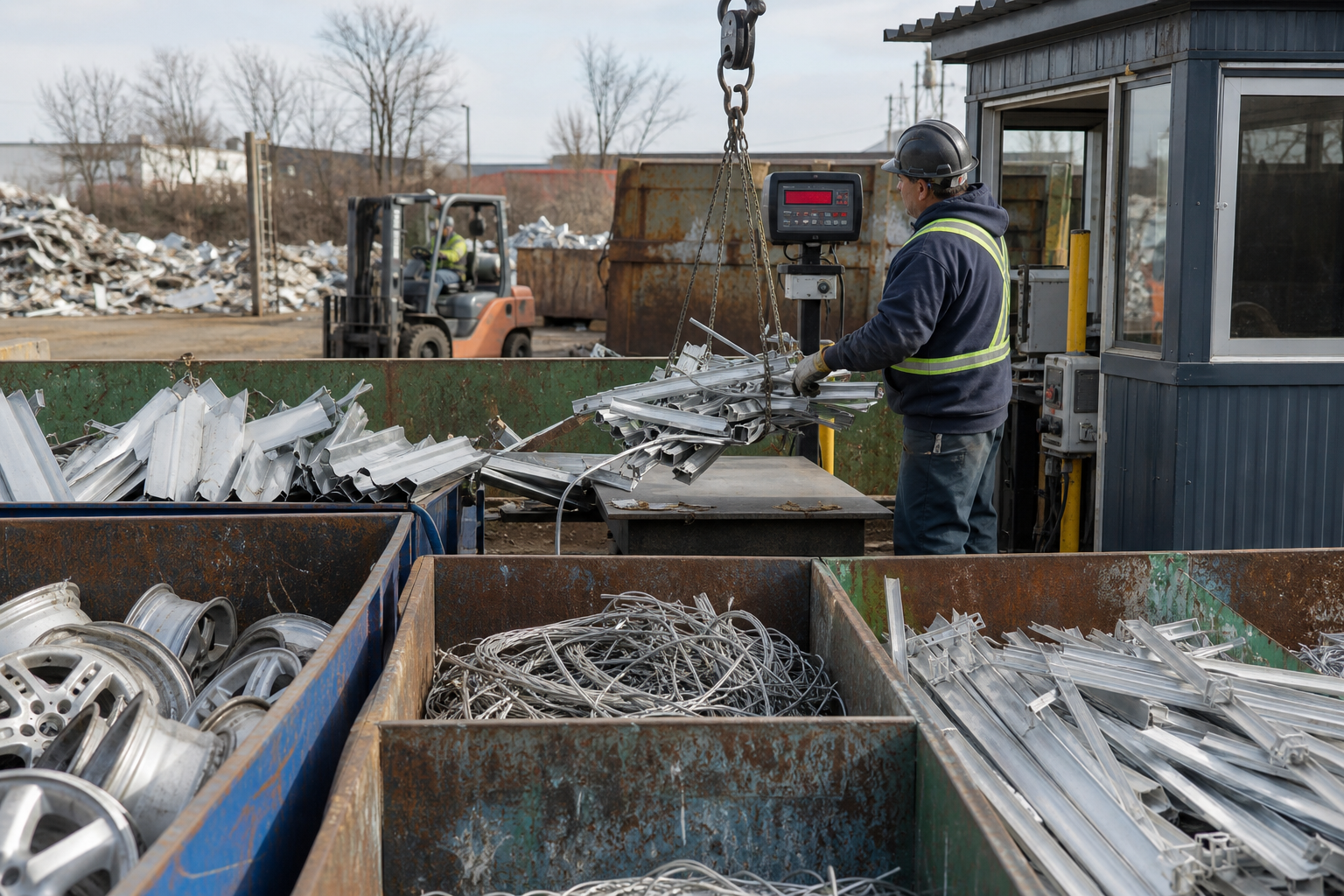
Aluminum prices are shaped by global supply and demand, economic activity, inventories, trade conditions, production disruptions, and transportation costs. However, the amount a recycler can pay for scrap aluminum is not the same as the headline market price. A local quote also reflects the material’s type, condition, sorting, contamination, processing requirements, and current buyer demand.
Quick summary

- Global aluminum prices respond to worldwide production, consumption, inventories, economic growth, and major disruptions.
- Construction, transportation, and industrial activity influence how much aluminum manufacturers and other buyers need.
- Tariffs, geopolitical events, shipping capacity, trucking, port congestion, and delays can change supply-chain costs.
- A scrap quote also depends on the material, condition, separation, contamination, quantity, handling, and transport economics.
- Because scrap rates are market-based and material-specific, confirm the current rate with the recycler before budgeting your payout.
The main forces that move aluminum prices
Aluminum is traded within a global market. Events far from Toronto can affect the broader price direction, even when a local seller’s material and quantity have not changed. The U.S. Geological Survey identifies production, consumption, stocks, economic growth, tariffs, changes in usage, international events, and mine disruptions among the influences on metal markets. See the USGS overview of metal price factors for broader market context.
Supply and production
Prices can respond when the available supply of primary aluminum changes. Production interruptions, raw-material constraints, facility problems, labour disruptions, or other events can reduce the amount reaching buyers. New production capacity or improved output can have the opposite effect, although the market response also depends on demand and inventories.
Demand from key industries
Demand matters because aluminum is used across construction, transportation, manufacturing, packaging, and other industries. When economic activity expands, manufacturers may purchase more aluminum. When construction or industrial activity slows, buyers may reduce orders or draw down existing supplies.
Natural Resources Canada reports that global aluminum demand is supported by sectors including construction and transportation. Its aluminum facts resource also publishes Canadian market data, showing why Canadian pricing must be understood within a wider international market. Review Natural Resources Canada’s aluminum market context.
Inventories and changing usage
Inventories provide another part of the picture. If buyers have substantial stock available, they may be less dependent on immediate new supply. If inventories are tight while demand remains strong, buyers may compete more actively for available material. Changes in product design, manufacturing methods, or substitution can also alter how much aluminum different industries require.
How tariffs, world events, energy, and logistics affect pricing

Aluminum does not move from producer to end user without costs. Shipping capacity, truck availability, driver shortages, port congestion, and delays can affect delivered prices and the economics of moving metal through the supply chain. The Commodity Futures Trading Commission notes that these logistics conditions can influence aluminum-related costs even when the underlying metal price has not changed. Read the CFTC report on aluminum futures market influences.
Tariffs can also change what a buyer pays for traded aluminum. A tariff may add a cost to imported material, affecting the price after duties even if the pre-duty market price does not move by the same amount. Statistics Canada found this distinction in its analysis of Canadian steel and aluminum exports during the 2018 and 2019 tariff period. See the Statistics Canada analysis of tariffs and aluminum trade.
Geopolitical events, recessions, wars, trade restrictions, and production interruptions can influence expectations about future supply and demand. These factors do not guarantee that prices will rise or fall immediately. Their effect depends on the event’s scale, duration, market expectations, available inventories, and the ability of buyers and suppliers to adjust.
Why aluminum scrap prices differ from headline market prices
A headline aluminum price usually refers to a particular market reference for primary or traded aluminum. Scrap aluminum is recovered material that still needs to be collected, sorted, prepared, transported, and sold into a downstream market. Those activities create costs and risks that are not represented by a simple headline number.
The U.S. Environmental Protection Agency explains that recovered aluminum pricing responds both to primary aluminum prices and to the economics of collecting, processing, transporting, and selling secondary material. Read the EPA discussion of markets for recovered aluminum. This is why a scrap quote should be viewed as the value of a particular load, not as a direct copy of an exchange or market reference.
Two loads may contain aluminum but require different amounts of labour, equipment, sorting, or downstream processing. A clean, identifiable load may be easier to handle than a mixed load with attached non-aluminum parts. Quantity and transport can also affect the economics of accepting the material.
For a practical explanation of the details that can influence aluminum scrap value, focus on the material itself rather than relying only on a general market price.
What changes the value of a specific scrap load
When a recycler evaluates aluminum scrap, these details can affect how the load is classified and priced:
- Material category: Aluminum items can include cable, wire, radiators, siding, plate, extrusion, and components from appliances or equipment. The buyer needs to identify what is actually being offered.
- Mixed or separated material: Separating aluminum from unrelated metals and keeping clearly different materials apart can make assessment easier. Do not assume every item containing aluminum will be treated as the same category.
- Attached components: Steel fasteners, plastic, rubber, insulation, electronics, or other attached materials can change the composition and handling requirements.
- Condition and contamination: Dirt, residue, moisture, coatings, and non-aluminum attachments may affect preparation or classification. The exact impact depends on the buyer’s current requirements.
- Quantity and handling: A small household load and a large contractor load may involve different weighing, unloading, and handling considerations.
- Transportation: Distance, vehicle requirements, and the effort needed to move bulky or heavy material can affect transaction economics, particularly when pickup is involved.
- Current buyer demand: A recycler’s price reflects the downstream market and the cost of moving the material onward. That demand can change independently of an item’s appearance.
These factors do not create a universal formula for calculating an exact payout at home. They explain why a recycler needs a description of the actual load before confirming a current material-specific rate.
How to prepare before requesting an aluminum scrap quote
A little preparation can make the quote conversation clearer. It cannot guarantee a higher payout, but it can reduce uncertainty and help the recycler classify the material more accurately.
- Identify the source: Explain whether the material is from renovation offcuts, equipment, appliances, wiring, demolition, automotive parts, or household cleanup.
- Estimate the quantity: Give an approximate weight if known, or describe the number and size of items. Mention whether the load is loose, palletized, boxed, or bulky.
- Separate practical categories: Keep aluminum items apart from steel, copper, electronics, and general debris where practical. Avoid dismantling anything that creates a safety risk.
- Note attached materials: Tell the buyer about insulation, plastic, rubber, dirt, coatings, or other components that remain attached.
- Photograph unusual loads: Clear photos can help a recycler understand a mixed, oversized, or difficult-to-describe load before you travel.
- Ask how it will be classified: Confirm which category the buyer expects to use and whether the rate applies to the entire load or only a separated portion.
- Confirm transaction details: Ask for the current rate, accepted materials, payment method, hours, and whether pickup is available for your type of load.
What to confirm with a GTA recycler
Quick Scrap Metal buys aluminum and other scrap metals at 407 Rexdale Blvd in Etobicoke. Its listed materials include aluminum, cable, wire, radiators, and other metal categories, and its business information describes pricing as market-based and specific to the material rather than a fixed published aluminum rate.
If you plan to sell scrap aluminum in the GTA, provide the material description, approximate quantity, condition, and photos where useful. You can also review current aluminum scrap pricing information, then contact the recycler to confirm the rate for your particular load. A market article or general price estimate cannot replace a current quote based on the material being delivered.
Frequently asked questions
Do aluminum prices change every day?
They can change frequently because global markets respond to updated information about supply, demand, inventories, trade, production, and logistics. A recycler’s scrap rate may not change in exactly the same way or on the same schedule, so ask for the current rate when you are ready to sell.
Why does an aluminum scrap quote differ from the market price?
A market reference generally describes primary or traded aluminum, while a scrap quote reflects recovered material. Collection, sorting, processing, transport, attached materials, contamination, quantity, and downstream buyer demand all affect what a recycler can pay.
Does sorting aluminum guarantee a higher payout?
No. Sorting can make the material easier to identify and process, but it does not guarantee a particular rate or increase. The result depends on the material, the buyer’s classification rules, current market conditions, and the cost of handling the load.
What information should I provide when requesting a scrap aluminum quote?
Describe the source and type of aluminum, approximate quantity, whether it is mixed or separated, any attached non-aluminum materials, your location, and whether you need drop-off or pickup. Photos are useful for unusual or bulky loads. Confirm the rate and transaction details before making the trip.
Use market context, then confirm the local quote
What affects aluminum prices depends on which price you mean. Global aluminum prices respond to worldwide supply and demand, economic activity, inventories, production disruptions, tariffs, international events, and logistics. Scrap aluminum value adds another layer: the material’s category, condition, separation, processing needs, quantity, transportation, and current downstream demand.
Before selling, organize the material as safely and clearly as possible, record useful details, and ask the recycler how the load will be classified. Then confirm the current material-specific rate instead of budgeting from a headline aluminum price.
For a local quote or drop-off information in Etobicoke, contact Quick Scrap Metal at 407 Rexdale Blvd.