
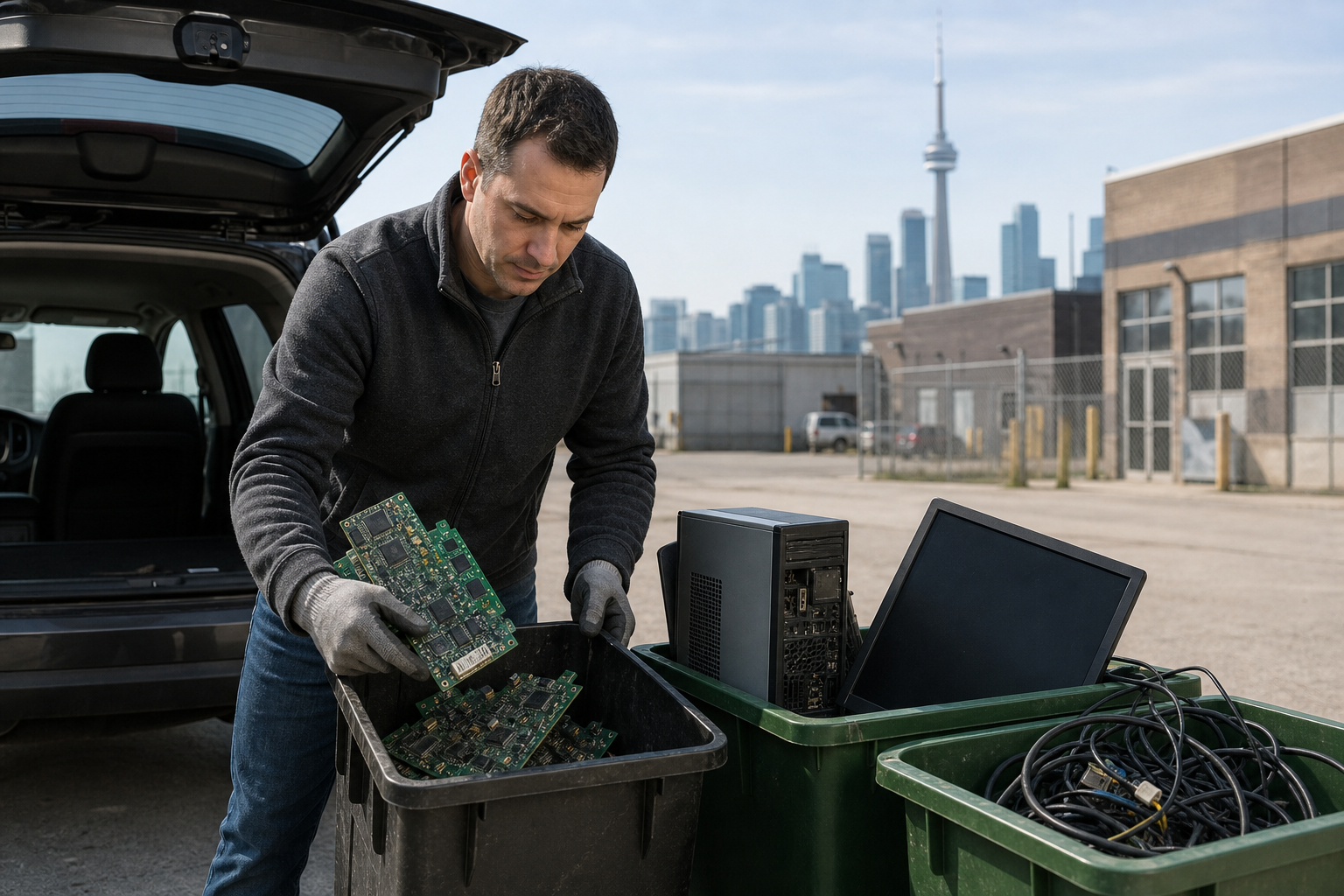
Printed circuit boards can usually be handled through an electronics recycling or scrap drop-off, but the best option depends on whether you have loose boards, complete devices, batteries, or a mixed load. Before travelling, identify what you have, protect personal data, secure the material for transport, and confirm unusual items with the recycler.
For Toronto-area residents, contractors, and businesses, Quick Scrap Metal provides a local drop-off option. The Etobicoke yard accepts printed circuit boards and related electronics such as computers, televisions, Blu-ray players, keyboards, and other electronic materials. However, broad service coverage does not mean every unusual board or damaged device should be assumed acceptable without checking first.
What Counts as a Printed Circuit Board Recycling Load?
A printed circuit board, or PCB, is the board inside many electronic products that connects and supports components. You may encounter one as a loose board after dismantling equipment, or as part of a complete device such as a computer, television, Blu-ray player, keyboard, printer, monitor, or other electronic product.
For most people, bringing the complete device is simpler than removing the board. A complete device keeps small parts together and avoids unnecessary handling of sharp edges, screens, screws, and internal components. If you already have loose boards from a repair, renovation, or equipment cleanout, keep them separate and describe the load accurately when asking about drop-off.
Quick Scrap Metal identifies printed circuit boards, computers, TVs, monitors, peripherals, cables, and related electronics among its accepted material categories. It also provides scrap metal and appliance recycling, which may be useful when a cleanout includes both electronics and ordinary metal. Acceptance of a particular commercial, damaged, or unusual item should still be confirmed before you go.
Choose the Right Drop-Off Approach Before You Leave

The main decision is not simply whether a board can be recycled. It is whether you should bring a loose component, the complete device, or a mixed load, and what preparation will make the handoff safer and easier.
Household loads
If you are clearing a basement, garage, or home office, keep computers, TVs, cables, keyboards, and loose boards together but organized. Do not dismantle devices solely to reach the boards unless you already know how to do so safely. A complete-device drop-off generally reduces the risk of broken plastic, exposed edges, or misplaced components.
Contractor and trade loads
Renovation and demolition work may produce wiring, panels, motors, appliances, and electronic controls alongside PCBs. Separate obvious electronics from ferrous and non-ferrous metals where practical. This makes it easier to explain the material, reduces sorting at the destination, and helps you ask a precise question about any unfamiliar control panel or industrial component.
Business and office cleanouts
Businesses often have a larger privacy concern because computers, drives, network equipment, and office electronics may contain customer, employee, or operational information. Create a short inventory, identify storage devices, complete your own data-removal process, and ask about the destination’s handling process before transporting the load.
Loose Boards, Whole Devices, or Mixed Loads: What to Consider
| Material | Prepare it by | Question to ask | Main consideration |
|---|---|---|---|
| Loose PCBs | Keep boards together in a sturdy box or container and avoid exposed sharp edges. | Do you accept this board type and quantity? | Unusual or commercial boards may need confirmation. |
| Complete computers | Remove personal data and secure loose accessories. | Should the device remain intact? | Keeping the device whole may be simpler than dismantling it. |
| TVs and monitors | Protect screens from impact and keep them stable during transport. | Do you accept this screen type or condition? | Broken or unusually large displays may require special instructions. |
| Mixed electronics | Separate boards, cables, batteries, appliances, and ordinary scrap where practical. | Can the full mixed load be handled at one drop-off? | Sorting improves clarity and avoids assumptions about every item. |
| Damaged or battery-powered devices | Do not crush, puncture, or mix visibly damaged batteries with other materials. | How should this item be transported and received? | Battery condition can change the appropriate handling method. |
Check Acceptance Before Bringing Unusual Electronics
One common avoidable mistake is treating a broad electronics list as universal acceptance. A household computer, keyboard, cable, or standard PCB may fit a recycler’s ordinary intake, while a large industrial board, damaged device, laboratory unit, or equipment containing a battery may require a separate conversation.
Call or message before travelling if your load includes unusually large equipment, many similar boards, loose components with unknown contents, broken screens, swollen batteries, or a mixture of electronics and construction scrap. Describe the item, approximate quantity, condition, and whether it contains a battery or data storage. That information lets the recycler give more useful direction than a general question about “electronics.”
This check is especially important when transport space is limited or the load comes from a job site. Confirming first can prevent an unnecessary trip and helps you decide whether drop-off is more practical than arranging another disposal route.
Prepare Devices for PCB Recycling
Before bringing a computer, phone, drive, or other data-bearing device to an electronics recycler, complete your own data-wiping process. Do not assume that a recycler will erase files, destroy storage media, or provide certified data destruction unless that service has been specifically confirmed.
- Make a list of the devices and loose boards in the load.
- Back up information you still need, then remove accounts and personal data from devices.
- Identify storage devices such as hard drives, solid-state drives, memory cards, and USB media.
- Remove detachable accessories when practical, but do not dismantle equipment if doing so creates a safety risk.
- Separate boards, cables, batteries, screens, appliances, and ordinary metal into clearly identifiable groups.
- Place loose boards in a rigid container so they do not shift, bend, or cut through packaging.
- Secure larger electronics so they cannot slide or break during transport.
For more preparation ideas, including data wiping and free electronics recycling considerations, review the guidance before packing your load. “Free” should not be assumed for every item or service, so confirm the terms that apply to your materials.
Handle Batteries and Potentially Damaged Components Carefully
Batteries deserve separate attention because their condition affects how an electronic item should be stored and transported. If a device has a removable battery, ask whether it should be separated before drop-off. If the battery is swollen, leaking, hot, crushed, or otherwise damaged, do not puncture it, place it loose with metal, or continue handling it unnecessarily.
Keep devices with integrated batteries protected from impact and tell the recycler about the battery when you call. The same applies to damaged screens, exposed wires, sharp board edges, and equipment that may contain fluids or other unusual components. A recycler can tell you whether to bring the item, how to package it, or whether another route is more appropriate.
Responsible electronic waste recycling centers sort devices and materials so reusable metals and plastics can be recovered while potentially hazardous components are managed appropriately. That is why honest descriptions of condition and contents matter before arrival.
Why Printed Circuit Boards Should Not Go in Household Waste
Printed circuit boards contain recoverable materials, including metals used in electronic components and connections. Sending them through an e-waste or scrap recycling route gives those materials a better chance of being separated and returned to manufacturing instead of being lost with ordinary household waste.
Complete electronics can also contain batteries, screens, wiring, and other components that need more careful handling than normal household waste. Using a dedicated drop-off supports material recovery and reduces the chance that a device is broken apart or discarded without the right sorting process. The exact handling route depends on the item, its condition, and the recycler’s facilities, so ask when the material is unusual.
PCB Recycling Drop-Off Checklist for Toronto
- Identify the material: Note whether you have loose PCBs, complete computers, TVs, monitors, cables, appliances, or mixed scrap.
- Protect privacy: Back up needed files and remove personal or business data from storage devices.
- Check batteries: Identify removable, integrated, swollen, leaking, or damaged batteries before packing.
- Sort the load: Keep electronics, loose boards, batteries, screens, and ordinary metals visibly separated where practical.
- Pack securely: Use sturdy containers for loose boards and prevent larger devices from shifting in the vehicle.
- Confirm unusual items: Ask about commercial equipment, damaged devices, large quantities, and unknown components.
- Verify the visit: Check the current hours and contact the yard if the load is mixed, bulky, or unusual.
Local PCB Drop-Off Context in Etobicoke
Quick Scrap Metal is located at 407 Rexdale Blvd, Etobicoke, Ontario, M9W 6P8, near Highway 27 and Rexdale. The business serves Toronto and the broader GTA, including customers bringing scrap metals, appliances, electronics, and printed circuit boards for drop-off.
The published hours are Monday through Friday from 8:00 a.m. to 7:00 p.m., Saturday from 8:00 a.m. to 5:00 p.m., and Sunday from 9:00 a.m. to 5:00 p.m. If you are bringing an unusual PCB, damaged device, large commercial load, or several categories of material together, contact the business before setting out to confirm the appropriate process.
Frequently Asked Questions
Can I bring loose printed circuit boards to a Toronto scrap yard?
Often, yes, but acceptance depends on the board type, condition, quantity, and the yard’s current handling process. Quick Scrap Metal identifies printed circuit boards among its accepted electronic materials. Keep loose boards secure and contact the Etobicoke yard first if they are unusual, damaged, or from commercial equipment.
Should I remove the circuit board from a computer before recycling it?
Usually, there is no need to dismantle a computer solely to remove its board. Bringing the complete device may be simpler and safer, provided you remove your data first. If the computer is already dismantled, keep the board and remaining parts organized and explain what you have when confirming acceptance.
Do I need to erase data before recycling electronics with PCBs?
Yes, you should remove personal or business data before drop-off. Back up important files, sign out of accounts, and follow an appropriate data-erasure process for computers, phones, drives, and other storage devices. Do not assume that a general electronics recycling service includes certified data destruction.
How should I handle a device with a built-in or damaged battery before drop-off?
Do not puncture, crush, or place a damaged battery loose with metal. Keep the device protected from impact and contact the recycler before transporting it, especially if the battery is swollen, leaking, hot, or visibly damaged.
Where is Quick Scrap Metal’s PCB and electronics drop-off in the Toronto area?
The drop-off is at 407 Rexdale Blvd in Etobicoke, Ontario, near Highway 27 and Rexdale. Published hours are 8:00 a.m. to 7:00 p.m. Monday through Friday, 8:00 a.m. to 5:00 p.m. Saturday, and 9:00 a.m. to 5:00 p.m. Sunday. Confirm unusual or mixed loads before arrival.
Make Your PCB Recycling Trip Straightforward
The safest decision is to treat printed circuit board recycling as a preparation and confirmation task, not simply a disposal run. Identify whether you have loose boards or complete devices, remove data, isolate battery concerns, sort mixed materials, and ask about anything unusual before loading the vehicle.
For a Toronto-area drop-off, Quick Scrap Metal provides a verified Etobicoke location at 407 Rexdale Blvd and published weekday, Saturday, and Sunday hours. Contact the business before arrival when your load includes damaged electronics, unusual PCBs, batteries, commercial equipment, or several material types together.