
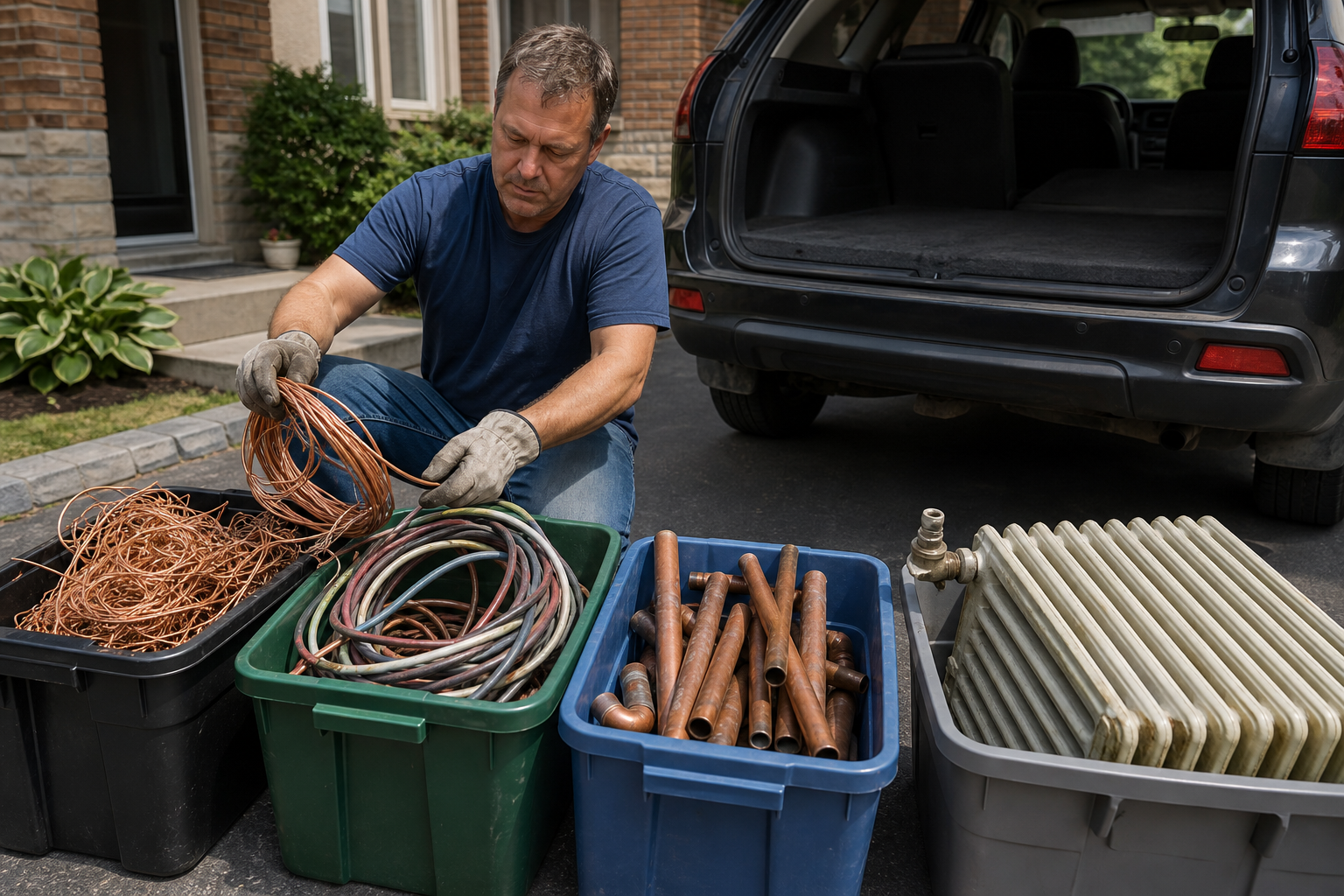
To sell copper in Etobicoke, identify and separate what you have, prepare it only as far as it is safe to do so, and bring the organized load to a scrap yard for an on-site assessment. Copper wire, pipe, tubing, radiators, electrical components, and copper-bearing assemblies may not receive the same classification or price.
Quick Scrap Metal buys copper and other ferrous and non-ferrous metals at 407 Rexdale Blvd, Etobicoke, Ontario M9W 6P8, near HWY 27 and Rexdale. Pricing is material-specific and market-based, so a current quote is more useful than an old price-per-pound estimate. Qualifying scrap is paid in cash on the spot after assessment.
Quick summary

- Separate bare copper, pipe, tubing, radiators, insulated wire, and uncertain assemblies.
- Keep visibly different materials in separate boxes, bins, or bundles.
- Never burn insulation, dismantle energized equipment, or force apart batteries and sealed components.
- Secure sharp or heavy material and confirm unusual, mixed, or bulky loads before travelling.
- Expect a material-specific assessment rather than a guaranteed rate.
1. Identify the copper before loading
Start with a simple inventory. Copper commonly appears in electrical wire and cable, plumbing pipe and tubing, radiators, motors, appliances, and larger mechanical assemblies. Quick Scrap Metal lists copper, cable and wire, radiators, engines and motors, and electrical components among its accepted materials.
Look for obvious differences. Bare, uncoated wire is different from insulated cable. Clean pipe differs from painted or soldered tubing. A radiator may contain copper alongside other metals, while a motor or appliance may contain copper as only one component.
Do not dismantle an item just to find out whether it contains copper. Leave uncertain items intact, keep them separate, and describe them when you contact or visit the yard. For a detailed local process, follow this guide to sell scrap copper in Etobicoke.
2. Sort copper into clear groups

Sorting makes inspection easier and prevents different materials from becoming one mixed pile. The goal is not to create a complicated grading system at home. Simply make each group identifiable.
| Material | Examples | Preparation |
|---|---|---|
| Bare copper | Uncoated wire, clean pieces, bus bar | Keep away from coated or insulated material. |
| Pipe and tubing | Plumbing pipe, tubing, fittings | Group together and remove loose debris where safe. |
| Insulated wire | Extension cords, electrical cable | Bundle by similar type. Do not burn insulation. |
| Radiators | Automotive or equipment radiators | Keep separate and identify them during assessment. |
| Electrical components | Motors, transformers, wiring assemblies | Do not open energized or sealed equipment. |
| Uncertain assemblies | Appliances and mixed components | Ask about acceptance before transporting bulky items. |
Keep copper-bearing materials away from steel, aluminum, brass, plastic, rubber, wood, and general waste where practical. If your load includes substantial wire, review the copper cable recycling guide for additional sorting and bundling advice.
3. Prepare copper safely
Useful preparation means making the load easier to identify and handle. Remove loose non-metal debris when it comes away easily, separate like materials, coil flexible wire, and keep everything dry and secure. Stop if preparation requires cutting an unfamiliar device, opening a sealed component, or handling a live electrical system.
Never burn insulation
Burning insulation creates hazardous smoke, may damage the copper, and does not guarantee a better classification. Keep insulated wire intact unless you have a safe, appropriate preparation method. The yard can assess cable as presented.
Do not dismantle energized equipment
Do not cut live wires or open unfamiliar electrical assemblies. If an item may still be connected to power, stop and obtain appropriate professional help before handling it.
Leave batteries and sealed components intact
Do not force apart batteries, pressurized parts, sealed components, or assemblies you do not recognize. Keep questionable items separate and ask the yard how they should be handled. The guidance on how to sell copper in Toronto also emphasizes safe preparation and confirming uncertain materials before travel.
4. Understand copper pricing
There is no single rate for every copper load. Quick Scrap Metal describes pricing as material-specific and market-based, and its website does not publish a fixed copper price list. The assessment may reflect material type, condition, cleanliness, mixture with other metals, and how easily the load can be identified and processed.
Bare copper, insulated wire, pipe, radiators, and copper-bearing equipment are not interchangeable. A clean, separated load may be easier to assess than a wet or mixed load, but no preparation method guarantees a particular payout.
When asking about current acceptance or pricing, describe the material accurately. Say whether you have bare wire, insulated cable, pipe, radiators, motors, or a mixed appliance. If you are unsure, say so rather than relying on an assumption.
5. Pack and transport the load
Use sturdy containers for small pieces and secure larger bundles so they cannot shift while driving. Cover sharp ends and avoid placing loose metal where it can damage the vehicle or injure someone unloading it.
- Label or visibly separate groups by material type.
- Keep the load dry and free from loose rubbish where practical.
- Secure long pipe, cable, and metal pieces against movement.
- Use suitable gloves and careful handling around sharp edges.
- Do not transport leaking, damaged, energized, or unfamiliar components without instructions.
- Contact the yard about unusually large, mixed, heavy, or bulky material.
6. What to expect at an Etobicoke drop-off
Bring separated material to Quick Scrap Metal at 407 Rexdale Blvd, Etobicoke, Ontario M9W 6P8, near HWY 27 and Rexdale. Present groups separately and explain uncertain items before assessment.
Business records list hours of 8 a.m. to 7 p.m. Monday through Friday, 8 a.m. to 5 p.m. Saturday, and 9 a.m. to 5 p.m. Sunday. Confirm current hours, acceptance, and arrangements for unusual material before travelling.
After assessment, qualifying scrap is paid in cash on the spot. This does not mean every item or load qualifies for immediate payment. Bring identifiable material, ask how groups were assessed, and clarify unusual items before accepting the transaction.
7. Local considerations
Toronto publishes official information about second-hand salvage-yard licensing and requirements. Review the City’s official information on second-hand salvage yards and shops for local regulatory context.
This guide is practical preparation advice, not a complete interpretation of Toronto bylaws. If you are selling for a business, handling job-site material, or bringing an unusual item, keep relevant ownership and transaction information available and ask the yard what it needs.
8. Common mistakes to avoid
Mixing everything together
A box containing wire, pipe, brass, steel, and appliance parts is harder to identify than separate groups and may slow assessment.
Relying on an outdated price
Market-based pricing changes, and material categories are assessed differently. Treat old figures as unreliable for your specific load.
Preparing beyond your skill level
Burning insulation, cutting energized wires, opening sealed equipment, or forcing apart batteries can create serious hazards. Safe sorting is more valuable than aggressive dismantling.
Failing to call about an unusual load
A bulky appliance, mixed industrial assembly, or large quantity of cable may require specific instructions. A quick call can prevent a wasted trip.
Copper selling checklist
- Inventory copper-bearing items.
- Separate bare copper, pipe, tubing, insulated wire, radiators, electrical components, and uncertain assemblies.
- Remove only loose debris that can be removed safely.
- Do not burn insulation or dismantle energized, sealed, pressurized, or unfamiliar equipment.
- Bundle or contain each group and keep it dry where possible.
- Secure sharp, long, and heavy pieces.
- Confirm acceptance and current hours before travelling.
- Ask for a current, material-specific assessment rather than assuming a price per pound.
Frequently asked questions
Can I sell copper wire at a scrap yard in Etobicoke?
Yes. Quick Scrap Metal lists cable and wire among its accepted materials. Sort wire separately, do not burn insulation, and confirm acceptance if the cable is unusual or part of a larger assembly.
Where can I drop off copper scrap in Etobicoke?
Quick Scrap Metal is at 407 Rexdale Blvd, Etobicoke, Ontario M9W 6P8, near HWY 27 and Rexdale. Confirm current hours before making the trip.
Do pipe, radiators, and insulated wire receive the same price?
Not necessarily. These materials differ in construction, cleanliness, mixed content, and processing requirements. Keep them separate for assessment.
Should I call before bringing an unusual item?
Yes. Contact the yard about mixed assemblies, large loads, appliances, motors, sealed components, or anything you cannot safely identify.
How is the payout determined?
The payout reflects the material presented during the on-site assessment. Type, condition, cleanliness, and mixed content can affect classification. Qualifying scrap is paid in cash on the spot.
Conclusion
The most reliable way to sell copper in Etobicoke is to identify the material, separate visibly different groups, prepare only what you can handle safely, and secure everything for transport. Do not chase a guessed price per pound or dismantle an unfamiliar assembly simply to change its appearance.
Confirm acceptance and current hours, bring organized material to the Etobicoke yard, and use the on-site assessment to determine the applicable classification and quote. To confirm details before travelling to 407 Rexdale Blvd, contact Quick Scrap Metal.