
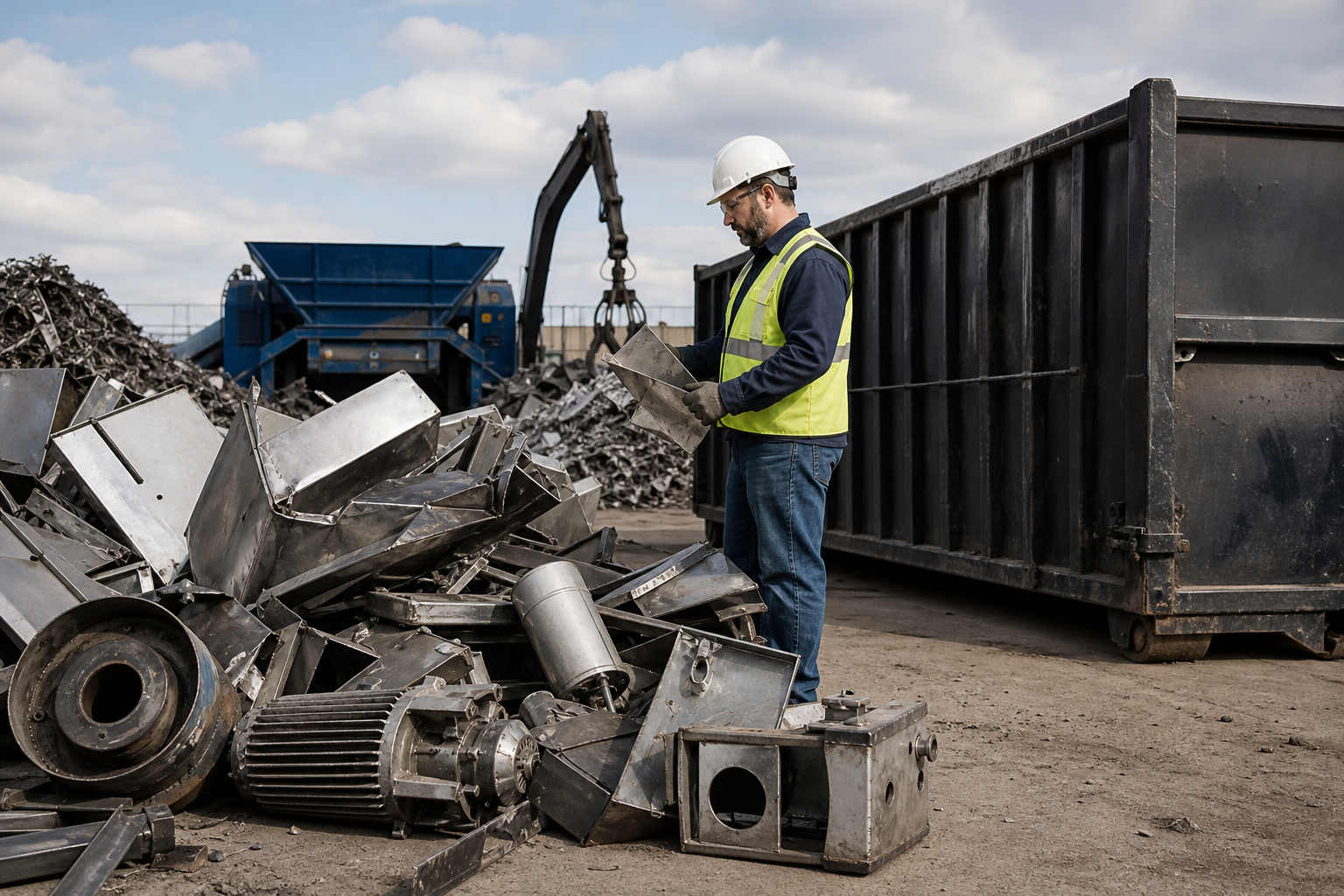
Industrial metal shredding reduces bulky or mixed metal into smaller pieces that can be separated into ferrous and non-ferrous streams. It may suit large, mixed, or difficult-to-handle scrap, but sorting, baling, shearing, or direct resale can be better when the material is already clean, separated, oversized, or valuable as an identifiable grade. Related reading: Industrial shelving toronto.
The right decision depends on what you have, how much there is, how safely it can be moved, and whether preserving separate grades matters more than reducing volume. This guide explains the options, collection logistics, preparation questions, and commercial tradeoffs before you arrange industrial scrap processing.
What Is Industrial Metal Shredding?
Industrial metal shredding is a processing method that breaks large or mixed metal items into smaller pieces so downstream equipment and workers can separate usable material. A typical metal-recycling facility may combine receiving, sorting, size reduction, magnetic separation, non-magnetic separation, storage, and shipping.
Ontario environmental approval records describe metal-recycling operations that include sorting, baling, shearing, shredding with magnetic and non-magnetic separation, cutting, receiving, storage, and shipping. That description explains the general industrial process, not a claim that every recycler performs every stage or that Quick Scrap Metal shreds every load. Ontario’s metal-recycling facility example provides useful context for the different stages.
Businesses usually consider shredding when material is too bulky for efficient manual sorting, contains several recoverable metal types, or needs to be reduced to a more manageable form. Shredding is not automatically the best way to maximize value. Clean copper, recognizable stainless grades, intact equipment, and separated castings may deserve individual assessment before they enter a mixed processing stream.
How Industrial Metal Shredding Works
Industrial metal shredding normally follows a sequence, although the equipment and order vary by facility and load. The practical workflow looks like this:
- Describe the load. The recycler needs to know the material type, approximate quantity, origin, dimensions, contamination, and any unusual components before collection or delivery is planned.
- Receive and inspect the material. The load is checked for oversized items, fluids, batteries, pressurized components, electronics, and other items that may require separate handling.
- Prepare the feedstock. Some pieces may need sorting, cutting, depollution, or removal from the shredding stream. Do not dismantle a hazardous item simply to make it smaller.
- Reduce the size. A shredder tears or breaks suitable metal feedstock into smaller pieces. The objective is improved handling and separation, not a guaranteed grade or payout.
- Separate the output. Magnetic equipment can separate ferrous material from non-ferrous and non-metal fractions. Additional systems may separate non-magnetic metals and residual material.
- Inspect and classify. The resulting streams may be checked for contamination, alloy, size, and consistency before storage or shipment.
- Weigh and settle the material. The applicable weight, category, terms, and current buying conditions determine the commercial assessment. Ask which figures appear on the weight ticket or settlement record.
- Move material downstream. Separated recyclable streams can be directed to intermediaries or end users for reuse or recycling, consistent with Ontario’s industrial and commercial source-separation guidance. Ontario’s source-separation guidance explains this broader pathway.
Shredding, Sorting, Baling, Shearing, or Direct Resale?
Choose the processing route by material condition and commercial objective. A load that is difficult to handle may suit size reduction, while a clean and identifiable load may be worth preserving as separate material.
| Route | Usually fits | Choose it when | Watch for |
|---|---|---|---|
| Shredding | Bulky, mixed, or difficult-to-handle metal | You need size reduction and separation of larger feedstock | Valuable identifiable grades may lose their separate identity in a mixed stream |
| Sorting | Recognizable steel, aluminum, copper, brass, stainless, and cast pieces | You can separate categories before transport | Manual sorting takes time and may not solve an oversized-load problem |
| Baling | Compressible, relatively consistent sheet, cans, or prepared scrap | You need compact, stackable bundles for handling or shipment | Mixed, rigid, wet, or hazardous material may not suit baling |
| Shearing | Long, oversized, or heavy sections that need a controlled cut | The main problem is length or dimensions, not mixed composition | Cutting can create sharp edges and may require equipment or site controls |
| Direct resale or separate assessment | Intact equipment, clean high-value grades, reusable items, or specialized components | Preserving identity could matter more than reducing volume | Do not assume an intact item has resale value without an actual buyer or assessment |
Use a simple decision rule
- If the material is mixed and bulky, ask whether shredding or a combination of sorting and size reduction is suitable.
- If the material is already separated and compactable, compare baling with direct delivery.
- If long beams, plate, pipe, or structural sections are blocking loading, ask whether shearing is more appropriate than shredding.
- If the load contains clean copper, brass, aluminum, stainless, or identifiable castings, separate those categories before considering a mixed stream.
- If equipment is intact and potentially reusable, assess that route before treating it as scrap.
Heavy castings deserve particular attention. Auto cast, cast plumbing, heating equipment, and industrial castings can be assessed differently from mild steel, and rubber, oil, concrete, or attached non-ferrous pieces can affect the category. Review the cast iron categories before mixing heavy components into a general processing load.
Which Industrial Scrap May Need an Intake Review?
Industrial scrap should receive an intake review when its composition, condition, size, or handling risk is unclear. Send a description before loading a truck, especially for material containing liquids, sealed systems, batteries, refrigerants, electronics, or unknown residues.
Common categories to discuss include bulky steel, machinery, structural sections, vehicles, appliances, cast iron, motors, cables, mixed non-ferrous pieces, and processed production scrap. The presence of one category does not establish acceptance or determine whether shredding is the correct route.
Describe these conditions specifically:
- Mixed metals: Explain whether steel, aluminum, copper, brass, stainless, and cast material are combined or separated.
- Oily or wet material: State whether the load has oil, coolant, water, grease, soil, or other residue.
- Batteries: Identify lead-acid, lithium, industrial, or unknown batteries and keep them out of a general load until handling is confirmed.
- Refrigerants and sealed systems: Identify refrigerators, air-conditioning equipment, compressors, and other units that may contain refrigerant or pressure.
- Electronics: List computers, circuit boards, monitors, controls, and other e-waste instead of assuming they belong with ordinary steel.
- Pressurized or sealed items: Identify cylinders, tanks, fire extinguishers, accumulators, and sealed containers before transport.
- Oversized pieces: Provide dimensions and explain whether the item can be safely loaded with the available equipment.
Containers, Access, and Collection Logistics
Container planning depends on volume, material density, loading equipment, pickup frequency, site access, and the way the material will be handled. A container that fits the volume may still be unsuitable if a truck cannot reach the loading area or the material cannot be safely placed inside.
Quick Scrap Metal describes totes, hoppers, drums, and roll-off truck services for business material handling. Its published roll-off options include the following dimensions:
| Container | Published dimensions | Planning use |
|---|---|---|
| 20 cubic yards | 20 ft L × 8 ft W × 4 ft H | Lower-volume or lower-profile staging where the site can accommodate a 20-foot container |
| 30 cubic yards | 20 ft L × 8 ft W × 5 ft H | More volume at the same published length and width |
| 40 cubic yards | 20 ft L × 8 ft W × 7 ft H | Larger material volumes where height and loading access permit |
| 50 cubic yards | 24 ft L × 8 ft W × 7 ft H | The largest published roll-off option, requiring additional length and site planning |
These dimensions do not establish a safe weight limit, loading height, material acceptance, or pickup schedule. Before selecting a container, confirm availability, permitted loading method, ground conditions, overhead clearance, turning space, truck access, placement rules, and whether the material should be delivered instead. Quick Scrap Metal also lists roll-off containers, totes, hoppers, and drums for industrial material handling.
Prepare a Useful Industrial Shredding Inquiry
A useful inquiry gives the recycler enough information to decide whether the load is suitable, which handling route may apply, and what logistics need attention. Photos are helpful, but a short written description prevents a photograph from hiding important conditions.
Include these details
- Site: Business name, collection address, municipality, and a site contact.
- Material: Metal types, equipment names, source of the scrap, and whether categories are mixed or separated.
- Quantity: Estimated weight, cubic volume, number of items, dimensions, or the size of the current pile.
- Condition: Clean, painted, oily, wet, dismantled, compacted, loose, or attached to plastic, rubber, wood, concrete, or electronics.
- Special components: Batteries, refrigerants, fluids, pressurized items, sealed units, electronics, and unknown residues.
- Access: Gate width, overhead wires, loading equipment, ground conditions, turning space, and whether the container can be loaded from the side or top.
- Service preference: Container, tote, hopper, drum, pickup, or delivery to the yard.
- Timing: One-time cleanout, project-based removal, or a possible recurring need. Do not assume recurring service is available until it is confirmed.
- Records: Ask what weight ticket, receipt, settlement detail, or other documentation is available for your transaction.
End the inquiry with two direct questions: “Will you accept this specific load?” and “Which processing route applies: sorting, shredding, shearing, baling, separate grading, or another method?” That wording keeps the decision open instead of assuming that every industrial load will be shredded.
How Shredding Can Affect Scrap Value
Shredding does not create one guaranteed price. The assessment can reflect material grade, alloy, cleanliness, contamination, net weight, physical form, transport and handling requirements, separation quality, and current market conditions.
Shredding may improve handling and recoverable separation for a bulky or mixed load. It can also mix components that would have been more clearly identified and assessed if they had been separated first. A clean batch of copper, recognizable brass, stainless, aluminum, or industrial castings should therefore be discussed before it is combined with general ferrous feedstock.
Alloy family and contamination matter even within one broad category. Bronze value, for example, can vary with alloy, cleanliness, weight, form, attached materials, and market conditions. The bronze value factors are useful for understanding why a published reference figure is not a guaranteed individual payout.
Use online figures only as rough planning context. The final commercial assessment depends on the material actually received and the buyer’s current categories and terms. Ask how the load will be classified, whether separate grades will be weighed separately, and which deductions or handling conditions apply before approving a processing plan.
Safety, Environmental, and Compliance Boundaries
Industrial scrap preparation is not just a size and price decision. Fluids, batteries, refrigerants, pressurized containers, sealed units, electronics, and unknown residues can change the safe handling and regulatory path.
Ontario’s end-of-life-vehicle guidance places metal shredding within an environmental activity and sector context, and Ontario maintains a public system for viewing environmental approvals and registrations. These resources are not a complete legal checklist for your facility. Verify the requirements that apply to your material, site, transport arrangement, and processing activity before work begins. Ontario’s end-of-life vehicle guidance is a useful starting point for that review.
Safety note: Do not dismantle, drain, puncture, cut, or process a hazardous or pressurized item merely to make it fit a scrap load. Identify it, isolate it from ordinary metal, and ask for handling instructions before moving it.
Quick Scrap Metal lists roll-off trucks, containers, hoppers, totes, drums, and responsible processing options for business material handling. That information does not establish acceptance of every hazardous or unusual item, on-site shredding, or a particular processing route. Describe questionable materials before arranging a container, pickup, or delivery.
Hypothetical Project: Preparing a Mixed Machinery Load
Imagine a contractor clearing a workshop with old machinery, structural steel offcuts, cable, cast components, appliances, and several parts with oil residue. This is a hypothetical example, not a Quick Scrap Metal customer result and not a promise that every item would be accepted.
- Separate potentially reusable equipment. Intact machinery is placed in a separate area while the contractor decides whether resale, reuse, or scrap assessment makes sense.
- Make material groups. Clean structural steel, cast components, cable, appliances, and mixed light metal are staged separately instead of being buried in one pile.
- Flag special items. Oil-containing parts, batteries, compressors, sealed units, electronics, and unidentified containers are photographed and described before movement.
- Measure the site. The contractor records the driveway width, overhead clearance, turning area, loading equipment, and the location where a container could safely stand.
- Estimate the load. The inquiry includes approximate dimensions, estimated weight or volume, photos from several angles, and the number of truckloads expected.
- Request a route decision. The contractor asks which material should be collected separately, whether a roll-off, hopper, tote, or drum is appropriate, and whether delivery is preferable for any category.
- Load only after confirmation. Materials remain staged by category until acceptance, handling instructions, container details, and timing are agreed.
This approach reduces surprises because the recycler can evaluate the actual material mix before the contractor commits to one container or one processing route.
What Happens After You Contact a Recycler?
The general workflow begins with a load description and an acceptance discussion. If the material is suitable, the parties then plan collection or delivery, container placement, loading, receiving inspection, weighing, classification, payment or settlement terms, and downstream processing.
Quick Scrap Metal lists business material-handling options including roll-off trucks, containers, hoppers, totes, and drums, along with responsible processing. It does not verify on-site shredding, a guaranteed processing route, recurring pickup, a fixed timeline, or a guaranteed settlement for a particular load.
Before dispatch, keep your inquiry, photos, material groups, estimated quantities, and questions together. Ask the receiving team to confirm acceptance, the preferred preparation, the container or delivery arrangement, the applicable identification or paperwork, and how the material will be weighed and assessed.
If you have a bulky, mixed, or recurring industrial load in Ontario, discuss the material and site details with Quick Scrap Metal through its business scrap recycling services before choosing shredding, sorting, shearing, baling, or direct delivery.