
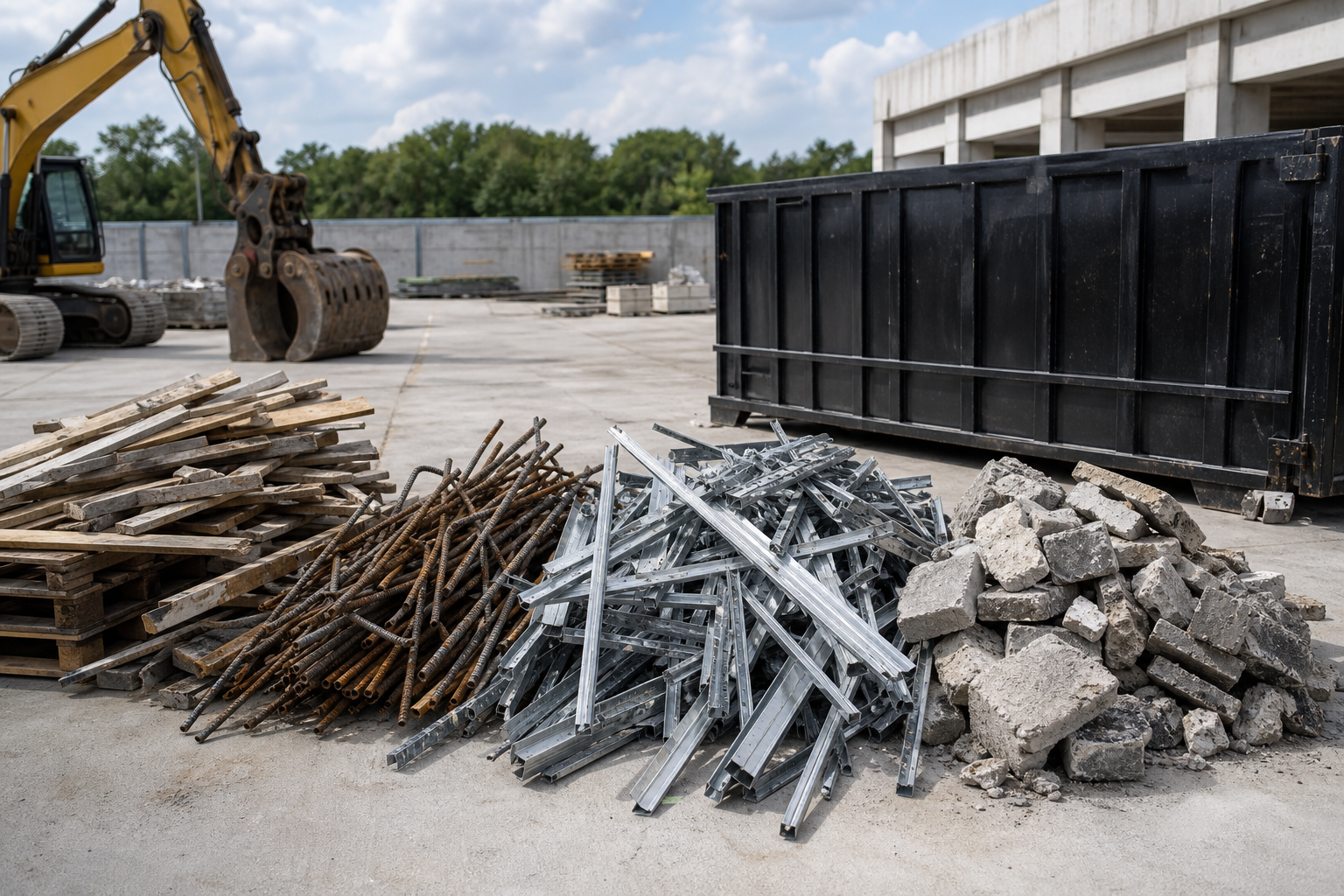
A construction site cleanout is the organized removal and separation of leftover materials, debris, and equipment from a renovation, construction, or demolition project. For a metal-focused cleanout, separate steel, cast iron, copper, brass, aluminum, appliances, electronics, and reusable items from concrete, drywall, wood, liquids, hazardous materials, and other waste before arranging a route. Related reading: Construction site security.
Quick Scrap Metal buys and recycles eligible metals, appliances, and electronics at 407 Rexdale Blvd in Etobicoke. Its verified scope does not mean every construction material belongs in a scrap-yard load, so confirm unusual or mixed materials before transport.
What a construction site cleanout does, and what it does not
A construction site cleanout removes material that is no longer needed for the next phase of work. It can include gathering metal offcuts, separating reusable items, staging appliances or equipment, and moving sorted loads away from active work areas.
That differs from construction cleaning, which may involve sweeping, dust removal, surface cleaning, glass cleaning, or preparing a finished space for inspection and handover. Demolition cleanup can involve large volumes of mixed debris, while a dumpster or approved disposal service is designed for waste streams that are not suitable for material recovery.
A scrap-metal buyer is most relevant when the site contains separated, recoverable metal. Before choosing a route, identify what the material is, when it must leave, how much labour and access the job requires, and whether the load contains non-metal or regulated waste.
Ontario Regulation 347 identifies brick, corrugated cardboard, concrete, drywall, steel, and wood leaving construction or demolition sites as designated wastes, subject to the regulation’s stated reuse exception. That designation does not mean a scrap-metal yard accepts every one of those materials. Source: R.R.O. 1990, Reg. 347: GENERAL – WASTE MANAGEMENT”.
Sort the site into scrap, reusable materials, and other waste

Create separate areas or containers for ferrous metal, non-ferrous metal, appliances and equipment, reusable materials, and general waste. Sorting reduces contamination and gives a yard clearer information about what it is being asked to assess.
| Material or item | Common examples | How to stage it | What affects assessment |
|---|---|---|---|
| Heavy steel | Beams, channels, plate, machinery parts | Keep structural pieces together and remove obvious debris where practical. | Category, thickness, cleanliness, weight, and handling. |
| Light steel | Studs, sheet, ducting, shelving, tubing | Separate from heavier steel and exclude concrete, wood, and insulation. | Grade, contamination, volume, and preparation. |
| Cast iron | Radiators, cast pipe, rotors, manifolds | Keep dense cast pieces separate from light steel. | Grade, cleanliness, attachments, and weight. |
| Copper | Wire, pipe, tubing, cable, offcuts | Separate bare, insulated, and mixed wire. | Form, grade, insulation, attachments, and cleanliness. |
| Brass | Valves, faucets, fittings, fixtures | Use a dedicated container and remove loose plastic or rubber where practical. | Grade and separation from steel and non-metal attachments. |
| Aluminum and stainless steel | Frames, trim, siding, rails, equipment | Keep each material distinct from steel and contaminated debris. | Category, attachments, cleanliness, and weight. |
| Appliances and equipment | Washers, dryers, stoves, compressors, motors | Keep complete units together and identify fluids or refrigerants. | Item type, condition, recoverable metal, and handling needs. |
| Electronics | Computers, monitors, televisions, circuit boards | Protect screens and boards; separate batteries or damaged components. | Equipment type, condition, and acceptance requirements. |
Steel, cast iron, and structural offcuts
Construction loads often contain heavy melt steel, light steel, plate and structural steel, cast iron, and auto cast. Beams, channels, plate offcuts, machinery bases, brackets, studs, and sheet should not automatically go into one undifferentiated pile.
Separating beams, channels, plate offcuts, and other ferrous material helps you understand scrap steel prices before delivery. Cast iron includes radiators, pipe, rotors, and machinery parts, and its assessment depends on grade and cleanliness.
Copper, brass, aluminum, and fixtures
Non-ferrous materials are easy to lose inside a mixed demolition pile. Copper wire, copper pipe, brass valves, faucets, aluminum frames, and stainless fixtures deserve their own containers because steel contamination, insulation, plastic, rubber, and other attachments can affect assessment.
Place valves, fittings, faucets, and other plumbing pieces together to preserve a clear view of the brass scrap price category. Do not dismantle material in a way that creates a hazard or releases a fluid.
Hypothetical small-renovation example
Imagine a hypothetical kitchen and washroom renovation producing copper pipe, brass faucets, stainless fixtures, steel studs, a cast-iron radiator, an old appliance, reusable cabinets, drywall, wood, and mixed debris. Separate the metals, appliance, reusable items, and general debris into distinct groups.
The metal groups could be discussed with a scrap buyer. Reusable cabinets could be donated or retained, while drywall, wood, and mixed debris would need a suitable disposal or recovery route. This example is illustrative, not a Quick Scrap Metal project result.
Choose the right cleanout stage for the project
Remove construction-site material when it begins to interfere with access, safety, trade sequencing, or the next inspection. Waiting until the final day often creates a mixed pile that takes longer to sort and may require more than one removal route.
During active construction
If offcuts accumulate around work areas, create a marked metal staging zone and remove obstructive loads before they block trades, entrances, loading areas, or equipment. Keep valuable non-ferrous material in closed, clearly identified containers.
At rough cleanout
Rough cleanout gathers larger leftover materials before detailed finishing work or inspection preparation. Sort structural steel, light steel, cast iron, wire, fixtures, appliances, and equipment before arranging a load. Photograph unusual items and note dimensions, weight estimates, and access conditions.
Review scrap prices for your cleanout, recognizing that metal type, grade, weight, preparation, contamination, local demand, and market conditions affect assessment.
Before final turnover
Use the final stage to remove eligible material and confirm who is responsible for cleaning, dust, floors, glass, paint residue, and non-metal debris. A scrap drop-off alone will not necessarily complete turnover work.
A small renovation may produce one organized load. A commercial buildout may need staged removals, while a larger demolition may require a disposal plan for mixed debris with scrap metal recovered separately.
Know the boundaries before loading the truck
Do not assume every item leaving a construction site belongs in a scrap-metal load. Concrete, drywall, wood, cardboard, insulation, soil, paint, sealants, liquids, contaminated material, and unknown equipment may require another route.
Separate batteries, refrigerant-containing appliances, pressurized or liquid-filled equipment, leaking items, and damaged components for confirmation. Transformers and cable also need identification because their construction, condition, and attachments vary. Never open, drain, cut, or dismantle an item merely to make it fit a scrap category.
For non-hazardous waste, Ontario advises using an approved disposal site or contacting a licensed waste contractor. Its guidance on approved disposal and illegal dumping is relevant when a cleanout includes material that is not going to a recycler.
If a material is hazardous, contaminated, leaking, regulated, or unidentified, pause the load and obtain instructions from an appropriate service.
Compare the practical removal routes
The right route depends on the material mix, available labour, vehicle access, and whether your goal is material recovery or a clean, finished site.
| Route | Best fit | Labour and access | Material limits | Value potential |
|---|---|---|---|---|
| Sorted scrap-metal drop-off | Separated steel, cast iron, non-ferrous metal, qualifying appliances, and electronics. | Your team sorts, loads, secures, and transports the material. | Confirm unusual, mixed, liquid-filled, or damaged items. | Eligible material may be assessed for payment. |
| Arranged removal, if available and confirmed | A load is too large, heavy, or inaccessible for self-delivery. | Discuss access, staging, loading, timing, and equipment in advance. | Do not assume a general construction pickup service or that every waste stream is available. | Material value and removal effort affect the practical outcome. |
| Dumpster or approved disposal service | Mixed drywall, wood, concrete, packaging, or other non-metal debris. | Requires a safe placement area and loading plan. | Follow accepted-material rules and local requirements. | Usually a disposal cost rather than a scrap payout. |
| Self-hauling | Small, sorted loads that fit safely in an appropriate vehicle. | Manage loading, tie-downs, travel, and unloading safely. | Vehicle capacity and material condition limit what is practical. | Labour and travel reduce the net benefit. |
| General construction cleaning | Dust removal, sweeping, surface care, or turnover cleaning. | Use a provider whose scope includes the required cleaning. | Not a substitute for scrap grading or regulated waste disposal. | Value comes from cleaning and readiness. |
Transformers and cable deserve a separate conversation. Their insulation, oil, attachments, and equipment design can change the appropriate route, so review transformer and cable disposal options before moving uncertain equipment.
Prepare a useful load inquiry before contacting the yard
A clear description helps a recycler decide whether a drop-off or arranged-removal discussion is appropriate. Include:
- Project and location: renovation, commercial buildout, demolition, shop, or property cleanout.
- Material categories: steel, cast iron, copper, brass, aluminum, stainless steel, appliances, motors, cable, transformers, or electronics.
- Quantity: estimated weight, piece count, bin size, pallet count, truckload, or dimensions.
- Condition: concrete, wood, insulation, plastic, oil, water, paint, corrosion, leaks, or unknown contents.
- Sorting: whether the load is separated or mixed.
- Access and loading: stairs, narrow lanes, overhead restrictions, docks, vehicle access, and staging.
- Timing: when the material must leave for the work schedule, inspection, occupancy, or turnover.
- Non-metal material: whether drywall, wood, concrete, packaging, or general debris is included.
These details do not guarantee acceptance, a quote, a pickup date, a minimum load, or a payment amount. They give the yard context about what should be confirmed next.
Plan the Etobicoke drop-off
Keep each material group accessible and secure loose pieces so they cannot shift, fall, or create sharp hazards during transport. Do not bury appliances, batteries, electronics, or questionable equipment inside a steel pile.
Quick Scrap Metal is at 407 Rexdale Blvd in Etobicoke and lists a range of metals, appliances, and electronics among its material categories. The business states that qualifying transactions receive cash on the spot.
Quick Scrap Metal publishes extended weekday and Sunday hours for customer convenience. Confirm current hours, unusual or mixed materials, damaged items, liquid-filled equipment, and non-metal loads before travelling.
Construction cleanout questions that prevent a wrong turn
Can a scrap-metal buyer handle all construction-site debris?
No. A scrap-metal buyer is suited to eligible, identifiable metal and certain appliances or electronics, not automatically to concrete, drywall, wood, insulation, mixed garbage, liquids, hazardous materials, or final construction cleaning.
Should scrap metal be removed during construction or at the end?
Remove it during construction when it blocks access, creates a handling problem, or interferes with trade sequencing. A rough cleanout helps before inspection or finishing work, while final turnover may still require separate cleaning.
Can contractors sell metal removed from a demolition or renovation site?
Yes, contractors can ask whether separated, eligible metal can be assessed for payment. Sort it, describe its condition and quantity, and confirm acceptance before transport.
What information should I provide about a mixed construction load?
Provide the project location, material categories, approximate volume or weight, photographs or dimensions, contamination, sorting status, access, loading conditions, timing, and non-metal content.
What should I do with construction materials that are not metal?
Separate reusable materials from general waste, then identify the correct approved disposal or recovery route for drywall, wood, concrete, cardboard, insulation, packaging, and mixed debris.
Are appliances, transformers, batteries, or electronics treated differently?
Yes. They may contain fluids, refrigerants, motors, wiring, batteries, or other components requiring separate handling. Identify the item and condition before loading it with ordinary steel.
A successful construction site cleanout starts with separation, not one oversized mixed pile. If your project has eligible metal, appliances, or electronics ready for an Etobicoke drop-off, contact Quick Scrap Metal about its scrap metal recycling services and provide the material details before travelling.