
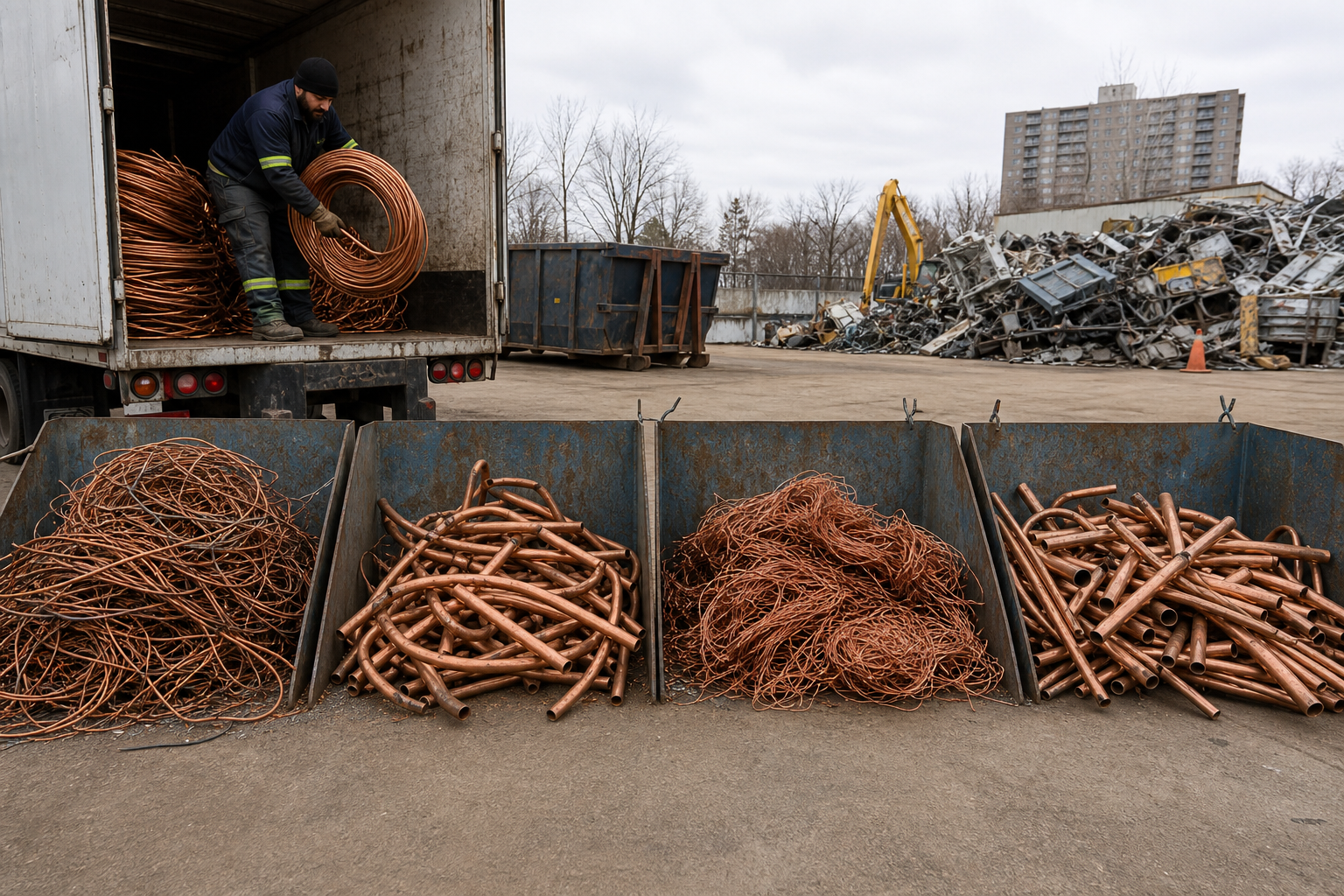
Copper Scrap Grades Explained for Better Sorting in Toronto
Copper scrap is graded by factors such as purity, physical form, insulation, coatings, solder, and attached materials. Two loads with similar weight may therefore receive different classifications after inspection. Sorting copper before visiting a yard makes those differences easier to see, but it does not guarantee a particular grade or payout.
What determines a copper scrap grade?
Scrap yards look at more than colour. Copper may be assessed according to its cleanliness and purity, whether it is wire or solid material, and whether it has insulation, paint, tin, solder, oxidation, or other non-copper attachments. Form and current market conditions also influence value. Quick Scrap Metal’s copper scrap value explanation describes purity, form, and market conditions as important factors.
Terms such as bare bright, #1, and #2 are useful sorting references, not substitutes for inspection. A label on a box or an assumption based on appearance does not establish the final sale category. The buyer’s inspection and agreed terms control classification.
Bare bright copper wire

Bare bright generally refers to clean copper wire that is bare, uncoated, untinned, and unalloyed. The supplied grading references also describe it as free from burnt material and brittle wire. In practical terms, it is wire with the insulation removed and without visible coatings or significant contamination.
Keep this material separate from insulated wire, soldered pieces, painted copper, and mixed metal. Do not assume every bright-looking piece will receive the same classification. Thin, damaged, coated, or questionable material may be assessed differently. Separating it allows the buyer to inspect clean wire without sorting it from a mixed container.
#1 copper scrap
#1 copper generally describes cleaner, largely unalloyed material with limited permitted variation. Examples in the supplied research include clean copper tubing, bus bar, clippings, and heavy sheet. These examples help identify what to separate; they do not guarantee a #1 classification.
Check for solder, paint, insulation, coatings, and attached non-copper parts before placing solid pieces in this group. A clean tube is different from one with substantial solder or fittings attached. If you are unsure, create a separate “needs inspection” pile rather than mixing it with your cleanest copper.
#2 copper scrap
#2 copper generally allows more variation than cleaner categories. It may include copper affected by solder, oxidation, coatings, or other permitted impurities. Exact limits can vary by buyer, so use this description as a preparation reference rather than a guaranteed definition.
Colour alone is not a reliable way to distinguish #1 from #2. A copper-coloured piece may still contain solder, paint, attachments, or another material affecting classification. Keep less-clean or questionable pieces apart from clean tubing, bare wire, and other material that may qualify for a cleaner category.
Insulated copper wire
Insulated wire is evaluated differently from bare copper because it contains both copper and insulation. Wire sizes, insulation types, and copper content can vary, so keep insulated wire separate from bare wire and solid copper.
Removing insulation is not automatically the best preparation choice. If you are considering stripping a large quantity, ask the buyer how it should be presented. Never burn insulation. Quick Scrap Metal’s copper sorting guidance recommends separating material before arrival and avoiding preparation that damages or contaminates it.
Copper scrap grading comparison
This table is a preparation aid, not a price list or guaranteed classification.
| Category | Visible condition | Common concerns | Sorting advice |
|---|---|---|---|
| Bare bright wire | Bare, clean, uncoated copper wire | Tinning, coatings, burnt or brittle wire, mixed metal | Keep separate from insulated or questionable wire |
| #1 copper | Cleaner solid or largely unalloyed copper | Solder, paint, fittings, coatings, attachments | Separate clean tubing, bus bar, clippings, and similar pieces |
| #2 copper | Copper with more permitted variation | Oxidation, solder, coatings, mixed attachments | Keep apart from the cleanest solid copper |
| Insulated wire | Copper wire covered by insulation | Different insulation types, wire sizes, copper content | Keep together and never burn the covering |
How to sort copper scrap before visiting a yard
- Identify copper-containing material. Gather wire, tubing, sheet, bus bar, fittings, and other copper items while keeping obviously different metals separate.
- Separate bare from insulated wire. Do not combine exposed wire with cable that still has plastic or another covering.
- Divide clean from questionable solid pieces. Keep clean-looking tubing apart from material with solder, paint, heavy oxidation, or attached fittings.
- Remove obvious loose attachments where appropriate. Do not damage the copper or use unsafe methods to make it look cleaner.
- Keep each group dry. Moisture, dirt, and mixed debris make inspection less straightforward.
- Label containers. Labels such as “bare wire,” “insulated wire,” “clean solid copper,” and “mixed or soldered” help maintain separation.
- Ask before extensive stripping. For a large load, confirm how the buyer wants unusual or insulated material presented.
This approach works for homeowners, electricians, plumbers, and contractors. The goal is not to assign yourself a final grade. It is to present visibly different materials separately so the buyer can inspect them clearly.
Why mixed copper loads create uncertainty
Combining everything in one box is convenient, but it makes assessment harder. Bare wire may be mixed with insulated cable, clean tubing with soldered fittings, and copper pieces with coatings or other metals. A single label such as “copper” does not explain the condition of every item.
Sorting creates clearer comparisons and may speed up unloading. It can also help you understand which material is driving the quote. However, sorting does not guarantee an upgrade or higher payout. The result still depends on inspection, classification, weight, form, and market conditions.
What happens when the yard evaluates the material?
The material is inspected and assigned a category based on its observed condition. The load is weighed, and the quote reflects its grade, form, weight, and current market conditions. Quick Scrap Metal states that it grades, weighs, and pays for copper scrap on the spot.
Before accepting a quote, ask:
- What grade or category was assigned to each pile?
- Was any material combined with another category?
- Which condition affected classification, such as insulation, solder, coating, or attachments?
- Was each pile weighed separately or as one mixed load?
- Are the terms based on the current rate for that material?
For additional local context, see how to sell copper in Toronto without guessing at the price. Ask about the actual material in front of the buyer rather than relying on a general online price or self-assigned grade.
Selling sorted copper in Toronto and the GTA
Quick Scrap Metal is located at 407 Rexdale Blvd in Etobicoke and serves Toronto and the broader GTA. The business buys copper and other ferrous and non-ferrous metals and states that qualifying copper scrap can be graded, weighed, and paid for on the spot.
If you are bringing household scrap, trade offcuts, wire, tubing, or other copper, separating it before arrival can make inspection easier to follow. Keep uncertain items in their own group and confirm current details directly rather than assuming an online description represents the final classification.
Common questions about grading copper scrap
Can copper wire be sold without removing the insulation?
Insulated copper wire can be assessed separately from bare copper. Keep it separate and ask the yard how it wants the material presented. Do not burn the insulation, and do not assume stripping it will automatically produce a better result.
Does separating copper scrap guarantee a higher payout?
No. Sorting can make inspection clearer, but it does not guarantee a higher payout or particular grade. Inspection, weight, form, and market conditions still determine the quote.
How can I tell whether copper is #1 or #2?
Check for solder, paint, coatings, oxidation, insulation, and attached non-copper parts. Cleaner, largely unalloyed material is generally associated with the cleaner category, while more variation or contamination may place material in a lower category. The yard makes the final determination.
What should I ask a scrap yard about my copper grade?
Ask what category was assigned, whether each pile was weighed separately, and which visible condition affected classification. If the material was mixed, ask whether separating it would make a future evaluation clearer.
Sort first, then confirm the grade
The most dependable preparation is to sort by visible condition and form: keep bare wire apart from insulated wire, separate cleaner solid copper from soldered or coated pieces, and isolate anything uncertain. Keep material dry, avoid burning insulation, and treat grade names as sorting references rather than guarantees.
To sell copper scrap locally, contact or visit Quick Scrap Metal at 407 Rexdale Blvd, Etobicoke. The yard states that it provides on-the-spot grading, weighing, and payment for qualifying copper scrap; you can contact Quick Scrap Metal to confirm details before bringing your load.