
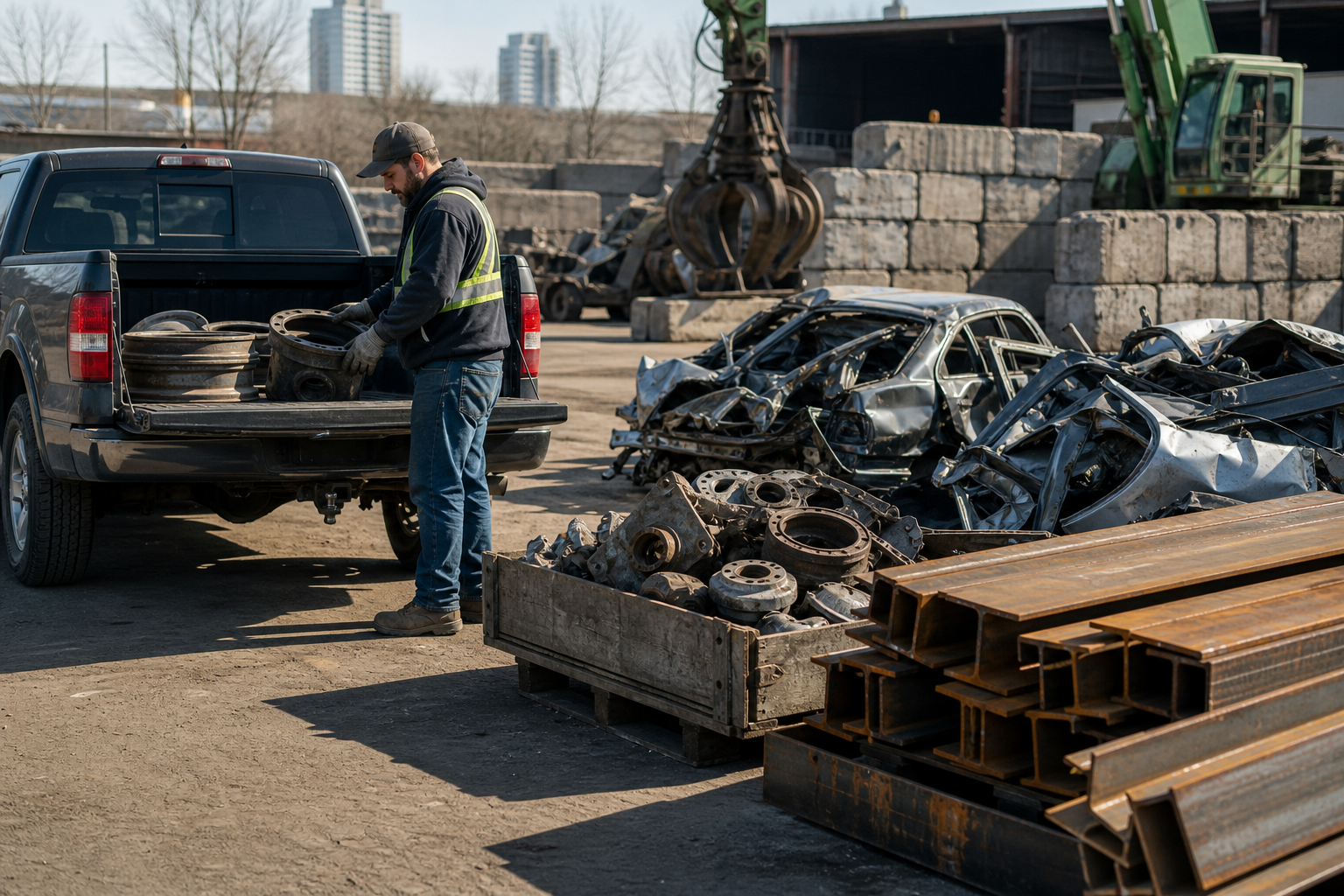
Ferrous metal processing is the receiving, sorting, assessing, preparing, and recycling of scrap that contains iron, especially steel and cast iron. For a homeowner, contractor, or business, the practical question is how to identify the load, prepare it safely, avoid unnecessary delays, and bring it to the right buyer.
This guide explains the difference between ferrous and non-ferrous scrap, compares common steel and iron materials, and outlines what typically happens during inspection, weighing, grading, and payment. It also shows how to prepare a load before bringing qualifying material to Quick Scrap Metal at 407 Rexdale Blvd in Etobicoke.
What Is Ferrous Metal Processing?
Ferrous metal processing is the series of steps used to receive and prepare iron-containing scrap for recycling. Depending on the facility and material, the broader recycling industry may use processes such as sorting, cutting, baling, shearing, shredding, or magnetic separation. Ontario regulatory material identifies these as processes associated with some metal recycling facilities, but that does not mean every local scrap yard offers every process or operates each type of equipment. Ontario’s description of metal recycling facility processes provides useful industry context.
From a seller’s perspective, processing begins before the material reaches a downstream recycler. The load must be received, inspected, weighed, and classified. Its composition, cleanliness, size, and condition affect how easily it can be handled and which category it belongs in.
Quick Scrap Metal’s verified role is buyer and recycler of ferrous and non-ferrous scrap, including steel, cast iron, and automotive-related materials. This guide therefore focuses on customer-facing stages, not unverified claims about specific machinery, processing capacity, mills, foundries, or smelters.
Ferrous vs. Non-Ferrous Metals: Why the Difference Matters

Ferrous metals contain iron. Steel and cast iron are the most familiar examples, while automotive parts, structural offcuts, machinery, rotors, and many appliances may contain substantial ferrous metal. A simple magnet can help identify many ferrous pieces, although it is not a complete test for every alloy or finished product.
Non-ferrous metals do not have iron as their main metallic component. Copper, aluminum, brass, nickel, and some stainless categories are commonly assessed separately from ordinary steel or iron. Sorting by metal type makes the load easier to inspect and helps prevent valuable non-ferrous pieces from being mixed into a lower-value ferrous category. The broader relationship between ferrous and non-ferrous metals also affects how scrap is weighed and graded.
Stainless steel deserves extra care. It is often treated as a separate category rather than ordinary carbon steel, and different stainless grades can have different characteristics. If you are unsure, keep suspected stainless pieces separate and ask the yard how they want them presented.
Common Ferrous Scrap Materials
Not every piece of ferrous scrap should be prepared in exactly the same way. The table below gives a practical starting point, not a guaranteed grade or price.
| Material | Typical examples | Preparation considerations |
|---|---|---|
| Steel | Structural offcuts, plate, sheet metal, fencing, steel and tin items | Separate from cast iron and non-ferrous metals. Remove obvious wood, plastic, rubber, and concrete where practical. |
| Cast iron | Brake rotors, engine blocks, cast components, heavy machinery parts | Keep cast pieces together when possible. Remove attached non-metal parts only when safe and reasonable. |
| Automotive scrap | Engines, motors, transmissions, auto cast, rotors, and other vehicle components | Keep fluids, loose parts, and unusual components in mind. Confirm requirements for complete vehicles or larger assemblies. |
| Appliances | Washers, dryers, stoves, ovens, dishwashers, microwaves, and appliances with metal housings | Appliances can contain several material types. Do not assume every attached component should be removed at home. |
| Mixed ferrous loads | Garage clear-outs, demolition scrap, tools, ducts, and assorted steel items | Organize by obvious category and remove loose debris. Expect a closer inspection if the load contains several grades. |
Quick Scrap Metal lists steel, cast iron, rotors, engines, motors, auto cast, transmissions, and several appliance types among its accepted or listed materials. Acceptance can depend on the item’s condition and handling requirements, so unusual, bulky, or incomplete items should be confirmed before transport.
How Sorting, Cleanliness, and Size Affect Processing
Sorting is one of the most useful steps a seller can take. Separate carbon steel from cast iron, stainless, copper, aluminum, brass, wire, and electronic components. A mixed pile may still be recyclable, but it can take longer to inspect and may be classified differently from a clean, consistent load.
Cleanliness matters because non-metal weight does not add recoverable metal value. Plastic housings, rubber, wood, glass, insulation, concrete, dirt, and trapped residue can increase handling or lead to a lower category. For steel, scrap steel grades may distinguish heavy, dense material from light or unprepared pieces.
Size also affects handling. Oversized beams, machinery sections, or other awkward pieces may require additional equipment or preparation. Cut material only if you have the appropriate tools and can do so safely. Never dismantle a pressurized, fuel-containing, refrigerant-containing, or otherwise hazardous item simply to make it smaller.
Preparation can reduce sorting time and avoid preventable contamination issues, but it does not guarantee a higher payout. Rates depend on material category, weight, condition, current market factors, and the buyer’s assessment at delivery.
What to Expect at a Ferrous Scrap Drop-Off
The exact procedure varies by yard and load size, but a seller-facing ferrous scrap drop-off commonly follows this sequence:
- Arrival and staging: Bring the load to the receiving area and follow staff directions. Keep loose pieces stable and make sure the vehicle or trailer can be unloaded safely.
- Initial inspection: The material is checked for obvious contamination, unusual items, unsafe conditions, and the general mix of metals.
- Weighing: The yard records the relevant weight for the material or category. Separate categories may be weighed separately.
- Grade confirmation: Staff assess whether the load is steel, cast iron, mixed ferrous material, or another category. Cleanliness, dimensions, and attached materials may affect classification.
- Ticket and payment: Once the material is assessed and weighed, qualifying customers receive payment according to the yard’s current terms. Quick Scrap Metal states that it pays cash on the spot for qualifying scrap.
Ask questions before unloading if you are uncertain about a category. Clarifying whether a piece is cast iron, stainless, steel, or an appliance component is more efficient than guessing and reorganizing the load after inspection.
How to Prepare Ferrous Scrap Before You Arrive
A short preparation routine can make a drop-off easier for you and the receiving team.
- Identify the main material: Separate steel, cast iron, suspected stainless, and non-ferrous metals into distinct groups.
- Remove obvious attachments: Where safe, take off loose plastic, wood, rubber, insulation, and other non-metal pieces.
- Keep categories accessible: Load heavier or clearly separated groups so they can be inspected without unloading the entire vehicle.
- Keep the load reasonably clean: Remove loose dirt, concrete, household rubbish, and unrelated debris.
- Handle fluids carefully: Do not bring leaking items without confirming acceptance requirements. Do not drain substances into soil, storm drains, or ordinary household containers.
- Secure sharp or unstable pieces: Prevent movement during transport and use suitable protection for exposed edges.
- Check unusual items first: Call ahead about pressurized containers, batteries, electronics, large appliances, complete vehicles, or loads that may need special handling.
For a mixed household or job-site load, the goal is not to dismantle everything. It is to separate obvious categories, remove loose contamination where safe, and avoid creating a transport hazard. If you are also bringing appliances, review how to prepare appliances for recycling safely before moving bulky units.
Safety and Acceptance Checks
Ordinary steel and cast iron are different from materials that may contain hazardous substances or require specialized handling. Leaking equipment, sealed or pressurized containers, batteries, fuel-related components, refrigerant-containing appliances, and certain electronic parts should not be treated as ordinary loose steel.
Canadian regulations address hazardous recyclable materials and exclusions involving electronic equipment, batteries, catalysts, and certain metal turnings. That regulatory context does not determine what a particular local yard accepts. It does show why you should confirm requirements before transporting unusual material. The federal regulations on hazardous recyclable materials are the appropriate place to verify the scope of those rules.
Never place a leaking, unstable, pressurized, or sharp item in a vehicle without an appropriate plan. If your load includes lead-acid batteries or similar items, use specific handling guidance and confirm acceptance before arrival. Quick Scrap Metal provides separate guidance on battery and lead recycling safety.
When a Local Scrap Yard Is the Practical Choice
A local scrap yard is usually practical when you have household metal, contractor offcuts, demolition steel, automotive components, appliances, or a mixed load that can be transported safely. You do not need industrial equipment or a direct relationship with a steel mill to begin the seller-facing process. The local buyer handles the initial receiving, assessment, weighing, and purchase of qualifying material.
Contact the yard first when the material is unusually large, contaminated, leaking, pressurized, attached to fluids, or difficult to unload. Calling ahead can also help when you have a complete scrap vehicle, several appliances, a large commercial load, or material that could belong to more than one category.
Ferrous Metal Drop-Off in Etobicoke
Quick Scrap Metal is located at 407 Rexdale Blvd in Etobicoke, near Highway 27 and Rexdale Boulevard. The business buys and recycles ferrous and non-ferrous metals, including steel, cast iron, automotive-related materials, and listed appliance items. It also accepts a range of electronics and e-waste, making it a potential one-stop option for a mixed household or business clear-out.
Bring the material organized and ready for assessment. Quick Scrap Metal states that qualifying customers receive cash on the spot after material assessment and weighing. Because prices and acceptance requirements can change by material and condition, contact the yard for current details before bringing an unusual or potentially hazardous load.
Ferrous Metal Processing FAQ
What materials are considered ferrous scrap?
Ferrous scrap contains iron and commonly includes steel, cast iron, rotors, engines, motors, transmissions, structural metal, sheet metal, and many appliance housings. Some items also contain copper, aluminum, plastic, or other materials, so the complete object may need to be sorted or assessed by its main recoverable components.
Should steel and cast iron be separated before drop-off?
Yes, separate them when practical. Steel and cast iron are different material categories and may be assessed differently. Keeping them apart makes inspection clearer and reduces the chance of a mixed load requiring additional sorting.
Can appliances be included with ferrous scrap?
Many appliances contain recoverable steel, and Quick Scrap Metal lists items such as washers, dryers, ovens, stoves, dishwashers, microwaves, and other appliances among its materials. Appliances can also contain non-ferrous parts, fluids, insulation, electronics, or other components. Confirm acceptance and preparation requirements before transporting an unusual or damaged unit.
Should I contact a scrap yard before bringing leaking or pressurized items?
Yes. Do not assume that a leaking, sealed, pressurized, fuel-containing, or refrigerant-containing item can be transported or accepted as ordinary ferrous scrap. Contact the yard first and follow appropriate safety and regulatory guidance.
Does preparing ferrous scrap guarantee a higher payout?
No. Sorting and cleaning can reduce handling and help the material receive a clearer assessment, but they do not guarantee a particular grade or price. The final result depends on material type, weight, cleanliness, dimensions, market conditions, and the buyer’s assessment at drop-off.
Conclusion: Prepare the Load, Confirm Acceptance, and Choose the Right Drop-Off
Ferrous metal processing becomes straightforward when viewed from the seller’s perspective. Identify iron-containing materials, separate steel from cast iron and non-ferrous metals, remove obvious contamination where safe, and keep oversized or unusual items organized. Before transport, confirm requirements for anything leaking, pressurized, fluid-filled, electronic, or otherwise hazardous.
For qualifying ferrous scrap in the Etobicoke and GTA area, organize the load and confirm current acceptance and pricing details. You can find local drop-off information through Quick Scrap Metal, located at 407 Rexdale Blvd in Etobicoke.