
To prepare an appliance for recycling, empty and clean it, remove only loose non-hazardous items, secure doors and sharp edges, and plan safe transport. Do not dismantle sealed systems, recover refrigerant, drain unknown fluids, or remove hazardous components yourself. Confirm the recycling yard’s requirements before loading anything.
This approach works for homeowners, landlords, tradespeople, and small businesses preparing refrigerators, freezers, washers, dryers, dishwashers, stoves, ovens, microwaves, air-conditioning units, and other bulky appliances for disposal in Toronto and the GTA.
Quick summary

- Identify the appliance and confirm acceptance, preparation rules, drop-off or pickup options, current hours, and documentation requirements.
- Remove food, water, laundry, dishes, racks, trays, and personal items. Wipe accessible surfaces so the appliance is safer to handle.
- Secure loose cords, doors, shelves, trays, knobs, and accessories, but do not cut wiring or open sealed systems to expose more metal.
- Leave refrigerants, compressor lines, unknown fluids, batteries, and other hazardous components for qualified handling.
- Use enough help and suitable equipment to move the appliance safely, then secure it inside the vehicle.
Step 1: Identify the appliance and confirm the recycling route
Preparation depends on what you are recycling. A dry electric stove does not present the same concerns as a refrigerator, freezer, window air conditioner, or appliance containing a compressor. Note the appliance type, approximate size, condition, and whether it contains food, water, oil, refrigerant, batteries, or other materials.
Ontario’s waste electrical and electronic equipment regulation includes household appliances such as clothes dryers, clothes washers, dishwashers, freezers, refrigerators, and stoves. That does not mean every yard has identical acceptance or preparation rules, so confirm the route for your specific appliance before travelling.
Quick Scrap Metal lists home appliances among its accepted materials, including washers, dryers, dishwashers, refrigerators, stoves, ovens, air-conditioning units, microwaves, and compressors. Before transporting an old appliance, review these appliance drop-off essentials so you can sort items, remove obvious hazards, and plan a safe drop-off.
Step 2: Empty, clean, and document the appliance

Remove everything that does not belong with the appliance. Empty food from refrigerators and freezers, drain accessible water from washers and dishwashers according to the manufacturer’s normal instructions, and remove dishes, laundry, ice, trays, racks, shelves, and personal items.
Wipe accessible surfaces and allow damp areas to dry before moving the appliance. Cleaning helps prevent leaks, odours, sharp surprises, and contamination during handling. The appliance does not need to look new, and you should not use aggressive chemicals or take it apart simply to clean hidden areas.
Take a photograph of the appliance and its model or serial label if you need a record for a landlord, business, insurance file, or removal arrangement.
Step 3: Remove only loose, non-hazardous items
Remove parts that are already loose and can be detached without tools or force, such as removable shelves, trays, racks, detachable knobs, and unsecured accessories. Place small pieces in a labelled box or bag so they do not fall during loading.
Secure or bundle loose cords rather than cutting them. Do not cut wiring, open motors, remove compressor lines, or dismantle panels merely to expose more metal. Disassembly can create sharp edges, release fluids, damage components, or turn a manageable appliance into an unsafe load.
Because preparation requirements vary, confirm the yard’s appliance preparation rules before removing parts or transporting the appliance.
Step 4: Stop at refrigerants, fluids, batteries, and other hazards
Refrigerators, freezers, air-conditioning units, dehumidifiers, and some other appliances may contain refrigerant in a sealed system. Ontario has regulations concerning ozone-depleting substances and halocarbons associated with refrigeration equipment. Do not cut, puncture, disconnect, or vent a sealed line. Review the provincial rules on refrigeration equipment and halocarbons if you need regulatory context.
Do not recover refrigerant yourself, drain an unknown liquid, puncture a compressor, or remove a sealed-system component. An appliance can still contain refrigerant even when it is unplugged or no longer cooling. Arrange qualified service before moving it if technical work is required.
Also stop if you find batteries, mercury-containing parts, pressurized containers, oil, chemicals, leaking fluids, or damaged electrical components. Ask the yard how it wants those items handled rather than placing them loose in a vehicle.
Step 5: Secure doors, sharp edges, and loose parts
Doors can swing open during movement and create a balance or pinch hazard. Close and secure them with suitable straps or tape that will not damage the appliance. Keep children and animals away from accessible appliances before removal.
Cover or clearly control sharp edges, broken panels, protruding metal, and exposed fasteners. Do not cover a leak, hide a hazard, or create loose wrapping that can catch on stairs or equipment.
Keep removable parts together and place them where they cannot fall underfoot. Protect floors with a suitable sheet or board when rolling the appliance out, and keep bystanders away from the route.
Step 6: Plan safe movement and transport
Measure narrow doorways, check stairs and thresholds, clear furniture and clutter, and decide where the vehicle can stop. Look for water, ice, uneven flooring, and overhead obstacles. A heavy appliance can become unstable quickly, especially on stairs or ramps.
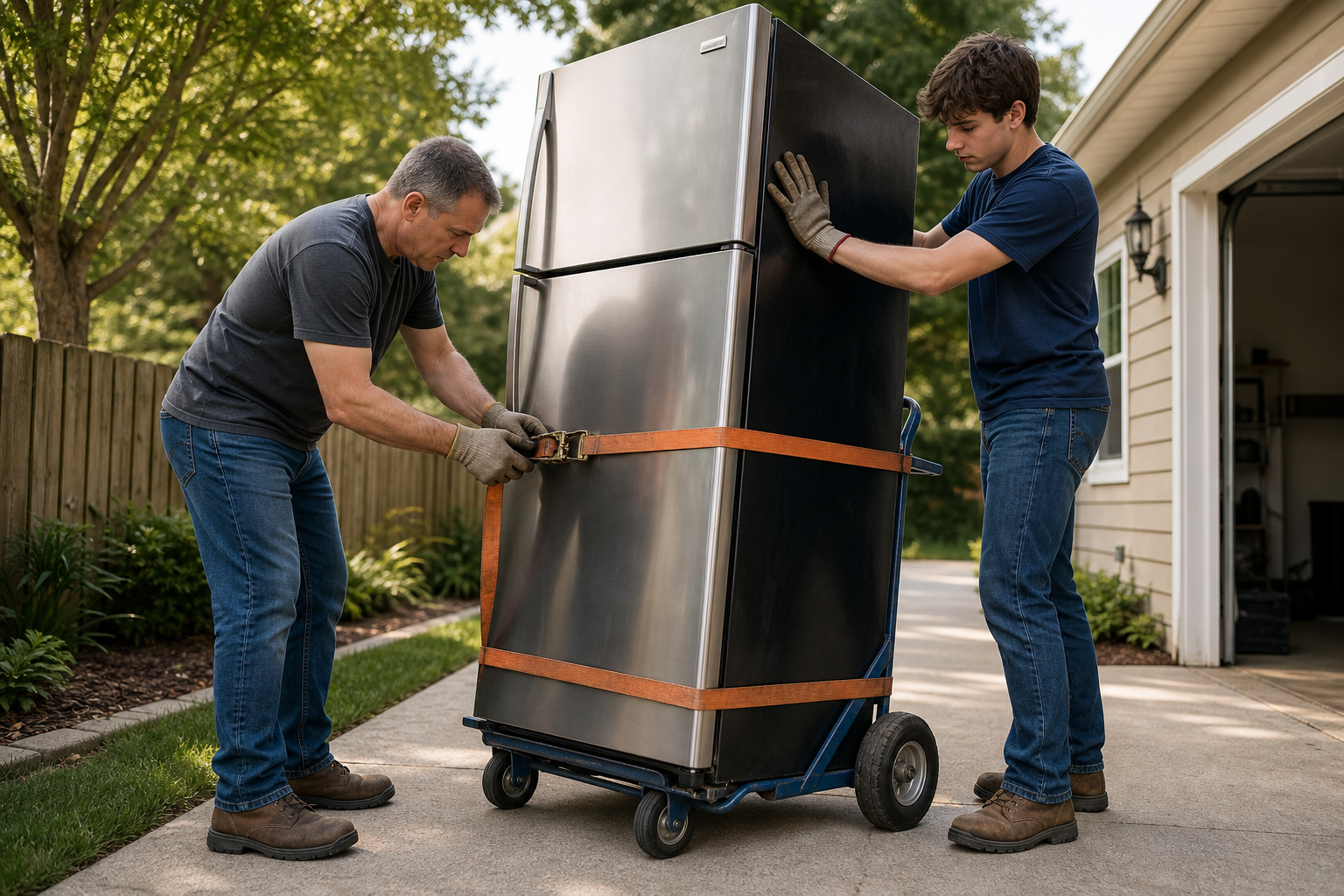
Do not attempt a solo lift if the appliance is too heavy or awkward to control. Use a suitable appliance dolly, enough capable helpers, and a coordinated plan. If the route requires risky stair work or the appliance is damaged, arrange professional help or pickup instead of improvising.
Inside a vehicle or trailer, protect against sharp edges and leaks and use suitable straps to prevent movement. Do not rely on a door, rope tied to a fragile part, or another unsecured object to hold the load. Check the load again before driving and after the first short part of the journey.
Step 7: Separate appliance-related scrap before leaving
If your load includes more than one material type, keep appliances separate from electronics, ferrous metals, and non-ferrous metals. This makes the contents easier to explain and reduces unnecessary sorting at the destination.
Place loose metal parts, cords, motors, radiators, and other items in separate, stable containers only when they were already loose and safe to handle. Do not dismantle an appliance to create these categories. A magnet can provide a rough indication of ferrous material, but it does not replace the yard’s grading process.
Label boxes containing small fittings, wire, or accessories, and keep sharp pieces contained. Quick Scrap Metal’s broader preparation guidance recommends separating appliances, electronics, ferrous metals, and non-ferrous metals before drop-off.
Step 8: Call before you go
Do not treat a general list of accepted items as confirmation that your particular appliance can be delivered in its current condition. Ask the yard specific questions before loading it, especially for refrigeration appliances, units with compressors, leaking equipment, and very large or damaged items.
- Is this appliance accepted in its current condition?
- Should it remain intact, or are any specific non-hazardous parts expected to be removed?
- How should a refrigerator, freezer, air conditioner, or compressor-equipped appliance be handled?
- Is drop-off available, or is pickup an option for this size and condition?
- Do I need identification, an appointment, payment information, or other documents?
- Are there handling, processing, or other fees?
- Can you provide a receipt describing the material received?
- What are the current hours on the day I plan to arrive?
These are questions to confirm, not universal policies. Quick Scrap Metal publishes Sunday and extended weekday hours, but verify current hours and requirements through its contact details before setting out.
What you can prepare yourself, and what should be left to a professional
| Usually reasonable preparation | Stop and arrange qualified help or ask the yard |
|---|---|
| Empty food, water, clothing, dishes, and personal items | Recovering refrigerant or opening a sealed cooling system |
| Wiping accessible surfaces and drying damp areas | Disconnecting refrigerant lines or puncturing compressors |
| Removing loose shelves, trays, racks, knobs, and accessories | Draining unknown fluids, oils, chemicals, or pressurized contents |
| Bundling loose cords and securing doors and small parts | Removing batteries, mercury components, or other hazardous parts |
| Planning the route, helpers, vehicle, and tie-downs | Solo lifting, risky stair work, or moving a leaking appliance |
The dividing line is simple: prepare the appliance for controlled handling, but do not perform technical or hazardous disassembly to increase its scrap value. When uncertain, leave the component in place and ask for instructions.
Final pre-trip appliance recycling checklist
- ☐ I identified the appliance and noted compressors, refrigerants, batteries, fluids, or visible damage.
- ☐ I confirmed acceptance, preparation requirements, and drop-off or pickup arrangements.
- ☐ I removed food, water, laundry, dishes, racks, trays, and personal items.
- ☐ I removed only loose, non-hazardous parts and kept small pieces together.
- ☐ I did not cut wiring, open sealed systems, recover refrigerant, or drain unknown fluids.
- ☐ Doors, cords, sharp edges, and loose parts are controlled for movement.
- ☐ The route is clear, and I have enough help or suitable equipment.
- ☐ The appliance is protected and secured in the vehicle or trailer.
- ☐ I have any identification, records, or documents the yard requested.
- ☐ I verified the current hours before leaving.
Frequently asked questions
Can I remove the refrigerant from a refrigerator before recycling it?
No. Do not recover refrigerant, cut sealed lines, or puncture a compressor yourself. Ask the yard what it requires and arrange qualified service when technical work is necessary.
Should I dismantle an appliance to get more scrap metal?
Usually, no. Remove only loose, non-hazardous items that can be detached safely. Cutting wires, opening motors, or stripping an appliance can create hazards and conflict with preparation requirements.
What should I do with a washer, dryer, or dishwasher before drop-off?
Remove clothing, dishes, food, standing water, racks, trays, and personal items. Wipe accessible surfaces, secure doors and cords, and ask whether the unit should remain intact.
How should I prepare an old appliance for transport?
Clear the route, use appropriate help or a dolly, protect floors and the vehicle, control doors and sharp edges, and secure the appliance with suitable tie-downs. Do not attempt a solo lift or transport a leaking appliance without professional guidance.
Does Quick Scrap Metal accept appliances at its Etobicoke location?
Quick Scrap Metal lists home appliances among the materials it accepts and recycles, including washers, dryers, dishwashers, refrigerators, stoves, ovens, air-conditioning units, microwaves, and compressors. Confirm current requirements before travelling to 407 Rexdale Blvd, Etobicoke.
Prepare only what is safe, then confirm the next step
Safe appliance recycling is not about stripping every component. Empty and clean the unit, remove only loose non-hazardous items, secure it for movement, leave refrigerants and other hazardous systems intact, and confirm the yard’s requirements before loading your vehicle.
For local appliance recycling and drop-off in Etobicoke, contact Quick Scrap Metal before travelling to 407 Rexdale Blvd. Confirm acceptance, preparation instructions, current hours, and whether drop-off or pickup is better for your appliance.