
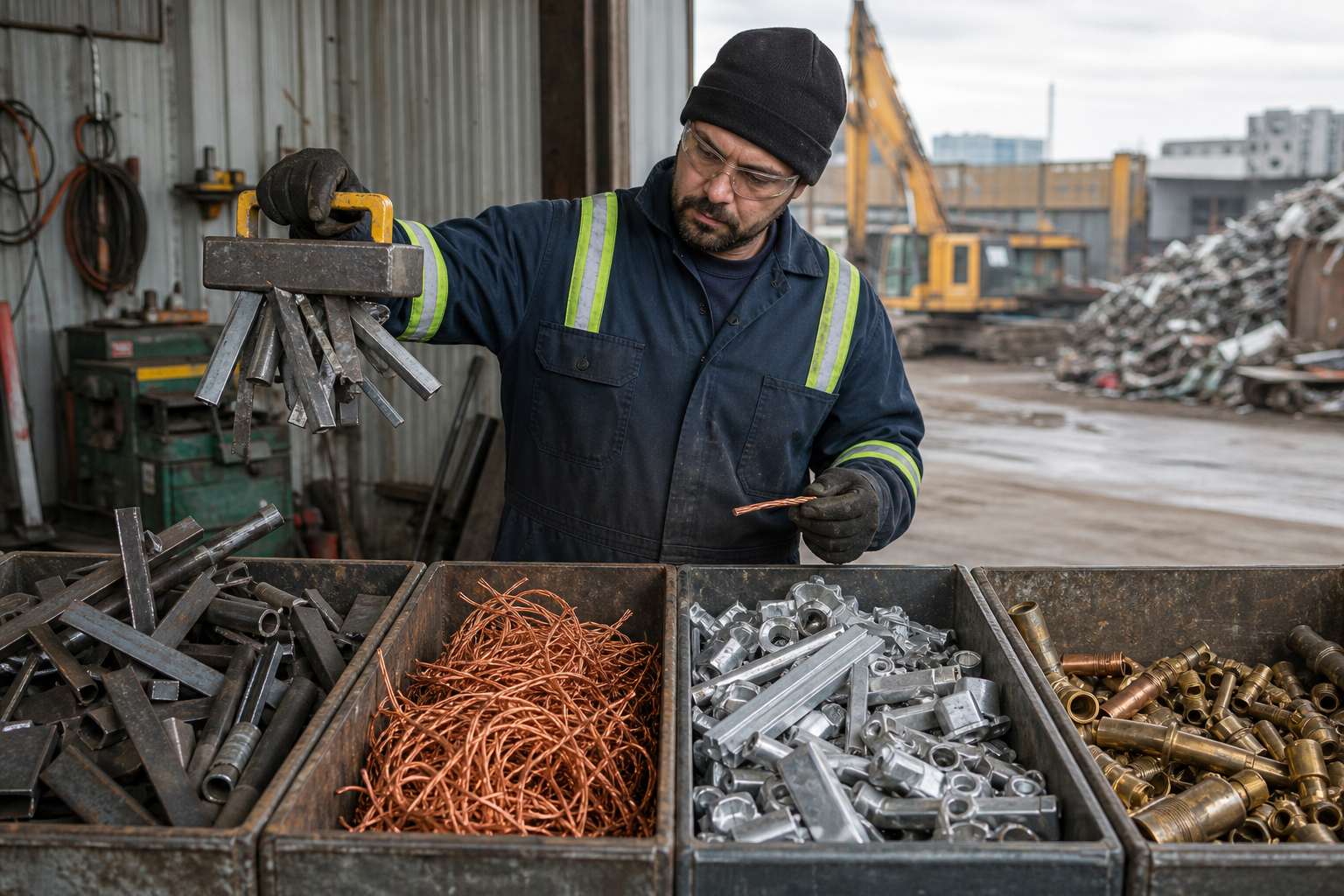
Ferrous metals contain iron, while nonferrous metals generally do not. That distinction helps with scrap sorting, but no single test works for every item. A magnet, surface appearance, weight, corrosion pattern, and the way an object was made should be considered together.
For homeowners, contractors, businesses, and vehicle owners in Toronto and the GTA, this approach makes it easier to separate obvious steel and cast iron from copper, aluminum, brass, stainless steel, and mixed-material items before visiting a scrap yard.
Quick summary

- Use a magnet as an initial clue. Strong attraction often indicates steel or iron, but it is not definitive for every alloy or finished product.
- Use color, weight, corrosion, and construction to support the identification.
- Keep obvious steel, cast iron, copper, aluminum, brass, and stainless steel in separate groups where practical.
- Treat appliances, motors, electronics, insulated wire, and plated items as potentially mixed materials.
- Keep uncertain scrap separate and ask the yard before guessing or dismantling it.
Ferrous vs nonferrous metals at a glance
| Clue | Ferrous | Nonferrous |
|---|---|---|
| Composition | Iron is a primary part of the material. | Iron is not the primary base metal. |
| Magnet response | Many steel and iron items attract a magnet. | Copper, aluminum, brass, and bronze usually do not. |
| Appearance | Often gray, dark, or black, although coatings can hide the surface. | May appear reddish, yellow, bright silver, or gray. |
| Weight | Steel and cast iron often feel heavy for their size. | Aluminum often feels light, while copper, brass, and bronze can feel substantial. |
| Corrosion | Exposed iron-based surfaces may develop reddish-brown rust. | Oxidation and tarnish vary by metal and do not usually resemble ordinary iron rust. |
These are starting points, not guarantees. Paint, plating, insulation, dirt, alloy composition, and attached parts can make an item look or behave differently from its base metal.
What ferrous metals are

Ferrous metals are iron-based materials. Steel is the most familiar example, while cast iron is common in heavy components, machinery, and older household or automotive items. Structural pieces, vehicle parts, tools, and appliances may also contain steel.
Common ferrous scrap includes steel, cast iron, and brake rotors. Quick Scrap Metal lists these materials among the ferrous scrap it accepts, along with household, automotive, and industrial items.
What nonferrous metals are
Nonferrous metals are not primarily iron-based. Examples include copper, aluminum, brass, bronze, nickel, and some stainless steel products. Cable, wire, radiators, siding, plate, and extrusion may also fall into nonferrous categories depending on their material and construction.
Nonferrous scrap is often found in plumbing fittings, electrical wire, vehicle and appliance components, building materials, and electronics. An item may be solid metal, plated, insulated, or assembled from several materials.
How to identify each type using multiple clues
The most dependable household sorting method is comparative rather than absolute. Inspect the object, test an accessible metal surface, compare its weight with a similar item, and consider what it was designed to do.
1. Start with magnet response
A magnet is a convenient first check. Strong attraction commonly points to steel or iron, while copper, aluminum, brass, and bronze generally do not attract it. Test a clean, accessible area rather than assuming a handle, fastener, coating, or attached part represents the entire item.
Do not treat a negative or weak response as final proof. Stainless steel products can behave differently depending on composition and finish, and a metal object may contain a magnetic core beneath a nonmagnetic surface.
2. Check color and surface appearance
Reddish or orange metal may suggest copper, bright silver material may suggest aluminum, yellow metal may suggest brass, and dull gray material may suggest steel or cast iron. Paint, plating, oxidation, dirt, and insulation can conceal the original color.
A yellow fitting may be plated rather than solid brass, and bright metal may be aluminum, stainless steel, or a coated product. Avoid scraping, cutting, or burning material simply to identify it.
3. Compare weight and density
Aluminum often feels light for its size compared with steel, while copper, brass, and bronze can feel heavier than their appearance suggests. Steel and cast iron commonly feel dense and heavy.
Shape and construction can defeat this shortcut. A hollow steel tube may weigh less than a solid aluminum block, and an appliance may include plastic, insulation, motors, and sheet metal. Use weight as supporting evidence, not a standalone classification.
4. Look at corrosion and condition
Reddish-brown rust on an exposed surface can support the conclusion that an item contains iron. Copper may develop a darker or greenish surface, aluminum can form a dull oxide layer, and brass may tarnish.
Painted, plated, galvanized, or heavily oxidized material may not show its base metal clearly. Corrosion may also be limited to a fastener or exposed edge, so inspect more than one area.
5. Consider how the item was made
Structural steel, cast-iron cookware, brake rotors, and many tools are likely to contain ferrous material. Plumbing fittings, electrical conductors, aluminum siding, and radiators may contain nonferrous metals.
Context is not proof. Motors, engines, transmissions, appliances, and electronics commonly combine metals with plastic, rubber, glass, insulation, or circuit boards. Classify accessible parts you can identify and keep the complete item separate when its composition is unclear.
Common scrap examples and likely categories
Household and appliance scrap
Washers, dryers, ovens, stoves, dishwashers, microwaves, BBQs, lawn equipment, old tools, and air-conditioning units may contain steel cabinets alongside aluminum, copper, wiring, motors, insulation, and other components. An appliance’s outside casing does not determine every material inside it.
Automotive and mechanical scrap
Brake rotors and many heavy cast components are common ferrous examples. Vehicles and machinery can also contain copper wiring, aluminum parts, radiators, brass fittings, engines, motors, and transmissions. Describe whether your material is a complete vehicle, a component, or loose metal.
Construction and trades scrap
Renovation scrap may include steel studs, plate, structural pieces, cast iron, copper pipe, copper wire, aluminum siding, aluminum extrusion, brass fittings, and stainless steel components. Insulated wire and assembled fixtures may need different handling from clean, identifiable metal.
Electronics and e-waste
Computers, laptops, televisions, monitors, printed circuit boards, keyboards, peripherals, cables, and batteries contain combinations of metal, plastic, glass, and electronic components. The casing may not represent the material inside. Quick Scrap Metal accepts electronics and e-waste categories including computers, TVs, monitors, PCBs, cables, and batteries.
How identification affects scrap sorting and selling
Correct identification helps a yard decide how to handle, weigh, and group material. Mixed content, insulation, coatings, attached nonmetal parts, and the difference between identifiable metal and an assembled product can affect assessment. A visual estimate does not predict a specific payout.
Before visiting, note whether you have mostly steel, cast iron, copper, aluminum, brass, stainless steel, electronics, appliances, or a mixture. For preparation questions, review how scrap yard pricing and material categories are assessed in Etobicoke, then confirm uncertain items with the yard.
A simple sorting process before you visit a yard
- Gather similar items. Keep household metal, construction offcuts, vehicle components, appliances, and electronics in separate groups.
- Inspect accessible surfaces. Look at color, finish, construction, and exposed corrosion.
- Use a magnet as a first check. Test a representative metal surface and note items that behave differently.
- Separate clear categories. Keep obvious steel and cast iron apart from copper, aluminum, brass, stainless steel, and other identifiable materials.
- Create an uncertain-items group. Include insulated wire, plated pieces, motors, appliances, and electronics.
- Ask before risky changes. Do not cut, burn, or force apart an item simply to identify it.
What to do when you cannot identify the metal
Uncertainty is normal with stainless steel, painted items, insulated cable, plated hardware, motors, appliances, and electronics. Keep the item separate, note where it came from, and describe its size, surface, magnet response, and attached materials.
Do not rely on color alone or combine an uncertain item with clearly identified metal. A separate group lets the yard assess the material without requiring you to make a confident classification first.
Local options for scrap drop-off in Etobicoke and the GTA
Quick Scrap Metal is located at 407 Rexdale Blvd in Etobicoke, near HWY 27 and Rexdale, serving Etobicoke, Toronto, Mississauga, Brampton, and the broader GTA. The business buys and sells scrap metal and provides cash on the spot for qualifying materials.
Accepted categories include steel, cast iron, rotors, copper, aluminum, brass, nickel, stainless steel, bronze, cable, wire, radiators, siding, plate, extrusion, appliances, electronics, e-waste, and batteries. Household scrap removal and scrap car drop-off or pickup options are also available.
Listed hours are Monday through Friday, 8:00 a.m. to 7:00 p.m.; Saturday, 8:00 a.m. to 5:00 p.m.; and Sunday, 9:00 a.m. to 5:00 p.m. Contact the yard before arrival if your load is bulky, mixed, or unidentified.
Frequently asked questions
Can a magnet tell me whether every metal is ferrous?
No. A magnet is useful for many steel and iron items, but it cannot definitively classify every alloy, stainless steel product, coating, or mixed-material object. Combine the result with appearance, weight, corrosion, and construction.
Is stainless steel ferrous or nonferrous?
Do not classify stainless steel by name alone. Products can have different compositions and may respond differently to a magnet. Keep uncertain material separate and ask the yard how it should be sorted.
How should I sort an appliance or motor made from several materials?
Separate accessible, obvious components only when practical and safe. Otherwise, keep the assembled item in its own group, note that it contains mixed materials, and let the yard assess it.
What should I do before bringing unidentified scrap to a yard?
Group similar items, keep uncertain materials separate, note whether they are insulated, coated, plated, or assembled, and contact the yard if the load is bulky or mixed.
Sort the obvious materials and ask about the rest
Identifying ferrous and nonferrous metals is easiest when you use several clues together. Separate clear steel and cast iron from copper, aluminum, brass, stainless steel, and other identifiable materials, but avoid overconfidence with coated, insulated, plated, electronic, or mixed items.
For local sorting and recycling questions, keep uncertain materials separate and explain what you know about them. Contact Quick Scrap Metal about drop-off guidance and cash for qualifying scrap at 407 Rexdale Blvd in Etobicoke.