
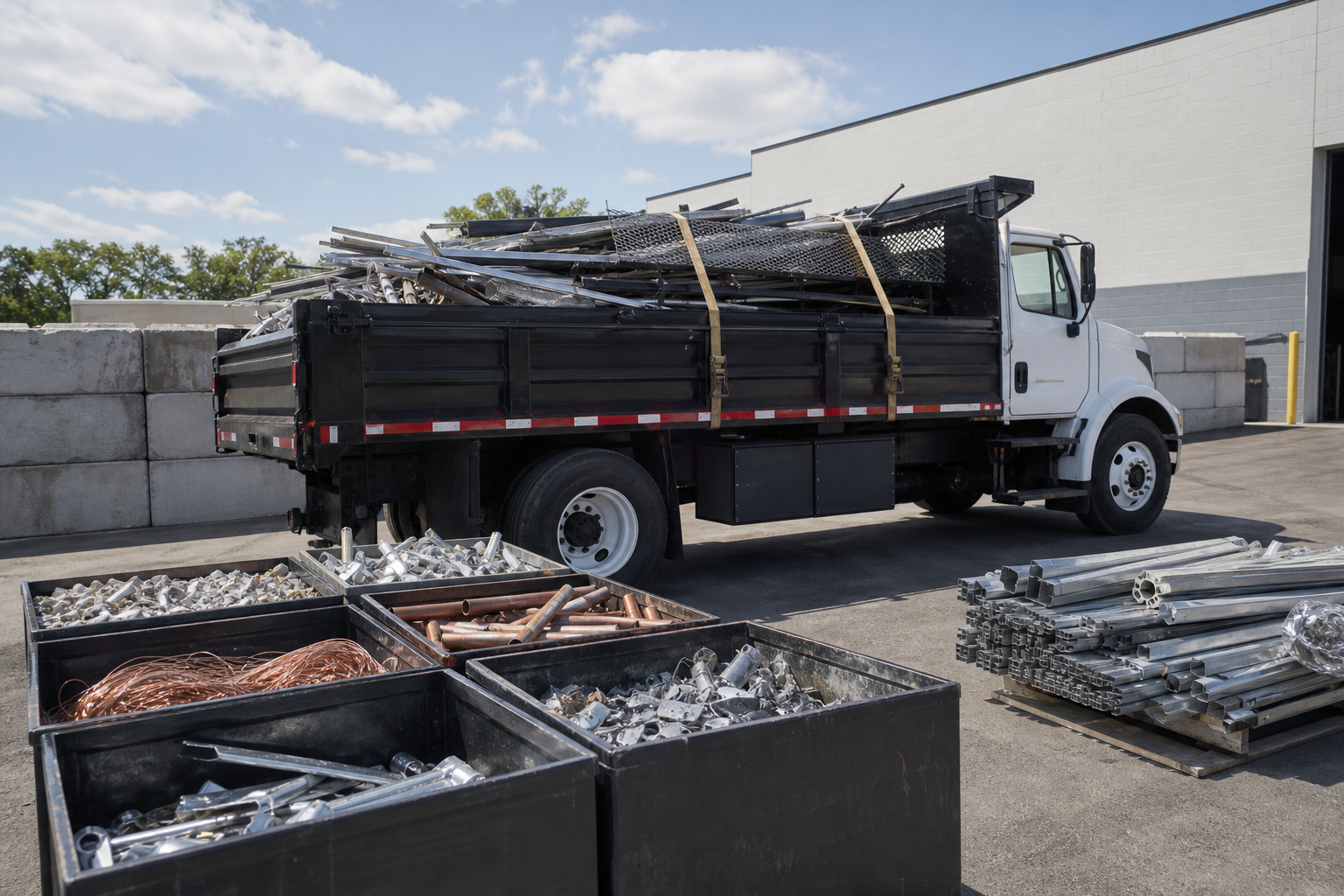
Scrap metal drop-off for businesses can be suitable when the load is safe to transport, reasonably organized, and accepted by the receiving facility. Before sending an employee or driver, describe the material and confirm that the specific commercial load, unusual items, and mixed categories can be handled.
This guide is for contractors, tradespeople, facilities teams, property managers, auto-related businesses, and small businesses preparing a commercial load. It explains when drop-off makes sense, what to bring, what happens at the yard, and what to confirm before dispatching a vehicle.
Which business loads are suitable for drop-off?
Drop-off is usually practical when your business can load the material safely, has a suitable vehicle, and can bring the scrap to the yard without disrupting operations. It works particularly well for a one-time cleanout, completed renovation, shop or warehouse clear-out, or manageable load of sorted offcuts.
Consider asking about collection instead when material is too heavy, oversized, spread across a difficult site, generated continuously, or unsafe for your team to load. Quick Scrap Metal lists scrap metal removal and scrap car services, but recurring commercial pickup, roll-off containers, bins, account pricing, and guaranteed collection terms are not confirmed.
| Situation | Likely starting point | What to confirm |
|---|---|---|
| One-time load that fits your truck or trailer | Yard drop-off | Material acceptance, hours, access, and current pricing |
| Regular offcuts from a contractor or shop | Compare scheduled drop-off with collection | Whether pickup, bins, or recurring arrangements are available |
| Large or awkward equipment | Call before loading | Handling requirements, equipment limits, and whether collection is possible |
| Mixed metal, appliances, and electronics | Drop-off may be suitable if separated | Unusual components, batteries, fluids, refrigerants, and oversized items |
Do not assume disposal is free simply because a material is recyclable. A qualifying load may be purchased for cash, while special handling, transport, or non-recyclable contents can have different terms. Free disposal, free pickup, and free collection are not guaranteed, so ask about the specific material and service before dispatch.
What business materials can you bring?
Commercial scrap loads commonly include ferrous metals, non-ferrous metals, wire, cable, equipment, appliances, electronics, e-waste, and automotive materials. The exact items a facility can receive, and whether they can travel together, depend on the material condition, preparation, and handling requirements.
| Material or equipment | Examples | Preparation or confirmation point |
|---|---|---|
| Ferrous metal | Steel, cast iron, rotors, auto cast, steel and tin | Separate from non-ferrous material where practical and remove loose non-metal pieces. |
| Non-ferrous metal | Copper, aluminum, brass, nickel, stainless steel, bronze, radiators | Keep distinct categories separate because grade and composition affect assessment. |
| Wire and cable | Copper cable, extension cords, insulated wire | Group similar wire together. Do not strip difficult or energized material. |
| Equipment and motors | Engines, motors, compressors, transformers, electrical heaters | Describe unusual equipment and any remaining fluids before travelling. |
| Appliances and HVAC items | Washers, dryers, ovens, stoves, microwaves, A/C units, range hoods | Empty and disconnect what you can safely handle. Confirm refrigerant or other special requirements first. |
| Electronics and e-waste | Computers, laptops, TVs, monitors, PCBs, keyboards, DVD players | Keep electronics dry, remove loose batteries where safe, and protect business data before recycling. |
| Batteries and lead | Lead-acid batteries and other battery materials | Keep intact batteries upright and separate. Confirm handling before moving anything leaking, swollen, hot, or damaged. |
| Automotive scrap | Scrap cars, transmissions, radiators, engines, auto cast | Confirm whether the item should be handled as loose scrap or through a vehicle service. |
Liquids, refrigerants, pressurized components, leaking batteries, contaminated equipment, and unusually large items need specific confirmation. Do not drain refrigerant, open a pressurized system, or dismantle hazardous equipment simply to make a load easier to transport.
How to prepare a mixed business load before transport

A prepared load is easier to describe, inspect, weigh, and price. Material type, weight, grade, preparation quality, contamination, and market conditions all affect scrap value, while clean and sorted loads can support a faster visit. See the guide to scrap metal prices for the pricing factors businesses should consider.
1. Separate the main material groups
Make separate sections for ferrous metal, copper, aluminum, brass, stainless steel, wire, appliances, electronics, and batteries. A magnet can help distinguish many steel items from non-ferrous materials, but it cannot identify every alloy or determine the final grade.
2. Remove loose attachments where practical
Take off obvious plastic, cardboard, wood, rubber, and loose fittings when doing so is safe and reasonable. Separate brass valves, copper pipe, aluminum profiles, insulated wire, and steel fasteners instead of placing the entire mixed assembly in one bin.
3. Label containers and record the load
Use clear labels such as “copper pipe,” “insulated wire,” “steel,” or “e-waste.” For a larger business load, photograph the sorted material and note approximate quantities, unusual items, and parts that remain attached.
4. Isolate batteries and sensitive items
Keep batteries separate from loose metal and protect electronics from rain, impact, and crushing. Remove business data from computers and storage devices before dispatch. Do not place damaged batteries, leaking equipment, or liquid-filled components in an ordinary scrap bin.
5. Load for stability and unloading
Place dense metal low, prevent loose pieces from shifting, and secure long or sharp items. Leave a way to identify each material group without climbing into an unstable load. If the vehicle or trailer cannot carry the weight safely, reduce the load or use another arrangement.
What happens when a business arrives at the yard?

A typical business drop-off begins with the driver identifying the load and explaining any unusual materials. The material is then directed for unloading or assessment, weighed, inspected, and categorized before the transaction is completed.
- Arrival and load description: Explain who owns the material, what categories are present, and whether anything needs special attention.
- Unloading: Follow the yard’s directions and keep employees clear of moving equipment, unstable loads, and other traffic. Do not unload until the site team indicates where and how to place the material.
- Scale-in and assessment: The material is weighed and inspected for type, grade, contamination, attachments, and condition. Mixed loads may need separation before categories are assessed.
- Ticketing: Weight and assessed categories are recorded. Ask for an explanation of any deduction or category you do not understand before accepting the transaction.
- Payment: Quick Scrap Metal describes payment on the spot for scrap transactions. Confirm the exact paperwork, payment method, and business requirements before dispatch.
Send the driver with the load description, photographs or inventory notes, and any authorization your business uses for selling company property. Confirm site instructions for vehicle movement, unloading, identification, and transaction records before the trip.
How business scrap pricing is assessed
A business payout is based on the material actually presented, not simply the total weight in the truck. The main factors are material type, grade, net weight, contamination, preparation, and current market conditions.
Estimated value = category rate × net weight
For a mixed load, apply that idea separately to each category, then account for material that is downgraded, contaminated, attached to non-metal parts, or not accepted. This is a planning framework, not a quote. The final assessment takes place when the yard examines and weighs the material.
How much scrap metal do you need to make $100?
There is no universal weight threshold because $100 of copper, aluminum, and steel requires different quantities, and rates change with grade and market conditions. To estimate a trip, weigh or approximate each sorted category, obtain current category rates, multiply each rate by its expected net weight, and subtract transport or handling costs.
A small amount of clean, high-value non-ferrous metal can be more worthwhile than a much heavier load of low-value mixed steel. Frequency matters too. A contractor with a scheduled trip near the yard may find a modest load practical, while a dedicated vehicle trip for a small mixed load may not be.
How much is scrap steel worth right now?
There is no single current steel rate for every business load. Steel value varies with category, weight, contamination, preparation, and market conditions, so the material and current rate must be assessed at the time of the transaction.
Businesses can improve the pricing conversation by separating light steel, heavier structural pieces, cast iron, auto parts, and non-ferrous attachments instead of describing everything as “steel.” Bring approximate weights or dimensions and ask how each category will be assessed.
For additional educational context on how preparation and market movement affect a scrap-yard assessment, this explanation of scrap metal pricing and offers clarifies why a headline market figure is not the same as a final yard payment.
Business documentation and dispatch details to confirm
The business does not publish a universal list of identification or authorization requirements. Before dispatch, ask what the driver should carry for the specific load and transaction.
- The legal or trading name of the business that owns the material.
- The employee, contractor, or driver’s name and authority to deliver or sell the load.
- A description of the material, including approximate weight, volume, and unusual equipment.
- Any internal asset, demolition, fleet, or customer authorization connected with the scrap.
- The vehicle type, trailer size, load height, and unloading limitations.
- Whether the load includes appliances, HVAC units, batteries, electronics, liquids, refrigerants, or pressurized components.
- Current acceptance, hours, payment method, and paperwork needed at the yard.
The yard is located at 407 Rexdale Blvd, Etobicoke, Ontario. Before sending a driver, use the business’s current contact channel to confirm hours, acceptance of unusual items, access instructions, pricing questions, and whether any collection or scheduling arrangement is available.
Pre-dispatch checklist for contractors and business drivers
- Sort: Separate ferrous, non-ferrous, wire, appliances, electronics, batteries, and automotive material.
- Describe: Record the main categories, approximate quantities, dimensions, and unusual components.
- Prepare: Remove loose non-metal attachments where practical, without opening hazardous or pressurized equipment.
- Protect: Keep e-waste dry, batteries separate, and leaking or damaged items out of the ordinary load.
- Secure: Tie down long pieces, contain loose small parts, and keep the vehicle within its safe payload.
- Authorize: Give the driver the business ownership or authorization details required by your company.
- Document: Take photos or keep an inventory note for mixed or high-value loads.
- Confirm: Ask about acceptance, hours, access, current pricing, payment, and pickup or scheduling questions before leaving.
Frequently asked questions
Can a business drop off scrap metal at Quick Scrap Metal?
Businesses should contact Quick Scrap Metal to confirm acceptance of their specific commercial load before travelling. Provide the material categories, approximate quantity, vehicle details, and any unusual items, then confirm the drop-off requirements.
How much scrap metal does a business need before a drop-off is worthwhile?
There is no published minimum load size. Judge the trip by expected value, transport cost, employee time, vehicle capacity, and whether the vehicle is already travelling near the yard.
Can businesses bring mixed loads of metal, appliances, and electronics together?
These categories are listed, but confirm whether they can be delivered together in one load. Separate them as much as practical, and identify batteries, fluids, refrigerants, damaged equipment, and other items needing special handling.
Do businesses need identification or authorization to sell scrap metal?
Bring the ownership or authorization information your company uses, but confirm the yard’s exact requirements before dispatch because no universal document list is published here.
Can Quick Scrap Metal arrange pickup or recurring collection for a business?
Quick Scrap Metal lists scrap removal and scrap car services, but recurring business pickup, bins, roll-off containers, and account pricing are not confirmed for this article. Ask about your load, site, frequency, and access requirements.
How much is scrap steel worth for a business load today?
There is no single rate for every steel load. The current assessment depends on steel category, grade, net weight, contamination, preparation, and market conditions at drop-off.
Once your material is sorted and your driver has the necessary details, confirm the load before travelling. Review Quick Scrap Metal’s scrap metal buying and recycling services for the relevant service information, then confirm current acceptance, hours, access, pricing, and any collection or scheduling details.