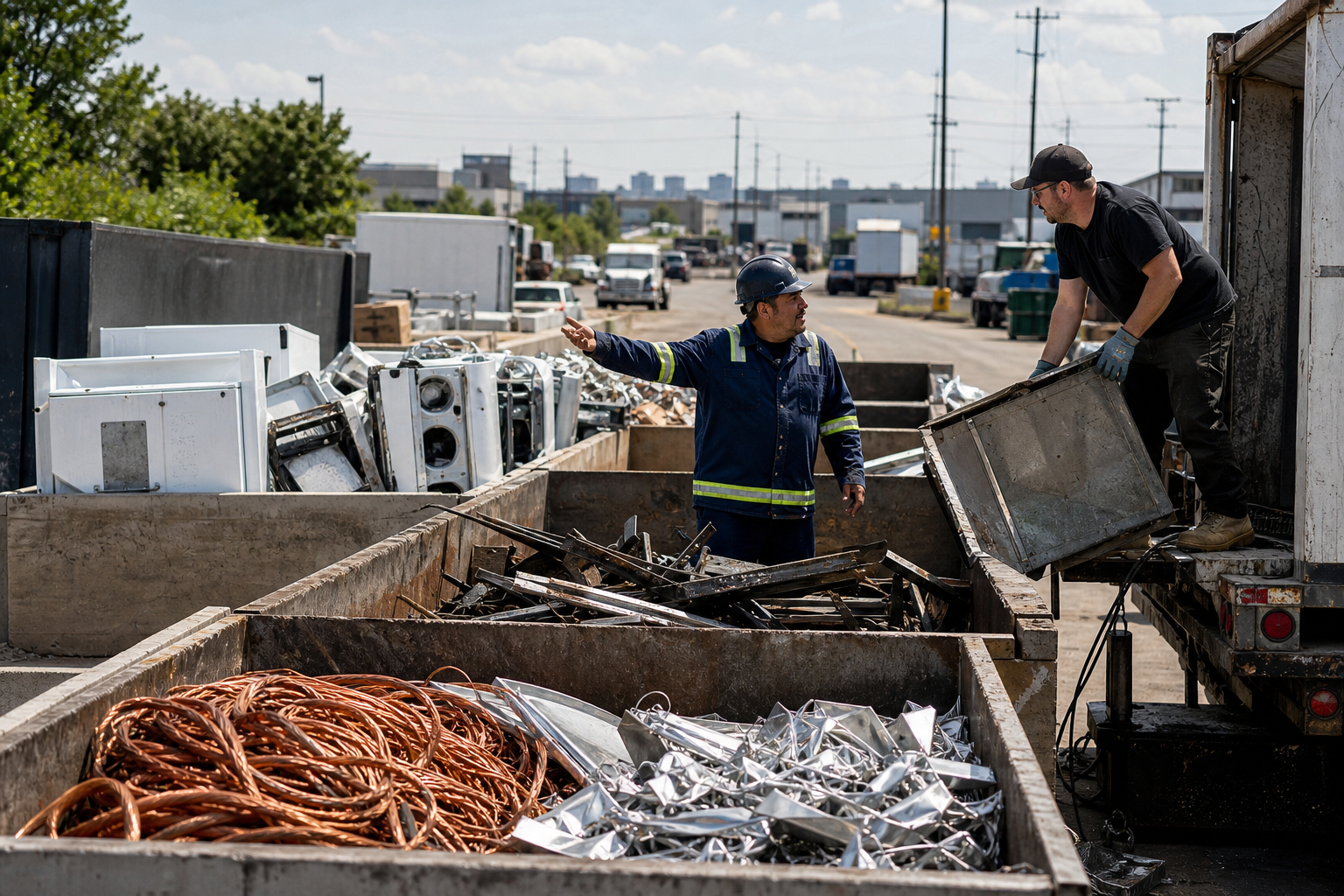
When suitable metal, appliances, electronics, or vehicle components are sent for scrap recycling instead of general disposal, recoverable materials can remain in circulation and reliance on virgin resources and waste disposal can be reduced. The environmental benefit is not identical for every item. It depends on the material, how well it is sorted, whether it needs special handling, and what happens after drop-off. The EPA explains the basic environmental benefits of recycling, but specific energy, water, emissions, or landfill savings should not be assumed without material-specific evidence.
What environmental benefit means in this comparison
Scrap recycling is a form of resource recovery. Instead of treating a metal object or component as worthless waste, a recycling process can direct its material back toward manufacturing or other productive uses. That can reduce reliance on newly extracted resources and keep suitable materials out of general disposal streams.
There is an important distinction between a general environmental principle and a guaranteed result. Recycling does not mean that every item is fully recovered, processed locally, or converted into a new product. Collection, sorting, contamination, transportation, processing technology, and downstream markets all influence the outcome. The EPA’s national materials and waste data provide useful context, but they should not be used to assign one universal environmental saving to every load of scrap. The International Energy Agency’s discussion of sustainable industrial recovery likewise shows why resource and industrial impacts need to be considered in context.
For that reason, the most accurate comparison is directional: suitable, correctly handled scrap generally offers a better opportunity for material recovery than placing it in a general waste stream, while reuse, repair, donation, manufacturer take-back, or a specialized disposal program may be preferable for some items.
Recycling compared with general disposal

The table below shows how the decision commonly differs by material. “Potential benefit” does not promise a particular recovery rate or downstream result. It highlights what responsible preparation makes possible.
| Material | Potential environmental benefit of recycling | Preparation or question to consider |
|---|---|---|
| Steel, cast iron, and automotive scrap | Recoverable metal can be directed toward further processing instead of general disposal. | Separate loose metal where practical and ask about fluids, batteries, and other vehicle components. |
| Copper, aluminum, brass, nickel, and stainless steel | Separating valuable non-ferrous material can support cleaner recovery and reduce contamination. | Keep wire, cable, radiators, faucets, siding, plate, and extrusion identifiable where possible. |
| Appliances and equipment | Metal shells and components may be recovered rather than discarded with bulky waste. | Ask about refrigerants, fluids, motors, compressors, and whether the item needs special preparation. |
| Computers, televisions, monitors, and circuit boards | Electronic materials can enter an e-waste pathway rather than a general disposal stream. | Keep devices together, remove personal data, and ask how electronics and printed circuit boards are handled. |
| Batteries and unusual components | Specialized handling can reduce the risk of placing unsuitable materials in ordinary waste. | Identify batteries, lead-containing items, transformers, or other questionable materials before arrival. |
| Scrap vehicles | Metal and selected components may be recovered through a dedicated automotive scrap route. | Confirm pickup or drop-off requirements and ask about fluids, batteries, and ownership documentation. |
Quick Scrap Metal’s service listing shows the materials and equipment it accepts, including metals, appliances, electronics, batteries, motors, compressors, and automotive scrap. Acceptance can depend on the item’s condition and handling requirements, so call ahead about anything unusual.
Ferrous metals: steel, cast iron, and automotive scrap
Ferrous metals contain iron and include common materials such as steel and cast iron. They can appear in construction offcuts, demolition scrap, rotors, engines, transmissions, auto cast, tools, appliances, and other equipment. Sending these materials to a scrap yard creates an opportunity for metal recovery rather than treating them as ordinary household or construction waste.
Automotive scrap needs more care than a pile of clean, loose steel. A vehicle may contain batteries, fluids, tires, electronics, and other components that do not belong in the same material stream. Before arranging a pickup or drop-off, review this scrap car removal checklist for Etobicoke and ask the yard what information or preparation it requires.
Copper, aluminum, brass, nickel, and stainless steel
Non-ferrous metals such as copper, aluminum, brass, nickel, and stainless steel are found in cables, wire, radiators, faucets, siding, plate, extrusion, appliances, and industrial components. Separating these materials from mixed waste can make identification and sorting easier and can help prevent recoverable material from being contaminated by unsuitable items.
Preparation does not mean dismantling every item. It means keeping materials identifiable and avoiding unnecessary mixing. Cables and wire may be easier to assess when kept together, while clean aluminum, copper, brass, and stainless steel should not automatically be treated as one category. For more focused context, see this comparison of copper wire recycling options in Toronto.
Environmental benefit should not be confused with a guaranteed price or a fixed reduction in energy or emissions. Those outcomes depend on the quality of the material and its downstream processing.
Appliances and equipment: recovery beyond the metal shell
Appliances are not simply large pieces of steel. Washers, dryers, ovens, stoves, microwaves, dishwashers, BBQs, lawn mowers, snow blowers, air-conditioning units, motors, and compressors may contain several materials and components with different handling needs.
Recycling an appliance can create a route for recovering its metal, but the item may also contain fluids, refrigerants, electrical parts, insulation, or other components that require instructions from the receiving facility. Do not puncture, drain, or dismantle an appliance unless the yard specifically tells you to do so. Ask whether the item can be dropped off as-is, whether pickup is available, and whether any components must be removed by a qualified provider.
Quick Scrap Metal lists appliance recycling and household scrap removal among its services. Its appliance pickup checklist can help you organize details before contacting a local yard.
Electronics and e-waste: why responsible handling matters
Computers, laptops, televisions, monitors, keyboards, peripherals, Blu-ray and DVD players, and printed circuit boards contain recoverable materials but should not automatically be treated like loose scrap steel. Electronics may also contain components that require specialized handling, and devices can hold personal information.
Before drop-off, back up anything you need and remove personal data using a method appropriate for the device. Keep electronics together rather than breaking them apart without guidance. Ask the recycling yard whether it accepts the specific device, how it handles printed circuit boards, and whether it sends materials to a downstream processor. Do not assume that every part of every device is recycled or that processing occurs locally.
Quick Scrap Metal lists computers, laptops, televisions, monitors, peripherals, and printed circuit boards among its e-waste offerings. You can also read its explanation of recycling PCBs in Toronto.
Batteries and special items: when recycling needs extra checks
Batteries, lead-containing items, transformers, and unusual electrical components deserve separate attention. Their environmental value depends heavily on safe collection and an appropriate processing route. Ask in advance about lead-acid batteries, transformers, electrical equipment, and any item that may contain fluids or other regulated components. This article does not replace local regulatory or hazardous-waste guidance; a specialized program may be required for some materials.
Quick Scrap Metal lists batteries, lead, and transformers among its accepted materials. Its lead-acid battery recycling checklist is a useful starting point, but confirm current instructions before bringing a battery or special item to the yard.
How to prepare scrap for a more responsible drop-off
- Consider reuse first. Repair, donation, resale, or manufacturer take-back may keep an item in use longer than scrap recycling.
- Identify the material. Note whether the load contains steel, cast iron, copper, aluminum, brass, stainless steel, electronics, appliances, batteries, or vehicle parts.
- Separate materials where practical. Keep clearly different metals, cables, electronics, and batteries from becoming one mixed load.
- Do not dismantle questionable items without instructions. Appliances, air-conditioning units, compressors, vehicles, and electrical equipment may contain fluids or components requiring specific handling.
- Protect personal information. Remove data from computers, storage devices, and other electronics.
- Ask about unusual or bulky materials. Confirm acceptance, pickup availability, and transport instructions.
Good preparation supports safer sorting and clearer communication, but it does not guarantee a specific payout or environmental outcome.
How to compare recycling yards responsibly
A responsible choice involves more than finding the closest scrap yard or the most attractive marketing phrase. Ask whether the yard clearly lists accepted materials, explains preparation requirements, provides understandable weighing and pricing practices, and publishes drop-off or pickup logistics. Clear answers about limitations are more useful than claiming to accept everything under every condition.
For more help, read how to choose the right Etobicoke scrap yard, review these questions about cash for scrap metal, and compare scrap metal prices in Etobicoke and the GTA. Price transparency and environmental responsibility are related decisions, but one does not prove the other.
Applying the comparison in Etobicoke and the GTA
Quick Scrap Metal provides a local drop-off option at 407 Rexdale Blvd, Etobicoke, Ontario M9W 6P8, near Highway 27 and Rexdale. The business lists ferrous and non-ferrous metals, appliances, electronics, e-waste, batteries, motors, compressors, and automotive scrap among its services.
Quick Scrap Metal also lists household scrap removal and scrap-car drop-off or pickup options. The yard publishes hours of 8:00 a.m. to 7:00 p.m. Monday through Friday, 8:00 a.m. to 5:00 p.m. Saturday, and 9:00 a.m. to 5:00 p.m. Sunday. Hours and acceptance requirements can change, so verify them before setting out.
Frequently asked questions
Is scrap recycling always better than throwing an item away?
No. Suitable scrap recycling can support material recovery, but reuse, repair, donation, manufacturer take-back, or a specialized program may be better for some items.
Should I reuse or donate an item before recycling it as scrap?
Usually, consider whether the item can remain useful before treating it as scrap. If it is broken, unsafe, obsolete, or not reasonably reusable, scrap recycling may be appropriate when a suitable yard accepts it.
Do appliances and electronics require different preparation from loose metal?
Often, yes. They may contain fluids, electrical components, batteries, or data-storage devices. Keep them identifiable, avoid dismantling them without instructions, remove personal data, and confirm acceptance before drop-off.
How can I tell whether a scrap yard handles unusual materials responsibly?
Ask whether it accepts the specific item, what preparation it requires, how it separates the material, and whether it uses a downstream processor when necessary. Do not rely solely on broad claims such as “eco-friendly.”
Choose the recovery route that fits the material
The environmental benefits of scrap recycling are strongest when the material is suitable, identifiable, safely handled, and directed to an appropriate recovery pathway. Recycling should not automatically replace reuse, repair, donation, take-back, or regulated disposal where those options are more appropriate.
If you have scrap in Etobicoke or the GTA, review the material list, prepare the load carefully, and confirm requirements for unusual or bulky items before travelling. To ask about accepted materials, drop-off or pickup options, and current hours, contact Quick Scrap Metal or visit 407 Rexdale Blvd in Etobicoke.