
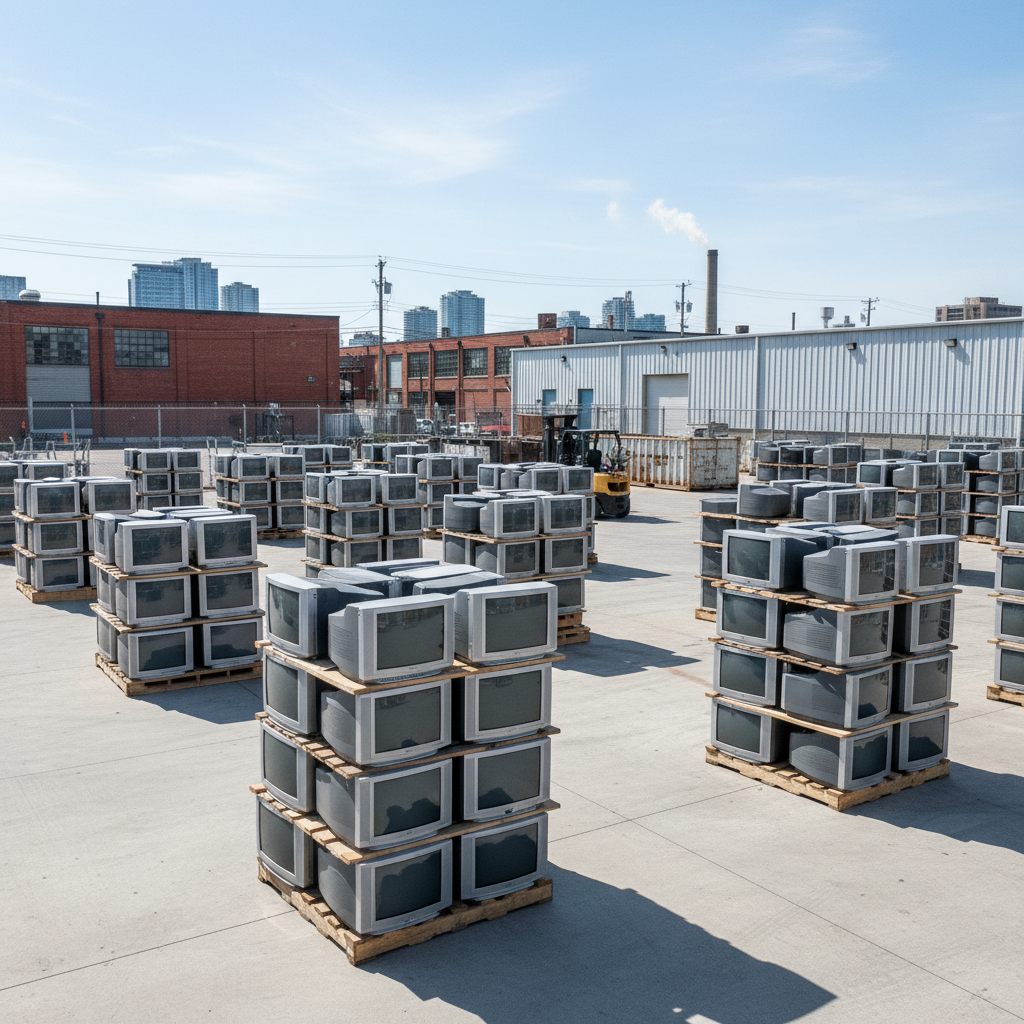
A tv recycling center is a certified facility that accepts old televisions, safely removes hazardous components, and recycles usable metals, glass, and plastics. Proper TV disposal keeps toxins out of landfills and returns valuable materials to manufacturing. At 407 Rexdale Blvd in Etobicoke, Quick Scrap Metal offers convenient TV drop-off alongside broader e-waste and metal recycling.
By Preet Dass · Last updated: May 5, 2026
Quick Summary
Drop your old TV at a local, certified tv recycling center to prevent environmental harm and recover valuable metals and glass. At our Etobicoke yard, you can bundle TVs with other electronics for one fast visit. This guide explains what to bring, how it works, and local tips for a smooth drop-off.
Here’s what you’ll learn and use today:
- What a TV recycling center does and which TVs are accepted
- Why TV recycling matters for the environment and your home
- How TV recycling works from intake to downstream processing
- Best practices to prep, transport, and unload safely
- Etobicoke and Toronto tips for faster weekend and winter visits
Table of contents
- What is a TV recycling center?
- Why TV recycling matters
- How TV recycling works
- Types, methods, and a quick comparison
- Best practices for Etobicoke drop-offs
- Tools and resources
- Case studies and local examples
- TV recycling FAQ
- Key takeaways
- Conclusion and next steps
What is a TV recycling center?
A TV recycling center is a facility that accepts televisions, removes hazardous parts like leaded glass and mercury-containing lamps, then separates and ships metals, glass, and plastics to certified processors. The goal is safe handling, maximum material recovery, and zero illegal dumping.
At Quick Scrap Metal’s Etobicoke yard, TVs arrive daily alongside laptops, small appliances, and bundles of cables. Our team inspects each unit, routes it to the correct stream, and consolidates metals like copper, aluminum, and steel with other recyclable loads. Flat-screens, CRTs, and monitors each follow a tailored path to ensure safe, lawful handling.
Many visitors pair TVs with other electronics to clear space quickly. If you’re organizing a basement or preparing for a move, bring extra items—old keyboards, DVD players, or cables—to finish in one stop. When you’re unsure about an item, remember our yard’s simple mantra: if it’s metal, we buy it, and we responsibly recycle a wide range of e-waste as well.
Why TV recycling matters
Recycling TVs protects soil and water from hazardous components and returns valuable metals to manufacturing. Proper de-manufacturing captures copper, aluminum, and steel, routes leaded glass safely, and diverts plastics from landfills. It’s a straightforward action with outsized environmental impact.
Televisions are complex products made from multiple recoverable materials. Circuit boards contain copper traces and tiny amounts of precious metals. Frames and speakers contain steel and magnets. Power supplies and connectors add more reusable copper and aluminum. With responsible disassembly, these materials circulate back into the economy rather than sitting in storage rooms or, worse, ending up in the wrong waste stream.
Older CRT (tube) televisions include leaded glass in their picture tubes. That glass must be handled and routed with care. Flat-screens, especially early LCDs with CCFL (cold-cathode fluorescent) backlights, require trained handling to manage lamps that may contain mercury. When you use a qualified tv recycling center, you ensure those hazards are managed correctly while reclaiming as much metal and glass as possible.
There’s a home benefit too: less clutter. Many households keep a nonworking TV “just in case” or because it’s heavy and awkward to move. A quick yard visit solves that. In our experience, most drop-offs take only a few minutes once you arrive prepared, and pairing your TV with other e-waste or scrap metal turns a chore into a clean slate.
How TV recycling works
The process is simple: you drop off the TV; staff log the item, remove hazardous parts, separate metals, glass, and plastics, then ship sorted materials to certified downstream processors. Each stage balances safety, recovery, and speed so you’re in and out quickly.
Here’s how a typical visit flows at our 407 Rexdale Blvd yard in Etobicoke:
- Arrive and check in. Staff confirm your item type (CRT, LCD/LED, or plasma/OLED) and guide you to the drop-off lane.
- Quick smart-TV prep. Sign out of streaming apps and remove any storage devices. If you can perform a factory reset at home, do it before arrival.
- De-manufacturing. Trained technicians remove back covers, circuit boards, speakers, and cabling. Older CCFL backlights and CRT glass are handled with specific safety procedures.
- Material separation. Metals (copper, aluminum, steel), plastics, and glass move to labeled bins to maintain quality for downstream processors.
- Downstream consolidation. Sorted materials ship in bulk for responsible processing and reuse.
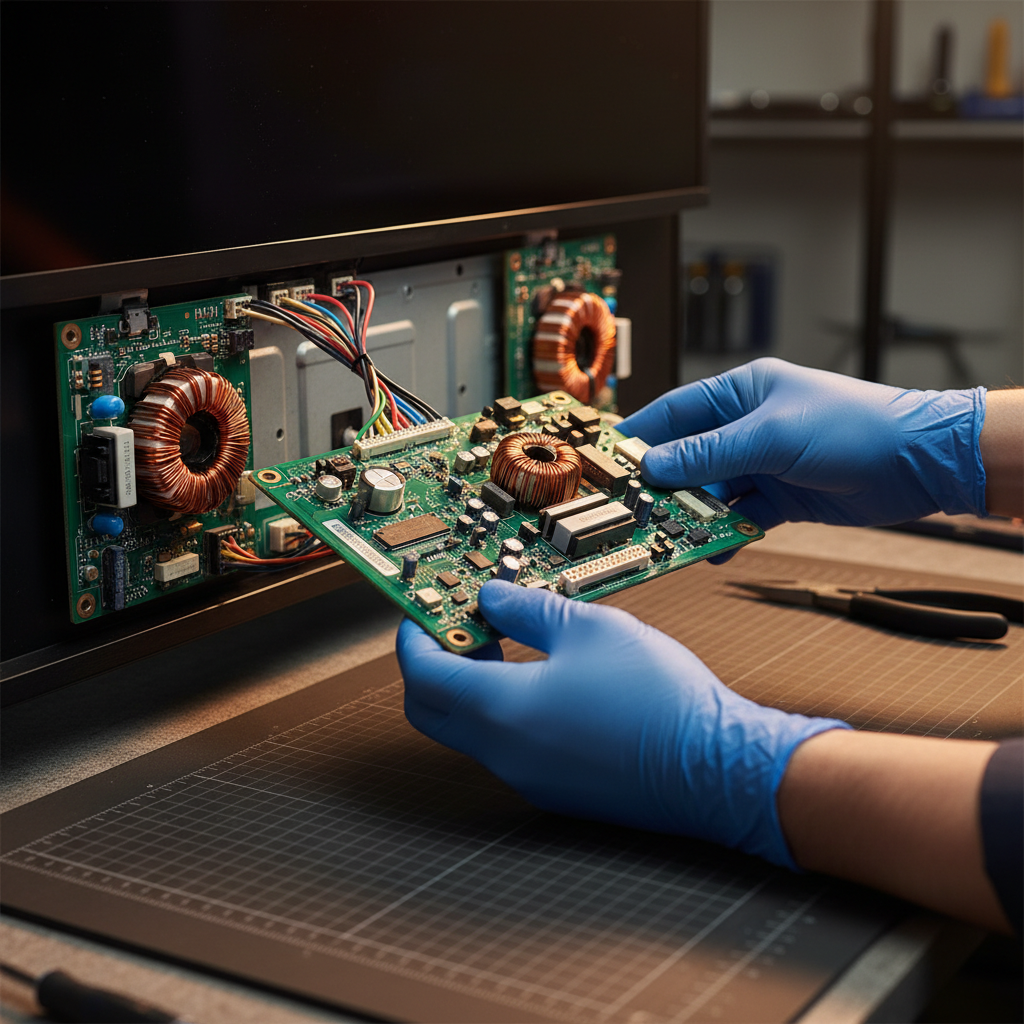
What to bring for a faster visit
- TV upright and protected: Use a blanket or foam; avoid stacking.
- Stands and mounts removed: Put screws in a small bag and tape it to the TV.
- Cables together: Gather power cords, HDMI, and AV cables with a twist tie.
- Bundle e-waste: Add laptops, keyboards, and small appliances to clear space in one trip.
- Bring metals too: If you have radiators, copper offcuts, or steel, you can recycle those on the same visit.
Simple process table
| Stage | What happens | Your role | Outcome |
|---|---|---|---|
| Intake | Identify TV type and condition; direct you to drop zone | Unload safely; follow staff guidance | Correct handling route is assigned |
| Preparation | Back cover, mounts, and cables removed | Sign out of accounts; detach mounts at home | Faster de-manufacturing |
| De-manufacturing | Boards, speakers, lamps, and glass handled safely | None—our team manages it | Hazards isolated and secured |
| Sorting | Metals, glass, and plastics separated | None | High-quality recyclable streams |
| Downstream | Bulk materials shipped to processors | None | Responsible recycling and reuse |
Planning to bring more than a TV? Our electronics recycling overview explains accepted items and prep tips across devices. See our electronics recycling centers guide to map out a single, efficient drop-off day.
Types, methods, and a quick comparison
Different TVs require different handling. CRTs involve leaded glass; LCD/LED sets may include lamps with mercury; plasma and OLED panels focus on recovering boards, wiring, and metals. A good tv recycling center adapts its process to maximize recovery and safety for each model.
While the goal—safe recovery—stays the same, the steps shift by technology. Below is a fast comparison you can reference before you load your vehicle. If you’re not sure what you have, describe it at intake; our team will route it correctly.
| TV Type | Key handling notes | Primary recoverables | Special considerations |
|---|---|---|---|
| CRT (tube) | Manage and route leaded glass; robust metal frames | Steel, copper windings, leaded glass | Do not break tubes; keep upright |
| LCD with CCFL | Careful handling of fluorescent backlights | Aluminum frames, copper, boards, glass | Backlights may contain mercury |
| LED-backlit LCD | Standard de-manufacturing; no CCFLs | Aluminum, steel, copper, boards | Check for large edge-light bars |
| Plasma | Heavier panels; sturdy transport | Steel, copper, boards | Two-person carry recommended |
| OLED | Fragile, thin panels | Boards, wiring, small metals | Extra padding during transport |
CRT televisions
- Keep upright and avoid pressure on the tube.
- Expect heavier weight; use a dolly if available.
- Recyclers route glass and metals to appropriate processors.
LCD/LED flat-screens
- Remove stands and wall mounts to speed up intake.
- Bundle cables and remote controls in a small bag.
- If the set used CCFL backlights, trained staff will manage lamp handling.
Wondering what else to include in your run? If you’re cleaning up wiring, bring it along—our team can route copper wire and offcuts to the right stream at the same time. If you have old HVAC parts, our notes on radiator recycling and current metal prices will help you plan a complete garage clear-out.
Best practices for Etobicoke drop-offs
Prepare your TV at home, secure it upright for transport, and follow staff directions on-site. Bundle other electronics and scrap metal to finish in one trip. Arrive early on busy weekends and take extra care during winter conditions for a quick, safe unload.
Prep and timing make all the difference. A few minutes of home preparation yields a faster, easier visit—and clears far more clutter in a single run. These pointers reflect what we see work best for households and small businesses in the Toronto area.
Drop-off checklist
- Unplug and coil cables; place accessories in a labeled bag.
- Remove stands and wall mounts; tape the hardware bag to the back.
- Protect screens with a soft blanket or foam; keep the TV upright.
- Sign out of streaming apps; perform a factory reset if possible.
- Load other e-waste and scrap (keyboards, microwaves, aluminum offcuts) for one efficient trip.
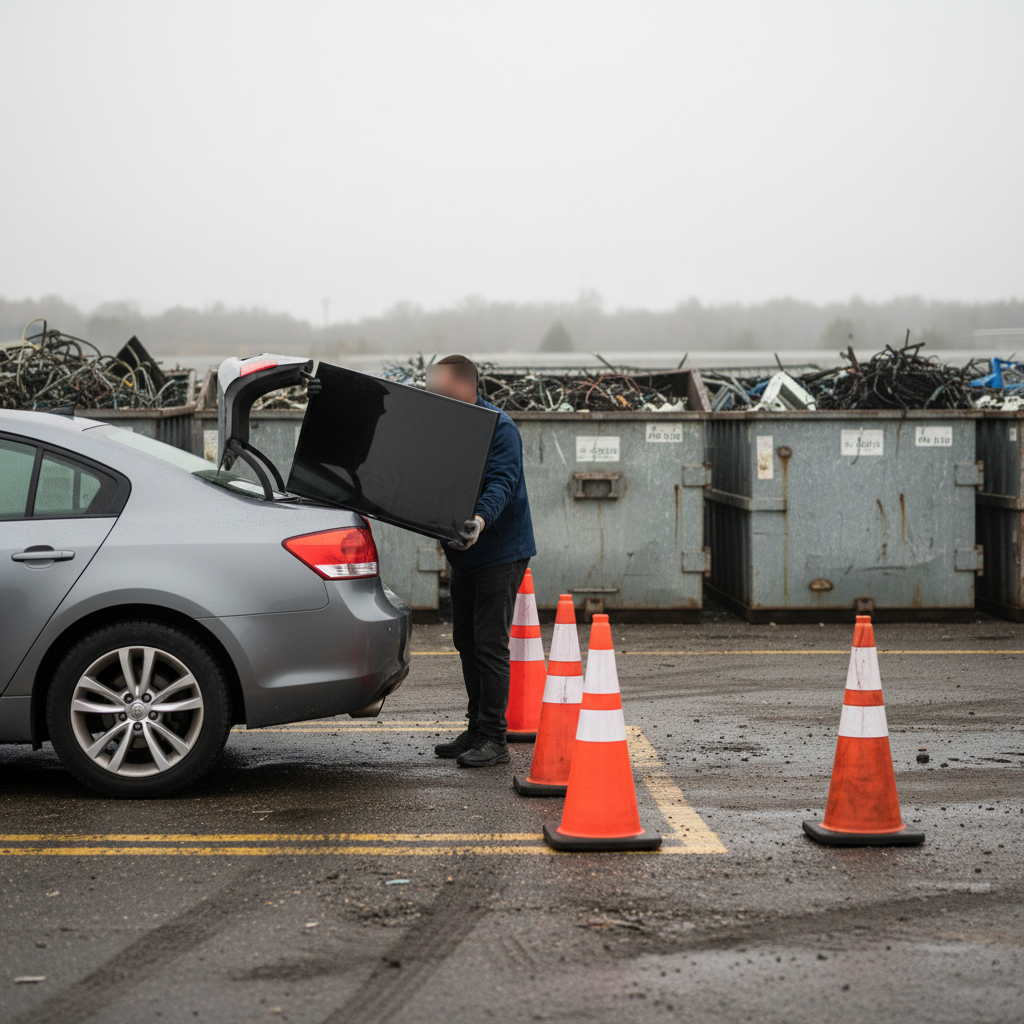
Local considerations for Etobicoke
- Weekend timing: traffic near Woodbine Mall & Fantasy Fair can pick up; early arrivals usually breeze through.
- Seasonal safety: in winter, clear ice and snow from the vehicle before unloading to maintain footing and visibility.
- Bundle runs: if you’re tidying a garage near Flagstaff Park, bring cables, small appliances, and metals with your TV to finish in one stop.
Working on a bigger decluttering day? Skim our iron scrap selling guide to understand how ferrous items move through the yard, then pair that with our computer recycling tips for a complete e-waste strategy.
Tools and resources
Plan your TV drop-off by checking accepted items, hours, and preparation tips on trusted local pages. Pair that with sustainability directories if you’re coordinating a larger home refresh. The right plan turns a single trip into a major space win.
Start with our own electronics overview for accepted devices and practical prep: see the electronics recycling centers guide to confirm what you can bring with your TV.
If your project goes beyond electronics, local resources can help you plan a whole-home tidy-up alongside your TV drop-off. For inspiration and nearby services, explore a greener junk removal listing, an eco-friendly disposal guide for household materials, and an example of sustainable home upgrades to round out your plan.
Tracking what metals you’re bringing? Our notes on metal prices per pound give you a sense of common categories, and our yard team will help you sort materials on arrival.
Soft CTA: Clearing a home office, garage, or small shop? Bring TVs, computers, cables, appliances, and scrap metal to Quick Scrap Metal at 407 Rexdale Blvd. One stop, clear space—fast and responsibly.
Case studies and local examples
Homeowners and small businesses across Etobicoke and Toronto use one organized drop-off to clear TVs, electronics, and metals. The result is a faster visit, responsible processing, and immediate space reclaimed at home or work.
Household refresh, Etobicoke: A family replacing a living room flat-screen brought the old TV, two monitors, and a box of HDMI and power cables. They added a broken microwave and a small bin of aluminum offcuts from a DIY project. Intake took minutes; the electronics moved to our e-waste stream, and the metals joined nonferrous sorting.
Small office upgrade, Toronto: A team migrating to larger displays delivered four retired TVs and mixed steel shelving. They prepped each unit (stands removed, cables bundled) and arrived early on a Saturday. The entire unload finished quickly, with TVs routed to e-waste handling and metals to ferrous sorting.
Garage tidy-up before winter: An Etobicoke homeowner combined a CRT set with a space heater, old tools, and a bucket of extension cords. Our staff helped keep the CRT upright while unloading, then directed the heater and cords into appropriate streams. One trip cleared a decade of clutter.
These examples share a simple pattern: plan the load, secure items for transport, and bundle categories. When you do, you shorten your visit and maximize recovery. If you’re unsure whether an item is accepted, ask the intake team on arrival or check our electronics recycling overview first.
TV recycling: Frequently asked questions
Most curbside services don’t accept TVs. Use a tv recycling center for safe handling, then bundle other e-waste for one fast visit. Sign out of smart TV accounts and keep sets upright during transport.
Can I put my old TV at the curb?
Curbside trash typically doesn’t accept TVs because they contain components that require special handling. Bring your television to a certified TV recycling center or a local electronics drop-off yard for safe, responsible processing.
Do smart TVs store personal data?
Smart TVs may hold account sign-ins and app settings. Before recycling, sign out of streaming apps and perform a factory reset if possible. This protects your privacy and speeds up intake.
How should I transport a large flat-screen?
Keep the TV upright and cushioned with a blanket or foam, avoid stacking, and remove stands or wall mounts ahead of time. Two people are recommended for heavy plasma or large OLED panels to prevent damage.
What about old tube (CRT) TVs?
CRTs include leaded glass and must be handled carefully. Do not break the tube. Bring it to a facility that routes glass to qualified downstream processors and recovers metals from frames and coils.
Key takeaways
Use a local tv recycling center to recycle TVs safely and quickly. Prepare the set, bundle other electronics and metals, and arrive early on busy days. Responsible processing protects the environment and clears clutter at home or work.
- TVs contain recoverable metals and components that need careful handling.
- CRTs and early LCDs require special procedures for glass and backlights.
- Bundling electronics and scrap metal finishes more in one visit.
- Home prep (removing stands, signing out of apps) shortens intake time.
- Etobicoke drop-offs are straightforward from our Rexdale Blvd location.
Conclusion and next steps
Recycling your TV is fast, responsible, and convenient in Etobicoke. Prep the unit, bundle related e-waste, and head to 407 Rexdale Blvd. Our team will route materials safely and help you reclaim space the same day.
Ready to clear space? Plan your load using our electronics recycling overview, add computers using the computer recycling guide, and check metal categories if you’re including scrap metal. We’re open late on weekdays and open Sundays to fit your schedule.