
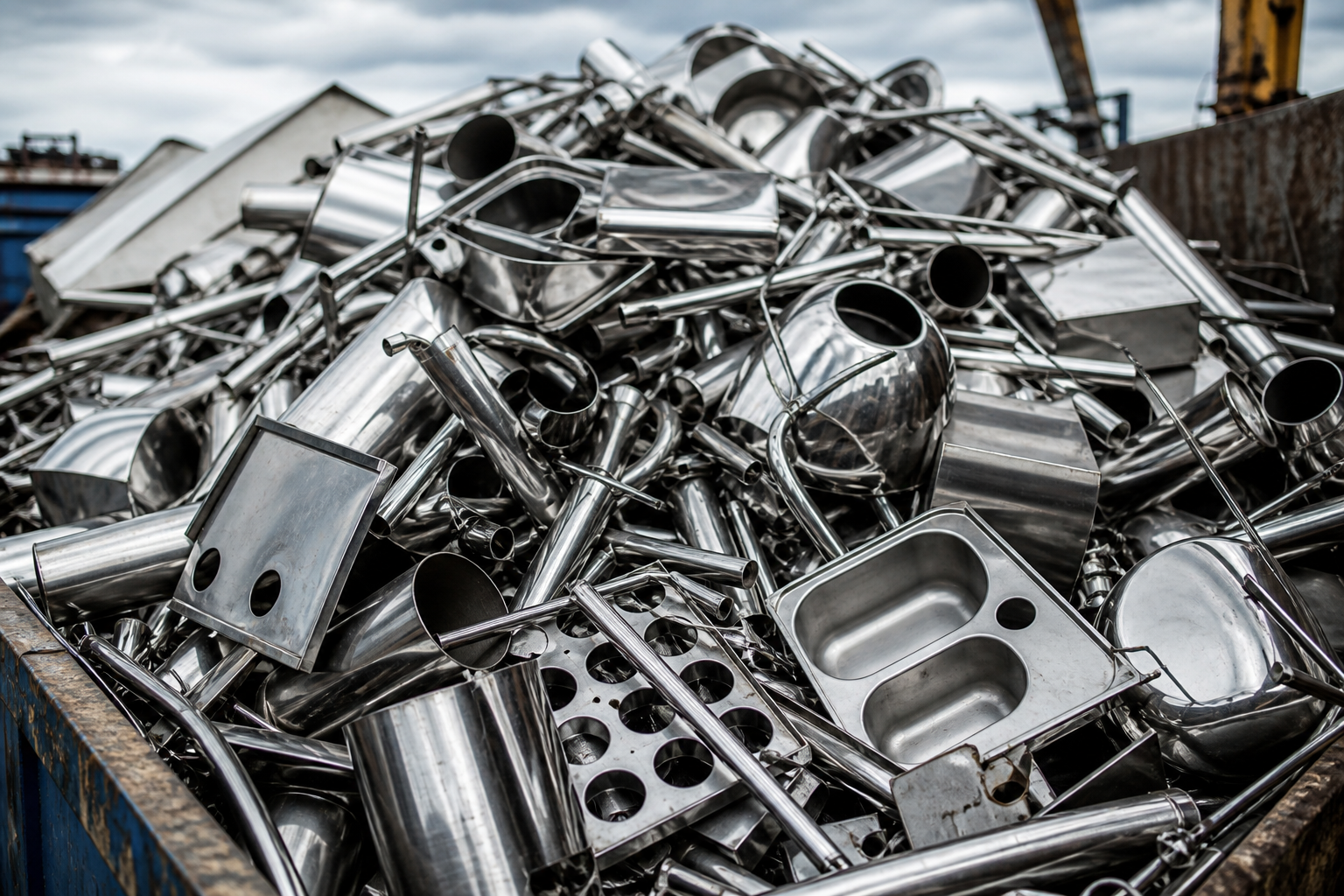
If you have sinks, restaurant equipment, tubing, or fabrication offcuts to recycle, you’re probably wondering how yards decide what to pay. While every buyer sets their own scale, the same core levers tend to drive scrap stainless steel prices everywhere: metal content by grade, cleanliness, size and accessibility, and broader market dynamics. This guide explains how to recognize common stainless grades, prepare material to avoid downgrades, and sell with confidence—without quoting numbers that change day to day.
What drives stainless scrap value
Stainless is an alloyed steel designed to resist corrosion. Its scrap value is primarily tied to the non-iron alloying elements it contains and the cost to process it. The following factors consistently influence offers on the scale:
- Grade chemistry: Different families (austenitic, ferritic, martensitic) and specific grades (for example, 304 vs 316) contain different amounts of elements like nickel, chromium, and molybdenum. Grades with more valuable alloying content are typically priced higher than leaner grades.
- Separation and purity: Loads free of attachments, coatings, carbon steel, and non-metallics are easier to process and usually command stronger pricing than mixed or contaminated loads.
- Form and size: Neatly cut, dense pieces pack and ship efficiently. Very thin sheet, tangled wire, or oversized items that require torching or shearing can reduce value due to extra handling.
- Weight and consistency: Larger, uniform lots make grading quicker and reduce uncertainty. Small, mixed buckets are slower to sort and more likely to be downgraded to a “mixed stainless” category.
- Market conditions: Stainless pricing reflects demand for melt feed at mills and alloy surcharges in the primary metals market. As input values change, scrap scales are adjusted.
- Logistics and distance: Freight, handling, and disposal costs (for attached residues or non-metal parts) factor into a yard’s net offer.
Because these inputs are variable, the most reliable way to gauge today’s value is to identify your grade accurately and present it as clean, separated material.
Identifying common stainless grades
Knowing what you have is the single best predictor of how your load will be priced. Here’s a practical overview of grades that frequently appear in scrap streams and the clues that help distinguish them:
- 304 (18/8 austenitic): Common in kitchen equipment, sinks, food-grade tanks, handrails, and architectural trim. Non-magnetic in bulk form, though heavy cold work can induce a weak magnetic response on edges. Typically bright silvery with a smooth finish.
- 316 (molybdenum-bearing austenitic): Found in marine fittings, chemical processing equipment, sanitary piping, and high-corrosion applications. Often similar in appearance to 304 but specified where pitting resistance is needed. Non-magnetic in most conditions.
- 201/202 (manganese-substituted austenitic): Used in some consumer goods and lower-cost stainless items. Can be less corrosion-resistant than 304. May show a slight magnetic pull, and surface staining may appear sooner in harsh environments.
- 409/430 (ferritic): Used in automotive exhaust components and appliance panels. Typically show a magnetic attraction. Surface may be duller; 409 can develop surface rust in service despite being “stainless.”
- 17-4 PH and other precipitation-hardened grades: Appear in aerospace, medical, and high-strength components. Often magnetic and denser; typically require precise identification.
Simple field checks:
- Magnet test: A strong magnet that does not stick (or barely sticks) suggests an austenitic grade like 304/316. A firm attraction suggests ferritic or martensitic stainless, or even plain carbon steel—so always confirm beyond the magnet alone.
- Spark/appearance check: Compared with carbon steel, stainless usually throws fewer, redder sparks under grinding, and the base metal remains bright where cleanly scratched.
- Markings and mill stamps: Offcuts, flanges, and fittings often carry grade marks (e.g., “304,” “316L”). Keep any documentation or tags; they support accurate grading.
When in doubt, keep grades separate instead of mixing. If testing equipment or documentation isn’t available, present questionable pieces in a clearly labeled “unknown stainless” pile so the buyer can test and sort without risking a downgrade of your whole load.
Sorting and preparation to avoid downgrades
Clean, well-organized stainless almost always performs better at the scale than mixed scrap. Focus on these preparation steps:
- Separate by alloy family and grade where possible: Keep known 304, 316, and ferritic grades apart. Do not mix 304 and 316—buyers price them differently.
- Remove attachments and non-stainless parts: Cut off carbon steel brackets, bolts, hinges, and frames. Detach rubber feet, gaskets, plastic liners, insulation, and wood. Expect deductions if attachments remain.
- Drain and wipe equipment: Appliances, tanks, or vessels should be free of oils, coolants, and residues. Wet or oily loads may trigger handling fees or rejections for environmental reasons.
- Right-size oversize items: If safe and permitted, cut large tanks or thick plate into manageable sections that fit yard equipment. Avoid creating tangled wire nests or needle-like shards that complicate handling.
- Bundle efficiently: Band together uniform shapes (like tubing) so they’re easy to lift and weigh. Avoid mixing thin sheet with heavy plate in the same bundle.
- Label lots: A piece of cardboard or a marker tag noting “304 sink cutouts” or “316 pipe offcuts” helps the grader, reduces debate, and supports better pricing.
Preparation time pays for itself by minimizing contamination and clarifying grade—two of the most common reasons for downgrades at the scale.
How yards typically grade and pay
While each buyer has unique categories, many follow similar principles when evaluating stainless scrap. Understanding the process helps set expectations:
- Inbound inspection: Staff assess the load’s appearance, check for attachments, and perform quick tests (magnet, grinder, handheld analyzer where available) to confirm grade.
- Category assignment: Material is assigned to a category like “304 solids,” “316 solids,” “stainless turnings,” or “mixed stainless.” Turnings and chips are generally valued less than solids due to higher surface oxidation, oil carryover, and handling losses.
- Contamination deductions: Steel fasteners, residues, non-metal inserts, or excessive moisture reduce the payable weight. Significant contamination can push a lot into a lower mixed grade.
- Units and scale tickets: Payment is usually by weight (e.g., per pound, kilogram, or ton). Expect a scale ticket listing gross, tare, and net weights. Keep your copy for records.
Tip: If you have a mix of known and unknown stainless, ask to weigh the separated lots individually. This limits the chance that a small amount of lower-grade or contaminated scrap pulls down the price of your clean material.
Timing the market without chasing it
Because stainless pricing tracks alloy inputs and mill demand, it moves. Trying to “time the top” is difficult for casual sellers. A practical approach:
- Accumulate a reasonable lot: Combine enough clean, separated stainless to justify a trip. Larger, uniform loads are easier to grade and often priced more precisely.
- Avoid long storage of oily turnings: Chips and turnings can retain fluids and oxidize; selling them sooner tends to limit deductions.
- Monitor category changes, not just headlines: The value spread between 304 and 316, or solids and turnings, may widen or narrow independent of broad steel news. Ask for current category differentials when you call.
Over time, consistent preparation and clear communication usually matter more to your returns than guessing short-term price movements.
Stainless in appliances and equipment
Many household and commercial items are partly stainless but still contain substantial non-stainless materials. Common examples include:
- Kitchen ranges, dishwashers, and refrigerators: May have stainless exteriors but carbon steel frames, wiring, insulation, plastics, and compressors. Full disassembly is often required to isolate stainless skin or panels.
- Food service tables and sinks: The tops and basins may be 304, but legs, cross-bracing, screws, and casters can be carbon steel or mixed alloys.
- Exhaust and ducting: Portions can be ferritic stainless that is magnetic; verify before mixing with 304/316.
When disassembling, keep fasteners and brackets out of your stainless pile, and consider separate containers labeled by material to streamline grading.
Seller checklist before you go
Use this quick run-through to avoid common pitfalls that reduce offers on stainless scrap:
- Identify the likely grade: 304, 316, or ferritic (magnet test plus markings).
- Separate known grades; keep “unknown” stainless in its own container.
- Remove bolts, brackets, carbon steel frames, plastic, rubber, and insulation.
- Drain oils and wipe residues from tanks and machinery.
- Cut oversized pieces to manageable dimensions if safe and permitted.
- Bundle uniform shapes; avoid tangled wire or mixed bundles.
- Label each lot (e.g., “316 tube offcuts”).
- Photograph higher-value items or markings as reference during grading.
- Bring ID and any paperwork that documents grade or source.
- Ask for separate weights by category on the scale ticket.
Avoiding mistakes that cost you
Even experienced sellers sometimes lose value through avoidable missteps. Watch out for these:
- Mixing 304 and 316: This almost always results in a downgrade to the lower category.
- Leaving carbon steel attached: A single welded bracket or steel backing plate can push a lot into “stainless with attachments.”
- Assuming non-magnetic means 316: 304 is typically non-magnetic too. Use markings or request verification rather than guessing.
- Bringing oily turnings in open bins: Moisture and fluids can lead to deductions. Use drainable containers and keep chips as dry as feasible.
- Delivering tangled wire nests: These are hard to handle and can mask contamination; cut and bundle neatly.
FAQ about scrap stainless steel prices
Do magnets reliably identify stainless grades for pricing?
No. The magnet test is a helpful first filter, but it isn’t definitive. Many 304 and 316 items are non-magnetic, yet cold working can create a slight magnetic pull. Ferritic grades like 409/430 are usually magnetic. Use grade stamps, documentation, or ask the buyer to test uncertain pieces.
Why are 316 offers usually different from 304?
Grades are priced by chemistry. 316 typically contains alloying elements that improve corrosion resistance compared with 304, so yards separate and price them differently. Mixing the two generally causes a downgrade to the lower price category.
How do yards handle stainless turnings and chips?
Turnings are commonly priced below solid scrap because they can carry oils and moisture, oxidize faster due to high surface area, and are costlier to handle and melt. Keeping chips as dry and clean as possible and segregated by grade helps limit deductions.
Can I sell stainless with attached plastic or rubber?
Usually yes, but expect deductions for non-metal weight and additional processing. Removing gaskets, liners, insulation, and composite layers before delivery typically yields better categorization and value.
What documentation helps me get fair value?
Mill certs, part drawings, or supplier invoices that specify grade can support accurate grading. Photos of stamps like “304” or “316L” on flanges or tubing are also useful. Labeling your lots by suspected grade speeds up verification at the scale.
Why do scrap stainless steel prices change over time?
Scrap values track demand for stainless melt and the market for alloy inputs. As mills adjust production schedules or alloy surcharges move, yards update their buy prices to reflect replacement costs and downstream contracts.