
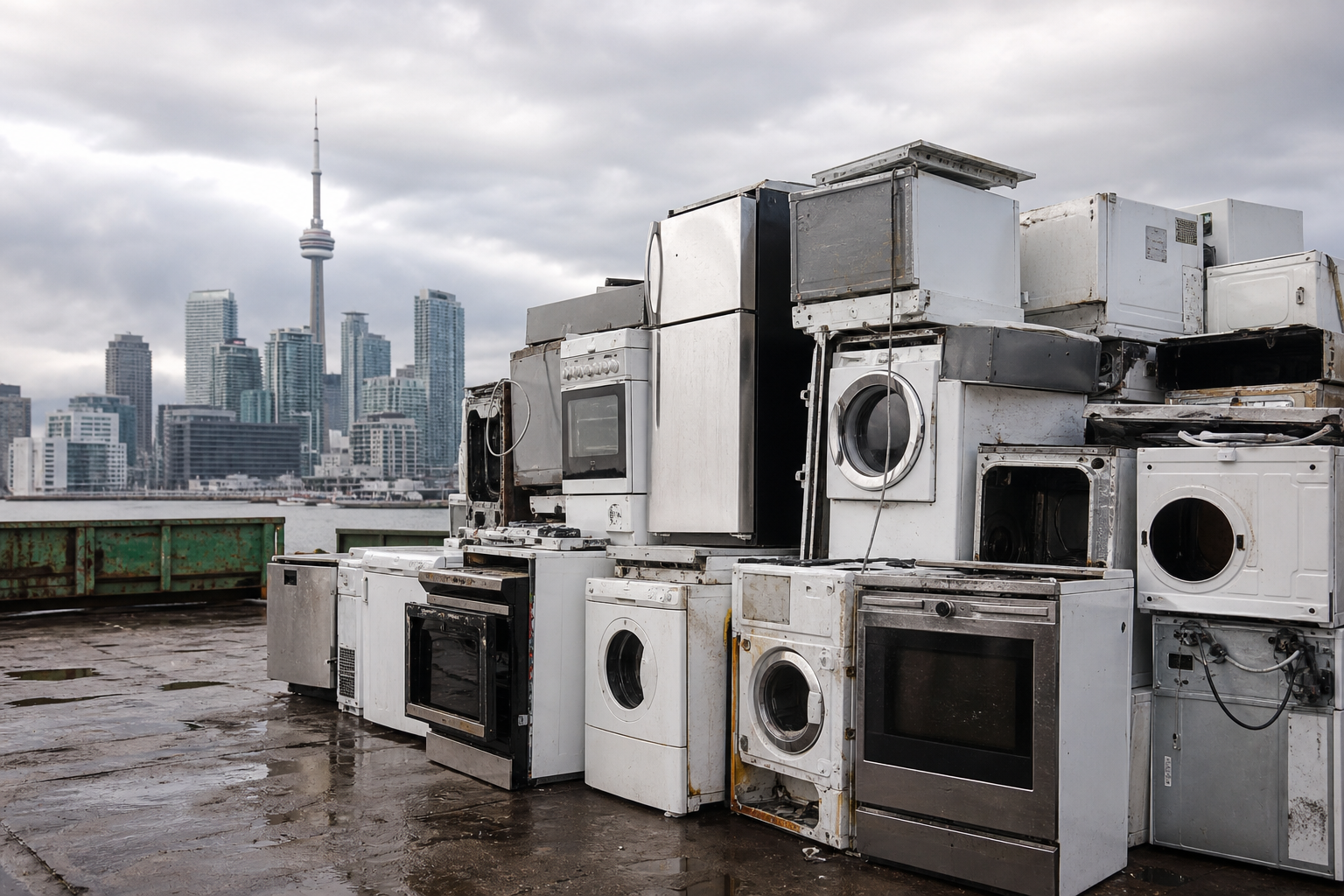
If you’re staring down a broken fridge, a past-its-prime stove, or a washer that finally quit, you’re not alone. Bulky household appliances are among the toughest items to move and dispose of responsibly. The good news: most major appliances contain recoverable metals and components. With a little prep, you can move them out of your space and into the recycling stream in a way that’s safer, cleaner, and more organized.
This guide walks through scrap appliance recycling Toronto options from end to end: what qualifies as a scrap appliance, how to prepare your items before they leave the house, when to choose drop-off vs. pickup, and what to expect at a recycling yard. You’ll also find a checklist you can use to make your unload or handoff faster.
What counts as a scrap appliance?
“Appliance” covers a wide range of household gear. When it comes to recycling, think in terms of size, material, and what’s inside. Many appliances are mostly steel, stainless steel, or aluminum on the outside, with additional non-ferrous metals, wiring, motors, and electronics inside.
- Large kitchen appliances: refrigerators, freezers, stoves/ovens, ranges, range hoods, microwaves, and dishwashers.
- Laundry: washing machines and dryers.
- Climate and air: A/C units and dehumidifiers.
- General household and outdoor: BBQs, lawn mowers, snow blowers, old tools, and compressors.
Many of these items have a core of ferrous metal (steel and iron) and a variety of non-ferrous components (aluminum, copper windings, brass fittings, and wiring). Certain items, like microwaves and range hoods, also contain electronic boards and components that can be recycled through e-waste channels.
How to prepare appliances for recycling
Good preparation makes transport safer and drop-off or pickup quicker. Use this checklist before you move anything:
- Unplug and disconnect: Turn off power, unplug the cord, and disconnect water or gas lines as applicable. If you’re unsure about disconnection steps or gas lines, seek help from a qualified technician.
- Empty and defrost: Remove food and shelves from refrigerators and freezers. Defrost fully to avoid leaks in transit.
- Drain lines: For washers, dishwashers, or A/C units, drain residual water as possible to reduce weight and spills.
- Remove loose parts: Take out racks, grates, and trays. Bag fasteners and small pieces to avoid dropping them during loading.
- Secure doors and cords: Tape doors shut and bundle cords to prevent tripping hazards.
- Check for added debris: Make sure the appliance isn’t loaded with non-recyclable items (trash, chemicals, or glass not part of the appliance) that could slow down processing.
- Plan your path: Measure doorways, stairs, and elevators. Use moving straps or a dolly and recruit help to protect walls, floors, and your back.
Tip: Photograph your appliance and any serial labels before moving it. If questions come up later, you’ll have a quick reference for model details.
Drop-off vs. pickup: choosing the right route
There are two common pathways for scrap appliance recycling Toronto residents consider: bringing items to a recycling yard or arranging a pickup. Each option has trade-offs:
- Drop-off benefits: You control the schedule, can combine multiple metals or electronics in one trip, and can see your items weighed and accepted at a designated yard entrance.
- Pickup benefits: Useful if you don’t have a vehicle that can safely move bulky or heavy appliances. Pickup can reduce lifting, stair carries, and logistics.
When deciding, consider the number of items, the total weight, your access to a truck or trailer, and the ease of navigating stairs or tight hallways. If you’re combining appliances with other scrap—like radiators, old tools, cables and wire, or e-waste such as computers and TVs—consolidating them into one organized load can save time.
What to expect at a recycling yard
Most recycling yards follow a straightforward flow. While exact layouts differ, you can expect a simple process:
- Arrival and direction: Follow yard signage. Staff may direct you to a specific lane or bay for appliances versus general scrap metals and electronics.
- Unload area: Use the designated space to unload. Keep a safe distance from moving equipment and other vehicles.
- Sorting and weighing: Appliances may be sorted by type or material category. Combined loads with metals and electronics may be directed to different areas.
- Confirmation: You’ll receive confirmation of what was accepted. If you have questions about categories (for example, stainless versus painted steel, or mixed-metal components), ask at the yard before unloading.
Bring gloves and closed-toe shoes, and avoid bringing children or pets into unloading zones. If part of your load includes e-waste (computers, TVs, or printed circuit boards), expect to place those items separately from bulk metal appliances for proper handling.
Safety and handling basics
Appliances are heavy and can shift unexpectedly. Prioritize safety for yourself and anyone helping you move the item.
- Team lift: Most large appliances require two or more people. Use a dolly or hand truck for long carries, and keep the load balanced.
- Protective gear: Wear work gloves, long sleeves, and sturdy footwear. Eye protection is helpful when moving debris or dealing with rusted fasteners.
- Avoid tilting fridges excessively: Bending sealed systems can stress components. Keep units upright as much as practical during moves.
- Mind sharp edges: Damaged metal panels, broken glass, or exposed screws can cut skin or tear clothing.
- Secure in transit: Use straps to prevent shifting. Even short drives can jostle loads.
When using ramps or loading docks, ensure the surface is dry and stable. Never climb into a vehicle bed with unsecured appliances; position and strap the load first, then re-check tension after a few minutes of driving.
Common metals and components in appliances
Understanding what’s inside helps you plan sorting and unloading:
- Steel and iron (ferrous): Outer shells and frames of washers, dryers, stoves, and many microwaves.
- Stainless steel: Sinks, panels, and certain trim pieces. A magnet test can help distinguish stainless from plain steel.
- Aluminum: Trims, panels, fins, and heat exchangers. Many A/C units and dehumidifiers have aluminum components.
- Copper: Motors, compressors, wiring, and coils contain copper windings and tubing.
- Brass: Valves, fittings, and some connectors.
- Electronics: Control boards, sensors, displays, and wiring harnesses.
If your load includes mixed appliances and electronics, separate them by broad type (metal appliance vs. e-waste) to streamline unloading. Coiled extension cords, cables and wire, and small motors can be gathered in boxes or buckets for easy handling.
Data and privacy on smart appliances
Modern appliances may store Wi‑Fi credentials, device names, or user preferences. Before recycling:
- Factory reset: Use the manufacturer’s instructions to reset smart features.
- Remove add-ons: Take out removable storage, dongles, or smart modules if present.
- Disconnect accounts: Unlink the appliance from voice assistants or home networks.
For electronics (computers, laptops, and certain TVs), handle data erasure separately and follow the manufacturer’s data-wipe procedures before recycling.
Organizing a combined load
Many people clear garages or basements at the same time as disposing of a large appliance. If you’re already arranging transport, consider adding other accepted scrap items to your run:
- Household metal items: Faucets, range hoods, radiators, old tools, and metal siding.
- Automotive parts: Rotors, engines and motors, transmissions, and auto cast.
- Cables and wire: Extension cords, copper wiring, and mixed cable.
- E-waste: Computers and laptops, televisions and monitors, keyboards and peripherals, and printed circuit boards (PCBs).
- Batteries: Keep terminals covered and store upright to prevent shorting.
Pack heavier items on the bottom, with fragile electronics on top or separated. Labeling boxes (e.g., “cables and wire,” “PCBs,” or “small motors”) speeds up sorting at the yard.
Costs and considerations
Every recycling trip is different. Factors to consider include the number and size of items, access at your site, and whether you need help moving appliances down stairs. If you’re exploring pickup, ask what items can be collected together and how to stage them for quick loading. If you plan to drop off, verify what types of materials are accepted and whether appliances and electronics should be separated on arrival.
Avoid making assumptions about accepted items based on appearance alone. If you’re unsure whether a specific appliance, component, or electronic item should go with metal or e-waste, bring a quick list or photos to review with yard staff before unloading.
Environmental benefits without the jargon
Recycling appliances recovers metals for reuse and diverts bulky goods from general waste. Steel, aluminum, and copper are readily recyclable materials. When appliances with electronic controls or wiring are also handled through appropriate streams, circuit boards and metals from those assemblies can re-enter manufacturing cycles as well. The result: less clutter at home, a cleaner handoff for heavy items, and materials kept in productive use.
FAQs about scrap appliance recycling Toronto
Do I need to remove doors from fridges or freezers before recycling?
Taping doors shut is a good safety step for transport. If the appliance will be staged or stored where children might be present, removing doors can reduce entrapment risk. Check your moving plan, keep doors secured during transit, and ask the receiving yard if they prefer doors on or off for processing.
Can I bring appliances and electronics in the same trip?
Yes—just separate categories so unloading is efficient. For example, group large appliances (washers, dryers, stoves) together and keep e‑waste items (computers, TVs, and PCBs) boxed and labeled. Cables and wire can be coiled and bundled.
How should I handle water lines and residual liquids?
Turn off supply valves, disconnect carefully, and drain remaining water. Move appliances upright to minimize leaks. For A/C units or dehumidifiers, draining what you reasonably can helps reduce weight and mess. If you’re unfamiliar with a specific connection, consult a qualified professional.
What if my appliance still works?
If an appliance is functional and safe, you may consider reuse or donation pathways. If it’s at the end of its life or not worth repairing, recycling is a responsible way to recover materials.
Can I recycle small kitchen gadgets with big appliances?
Small plug-in gadgets often contain mixed materials and electronics. You can include them as part of an electronics batch, packed in boxes and kept separate from heavy metal appliances to prevent damage in transit.
Is it okay to remove valuable parts first?
If you’re experienced and have the right tools and safety gear, you may separate certain components. However, disassembly isn’t required to recycle an appliance. For most people, it’s faster and safer to transport the whole unit intact and let the receiving facility handle downstream processing.