
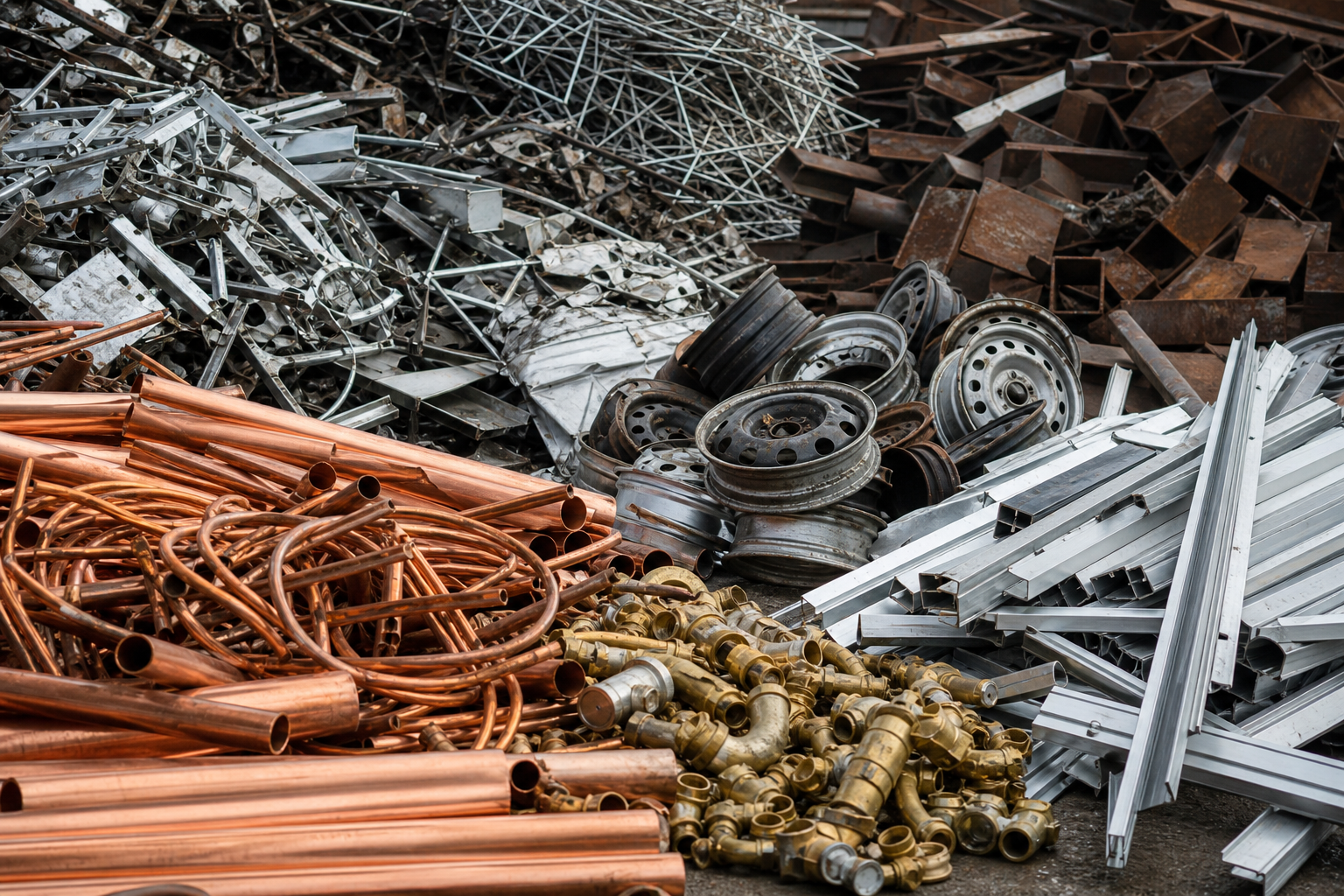
If you’re cleaning out a garage, wrapping up a renovation, or finishing a job site, the question comes up fast: what metals are accepted at a scrap yard? Most yards sort metals into broad categories—ferrous, non‑ferrous, insulated wire and cable, and metal‑bearing items like appliances and electronics. Within each category, acceptance and pricing vary by item, grade, and condition, and some locations may have extra requirements. Use the checklist below to quickly identify what you have and how to prepare it before you go.
Quick answer: common categories most scrap yards accept
- Ferrous metals (magnetic): steel, iron, cast iron, rotors, tin.
- Non‑ferrous metals (non‑magnetic): copper, aluminum, brass, stainless steel, lead, nickel, bronze.
- Wires and cables: copper and aluminum wiring (bare, insulated, or data/telecom types).
- Metal‑bearing items: appliances, radiators, motors, compressors, faucets, fixtures.
- E‑waste with recoverable metals: computers, laptops, printed circuit boards (PCBs), some consumer electronics.
Important: Acceptance policies differ by yard and can change over time. If you’re unsure about a specific item, call ahead or check the yard’s website before loading your vehicle.
How to identify your metals fast
- Magnet test: A basic magnet quickly separates ferrous (magnetic) from most non‑ferrous (usually non‑magnetic) metals.
- Color and surface clues:
- Copper: reddish or brown; bright when freshly scraped.
- Brass: yellow‑gold, often used in valves and faucets.
- Aluminum: light gray, lightweight; common in cans, window frames, siding, and radiators.
- Stainless steel: silvery with a clean finish; often slightly magnetic or non‑magnetic depending on grade.
- Lead: dull gray, very soft and heavy; found in some batteries and flashing.
- Weight check: Aluminum is light; copper, brass, and lead are notably heavier for their size.
- Spark test (advanced, optional): Some steels produce distinct sparks when touched to a grinder. If you’re not experienced, skip this and use safer identification methods.
Ferrous metals: steel and iron
Ferrous metals contain iron and are typically magnetic. They’re abundant and widely accepted. Typical examples include:
- Steel and tin: sheet metal, structural offcuts, beams, ductwork, shelving.
- Cast iron: old radiators, bathtubs, cookware, and machinery bases.
- Auto rotors and brake components.
- Engines, transmissions, lawn mowers, and snow blowers (often accepted if fluids are drained).
Preparation tips:
- Remove non‑metal attachments where practical (plastic covers, rubber, wood).
- Drain fluids from engines, compressors, and fuel‑powered equipment in accordance with local rules.
- Bundle small pieces or place them in containers so they’re easier to unload and weigh.
Non‑ferrous metals: copper, aluminum, brass, stainless, and more
Non‑ferrous metals generally fetch higher values per pound than common ferrous items and are widely accepted in many grades. Common categories include:
- Copper
- Bright/bare copper wire (no insulation or coatings).
- Copper tubing and pipe (clean vs. painted/soldered with fittings attached).
- Electric motors and transformers with copper windings.
- Aluminum
- Cans, siding, gutters, window frames, and screen doors.
- Sheet, plate, and extrusion offcuts.
- Radiators (auto and HVAC), often sorted as aluminum or mixed aluminum/copper.
- Brass and bronze
- Faucets, valves, plumbing fittings.
- Decorative hardware and boat components.
- Stainless steel
- Appliance panels, sinks, commercial kitchen equipment.
- Fasteners and pipe. Some grades are slightly magnetic; sort by grade if you can.
- Lead and nickel (yard‑dependent)
- Lead flashing, wheel weights, and certain batteries (many yards have specific intake processes for batteries).
- Nickel alloys from industrial components.
Preparation tips:
- Keep grades separate: For example, don’t mix clean aluminum extrusion with painted or steel‑contaminated pieces.
- Remove steel screws and fittings from non‑ferrous metals when possible to avoid downgrades.
- Cut large pieces down to manageable sizes for safer transport and faster unloading.
Insulated wires and cables
Most scrap yards accept copper and aluminum wiring. Categories often include:
- Bare bright copper: stripped of insulation.
- Insulated copper wire: extension cords, household wiring, power cables.
- Data/telecom cable: Ethernet, coaxial, and low‑voltage lines.
- Aluminum service cable: sometimes accepted; sort separately from copper.
Preparation tips:
- Leave factory plugs attached if removing them damages the conductor; the yard can advise on grading.
- Coil and tie cables into neat bundles to speed up handling.
- Stripping insulation is optional; it can improve grading but takes time. Weigh effort vs. benefit for your load.
Appliances, electronics, and other metal‑bearing items
Many yards accept household appliances and a portion of consumer electronics because they contain recoverable metals. Examples include:
- Large appliances: washers, dryers, ovens/stoves, microwaves, dishwashers, range hoods, air conditioners (A/C units), and refrigerators/freezers (policies vary).
- Small appliances and tools: old tools, heaters, faucets, and fixtures.
- Automotive parts: radiators, compressors, engines, transmissions, and auto cast components.
- Electronics and e‑waste: computers, laptops, TVs and monitors, printed circuit boards (PCBs), keyboards, and peripherals.
Preparation tips and cautions:
- Refrigerants and oils: Items like A/C units and refrigerators may require certified removal of refrigerants or fluids before drop‑off. Policies differ by yard.
- Batteries: Some yards accept certain battery types; others direct you to specialized intake. Transport and store batteries carefully to avoid short circuits.
- Data security: For computers and storage devices, consider wiping or removing drives before recycling.
- Screens: CRTs and certain flat‑panel displays have special handling rules. Call ahead to confirm acceptance.
What scrap yards usually don’t accept
While policies vary, there are common restrictions:
- Hazardous materials: containers with fuel or chemicals, pressurized cylinders that aren’t safely vented and certified, mercury‑containing devices.
- Items with active fluids: engines or compressors containing oil, gas, or refrigerant.
- Stolen property or materials without proof of ownership where required.
- Illegal items or those restricted by local regulations.
When in doubt, ask your yard. Bringing an item the facility can’t accept may require you to reload it and take it back.
Sorting and prep checklist before you go
- Separate by category: ferrous, non‑ferrous (copper, aluminum, brass, stainless, lead), insulated wire, appliances/e‑waste.
- Use a magnet and clear bins or labeled boxes.
- Remove obvious contaminants: rubber, plastic, wood, fabric, and excessive dirt.
- Drain fluids from machinery and compressors according to local guidelines.
- Disassemble mixed‑metal items when it’s easy and safe: remove steel screws from brass, cut off attached plastic, and separate copper radiators from steel frames.
- Bundle smalls: tie rebar, coil cables, and box small parts to speed weighing.
- Secure your load for transport: prevent shifting and ensure heavy items are anchored.
Grading basics that affect acceptance
Scrap yards classify metals into grades that reflect purity and ease of processing. Understanding grades helps you sort better:
- Clean vs. dirty metal: Clean pieces are free of attachments, coatings, and residues. Dirty or mixed items may still be accepted but assigned to a lower grade.
- Alloy and temper: For aluminum and stainless steel, common grades depend on alloy and form (sheet, plate, extrusion). Keep similar pieces together.
- Wire content: For insulated wire, grading considers conductor metal (copper vs. aluminum) and insulation thickness.
- Condition: Excessive rust, embedded concrete, or contamination can impact whether a yard will accept the load as delivered.
Safety and compliance reminders
- Wear gloves, eye protection, and sturdy footwear when handling scrap.
- Avoid cutting or dismantling pressurized cylinders or sealed units unless you’re trained and equipped to do so.
- Transport batteries upright, insulated from shorting, and separate from sparks or flames.
- Follow local rules for draining fluids and handling refrigerants. If you’re unsure, ask the yard how they want those items prepared.
Note: This article provides general information about typical scrap yard acceptance and preparation. It is not professional, legal, or environmental compliance advice. For specific requirements, consult your local authorities or a qualified professional.
Frequently asked questions
Do scrap yards pay more for non‑ferrous metals than for steel?
Non‑ferrous metals such as copper, aluminum, brass, and some stainless grades are commonly valued higher per pound than standard steel or iron because of their properties and downstream demand. Actual pricing and acceptance are yard‑specific and can change over time.
Should I strip insulation from copper wire before bringing it in?
Stripped copper (bare bright) is typically graded higher than insulated wire. However, stripping takes time and requires proper tools. If you have a small amount or thick insulation, it may not be worth the effort. If you have large volumes of heavy‑gauge wire, stripping could make sense. When in doubt, ask the yard how they grade each type.
Can I bring appliances that still have refrigerant or oil?
Policies differ. Many yards require that refrigerants and oils be removed before acceptance, and some offer guidance or direct you to specialized services. Always call ahead about fridges, freezers, A/C units, and compressors to confirm what’s required in your area.
What’s the best way to sort mixed loads quickly?
Start with the magnet test to split ferrous from non‑ferrous. Then separate non‑ferrous into copper, aluminum, brass/bronze, stainless, lead, and wire. Keep each category in labeled bins or piles, and remove obvious steel screws or plastic parts to avoid downgrades.
Will a yard accept electronics like computers and TVs?
Many yards accept a range of electronics because they contain recoverable metals and boards. Acceptance depends on the item type and condition, and screens may have special rules. Back up or wipe data and ask the yard about specific e‑waste items before drop‑off.