
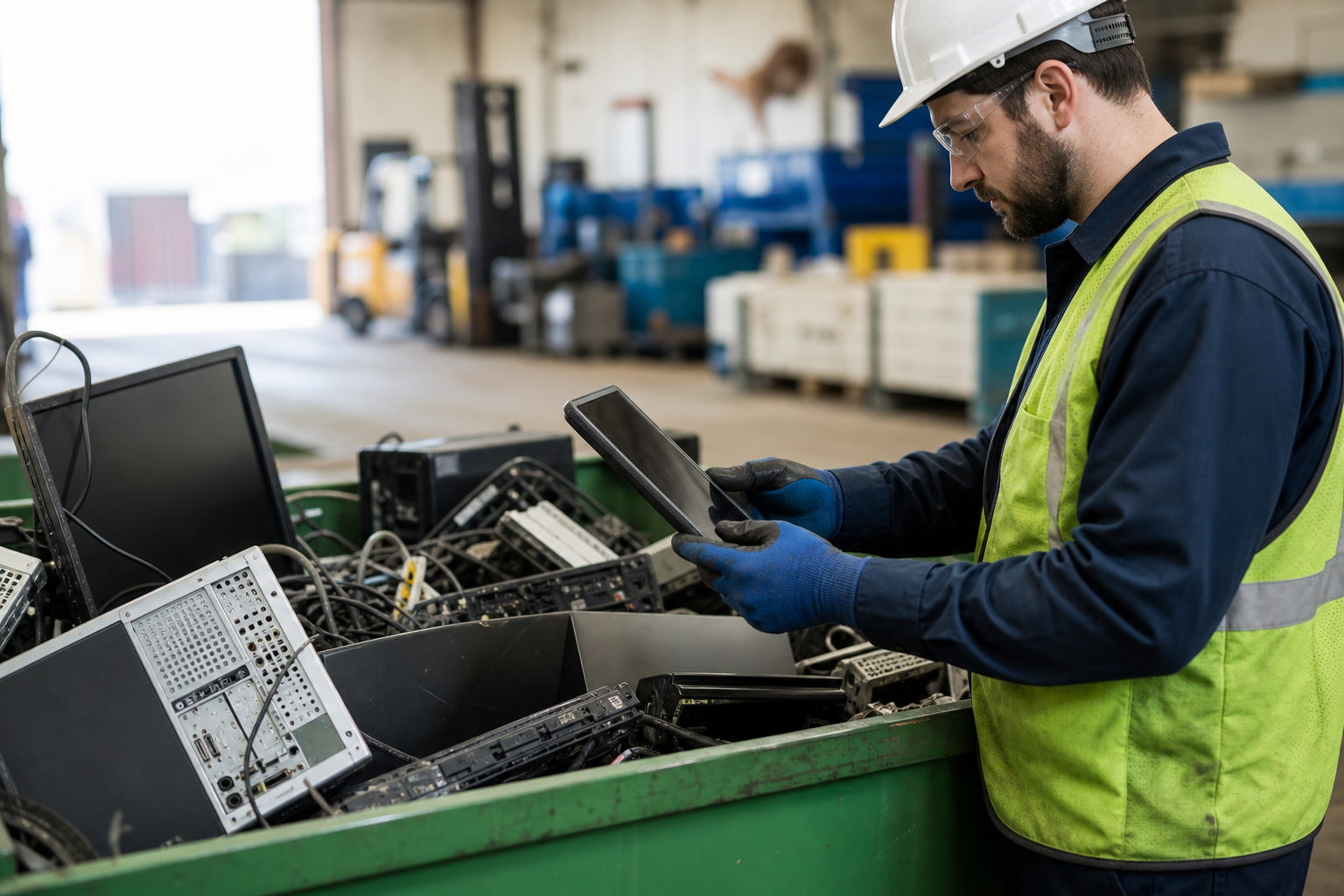
Recycling electronics in Etobicoke helps recover metals, keeps hazardous components out of landfill, and clears household clutter. However, recyclers vary in how they handle devices, data, and downstream shipments. Use these seven specific questions and checks when you call a recycler or visit the yard so you avoid data exposure, hidden fees, or improper disposal.
Why these checks matter
Electronics contain valuable metals and hazardous parts that require documented handling. Federal guidance recommends asking recyclers about certification, facility operations, and downstream arrangements to reduce environmental and data risks. Canadian consumer guidance also urges removing personal data before recycling and checking takeback programs. If a recycler cannot answer these basic checks, consider a certified facility or a municipal program instead (see the EPA selection checklist and Canada’s e‑waste guidance for more detail).
1. Ask for certifications and independent audits
Ask whether the recycler holds recognized certifications such as R2 (Responsible Recycling) or e‑Stewards, and request a copy of the current certificate or recent audit summary. A certified recycler will identify the certifier and provide a contact or a scanned certificate on request.
On the phone or at the gate, ask them to state the certificate holder name and expiry date aloud, or to email a copy before you drop off. If they cannot identify the certifier or refuse documentation, treat that as a reason to use a different provider or a municipal drop off. The EPA selection checklist recommends confirming certification and facility information as part of choosing a recycler (EPA selection checklist).
2. Confirm how they handle data destruction and device sanitation
Data security is the top concern for many people. Ask whether the recycler performs on‑site data wiping, provides secure physical destruction for hard drives and phones, or issues a certificate of data destruction. If they do not perform secure wiping, request a written policy that explains how devices are sanitized and whether they accept already‑destroyed drives.
If you prefer to erase devices yourself, follow manufacturer instructions for factory resets and keep proof such as screenshots or dated notes. Canadian guidance reminds consumers to consult manufacturer resources about data deletion before recycling (E‑waste guidance).
Actionable check: ask, “Do you issue a certificate of data destruction and can I receive it at drop off?” If the answer is no, consider erasing devices yourself or using a certified electronics recycler.
3. Verify which electronics and hazardous components they accept

Not every recycler accepts the same items. Request a specific, written list for the items you plan to bring: TVs and CRTs, monitors, printed circuit boards, laptops, mobile phones, printers, power supplies, household appliances, lithium batteries, and sealed battery packs. Ask whether certain components must be removed before drop off, for example loose batteries, ink or toner cartridges, or refrigerant lines from appliances.
Quick Scrap Metal lists computers, TVs, monitors and printed circuit boards among accepted materials, and it offers appliance recycling and vehicle scrap services. Always confirm the yard’s exact acceptance rules and whether there are handling fees for hazardous components before you travel (Quick Scrap Metal electronics page).
4. Ask how pricing and payouts are calculated and shown on site
If you expect cash for recyclable electronics or material components, ask precisely how value is determined. Common approaches include weight by material, flat fees for appliances, or component pricing for items like circuit boards. Request an example receipt and ask how scale weights are measured, whether you may observe the weighing, and whether payouts are immediate.
Avoid accepting vague claims of “top payout” without seeing how the price is calculated. Ask who to contact in case of a dispute and what the documented resolution process is. When you visit, bring photo ID if required and request a written receipt that lists items, weight or fee, and a contact for follow up.
5. Check logistics: yard flow, hours, appointments, and pickup policies
Practical logistics often determine the experience at a yard. Confirm opening hours, whether the site accepts walk‑ins for bulk loads, and if appointments are required for large pickups or scrap vehicles. Quick Scrap Metal advertises extended weekday hours and Sunday openings for convenience, but you should still confirm access procedures, unloading assistance, and safety steps before you go.
On site, check for clear traffic flow and signage, visible staff to direct vehicles, and a safe waiting area. If the yard appears chaotic or staff cannot explain unloading, consider scheduling an appointment or using another depot to avoid delays and safety issues.
6. Request proof of responsible downstream handling and manifests

A responsible recycler will describe where materials go after they leave the yard. Ask for recent downstream documentation such as bills of lading, manifests, or a written downstream handling policy identifying processors and end destinations. The EPA selection guidance advises asking recyclers for a business description and downstream arrangements to reduce the risk of diversion to improper exporters (EPA checklist).
Practical verification: request a written chain‑of‑custody summary for electronics and high‑risk items such as PCBs or batteries. If the yard cannot describe or document where materials are processed, prefer a certified recycler or a municipal program with clearer accountability.
7. Get documentation, know your rights, and use municipal options when appropriate
Before you hand over devices, request a written receipt listing each item accepted, the measured weight or fee, and a contact for follow up. Keep that receipt for at least 30 days in case of questions about payout or loss. If you have serious data or liability concerns, or if you are recycling hazardous components, consider municipal drop‑off programs or manufacturer takeback programs instead of an unverified private yard. Canada’s guidance lists producer and municipal programs that may accept devices at no cost and explains why removing personal information matters (E‑waste guidance).
Final practical tip: review the recycler’s electronics page ahead of time for accepted items and preparation steps to save time and avoid surprises. For local details and accepted items, start with the recycler’s electronics information page before you go (Quick Scrap Metal electronics page).
Quick FAQs
What should I remove from electronics before drop off at a recycler in Etobicoke
Remove SIM cards, memory cards, and loose batteries, and remove any removable media. Where possible, sign out of accounts and perform a factory reset. For appliances, drain fluids and remove small batteries. Always check the recycler’s prep list before arrival.
Do I need to wipe my phone or laptop before recycling and what proof should I keep
Yes. Wipe devices if you can and keep proof such as a screenshot of the factory reset confirmation or a dated note of actions taken. If the recycler issues a certificate of data destruction, retain that with your receipt.
Will Quick Scrap Metal pay cash for electronics and how are payouts shown on a receipt
Quick Scrap Metal advertises on‑site cash payouts for qualifying scrap and electronics, and they provide receipts for transactions. Ask the yard to show an example receipt and confirm whether payouts are immediate and how weights or fees will be documented at drop off (Quick Scrap Metal).
Are there extra fees or restrictions for batteries, CRTs, or other hazardous components
Many facilities have special rules for lithium batteries, CRT tubes, and refrigerants. Always ask the recycler for handling fees or refusal policies for hazardous components before you travel, and follow their instructions for preparing or segregating these items.
Key takeaway and next steps
Use these seven questions as your checklist when choosing electronics recycling Etobicoke options. Confirm certification and audit status, insist on clear data destruction procedures, verify accepted items, understand pricing and receipts, check yard logistics, and request written downstream proof whenever possible. If you prefer a municipal or certified route, use local takeback programs or a verified electronics recycler to reduce data and disposal risk.
For local drop off, pickup options, and an up to date list of accepted electronics, visit Quick Scrap Metal’s electronics page or the main site.
Quick Scrap Metal electronics information | Quick Scrap Metal