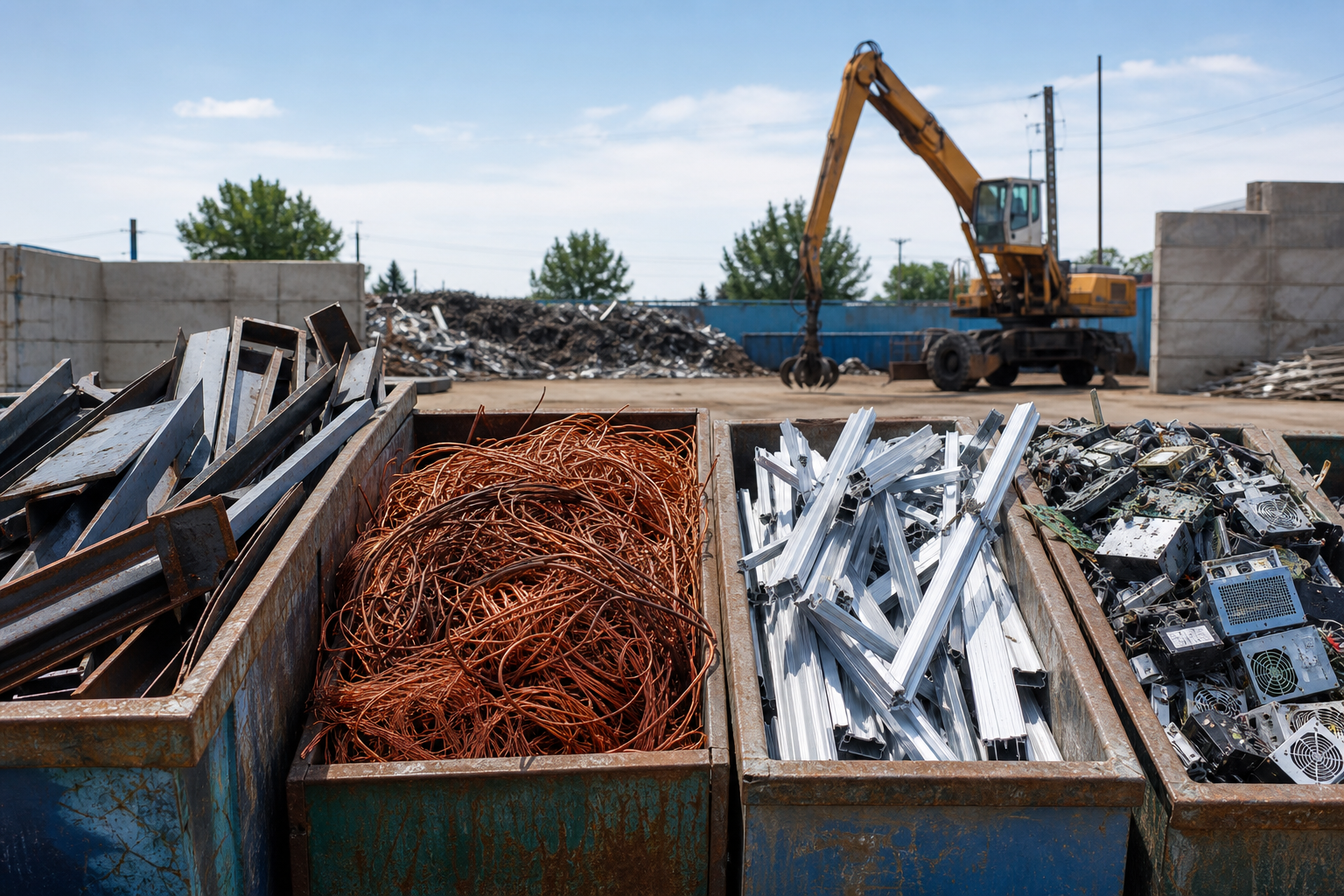
Sorting ferrous and non-ferrous metals means separating iron-containing materials, such as steel and cast iron, from metals such as copper, aluminum, brass, nickel, and stainless steel. Before taking a mixed load to a scrap yard, separating clearly identifiable materials makes the load easier to describe and helps the yard classify it. It does not guarantee a specific price or payout.
What ferrous and non-ferrous metals mean
In scrap recycling, ferrous describes metal categories that contain iron. Steel and cast iron are familiar examples, and vehicle rotors are another type of ferrous scrap accepted by Quick Scrap Metal.
Non-ferrous describes commonly recycled metals outside that iron-based category. Copper, aluminum, brass, nickel, and stainless steel are examples listed among Quick Scrap Metal’s accepted materials. Identifying these materials gives the yard more useful information when it evaluates a mixed load.
You do not need to identify every alloy or dismantle every object. Separate what you recognize confidently, isolate mixed or uncertain items, and ask the yard about anything that does not fit neatly into one category. The list of metals accepted at a scrap yard provides additional examples.
Ferrous and non-ferrous scrap at a glance

| Category | Examples | Common sources | Sorting approach |
|---|---|---|---|
| Ferrous | Steel, cast iron, rotors | Automotive parts, tools, appliances, construction scrap | Keep clearly identifiable pieces together. |
| Non-ferrous | Copper, aluminum, brass, nickel, stainless steel | Wire, siding, plate, extrusion, ducts, fixtures | Separate recognizable metals by type where practical. |
| Mixed-material items | Motors, appliances, electronics, transformers | Household, automotive, commercial, and electronic equipment | Keep separate from clean metal and confirm handling requirements. |
An assembled item can contain both ferrous and non-ferrous components. An appliance, motor, vehicle part, or electronic device may not belong in one clean category. Treating it as mixed is safer and clearer than guessing.
Where these metals appear in everyday scrap
Household items
Household loads can include old tools, lawn mowers, heating ducts, washers and dryers, BBQs, range hoods, microwaves, dishwashers, ovens, and stoves. Some combine metal with wiring, motors, insulation, glass, or other materials. Keep intact appliances separate from loose steel or aluminum.
Contractor and renovation scrap
Tradespeople may encounter steel and tin, siding, plate and extrusion, electrical heaters, extension cords, cables, and wire. Group loose pieces you can identify confidently. Keep insulated wire, cords, and assemblies separate from clean metal when their composition is unclear.
Automotive parts
Automotive scrap may include engines, motors, auto cast, radiators, transmissions, and rotors. These parts can contain multiple metals and attached non-metal materials. Group clearly identifiable parts together, but set complex assemblies aside rather than dismantling them just to force a category.
Electronics and electrical equipment
Computers, laptops, televisions, monitors, Blu-ray or DVD players, keyboards, printed circuit boards, transformers, and cables are examples of electronic or electrical items Quick Scrap Metal lists among its materials. Treat them as electronic or mixed items rather than ordinary loose metal, and confirm requirements before arrival.
How to sort a mixed scrap load before drop-off
- Start with clear material. Create one group for recognizable ferrous pieces such as steel, cast iron, or rotors.
- Separate recognizable non-ferrous metal. Keep copper, aluminum, brass, nickel, and stainless steel apart where you can identify them confidently.
- Keep wire and assemblies separate. Cables, motors, transformers, appliances, and electronic devices may combine several materials.
- Remove obvious non-metal clutter only when appropriate. Do not dismantle anything if doing so could create a safety problem or damage the item.
- Set uncertain pieces aside. A “needs confirmation” group is better than assigning an item to the wrong category.
- List unusual items. Note appliances, batteries, lead-containing materials, electronics, transformers, and large assemblies before contacting the yard.
This is preparation, not a promise of a higher payment. Its main benefit is a clearer understanding of what is in the load and which items need confirmation.
Why mixed assemblies need extra attention
Motors, appliances, vehicles, electronics, and transformers can contain several materials in one object. Separating them may require tools or additional handling. Do not assume that an entire appliance or device should be classified as steel, copper, or another single metal.
Batteries, lead-containing items, electronic waste, appliances, and transformers deserve a confirmation step before arrival. Quick Scrap Metal lists these materials among its services, but requirements can depend on the item and its condition. Ask how an unusual or mixed load should be handled rather than dismantling it without clear instructions. Review the company’s scrap metal and recycling services before contacting the yard.
Preparing for scrap drop-off in Etobicoke
Keep separated groups stable and easy to identify. Place questionable items where they will not be mistaken for clean loose metal, and note any batteries, electronics, appliances, or mixed assemblies. If the load is unusual, contact the yard before unloading to confirm whether the material is accepted and how it should be presented.
Quick Scrap Metal is located at 407 Rexdale Blvd, Etobicoke, Ontario M9W 6P8, near Highway 27 and Rexdale. The business serves Etobicoke, Toronto, Mississauga, Brampton, and the broader GTA, and offers scrap drop-off services with cash on the spot for qualifying materials.
Published hours are Monday through Friday from 8:00 a.m. to 7:00 p.m., Saturday from 8:00 a.m. to 5:00 p.m., and Sunday from 9:00 a.m. to 5:00 p.m. Check the contact page for current details before visiting.
What sorting can and cannot tell you about value
Sorting makes the composition of your load easier to explain, but it cannot tell you the exact amount you will receive. The supplied information does not provide fixed rates, and load value can depend on the material and how it is presented. Do not rely on an assumed price or a promise that sorting will produce a particular premium.
For quote-related context, review Quick Scrap Metal’s page about scrap yard prices in Etobicoke, then contact the yard about the materials you actually have.
Common questions about sorting scrap metal
Are all metal items either ferrous or non-ferrous?
Those are the two broad categories used here, but many real-world objects are assemblies containing several materials. An appliance, motor, vehicle component, transformer, or electronic device may include both. Keep mixed objects separate and confirm how the yard wants them handled.
Should I dismantle appliances or electronics before sorting them?
Not necessarily. The supplied information does not establish a universal dismantling process, and taking an item apart may create handling or safety concerns. Separate intact appliances and electronics from loose metal, then ask the yard about preparation requirements.
What should I do with batteries, lead, or an item containing several metals?
Place these materials in a clearly identified group and confirm requirements before arrival. Quick Scrap Metal lists batteries, lead, electronics, and mixed equipment among its service categories, but unusual materials should be discussed with the yard rather than classified by guesswork.
Conclusion
Effective scrap sorting starts with a simple distinction: group ferrous materials such as steel, cast iron, and rotors separately from non-ferrous materials such as copper, aluminum, brass, nickel, and stainless steel. Keep wire, appliances, electronics, batteries, transformers, and other mixed assemblies apart when their composition is unclear. This creates a more understandable load without promising a specific price or payout.
If you have an unusual or mixed load, contact Quick Scrap Metal before unloading to confirm acceptance and preparation requirements. Visit 407 Rexdale Blvd in Etobicoke during the published hours, or use the Quick Scrap Metal contact page to get in touch.