
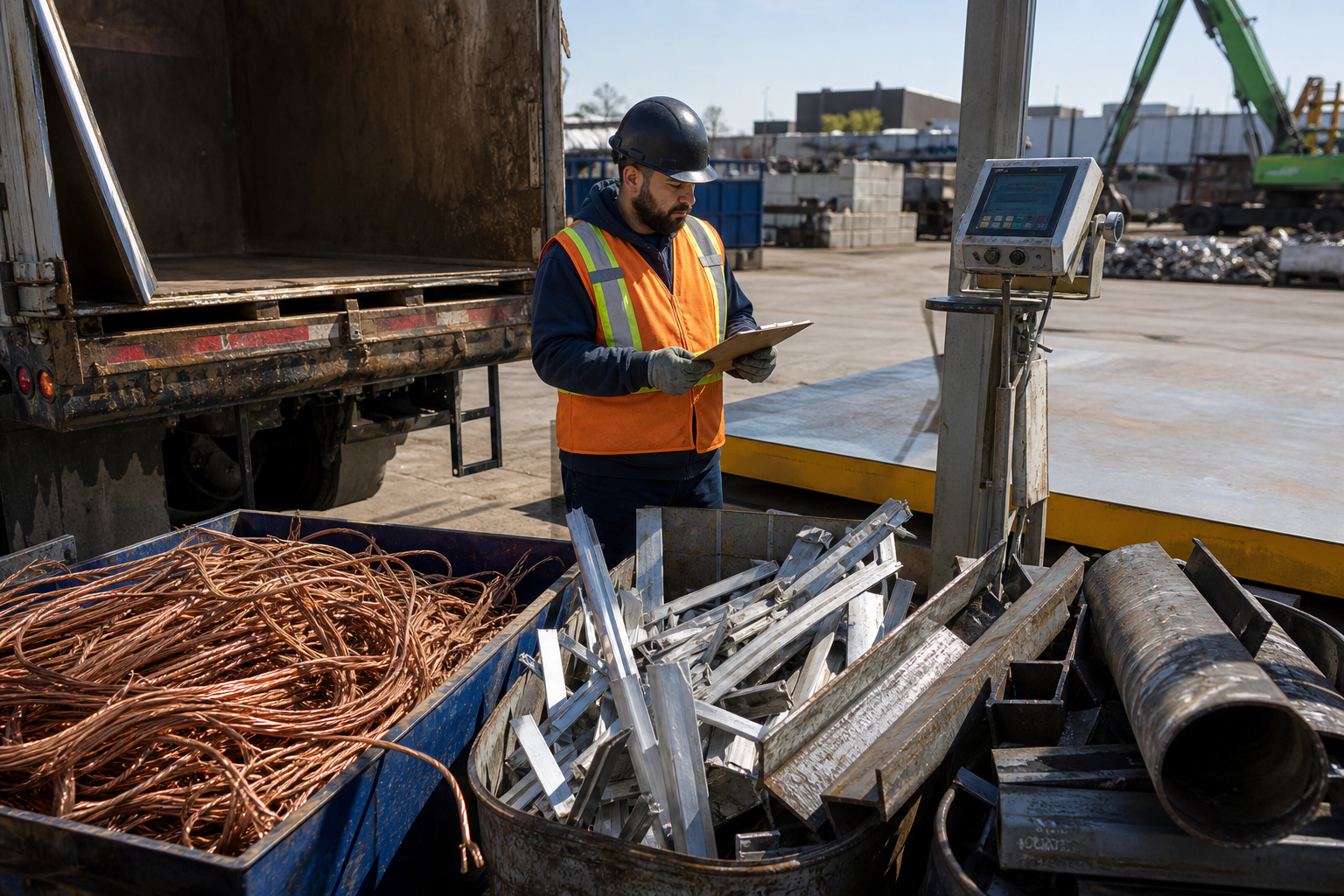
Scrap-metal prices are shaped by market value, material type, grade, weight, condition, and the work required to handle and process the load. A public market benchmark can provide useful context, but it is not automatically the amount a local scrap yard will pay. Your final quote depends on the specific material and load you bring in.
Quick Scrap Metal describes its pricing as market-based and material-specific rather than publishing a fixed online price list. The most useful way to evaluate a quote is to understand what is being priced, how much you have, how it was classified, and whether any adjustments apply.
The basic model behind a scrap-yard quote
Sellers can think about a scrap-metal quote in five stages:
- Material identification: What metal or item is being presented?
- Grade and condition: Is it clean and clearly defined, or mixed, coated, attached to other materials, or contaminated?
- Quantity: What does the verified scale reading show, and is the weight measured in pounds or kilograms?
- Applicable local rate: What current rate does the yard use for that category and grade?
- Adjustments: Are there disclosed deductions, exclusions, handling considerations, or items outside the quoted category?
This is a useful decision model, not a universal formula. A yard may need to inspect the load before confirming its classification and final amount. The London Metal Exchange’s educational explanation of price discovery in metal markets provides broader context for how prices are formed.
Why market benchmarks do not equal your final payout

Metal-market references help explain broader market conditions. The London Metal Exchange publishes reference information, including LME closing prices and LME official prices. These figures should not be treated as the exact cash payout a local scrap yard must offer.
A local quote concerns a particular load at a particular time. The yard must identify, weigh, sort, and prepare material where necessary, while accounting for receiving, transportation, and downstream processing. These practical considerations help explain why an online benchmark and a seller’s quote may differ.
When reviewing an online figure, check what it represents. It may refer to refined metal, a specific grade, a wholesale transaction, or a market reference rather than mixed scrap delivered by a household or contractor. Use it as context, then ask for a current rate for your actual material.
Material type and grade are major price drivers
Different metals have different market values and handling requirements. Ferrous materials contain iron and include steel and cast iron. Non-ferrous materials include copper, aluminum, brass, nickel, and some stainless-steel categories. Quick Scrap Metal’s service information lists both types, along with cables, wire, radiators, engines, motors, transformers, lead, and batteries.
The broad metal name is only the starting point. “Copper” might mean separated pieces, insulated wire, cable, tubing, or a component attached to other materials. Aluminum may appear as clean pieces, siding, plate, extrusion, or part of an appliance. Steel may arrive as separated scrap, cast iron, tin, or a larger item requiring additional handling.
Two loads that appear to contain the same metal may therefore receive different quotes. Grade, form, attachments, and cleanliness can change how easily the yard identifies and handles the material.
How condition, contamination, and mixed loads affect value
Clean, clearly separated scrap is easier to classify than a mixed load containing several metals, non-metal attachments, dirt, or other unwanted material. A mixed load may still be accepted, but it could require a different classification or additional sorting.
Sort obvious categories where practical. Keep copper, aluminum, steel, brass, wire, and stainless steel separate if you can identify them confidently. Remove loose non-metal material only when safe. Do not dismantle appliances, electronics, batteries, or other items simply to pursue a potentially better category without first asking the yard what preparation it recommends.
Describe unusual items accurately. Motors, radiators, transformers, appliances, and electronic components may not be evaluated like loose metal. Quick Scrap Metal lists these materials among its accepted categories, but acceptance and valuation depend on the material presented and the yard’s inspection.
Weight, scale readings, and units matter
Even when the rate is unchanged, the total payout depends on quantity. Ask the yard:
- What is the total weight?
- Is it measured in pounds or kilograms?
- Is the weight gross, net, or adjusted for packaging or non-metal material?
- Which items are included?
- Are any items excluded or separately classified?
Record the rate, unit, weight, and final total so you can compare offers and resolve misunderstandings before accepting payment.
What determines value across common scrap categories?
This table does not assign prices. It shows questions that may matter when evaluating materials Quick Scrap Metal accepts.
| Category | Factors that may affect evaluation | What to clarify |
|---|---|---|
| Copper | Form, grade, cleanliness, attachments, and separation from insulation | How bare, attached, or mixed copper is classified |
| Aluminum | Product form, coatings, attachments, and mixed content | Whether siding, extrusion, plate, or mixed aluminum is priced separately |
| Steel and cast iron | Ferrous classification, size, weight, attachments, and mixed content | Which items belong in each category |
| Brass and stainless steel | Identification, cleanliness, attachments, and form | Whether similar pieces need separation or inspection |
| Appliances | Recoverable metal content, size, condition, and handling requirements | Whether the appliance is accepted as delivered and whether pickup is available |
| Electronics and e-waste | Item type, components, recoverable materials, and handling requirements | Whether computers, TVs, monitors, peripherals, or PCBs are accepted |
Quick Scrap Metal lists copper, aluminum, steel, brass, stainless steel, appliances, computers, televisions, monitors, peripherals, and printed circuit boards. Its accepted-material list can help you prepare questions before loading your vehicle.
How to compare scrap-yard quotes fairly
Do not compare one yard’s rate with another yard’s total payout. Match the material category, grade, condition, unit, weight, inclusions, exclusions, adjustments, quote timing, and payment terms.
A separated copper-wire rate should not be compared with a mixed-wire rate. Likewise, a quote for clean material may not be comparable with one covering coated, attached, or contaminated scrap. For related seller-focused advice, see this checklist for evaluating scrap-metal prices and these questions about cash for scrap metal.
Questions to ask before accepting a quote
- What material category and grade is this?
- What is the scale weight and unit?
- Is the load clean, mixed, attached, or contaminated?
- Are there deductions, exclusions, or separate classifications?
- Is the quote based on the material as delivered or after sorting?
- Is payment made on the spot?
- Will the yard accept all parts of the load, including appliances or electronics?
These questions cannot guarantee a particular price, but they help ensure you understand the offer. For more preparation advice, see what to check before selling scrap metal in Etobicoke.
What sellers can bring to Quick Scrap Metal in Etobicoke
Quick Scrap Metal is located at 407 Rexdale Blvd in Etobicoke, Ontario, near HWY 27 and Rexdale. The business buys and sells scrap metal and describes its service as offering cash on the spot for qualifying materials. Listed categories include ferrous and non-ferrous metals, appliances, electronics, and e-waste.
The business also describes drop-off services and arranged pickup options for some household scrap and scrap vehicles, serving Etobicoke, Toronto, Mississauga, Brampton, and the broader GTA. Confirm current acceptance and arrangements for your specific items before travelling.
A practical next step for estimating your payout
- Inventory the load: List your metals, appliances, electronics, vehicle parts, and other items.
- Separate obvious categories: Keep identifiable metals apart where practical and safe.
- Record unusual items: Note or photograph motors, radiators, transformers, appliances, or e-waste.
- Request a current quote: Give the yard an accurate description of the actual material.
- Confirm the terms: Verify classification, weight, unit, inclusions, exclusions, adjustments, and payment method.
- Choose drop-off or pickup: Confirm availability for the size and type of your load.
To confirm accepted materials or arrangements before visiting, use Quick Scrap Metal’s contact page.
Conclusion: compare the full quote, not just the headline rate
Metal prices are not determined by one public number. Material identity, grade, condition, weight, the applicable local rate, and disclosed adjustments all matter. Market benchmarks provide context, but your quote depends on what you bring to the yard and how it is classified.
Sort what you can, describe the load accurately, confirm the scale reading and unit, and compare equivalent offers. If your materials fit the service, contact or visit Quick Scrap Metal at 407 Rexdale Blvd in Etobicoke to ask about scrap metal, appliances, electronics, or other accepted materials.