
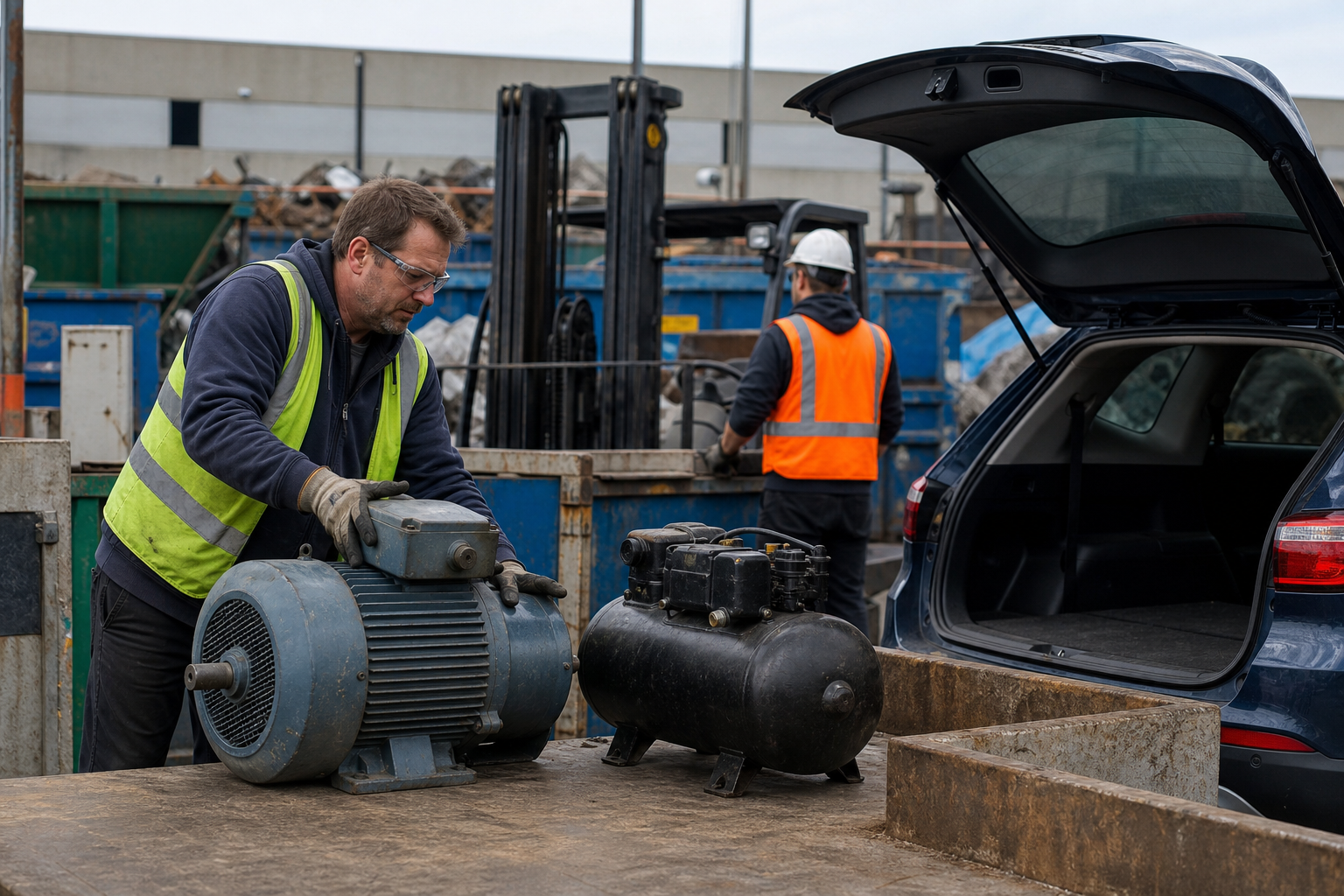
Recycling motors and compressors means taking unwanted equipment, components, or appliances containing them to a scrap yard for assessment and material recovery. The yard considers the item’s composition, condition, size, and quantity before determining acceptance and any applicable payment. Every motor, compressor, and complete appliance is not automatically valued or handled the same way.
For residents, contractors, and businesses in Etobicoke and the GTA, the sensible first step is to identify the equipment, keep related parts together, and contact a yard before moving or altering an unusual or bulky item. Quick Scrap Metal lists engines and motors, compressors, A/C units, appliances, cables, wire, transformers, and common metals among its relevant materials.
Motors, compressors, and complete equipment explained
An electric motor converts electrical energy into movement and may be found in machinery, appliances, fans, pumps, and automotive components. Quick Scrap Metal specifically lists engines and motors, as well as related materials such as radiators, transmissions, electrical heaters, and auto cast.
A compressor compresses gas or refrigerant within equipment and may appear in cooling equipment such as A/C units. From a recycling perspective, it matters whether you have a loose compressor, a complete unit, or a larger appliance containing one.
A standalone motor, old compressor, A/C unit, washer, or dryer may therefore receive a different assessment. Quick Scrap Metal also lists microwaves, dishwashers, ovens and stoves, and other appliances. A listed category does not guarantee acceptance of every item or condition, so confirm the details first.
Why material type and condition affect the assessment

Motors and compressors can contain combinations of steel, cast iron, copper, aluminum, wiring, and other components. A yard may also consider whether equipment is complete, damaged, mixed with other scrap, unusually large, or supplied in quantity.
That is why there is no universal price for every motor or compressor. Quick Scrap Metal describes its rates as market-based and material-specific rather than publishing one fixed price list. Payment can depend on what the yard identifies during assessment.
For broader context, read how metal prices are calculated at a scrap yard. Do not rely on an old online price or assume dismantling automatically improves value. Ask the yard what form it prefers before separating components.
Related materials Quick Scrap Metal lists
Quick Scrap Metal’s service information includes several categories relevant to motor and compressor recycling:
- Equipment and components: engines and motors, compressors, A/C units, transformers, radiators, transmissions, and electrical heaters.
- Common metals: copper, aluminum, steel, cast iron, brass, nickel, stainless steel, and bronze.
- Conductive materials: cables, wire, extension cords, and related electrical components.
- Appliances: washers, dryers, BBQs, lawn mowers, snow blowers, microwaves, dishwashers, range hoods, ovens, and stoves.
- Other recyclable items: batteries, computers, televisions, printed circuit boards, and additional electronics.
This list helps you describe a load, but it does not guarantee acceptance of every item, quantity, or condition. Explain if your load combines motors, compressors, appliances, and loose metal.
What to gather before you bring the equipment
- Identify the item: note whether it is a motor, compressor, A/C unit, appliance, engine, or mixed equipment.
- Estimate quantity and size: mention how many units you have and whether they are easy to carry or bulky.
- Describe condition: explain whether each item is complete, damaged, partially separated, or mixed with other scrap.
- Keep related parts together: ask the yard before separating components.
Do not open, puncture, drain, or dismantle a compressor based on general online advice. Refrigeration and electrical equipment may require specialized handling, and the supplied information does not establish a safe modification procedure. If you are unsure how to move or prepare it, contact the yard first.
Drop-off or removal: which option fits?
Drop-off may suit a manageable motor, compressor, appliance, or small mixed load that you can transport appropriately. It can also work for tradespeople and small contractors with offcuts or equipment ready for delivery.
A large household load, heavy appliance, or scrap vehicle may require a different arrangement. Quick Scrap Metal offers scrap drop-off services, household scrap removal, and scrap car drop-off or pickup options. Ask about the appropriate option for your specific item rather than assuming pickup is available for every motor or compressor.
Local recycling option in Etobicoke
Quick Scrap Metal is at 407 Rexdale Blvd, Etobicoke, Ontario, M9W 6P8, near HWY 27 and Rexdale. The business serves Etobicoke, Toronto, Mississauga, Brampton, and the broader GTA, and pays cash on the spot for qualifying scrap according to the applicable material assessment.
Published hours are 8:00 a.m. to 7:00 p.m. Monday through Friday, 8:00 a.m. to 5:00 p.m. Saturday, and 9:00 a.m. to 5:00 p.m. Sunday. Confirm current hours, acceptance, and pricing before loading an unusual or bulky item.
Questions to ask before recycling an unusual motor or compressor
- Is the item accepted in its current form?
- Should it remain complete, or should particular components be separated?
- Does its size or quantity make drop-off unsuitable?
- What details or photos would help with a current assessment?
- Are there preparation or transport instructions to follow?
For broader advice on evaluating a local yard, read how to choose the right Etobicoke scrap yard.
The practical next step for motor and compressor recycling
Recycling motors and compressors is a material assessment, not one fixed-price service. Identify the equipment, note its size and quantity, keep related parts together, and avoid unsupported disassembly or compressor handling. Then confirm acceptance and decide whether drop-off or removal is appropriate.
To ask about current acceptance, pricing, hours, or the best way to bring an unusual motor or compressor, contact Quick Scrap Metal or visit 407 Rexdale Blvd, Etobicoke, during its published hours.