
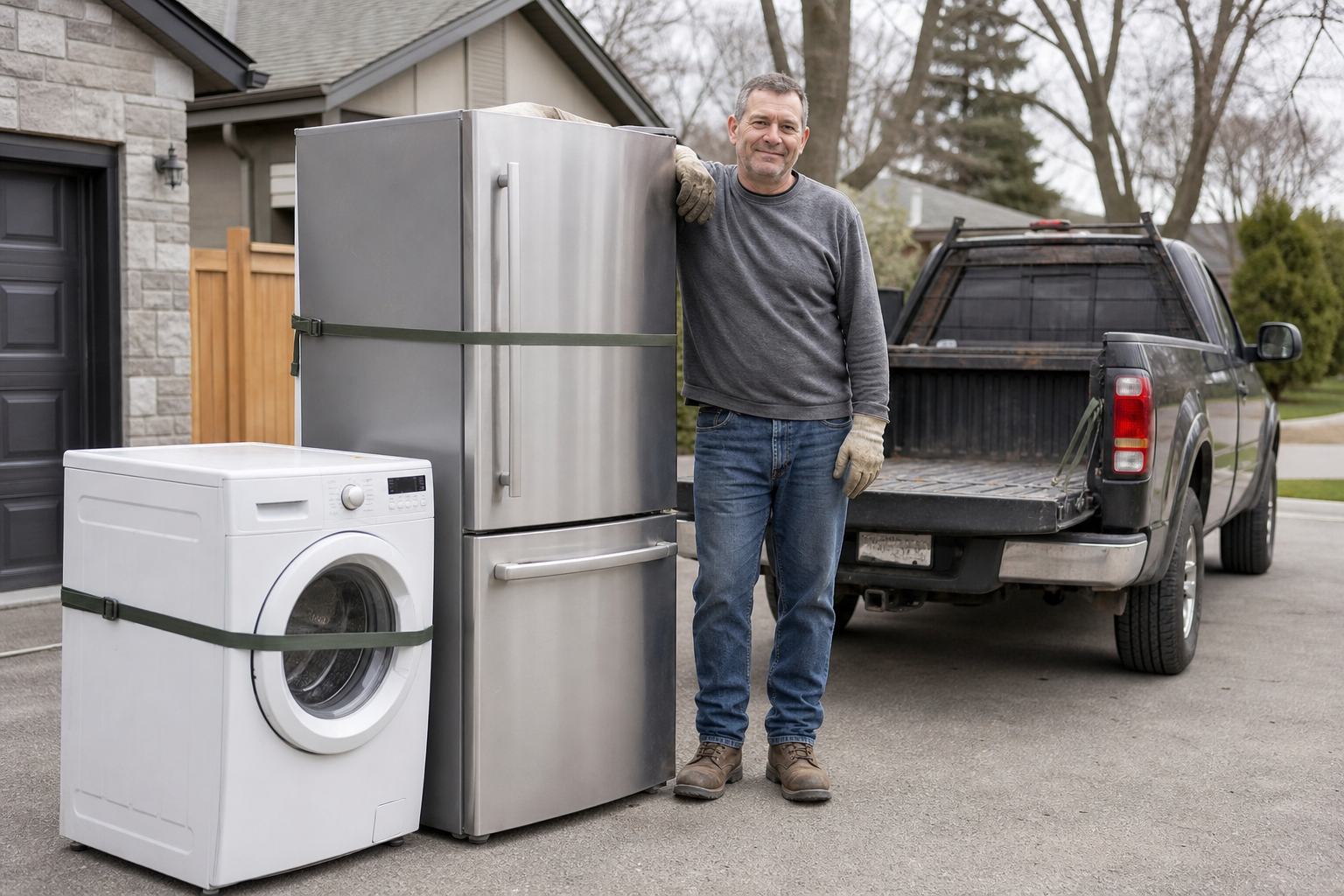
Preparing Appliances for Recycling in Etobicoke Safely
Preparing an appliance for recycling means making it empty, reasonably clean, safely disconnected, and ready to move without hazardous dismantling. Before taking a washer, dryer, refrigerator, stove, microwave, dishwasher, BBQ, air conditioner, or compressor to a scrap yard, remove loose contents, secure movable parts, and confirm how the item should be handled.
What appliance preparation for recycling means
Appliance preparation is the point between removing an appliance from service and taking it to a recycling or scrap facility. You are making the item easier and safer to handle, not rebuilding it or stripping every component from it.
For most household appliances, preparation means removing personal or food-related contents, draining accessible water, unplugging the unit, securing movable parts, and arranging safe transport. Quick Scrap Metal buys and recycles appliances alongside ferrous metals, non-ferrous metals, electronics, and e-waste. You can review its appliance recycling services before sorting your load.
The appliance preparation checklist

- Identify the appliance. Note whether it is a washer, dryer, refrigerator, stove, oven, microwave, dishwasher, BBQ, A/C unit, compressor, or another type.
- Remove contents. Take out food, dishes, clothing, grease traps, shelves, trays, racks, and other loose items.
- Clean and dry accessible areas. Wipe away loose debris, standing water, food residue, and grease without disassembling the appliance.
- Disconnect safely. Unplug the unit and arrange appropriate help for utility disconnection where needed.
- Secure loose parts. Close doors and drawers. Keep removable shelves, trays, cords, and accessories together.
- Plan the move. Check vehicle space, lifting help, the loading route, and tie-downs before moving a heavy appliance.
- Confirm before travelling. Ask about acceptance, cash assessment, current requirements, and pickup options.
Empty, clean, and secure the appliance
Loose contents can spill, break, or shift during loading. Emptying the appliance also prevents personal belongings from being mixed into a scrap load. Remove detachable accessories only when they come away easily and do not require technical disassembly.
Secure doors and drawers so they do not swing open while the appliance is moved. If a door or panel is loose, tell the person helping you load it and keep the loose piece with the appliance. Do not create a new hazard by forcing, cutting, or removing difficult parts.
For washers, dishwashers, and other appliances that may retain water, allow accessible areas to drain and dry before loading. If the appliance cannot be made safe to move, ask about a removal or pickup arrangement instead.
Disconnect only what you can handle safely
Unplug an appliance before handling it. Do not work on damaged cords, exposed wiring, unfamiliar electrical connections, gas connections, or hard-wired installations. Use a qualified person when an appliance is not ready for safe disconnection.
Do not cut refrigerant lines, open sealed systems, remove compressors, or attempt to release substances from an appliance. Do not dismantle heavy internal parts simply to expose more metal. These tasks can create risks that are unnecessary for a basic drop-off.
If you are unsure whether an appliance is ready, describe its condition when you contact the yard. A clear explanation is safer than trying to make an unusual item fit a standard preparation routine.
Common appliances and what to check
Quick Scrap Metal lists washers, dryers, BBQs, A/C units, microwaves, dishwashers, compressors, ovens, and stoves among its appliance-related materials or services. Unusual models, conditions, quantities, or components should be confirmed before arrival.
| Appliance | Prepare it by | Confirm before drop-off |
|---|---|---|
| Washer or dishwasher | Remove contents, drain accessible water, unplug it, and secure hoses and doors. | Ask whether its condition and attached components are accepted. |
| Dryer | Empty the drum, remove loose lint or accessories, unplug it, and secure the door. | Confirm handling requirements if it is unusually large or damaged. |
| Refrigerator | Remove food and shelves, wipe accessible moisture, unplug it, and secure the door. | Ask how this type of appliance should be handled. |
| Stove or oven | Remove racks, pans, and debris. Disconnect it safely and secure doors or loose controls. | Confirm acceptance if it is gas-connected, hard-wired, or missing parts. |
| Microwave | Remove food, trays, and loose accessories, then unplug it and box small parts. | Ask whether it should be dropped off with appliances or electronics. |
| BBQ | Remove food and loose cooking materials. Keep the unit stable. | Confirm how to handle any remaining fuel-related component. |
| A/C unit or compressor | Unplug it if possible, keep it intact, and protect sharp or loose exterior parts. | Ask about acceptance. Do not cut lines or open sealed components. |
What not to dismantle before drop-off
Do not dismantle an appliance simply to separate every metal component. Cutting sealed lines, opening compressors, removing unfamiliar electrical parts, or pulling out heavy internal assemblies can make the item harder and less safe to handle.
Leave exposed wiring and damaged components alone. If an appliance has already been partly dismantled, tell Quick Scrap Metal what was removed and describe any sharp, unstable, or unusual parts before loading it.
Can appliance scrap qualify for cash?
Some appliances contain steel, aluminum, copper, brass, motors, or other materials that may be classified as scrap. Quick Scrap Metal offers cash payouts for qualifying scrap, but eligibility and the final amount depend on material classification, condition, quantity, and current market-based rates.
There is no single fixed value for every refrigerator, washer, stove, or dryer. A clean, intact appliance and a partly dismantled appliance may be assessed differently, while mixed materials can affect classification. Ask for the current assessment rather than relying on an online estimate. For more context about material sorting, see copper scrap grades and sorting.
Choose drop-off or ask about pickup
Drop-off is usually suitable when you have a suitable vehicle, enough loading space, and help for the appliance’s size and condition. It may be less suitable when the unit is trapped in a tight area, too heavy for available helpers, or unsafe to move down stairs or across uneven ground.
Quick Scrap Metal provides household scrap removal and options related to scrap car drop-off or pickup, subject to confirmation. Ask specifically whether pickup is available for your appliance, what information is needed, and whether the arrangement applies to one item or a larger household load.
Transport checklist for bulky appliances
- Measure the appliance and check that your vehicle has enough room for safe loading.
- Arrange suitable lifting help. Do not move a heavy appliance alone if it can tip, slide, or injure you.
- Use suitable straps or tie-downs and prevent doors, drawers, shelves, and loose parts from moving.
- Protect people and the vehicle from sharp edges, broken panels, or protruding components.
- Keep detachable parts, cords, racks, and trays together, especially when carrying several appliances.
- Tell the yard about damaged, unstable, partially dismantled, or unusual items before unloading.
Confirm acceptance before you leave
A short call can prevent an unnecessary trip, especially for refrigerators, A/C units, compressors, hard-wired appliances, damaged items, or a large mixed load. Have the appliance type, approximate quantity, condition, and unusual components ready to describe.
- Is this appliance type currently accepted?
- Should it arrive intact, or are removable parts handled separately?
- Does the item qualify for a cash assessment?
- What are the current drop-off hours?
- Is pickup or household scrap removal available for this item and location?
Where to take prepared appliances in Etobicoke
Quick Scrap Metal is located at 407 Rexdale Blvd, Etobicoke, Ontario M9W 6P8, near Highway 27 and Rexdale. Published hours are Monday through Friday from 8:00 a.m. to 7:00 p.m., Saturday from 8:00 a.m. to 5:00 p.m., and Sunday from 9:00 a.m. to 5:00 p.m.
Hours and acceptance requirements can vary by item or situation, so confirm details before loading an unusual appliance or planning a large drop-off. The business can be reached at +1 (289) 429-0159.
Frequently asked questions
Do I need to dismantle an appliance before recycling it in Etobicoke?
No. Basic preparation means emptying, cleaning, safely disconnecting, and securing the appliance. Avoid cutting sealed systems, handling exposed wiring, removing heavy internal components, or attempting unfamiliar electrical work.
Should refrigerators and A/C units be prepared differently?
They need extra confirmation because they may include sealed components or connections that should not be cut or opened during household preparation. Empty and secure the unit, keep it intact, and ask Quick Scrap Metal about handling before transport.
Can I receive cash for an old appliance?
An appliance may qualify for a cash assessment when it contains accepted scrap materials, but payment is not guaranteed for every item. The amount depends on classification, condition, quantity, and current pricing.
Can Quick Scrap Metal pick up a bulky household appliance?
Household scrap removal and pickup options may be available, but they should be confirmed for the specific appliance and location. If you cannot safely load the item, describe the situation when contacting the business.
Prepare only what you can handle safely
The right preparation is simple: empty the appliance, clean accessible areas, disconnect it safely, secure doors and loose parts, and plan a stable way to move it. Do not turn a recycling drop-off into an electrical repair or sealed-system dismantling project.
Once you know what you have and how it will be transported, confirm acceptance, cash-assessment details, hours, and any pickup option. For current guidance or drop-off information, contact Quick Scrap Metal at 407 Rexdale Blvd, Etobicoke, or call +1 (289) 429-0159.
,”inLanguage”:”en-US”,”description”:”Learn how to prepare appliances for recycling in Etobicoke, including safe disconnection, transport, cash eligibility, and drop-off or pickup options.”,”dateModified”:”2026-09-14T13:50:05.088Z”,”datePublished”:”2026-09-14″,”articleSection”:”Scrap Metal Buying”,”mainEntityOfPage”:},,{“item”:”https://quickscrapmetal.com/blog”,”name”:”Blog”,”@type”:”ListItem”,”position”:2},{“item”:”https://quickscrapmetal.com/blog/prepare-appliances-for-recycling-etobicoke”,”name”:”Preparing Appliances for Recycling in Etobicoke Safely”,”@type”:”ListItem”,”position”:3}]}