
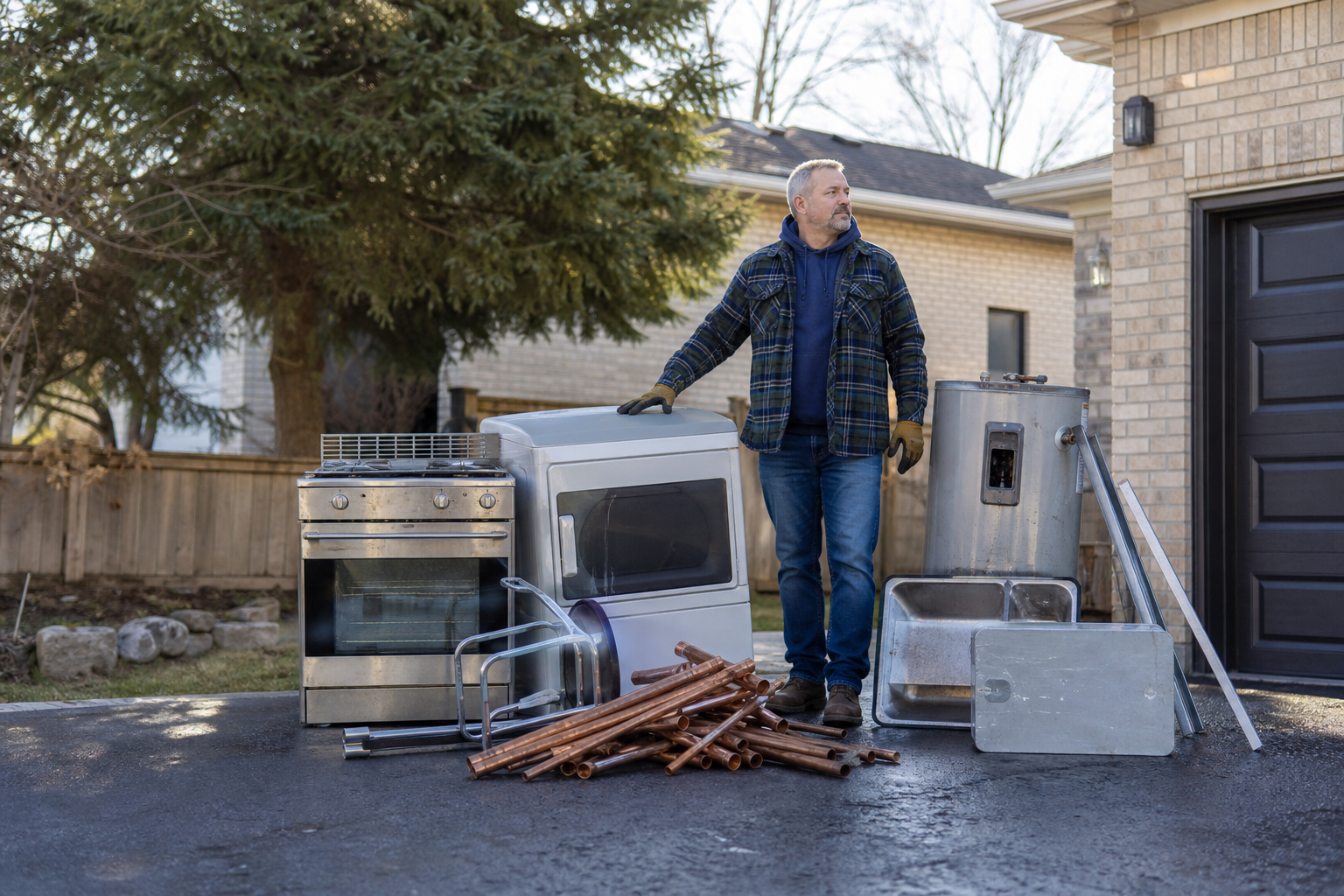
Residential scrap metal pickup in Etobicoke is worth exploring when you have bulky, difficult-to-transport items and enough recyclable material to justify collection. Smaller loads that are already sorted and easy to move may be simpler to bring directly to a yard.
The practical choice depends on four things: what you have, how much you have, where it is located, and how easily a collection vehicle can access it. Quick Scrap Metal offers household scrap removal and arranged pickup options, as well as drop-off at its yard at 407 Rexdale Blvd in Etobicoke.
Pickup or Drop-Off: Which Option Fits Your Household Load?
Pickup reduces the work of moving large appliances, heavy metal, or a substantial household cleanout. It can be especially useful when items are gathered in a driveway, garage, or other accessible location and cannot easily fit into a personal vehicle.
Drop-off gives you more control over when you deliver the material and can make sense when the load is already sorted, stable, and manageable. Quick Scrap Metal accepts a broad range of metals, appliances, electronics, and e-waste, with qualifying scrap eligible for on-the-spot payment at the Etobicoke yard.
| Consideration | Pickup | Drop-off |
|---|---|---|
| Best for | Bulky, heavy, or difficult-to-transport household materials | Sorted materials that can be loaded and transported safely |
| Your effort | Less lifting and hauling, but items must be consolidated and accessible | More responsibility for loading, transport, and unloading |
| Eligibility | Depends on material value, volume, access, and logistics | Depends on the yard accepting the materials you bring |
| Payment | Confirm whether the load qualifies for payment and whether pickup is free | Ask how the delivered materials will be assessed and paid |
| Timing | Requires arranging collection details in advance | Works around the yard’s published operating hours |
When Residential Pickup Makes Sense

Pickup is usually the option to investigate first when your items are too large, heavy, or numerous for a normal trip. A group of appliances, a garage full of metal offcuts, or a concentrated collection of household scrap may be more practical to collect than to move piece by piece.
Access matters just as much as quantity. Materials should be consolidated in a location where they can be reached without navigating unnecessary obstacles. Homeowners who qualify for free scrap metal pickup can improve the assessment by providing photos and staging items where they can be safely accessed.
Do not assume that every request is free or that every load qualifies. Free collection depends on whether the recyclable value is sufficient to offset the work and logistics involved. Confirm the arrangement before moving items or relying on a particular pickup date.
Household Items That May Be Suitable for Collection
When requesting pickup, describe the actual items rather than simply saying you have “junk.” Household scrap metal may include old refrigerators, stoves, dishwashers, washers, dryers, air-conditioning units, lawn mowers, BBQs, heating ducts, and other metal appliances.
Smaller materials can also contribute value. Mention copper pipes, brass fixtures, aluminum, steel, cast iron, radiators, motors, cables, wire, and metal offcuts. Quick Scrap Metal also discusses electronics and e-waste such as computers, televisions, monitors, peripherals, and printed circuit boards.
These examples are not a guarantee that every item will be accepted through every pickup arrangement. Mixed loads can contain materials with different handling requirements, so disclose unusual items, batteries, electronics, or anything that is damaged, leaking, unstable, or difficult to access.
If you are sorting household scrap metal, separate obvious categories such as appliances, loose metal, copper, brass, aluminum, steel, and e-waste where practical. This gives the yard a clearer picture of the load and helps you explain what needs to be collected.
What Affects Pickup Eligibility?
Material value
Pickup involves vehicle time, loading, transport, and sorting. A load with enough recyclable material may justify those logistics, while a few low-value items may be better suited to drop-off or another removal service.
Volume and concentration
A large amount of similar material is easier to evaluate than a scattered collection of unrelated objects. Consolidating items helps the business understand the potential value before deciding whether collection is suitable.
Access and loading conditions
Describe whether items are at ground level, inside a garage, behind a gate, on a narrow driveway, or blocked by vehicles. Collection becomes more complicated when items require extensive moving, stairs, dismantling, or special handling.
What is included in the load
Non-recyclable household junk can reduce the usefulness of a scrap pickup. If the load includes furniture, garbage, construction debris, liquids, or other materials that are not scrap metal, explain that in advance. A general junk removal provider may be more appropriate for a mixed cleanout.
How to Prepare Your Scrap for Pickup
A little preparation can make it easier to assess the load and avoid an unproductive trip. Use this checklist before contacting a scrap recycler:
- Identify the materials. List the main items and any obvious metals, appliances, electronics, batteries, wire, or e-waste.
- Separate obvious categories. Keep loose metal, appliances, electronics, and unusual materials distinct where possible.
- Take clear photos. Photograph the full load and include closer images of labels, large appliances, wires, or materials that may affect acceptance.
- Estimate the quantity. You do not need a precise weight, but note the number of appliances, approximate number of bags or bins, or the area occupied by the material.
- Consolidate the items. Group materials in one accessible location instead of leaving them spread through the home or yard.
- Describe the access route. Explain where the items are staged, how a vehicle can reach them, and whether gates, stairs, narrow passages, or parked cars could affect loading.
- Confirm the arrangement. Ask whether the items qualify, whether pickup is free, what preparation is required, and how payment will be handled.
Safe Staging Without Unnecessary Dismantling
Stage items so they are stable, visible, and reachable without creating a trip hazard. Keep children and pets away from the loading area, leave a clear route, and do not stack heavy objects where they could fall.
Do not dismantle appliances, cut refrigerant lines, open sealed components, or handle batteries and other potentially hazardous parts unless the recycler specifically tells you how to proceed. Preparation should focus on access and accurate information, not on taking equipment apart.
Keep electronics separate where practical and mention them when requesting pickup. If an appliance is damaged, leaking, unusually heavy, or located somewhere difficult to reach, disclose that before collection. For additional appliance preparation considerations, see preparing appliances for recycling in Etobicoke safely.
Pricing, Free Pickup, and Payment Expectations
Scrap pricing is material-specific and market-based. The website does not publish a fixed price list, so the value of a household load cannot be determined reliably from a general list of items alone.
When you request a quote or pickup assessment, provide the material types, approximate quantity, photos, and access details. Ask whether the load qualifies for free collection, whether any removal charge applies, and whether qualifying material will be paid for after weighing or assessment.
Do not assume that an appliance, mixed load, or small quantity will produce cash. Payment depends on the material accepted and its assessed value. Confirm the terms before collection so you understand what will happen to both recyclable and non-recyclable items.
When Drop-Off Is the Better Choice
Drop-off is often simpler when you have a manageable load, can transport it safely, and want to avoid coordinating collection access. It may also be preferable when the materials are already sorted and you want to bring them directly to the yard for assessment.
Quick Scrap Metal is located at 407 Rexdale Blvd, Etobicoke, Ontario, near Highway 27 and Rexdale. The supplied hours list Monday through Friday from 8:00 a.m. to 7:00 p.m. and Sunday from 9:00 a.m. to 5:00 p.m. Verify current arrangements before travelling, particularly if you have unusual materials or a large load.
Bring only what you can load and transport safely. Do not overload a vehicle, leave unstable materials unsecured, or mix items in a way that could shift during travel. If the load is too bulky or heavy for your vehicle, pickup may be the safer option to discuss.
Pickup Request Checklist for Etobicoke Homeowners
Have these details ready when you contact a recycler about residential scrap metal pickup:
- Your Etobicoke address and the location of the items on the property.
- A list of the main materials, appliances, electronics, or e-waste.
- Photos showing the full load and any unusual or valuable materials.
- An approximate quantity, number of items, or estimated load size.
- Access information, including stairs, gates, narrow driveways, parked vehicles, or ground-level staging.
- Whether the material is separated, mixed, loose, bagged, or inside appliances.
- Questions about acceptance, free pickup eligibility, payment, and collection timing.
Use the pickup contact route to confirm the details rather than assuming that a general service description applies to every residential load.
Frequently Asked Questions
Can every household in Etobicoke get free scrap metal pickup?
No. Free pickup depends on whether the recyclable value of the load is sufficient to offset collection logistics. Material type, quantity, accessibility, and the amount of sorting or loading required can all affect eligibility.
What household items should I mention when requesting scrap pickup?
List appliances such as refrigerators, stoves, dishwashers, washers, and dryers, along with copper pipes, brass fixtures, metal offcuts, wire, motors, radiators, electronics, and e-waste. Mention batteries, damaged items, or unusual materials separately.
How should I prepare appliances and metal before pickup?
Consolidate items, take photos, clear a safe access route, and keep the load stable. Avoid dismantling appliances or handling potentially hazardous components unless the recycler gives you specific instructions.
Is pickup better than dropping scrap off at the Etobicoke yard?
Pickup is generally more convenient for bulky or difficult-to-transport loads. Drop-off is often more practical for smaller, sorted materials that you can safely deliver to 407 Rexdale Blvd.
How can I find out what my household scrap is worth?
Provide the recycler with the material types, approximate quantity, photos, and access information, then ask for current material-specific details. The value may change by category and assessment, and there is no single fixed rate for every household load.
Choose the Option That Fits Your Load
For Etobicoke homeowners, the best first step is to compare the effort of transporting the material with the likely value and convenience of collection. Contact a recycler before moving bulky items when access is difficult, and provide enough detail for the load to be assessed accurately.
If your materials are sorted, stable, and easy to transport, drop-off at 407 Rexdale Blvd may be the more direct option. Whichever route you choose, confirm acceptance, pickup eligibility, pricing expectations, and payment details before the handoff.
For residential scrap removal, pickup questions, or yard drop-off information, visit Quick Scrap Metal.