
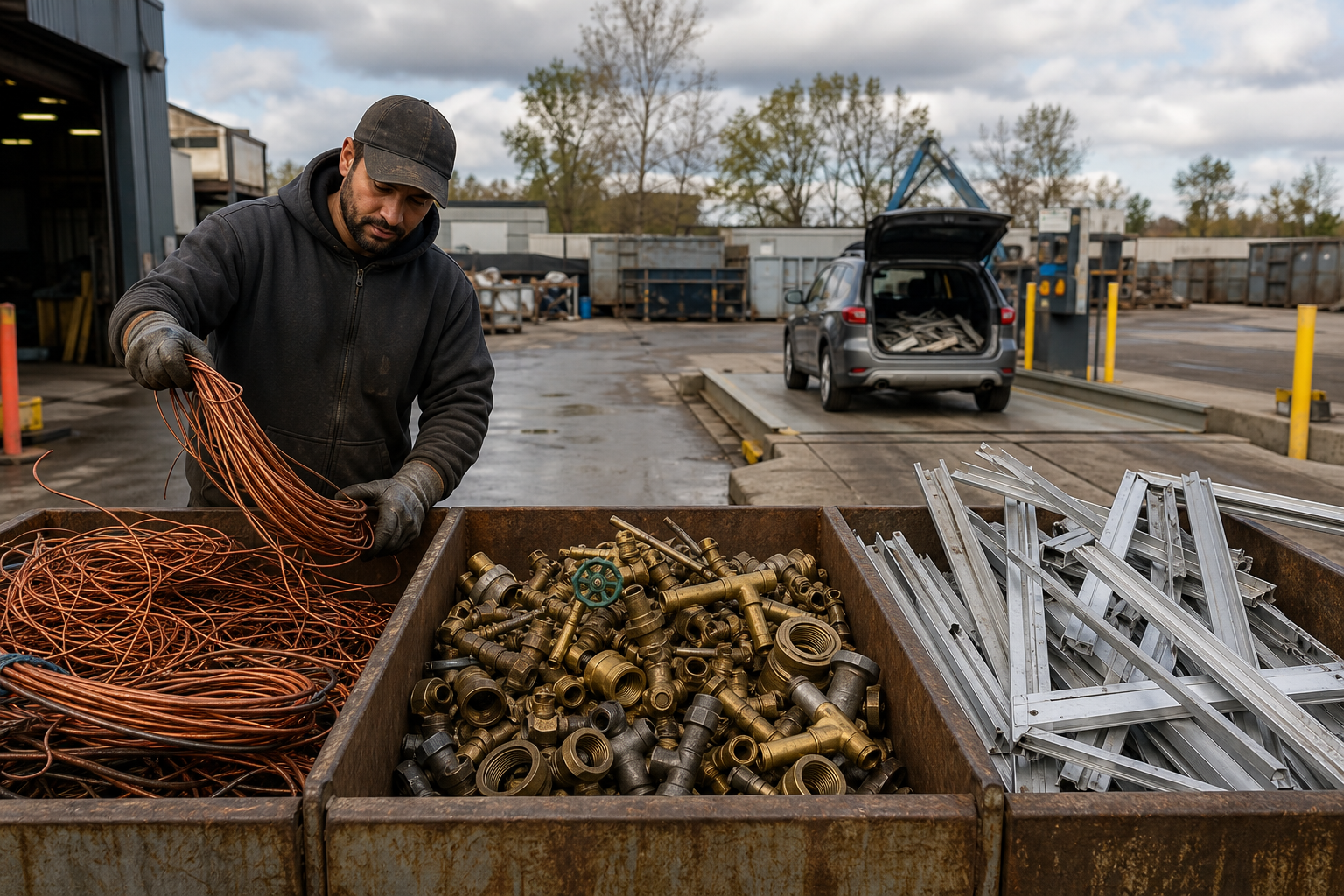
There is no single fixed price for copper, brass, or aluminum scrap. A current quote depends on the metal, its grade, cleanliness, physical form, weight, attachments, and market conditions.
That is why an old online price table can mislead. The better approach is to sort your material, describe it accurately, and request a current quote based on the actual load.
Quick summary

- Copper, brass, and aluminum each have multiple grades and forms.
- Clean, separated material is easier to evaluate than mixed material.
- Prices are commonly discussed in Canadian dollars per pound, but rates change.
- Do not remove hazardous, energized, pressurized, or unfamiliar components.
- Quick Scrap Metal accepts qualifying scrap at 407 Rexdale Blvd in Etobicoke and provides cash payouts for qualifying materials.
What determines copper, brass, and aluminum scrap prices?
Scrap yards do not value every item made from the same base metal identically. A clean, identifiable material is generally easier to assess and process than a mixed load containing insulation, coatings, dirt, or other metals.
Metal type and grade
Bare copper wire, insulated cable, copper pipe with fittings, and copper-containing equipment may be assessed differently. The same applies to clean aluminum extrusion, cans, cast aluminum, and mixed aluminum items. Brass fixtures may contain steel, plastic, rubber, or plating.
Cleanliness and physical form
Solder, insulation, paint, steel screws, plastic housings, rubber seals, and other attachments can change the material category. Form also matters because the yard needs to determine how much of the load belongs to each category.
Weight, quantity, and market conditions
Scrap prices are commonly expressed in CAD per pound, but the final amount depends on the verified weight assigned to each category. Market conditions and buyer demand can also change, so an online figure may reflect a different date, location, or grade.
Copper vs. brass vs. aluminum

| Material | Common examples | What can affect the quote | Useful preparation |
|---|---|---|---|
| Copper | Wire, pipe, tubing, cable, motors, radiators, and electrical components | Purity, insulation, solder, fittings, coatings, and mixed material | Keep bare copper, insulated wire, pipe, and mixed components separate |
| Brass | Faucets, valves, plumbing fittings, hardware, and fixtures | Steel, plastic, rubber, chrome plating, and other attachments | Separate recognizable brass from heavily mixed fixtures |
| Aluminum | Cans, siding, sheet, extrusion, cast parts, and frames | Paint, steel attachments, contamination, form, and mixed loads | Keep cans, sheet, extrusion, cast pieces, and mixed items apart when practical |
This is a sorting guide, not a rate sheet. The yard’s assessment determines the applicable category and current price.
Copper scrap: why form and cleanliness matter
Copper comes from electrical work, plumbing, renovation offcuts, appliances, motors, radiators, and cable. Two loads both described as “copper” may contain very different proportions of copper and non-copper material.
Bare copper is different from insulated wire. Clean tubing is different from pipe with solder, brass fittings, or other attachments. Motors, transformers, and electronic parts may contain copper alongside steel, plastic, insulation, and other components.
Do not rely on color alone when identifying unfamiliar material. A copper scrap identification guide can help you organize common materials before requesting a quote.
Remove only attachments that are obvious and safe to remove. When in doubt, keep the item intact and ask the yard how it should be presented.
Brass scrap: separate fixtures and mixed attachments
Brass commonly comes from faucets, valves, fittings, hardware, and decorative items. It may be yellow, reddish, plated, painted, or partly covered, so appearance is only one clue.
A brass faucet may include steel screws, a cartridge, rubber seals, plastic parts, or plating. A plumbing fitting may be mostly brass but still contain another metal. These components can affect classification and weighing.
For a household load, group clearly recognizable brass fixtures together and keep heavily mixed items separate. The scrap yard should make the final determination rather than relying on color or a product label alone.
Aluminum scrap: sorting still makes a difference
Aluminum is common in cans, siding, frames, sheet, extrusion, lawn equipment, appliances, vehicle parts, and building materials. Because it is lightweight, a large-looking pile may weigh less than expected, although sorting can still matter for a substantial quantity.
Clean extrusion, cast aluminum, cans, painted sheet, and aluminum attached to steel are not necessarily identical categories. Steel screws, brackets, plastic, rubber, dirt, and other attachments affect the composition.
For a few mixed household items, extensive dismantling may not be worthwhile. For renovation, demolition, manufacturing, or business loads, separating recognizable forms can make evaluation clearer.
How to prepare scrap before selling
- Identify the broad material. Group copper, brass, aluminum, steel, insulated wire, electronics, and uncertain items.
- Separate obvious categories. Keep copper away from brass and aluminum, and separate clean-looking material from heavily attached items.
- Remove loose non-metal items. Take out packaging, cardboard, and loose plastic when safe and easy.
- Keep forms apart. Do not combine clean wire, insulated cable, plumbing fixtures, cans, extrusion, and mixed components unnecessarily.
- Estimate the quantity. Note the number of containers or pieces and estimate the weight if possible.
- Identify unusual items. Describe batteries, electronics, appliances, transformers, and mixed-material components separately.
- Transport safely. Secure loose pieces, protect sharp edges, and avoid overloading your vehicle.
For a broader preparation list, review what to bring to a scrap yard in Etobicoke. General advice does not replace the yard’s assessment.
A simple sorting checklist
| Material | Check before leaving |
|---|---|
| Copper | Is it bare, insulated, attached to fittings, or part of a mixed component? |
| Brass | Does it include steel, plastic, rubber, or plating? |
| Aluminum | Can you separate cans, extrusion, sheet, cast parts, and mixed items? |
| Uncertain material | Have you kept it separate rather than assigning an unverified grade? |
| Quantity | Do you know approximately how much you have? |
How to request a useful current quote
Provide more than the word “copper,” “brass,” or “aluminum.” Explain the form, approximate weight, quantity, cleanliness, and whether the material is separated or mixed.
A useful description might be: “I have three containers of insulated copper cable, one box of brass plumbing fittings, and several aluminum frames with steel attachments.” If you are unsure, say so. An honest description is more useful than assigning a grade you cannot verify.
Photos may show the general material but not its weight, hidden attachments, contamination, or the full load. A final quote may require an in-person review and weighing. Ask whether a quoted figure applies to the whole load or separate categories.
Why online scrap-price tables become outdated
Rates can change with market conditions and buyer demand. Comparisons can also be misleading when a clean grade is compared with a mixed grade, a per-pound figure is confused with a total payout, or a rate from another location is applied locally.
A pricing guide explains what affects a quote, but it cannot replace a current material-specific assessment. Compare the date, unit, grade description, accepted material, and whether the figure is an estimate or a live quote.
Selling scrap metal in Etobicoke and the GTA
Quick Scrap Metal accepts copper, brass, aluminum, steel, cable, nickel, stainless steel, appliances, electronics, and other listed categories at 407 Rexdale Blvd in Etobicoke, near Highway 27 and Rexdale. The business serves Etobicoke, Toronto, Mississauga, Brampton, and the broader GTA.
Published hours are Monday through Friday from 8:00 AM to 7:00 PM, Saturday from 8:00 AM to 5:00 PM, and Sunday from 9:00 AM to 5:00 PM. Confirm details before travelling with an unusual or bulky load.
Quick Scrap Metal describes its service as cash for qualifying scrap. Bring material sorted as clearly as practical, explain anything mixed or uncertain, and remember that the final amount depends on the categories and weights assessed.
Frequently asked questions
Should I separate copper, brass, and aluminum?
Yes, whenever it is safe and practical. Separating broad metal types makes the load easier to evaluate. Do not dismantle hazardous or unfamiliar equipment simply to sort it.
Is aluminum worth sorting?
It can be, especially with a large quantity or recognizable forms such as cans, extrusion, sheet, and cast pieces. For a small mixed load, the time required may outweigh the benefit.
Why can two copper loads receive different quotes?
They may differ in purity, insulation, attachments, contamination, form, weight, or the amount of other material included. Market conditions and the quote date can also differ.
Are scrap prices quoted per pound?
They are commonly discussed in CAD per pound, but the applicable rate depends on material category and current conditions. The total payout depends on verified weight.
Can I get a fixed price before arriving?
You can request a current quote, but a final fixed amount may require accurate information about grade, weight, and attachments. An in-person review may be necessary.
Conclusion: prepare the material, then get a current quote
The most reliable way to understand copper, brass, and aluminum scrap prices is to focus on the actual material rather than a headline rate. Separate metals, keep recognizable forms apart, remove only safe attachments, and describe uncertain items honestly.
For a local cash-for-scrap option, bring your prepared material to Quick Scrap Metal at 407 Rexdale Blvd in Etobicoke, or request a current quote before travelling.