
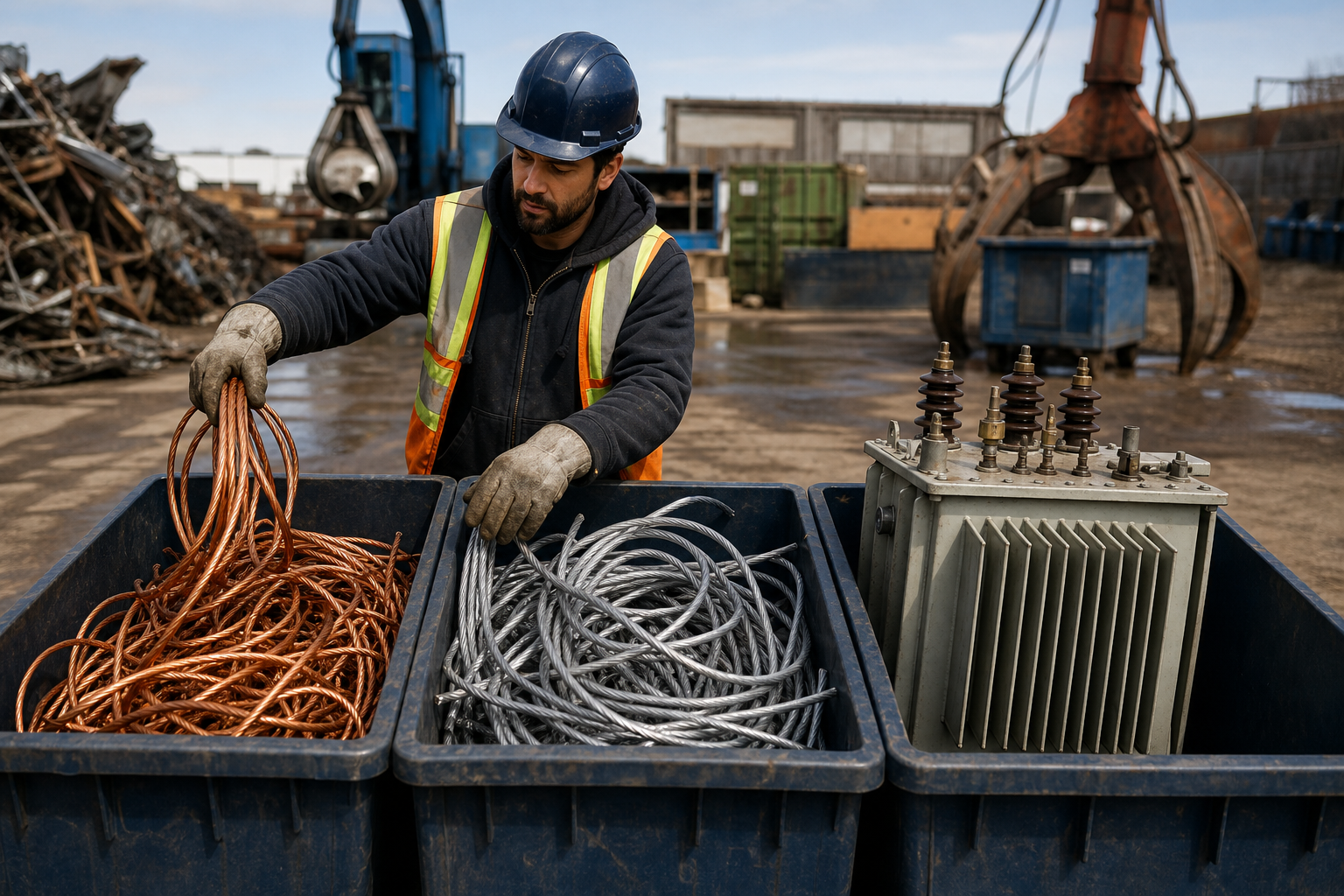
Transformer and cable disposal starts with classification. Clean copper or aluminum cable may be assessed as scrap metal, while insulated or mixed cable needs sorting. A transformer may contain valuable metal, but an unknown, sealed, oil-filled, or potentially PCB-containing unit should never be opened or assumed acceptable without confirmation.
For homeowners, contractors, and businesses in Toronto and the GTA, the safest approach is to identify the load, keep materials separate, photograph labels, and contact a recycler before transporting uncertain equipment. Ontario’s current terminology includes electrical and electronic equipment, or EEE. Ontario’s EEE regulation provides the current provincial reference.
Quick summary

- Separate bare copper, insulated cable, aluminum cable, and mixed material.
- Keep transformers intact. Never open, drain, cut, or dismantle an unknown or oil-filled unit.
- Photograph nameplates, model numbers, markings, connectors, and visible fluid concerns.
- Potential value depends on material type, recoverable metal, cleanliness, attachments, quantity, and current market conditions.
- Quick Scrap Metal lists transformers, cable, and wire among its material categories at 407 Rexdale Blvd in Etobicoke. Confirm acceptance before bringing unusual equipment.
First decide what you have
The word “transformer” covers several types of equipment. A small dry transformer from a control panel is different from a larger sealed or oil-filled transformer removed from industrial equipment. Its markings, history, condition, and contents affect whether it can be assessed as ordinary scrap, electrical and electronic equipment, or material requiring specialized handling.
Cable also falls into practical categories. Bare copper wire, insulated copper cable, aluminum cable, communication cable, and cable with steel shielding do not have the same recoverable metal content or processing requirements. Ontario’s definition of waste electrical and electronic equipment includes devices that required an electric current to operate and became waste from residential, commercial, institutional, or industrial establishments. The provincial equipment definition helps explain why some electrical items are handled differently from loose metal offcuts.
Transformer and cable disposal comparison

| Material | Likely assessment | What to do first |
|---|---|---|
| Clean copper cable | Potential non-ferrous scrap, depending on grade and condition | Separate bare, insulated, tinned, and coated cable. Never burn insulation. |
| Aluminum cable | Potential non-ferrous scrap based on aluminum recovery | Keep it separate from copper, steel, plugs, plastic, and unrelated attachments. |
| Insulated or mixed cable | Usually assessed by recoverable metal content and processing effort | Describe the insulation, connectors, shielding, and approximate quantity. |
| Ordinary dry transformer | May contain recoverable copper, aluminum, and steel, subject to assessment | Leave it intact. Photograph the nameplate and record its source and size. |
| Unknown, sealed, oil-filled, or potentially PCB-containing transformer | Do not assume ordinary scrap acceptance | Do not open, drain, cut, or puncture it. Seek instructions before transport. |
How to identify and sort cable
Start with information that can be gathered without cutting into questionable equipment. Check jacket markings, conductor colour, gauge, plugs, connectors, and shielding. Copper is often reddish or orange where exposed, while aluminum is usually lighter and silvery, but appearance alone cannot reliably identify every cable.
Keep bare copper separate from insulated wire. Also separate heavy power cable, extension cords, data or communication cable, coaxial cable, and wire attached to motors or other equipment. Insulation changes the proportion of recoverable copper by weight, while plugs, steel armor, aluminum shielding, plastic, and dirt add material that may require additional handling.
Before arranging disposal, review insulated wire categories to understand how insulation and copper recovery can affect sorting and value. Some cables contain aluminum rather than copper, so identifying the aluminum cable and wire category and checking attached components can also help.
Remove only loose, obvious non-metal debris when it is safe. Do not burn insulation, use improvised stripping methods, or dismantle equipment solely to expose a conductor. If stripping requires opening a sealed assembly or working around energized components, stop and ask for professional instructions.
What to do with transformers
Do not treat every transformer as an ordinary metal box. Check for markings such as dry-type, oil-filled, sealed, or fluid-filled. Look for the manufacturer, model number, voltage information, date, warning labels, and any indication of PCB or legacy insulating material. The absence of a clear label does not prove that a unit is suitable for standard scrap drop-off.
Leave the transformer intact and upright where practical. Do not drain oil, remove covers, cut windings, puncture tanks, or use heat to separate components. These actions can cause spills, expose people to unknown substances, and make the unit harder to assess.
For an old industrial, utility, or commercial transformer, record where it came from and whether it was removed from service. A recycler can then determine what information is needed before accepting or directing the material. Do not assume a general scrap yard provides specialized PCB or hazardous-waste handling unless that service has been specifically confirmed.
Safe preparation checklist
- Identify the source. Note whether the material came from a renovation, jobsite, electrical panel, machine, vehicle, or industrial installation.
- Photograph labels. Capture transformer nameplates, cable markings, connectors, visible damage, and overall dimensions.
- Separate known materials. Keep copper, aluminum, steel, insulated wire, appliances, and electronic equipment apart.
- Keep the load dry and contained. Use bins or boxes for loose cable and protect people from sharp ends.
- Do not dismantle uncertain equipment. Leave sealed transformers and unfamiliar electrical units intact.
- Remove only safe, loose debris. Never cut energized cable or work on equipment that may remain connected to power.
- Keep ownership information. Contractors and businesses should retain a work order, invoice, or note showing the legitimate source when available.
What affects potential scrap value
A recycler does not price every cable or transformer by its outside appearance. An offer may reflect the metal category, recoverable copper or aluminum content, insulation, steel components, contamination, attachments, quantity, and the effort required to sort or process the load.
Clean, consistent material is easier to classify than a mixed pile. Insulated wire may be priced according to estimated copper recovery rather than total jacketed weight. Aluminum cable, communication cable, and cable containing steel or plastic can have different classifications. For transformers, the proportion of copper, aluminum, and steel matters, as do the unit’s condition, fluid status, construction, and handling requirements.
Rates are market-based and material-specific, so there is no responsible fixed price for “a transformer” or “a box of cable” without more information. Separate loads, accurate descriptions, and photographs can help a yard determine whether it can provide a useful estimate before you travel.
What to confirm before transporting the load
Contact the recycler before bringing any transformer or unusual electrical equipment. Provide:
- The material type, including copper cable, aluminum cable, insulated wire, or mixed cable.
- The transformer type, manufacturer, model, dimensions, and whether it is dry, sealed, or oil-filled.
- Photographs of labels, nameplates, connectors, fluid residue, and the complete unit.
- The approximate weight, quantity, and whether the material is loose, palletized, or attached to larger equipment.
- Whether you need drop-off or want to ask about pickup options.
- Any concern that the equipment may contain legacy insulating material or require specialized handling.
Do not load an uncertain transformer simply because it contains visible metal. Confirmation before transport can prevent an avoidable trip and helps the yard give safer, more accurate instructions.
Local disposal context in Etobicoke and the GTA
Quick Scrap Metal is located at 407 Rexdale Blvd in Etobicoke, near Highway 27 and Rexdale, and serves customers from Toronto and the broader GTA, including Mississauga and Brampton. Its listed material categories include transformers, cable, wire, copper, aluminum, lead, batteries, and other ferrous and non-ferrous metals.
The business operates as a drop-off scrap buyer that pays cash for qualifying material at market-based rates. Published hours include weekdays until 7:00 p.m., Saturday hours until 5:00 p.m., and Sunday hours from 9:00 a.m. to 5:00 p.m. Hours and acceptance can change, so confirm before arriving with an unusual or potentially regulated load.
For a broader view of available categories and recycling services, review the scrap metal and e-waste services. This can help you decide whether your load is a straightforward drop-off or requires a conversation first.
Frequently asked questions
Can I take an old transformer to a scrap yard?
Possibly, but do not assume acceptance. A small, clearly identified dry transformer may be assessed for recoverable metal, while an unknown, sealed, oil-filled, or potentially PCB-containing unit requires confirmation before transport. Send photographs of the nameplate and complete unit.
Should I strip insulation from cable before recycling it?
Not always. Stripping can change a cable’s classification, but it may not be practical or safe for every type. Never burn insulation or dismantle cable connected to energized equipment. Sort the material as it is and ask how the recycler wants it presented.
How can I tell whether a cable is copper or aluminum?
Check jacket markings and any safely exposed conductor, but do not rely on colour alone. Coatings, oxidation, and mixed construction can be misleading. Keep uncertain cable separate and identify it as unknown when requesting an assessment.
What should I do with an unknown or oil-filled transformer?
Keep it intact, upright where practical, and away from activities that could damage the casing. Do not drain or open it. Photograph its labels, note its source, and contact a qualified recycler or specialized handler before moving it.
What information should I provide before bringing transformers or cable to Quick Scrap Metal?
Provide the material type, photographs, labels, dimensions, approximate quantity, and any information about oil, damage, or original use. Ask whether the specific transformer or cable can be assessed at the Etobicoke location and whether drop-off or another arrangement is appropriate.
Make the disposal decision before you load the vehicle
The practical rule is simple: sort known cable, keep copper and aluminum separate, and treat insulated or mixed cable according to its recoverable content. Leave unfamiliar transformers sealed and intact, especially when they are oil-filled, damaged, or missing identifying information.
Ontario’s current EEE framework distinguishes electrical equipment from former waste-diversion terminology, and some transformers may need handling beyond ordinary scrap recovery. When the material’s history or contents are unclear, confirmation is more important than trying to maximize the metal recovered from it.
For local guidance on a transformer, cable, or mixed load, contact Quick Scrap Metal before visiting its 407 Rexdale Blvd yard. Share clear photos and a description so the team can confirm whether the material is suitable for assessment and explain the next step.