
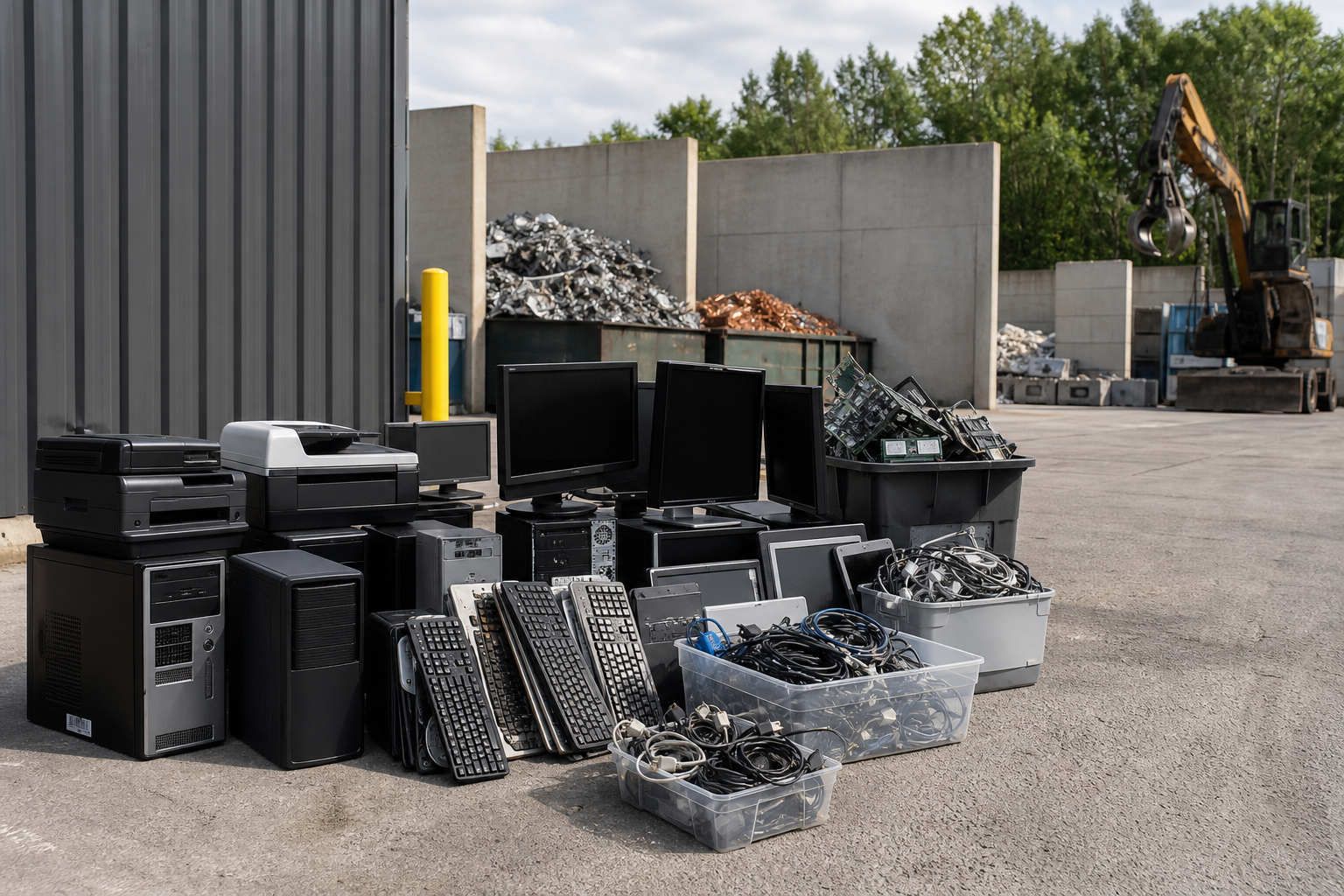
E-waste pickup in Etobicoke may suit a large, heavy, inaccessible, or business load, but availability, pricing, minimum quantities, and access requirements must be confirmed before booking. For a small load that fits safely in your vehicle, drop-off or a public recycling route may be simpler. Related reading: Best Pickup Options: Get Prints Fast in 2026 Today.
E-Waste Pickup in Etobicoke: What You Can Confirm First
“E-waste pickup” can mean a private recycler collecting electronics from your property, a business arranging scheduled collection, or a public program accepting household devices. These routes differ in eligibility, cost, timing, loading requirements, and paperwork.
Quick Scrap Metal is located at 407 Rexdale Blvd in Etobicoke, near HWY 27 and Rexdale. Its published details cover scrap metal, home appliances, electronics, and e-waste recycling, including cash on the spot for qualifying scrap. They do not establish universal residential pickup terms for every load, so confirm the route before putting devices outside or loading a truck.
A homeowner with a few monitors or a small box of cables may find a drop-off trip easier than arranging collection. Pickup becomes more worth investigating when the load is bulky, spread across an office, difficult to move, or impossible to transport safely in your vehicle.
Choose the Route That Fits Your Load

The right route depends on the volume of electronics, your transport options, the property layout, and whether you need business records or a scheduled collection.
Private pickup: best when access or volume is the obstacle
Ask about private pickup when several large devices will not fit safely in a car or van, or when equipment is stored in a basement, on an upper floor, behind a locked commercial entrance, or away from a suitable loading area.
Collection is not automatically the better choice for a small load. A provider may set a minimum quantity, require ground-level staging, limit service by address, or charge for stairs, distance, loading, or special handling. Treat each of those as a question to resolve before booking.
Drop-off: best for a small, transportable load
Drop-off usually makes sense when the electronics fit securely in your vehicle, you can move them without unsafe lifting, and you want to combine them with other recyclable material. It gives you control over when you travel and avoids waiting for a collection window.
A mixed household load may include electronics, an appliance, and ordinary scrap metal. Separate those groups before travelling and ask about unusual items, especially anything containing a battery, refrigerant, liquid, broken glass, or a damaged power cell.
Public recycling: best when private acceptance is unclear
A municipal or public route may be more suitable for a small quantity, an item with no apparent scrap value, or a device that a private buyer will not confirm. Dedicated public programs can also be appropriate for materials such as certain batteries or light bulbs.
Ontario Regulation 522/20 addresses public accessibility and acceptance obligations for covered electrical and electronic equipment collection sites. It does not guarantee residential pickup from a private buyer, set a private collection price, or determine whether every item qualifies for payment. Review the current Ontario electrical and electronic equipment regulation if you need the governing framework.
What to Ask About the Electronics in Your Load
Do not assume that every electronic item follows the same collection or payment route. Before arranging service, describe the equipment by type, quantity, size, condition, and location.
| Load detail | Why it affects the decision | Question to ask |
|---|---|---|
| Small household devices | They may be easier and less costly to transport yourself. | Is drop-off the available route for this quantity? |
| Large screens or office equipment | Weight, stairs, fragile parts, and vehicle space affect collection logistics. | Who moves the items, and where must they be staged? |
| Mixed electronics and metal | Different material groups may be assessed or processed separately. | Should I separate the load before pickup or arrival? |
| Devices with batteries or damage | Condition can affect acceptance, handling, and transport. | How should damaged or battery-powered items be handled? |
| Business equipment | A business may need an inventory, receipt, or transfer record. | What documentation can accompany the collection? |
Electronic items do not all have the same scrap value. Assessment can depend on material, completeness, weight, condition, contamination, and the sorting or handling required. A scrap value estimate can explain the factors involved, but it cannot replace an item-specific assessment or guarantee a payout.
Prepare an E-Waste Load Before Pickup or Drop-Off

Preparation for this decision is mainly about making the load easy to describe, stage, and transport. Create a short inventory, group similar equipment, and identify anything that needs a separate handling route.
Build a useful inventory
Record the number of devices, broad categories, approximate sizes, and their location. For a business, note which rooms or floors contain equipment and whether a loading door, elevator, stairs, or parking restrictions will affect collection.
Photographs can answer practical questions before a vehicle is booked. Show the quantity, storage area, access route, and any damaged or unusually large items.
Stage the load without unnecessary dismantling
Keep electronics dry and place fragile screens or housings where heavy material cannot fall onto them. Separate electronics from appliances and ordinary scrap metal so the receiving team can identify the load quickly.
Do not dismantle sealed electronics simply to expose possible metals. Opening screens, power supplies, or enclosed components can create sharp edges, electrical hazards, chemical exposure, or breakage and may make the equipment harder to assess.
Set aside batteries and special items
Identify batteries, bulbs, refrigerant equipment, leaking devices, and other unusual items in advance. Keep uncertain items separate until the receiving facility confirms the correct route. If a battery is swollen, leaking, hot, cracked, or otherwise damaged, do not place it in a mixed box or transport it as ordinary e-waste.
For a broader list covering documents, sorting, appliances, and transport, use this Etobicoke scrap-yard drop-off checklist.
Protect Personal Data Before Recycling Electronics

Data preparation should be proportionate to the device and the information it holds. Back up anything you need, sign out of accounts, remove activation locks, and reset ordinary phones, computers, tablets, and similar devices using the current operating system instructions.
Remove SIM cards, memory cards, USB drives, and other removable storage. A factory reset is not the same as documented destruction, so businesses handling client, financial, health, password, or other regulated information should decide whether they need a formal data-destruction process before collection.
Keep a simple inventory of business devices and serial numbers if records matter. Ask what paperwork the chosen recycler can provide before handing over the load.
Questions to Ask Before Arranging E-Waste Pickup
E-waste pickup in Etobicoke means collection from your property, but the exact service depends on your load, address, access conditions, and timing. Quick Scrap Metal’s published details do not establish a universal residential pickup price, minimum load, booking window, or recurring business account arrangement.
Use this script when you call or enquire:
- Do you currently collect e-waste from my Etobicoke address, or is drop-off the available route?
- Which types of electronics in my load can you accept?
- Is there a minimum quantity for residential or business collection?
- Is pickup free, charged, or assessed after you review the load?
- Do stairs, distance, loading time, or restricted access affect the arrangement?
- What collection date or arrival window is available?
- Who moves the electronics, and must I stage everything outside or at ground level?
- How should damaged devices, batteries, bulbs, refrigerant equipment, or unusual electronics be handled?
- Will the load be assessed by item, weight, material category, or another method?
- Does the load qualify for cash, and what identification or receipt is required?
- Can you provide documentation for a business transfer or data-handling requirement?
For business collections, also ask whether recurring service or account pricing exists and whether a load record is available. Those terms should be confirmed directly before you plan a regular schedule.
If Drop-Off Is Simpler: Plan the Etobicoke Visit
Drop-off is often the clearest choice for a small, transportable load. Quick Scrap Metal is at 407 Rexdale Blvd, Etobicoke, near HWY 27 and Rexdale.
Before leaving, separate fragile devices from heavy scrap, secure every item so it cannot slide, and keep the vehicle’s sightlines clear. Bring a short inventory if the load is mixed, and identify which items are electronics, appliances, ferrous metal, and non-ferrous metal.
Quick Scrap Metal’s published details describe e-waste and appliance drop-off alongside metal recycling. A combined trip can be efficient, but each material may still receive a different assessment or processing route.
A Simple Decision for Your Electronics Load
Consider this hypothetical household example: a tenant has two monitors, one laptop, a keyboard, and a small box of cables. The items fit in a car, are dry and intact, and can be carried without unsafe lifting. Drop-off is probably the simpler first route, subject to confirming acceptance.
Now consider a hypothetical small office with 18 desktop towers, 14 monitors, several printers, and mixed cables stored on two floors. The office should ask about business collection, loading responsibility, minimum quantities, timing, fees, and documentation before moving anything. If collection is unavailable or unsuitable, the office can plan a staged drop-off with the correct vehicle and enough help.
- Route: Decide between confirmed pickup, drop-off, and a public or specialist program.
- Load: Count devices, note their condition, and identify unusual items before contacting a provider.
- Access: Describe stairs, elevators, doors, parking, and loading distance accurately.
- Data: Back up devices, sign out, reset them, and remove storage media.
- Records: Ask how assessment, payment, receipts, and business documentation will work.
Frequently Asked Questions About E-Waste Pickup in Etobicoke
Does Quick Scrap Metal offer residential e-waste pickup in Etobicoke?
Quick Scrap Metal’s published details confirm e-waste and electronics recycling at its Etobicoke yard, but they do not confirm universal residential pickup terms. Ask about your address, item list, quantity, access, fees, and timing before treating collection as available.
Can I combine electronics with appliances and scrap metal?
Quick Scrap Metal describes electronics, appliances, ferrous metal, and non-ferrous metal among its recycling categories, so a combined enquiry is reasonable. Sort the load into clear groups and ask about unusual, damaged, battery-powered, or refrigerant-containing items before travelling.
What should I do with a phone or computer before recycling?
Back up needed information, sign out of accounts, remove activation locks, reset the device, and take out SIM cards and removable storage. If the device held sensitive business or regulated data, arrange documented destruction instead of relying only on an ordinary factory reset.
Are batteries, light bulbs, or damaged electronics accepted?
Do not assume that batteries, LED or fluorescent bulbs, swollen cells, leaking devices, or other damaged electronics belong in an ordinary mixed load. Keep them separate and ask the receiving facility or appropriate public collection program for the correct route before transport.
How does e-waste pickup pricing work?
Quick Scrap Metal’s published details do not provide a fixed residential e-waste pickup price, minimum load, or standard collection charge. Ask whether the service is available, whether transport costs apply, how the material will be assessed, and whether qualifying items receive payment.
Plan Your Next E-Waste Drop-Off or Pickup Question
Prepare an item list, protect your data, separate fragile electronics from heavy metal, and confirm the route before loading your vehicle or scheduling collection. For a small load, drop-off at the Etobicoke yard may be the most direct option. For a larger or inaccessible load, ask specifically about pickup terms instead of assuming they apply.
Contact Quick Scrap Metal to ask which options are currently available for your material and address. You can enquire about its electronics and e-waste recycling services before you travel or arrange a collection.