
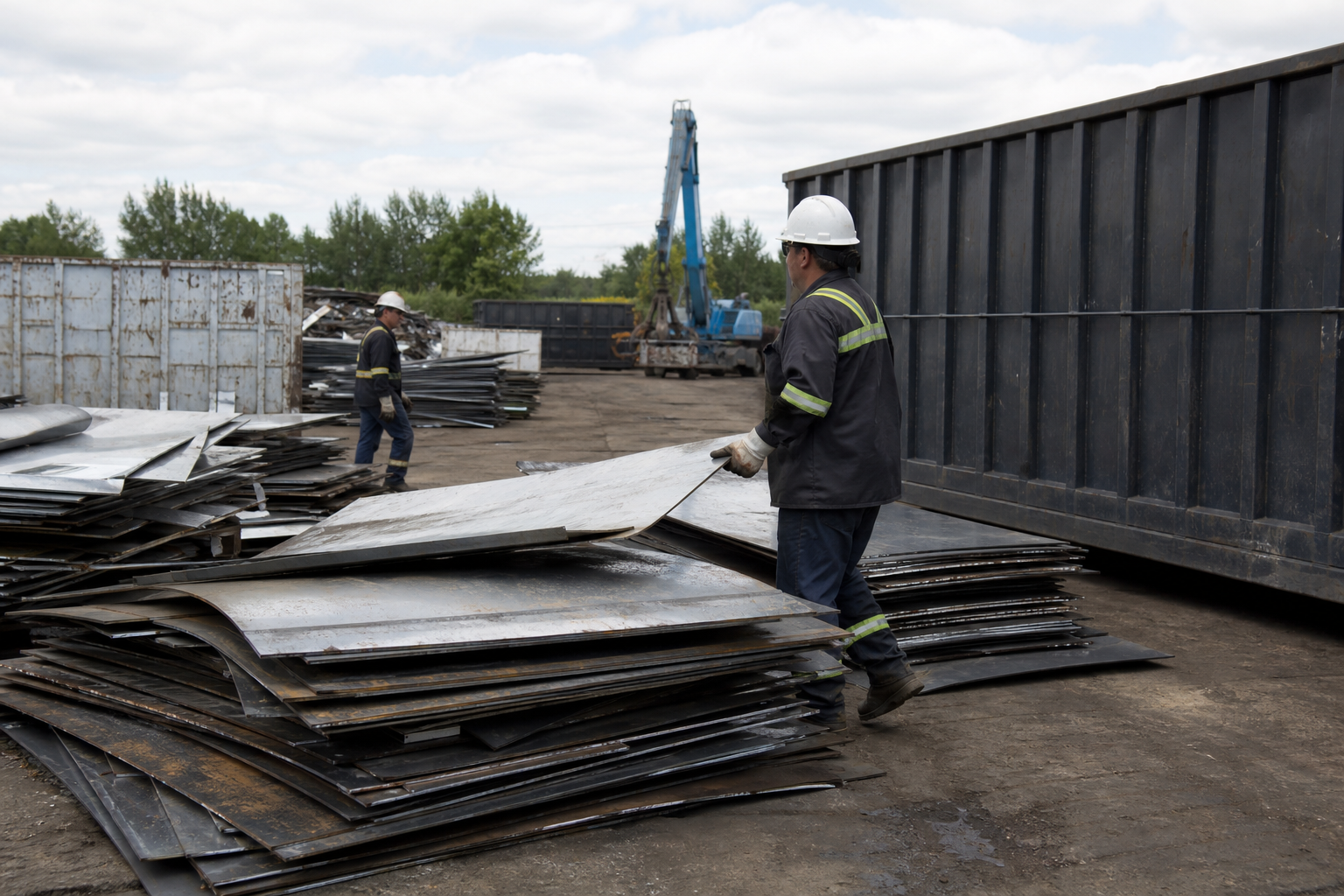
Metal shearing uses opposing blades to cut metal, usually in straight lines. It suits material whose alloy, thickness, dimensions, and condition fit the available equipment. For scrap, cutting can make oversized material easier to handle and sort, but it does not automatically increase its payout. Quick Scrap Metal confirms scrap buying, recycling, and commercial container services, while any specific shearing capability should be confirmed before delivery.
What Metal Shearing Services Actually Do
Metal shearing is a mechanical cutting process in which one blade moves against another blade or a fixed edge to separate metal. The result is generally a straight cut with little heat compared with plasma or oxy-fuel cutting.
Shearing is different from shredding, which breaks scrap into smaller pieces, and baling, which compresses material for storage and transport. It also differs from sawing, plasma cutting, and oxy-fuel cutting, each of which creates different edge, heat, and size results.
Ontario’s environmental record identifies shearing alongside sorting, baling, shredding, magnetic separation, non-magnetic separation, oxy-fuel cutting, and plasma cutting as processes used in metal recycling. That record provides industry context, but it does not confirm a particular machine or customer-facing shearing service at Quick Scrap Metal. The Ontario metal-recycling record is not a capacity specification.
Which Materials Are Likely to Fit Shearing?
Steel sheet, stainless steel, aluminum sheet, copper sheet, and some plate can be suitable for shearing. No material is automatically accepted simply because it is metal. Feasibility depends on thickness, width, length, alloy, edge condition, quantity, attachments, and contamination. Related reading: How to Sell Copper in Toronto Without Guessing at the Price.
| Material or load | Shearing may be worth investigating when | Confirm first |
|---|---|---|
| Mild or carbon steel sheet | Pieces are flat, reasonably clean, and need straight cuts. | Thickness, width, length, coatings, and attached hardware. |
| Steel plate | It is within the processor’s equipment range and has no hazardous attachments. | Exact thickness, largest dimensions, weight, and transport needs. |
| Stainless steel | The alloy and form are known and separated from carbon steel. | Grade, thickness, attachments, cleanliness, and testing requirements. |
| Aluminum or copper sheet | The material is flat and the required cut is straight. | Alloy, thickness, distortion risk, and separation from other metals. |
| Structural shapes or beams | The section can be supported safely and the cut suits the equipment. | Profile, dimensions, wall thickness, length, and loading access. |
| Machinery or large assemblies | Cutting is needed to reduce size after suitable preparation. | Fluids, batteries, pressure vessels, wiring, moving parts, and stability. |
| Coated or painted metal | The coating is known and acceptable for the intended process. | Coating type, residue, fumes, and whether it should remain intact. |
| Mixed or contaminated scrap | The priority is safe size reduction, not a clean fabrication cut. | Non-metal content, dirt, concrete, rubber, plastic, and oil. |
There is no verified Quick Scrap Metal maximum thickness, width, length, tolerance, or machine capacity to publish for shearing. For steel, preparation, dimensions, contamination, and processing costs affect handling and classification. Steel preparation requirements can help you organize an assessment, but they do not replace confirmation of a specific cutting capability.
Keep stainless steel separate from carbon steel and identify known grades where possible. Alloy content, attachments, form, size, and cleanliness can change how a stainless load is assessed.
Shearing, Sawing, Plasma, or Oxy-Fuel Cutting?

The right method depends on the result you need. A straight cut through suitable sheet may favor shearing, while a thick section, shaped cut, or heavily attached assembly may need another process or a specialist processor.
| Method | Usually makes sense when | Main tradeoffs |
|---|---|---|
| Shearing | You need fast, straight cuts in suitable sheet or plate. | Limited by equipment capacity, shape, thickness, and support. |
| Sawing | You need a controlled cut through a bar, tube, or structural section. | Can provide a clean, narrow cut but may be slower for large scrap. |
| Plasma cutting | You need shaped cuts in electrically conductive metal. | Creates heat, sparks, a heat-affected edge, and possible cleanup. |
| Oxy-fuel cutting | You are reducing heavy carbon steel and heat exposure is acceptable. | Produces slag, fumes, and a wider heat-affected area. |
| Leave it intact | The material is manageable or cutting adds no clear benefit. | Oversized pieces may be harder to load, store, transport, or sort. |
Choose shearing if the cut is straight, the material is flat enough to support, and its thickness and width are within the confirmed range. Choose sawing for suitable sections needing a controlled cross-cut. Consider plasma or oxy-fuel cutting only when shape, thickness, or size makes mechanical shearing unsuitable.
For scrap steel, the practical question is often not which cut looks most precise, but which method makes the load manageable at a reasonable cost. Describe the intended result before choosing a process.
Shearing for Scrap Is Not the Same as Fabrication Cutting
Shearing scrap means reducing unwanted material so it can be moved, sorted, stored, transported, or processed. Fabrication cutting means producing a new part to specified dimensions, tolerances, edge conditions, and quantities.
| Your goal | What matters most | Practical route |
|---|---|---|
| Sell oversized scrap | Safe handling, separation, weight, grade, contamination, and transport. | Ask a scrap buyer whether reduction is necessary and whether the material can be accepted intact. |
| Prepare a demolition or contractor load | Piece size, access, loading method, container requirements, and material separation. | Describe the load and request an assessment before cutting or arranging collection. |
| Order finished parts | Exact dimensions, tolerances, edge quality, alloy, quantity, and finish. | Use a verified fabrication provider that confirms its equipment and specifications. |
Quick Scrap Metal’s confirmed role is buying and recycling metals, appliances, electronics, and other scrap. Its published information supports assessment and recycling of materials such as copper, aluminum, steel, brass, and stainless steel. It does not confirm custom fabrication, precision tolerances, or a specific customer-facing shear. Related reading: Custom metal fence fabrication that lasts.
Do not send a fabrication drawing to a scrap yard and assume it can manufacture the part. Conversely, do not pay for a precision fabrication cut when your goal is only to reduce scrap for safe loading.
How Cutting Can Change Scrap Handling and Value
Shorter, stable pieces can be easier to load, stack, weigh, sort, and place in a container. Cutting may expose another metal inside an assembly or separate an attachment.
It does not guarantee a higher payout. Scrap value depends on material type, grade, net weight, preparation, cleanliness, dimensions, market conditions, and processing required. Cutting can add labor, produce offcuts, create sharp edges, or mix materials if done without a sorting plan.
For example, cutting a painted steel frame into manageable sections may improve loading, but it does not turn painted steel into a higher grade. Cutting a stainless assembly may reveal carbon-steel fasteners or plastic inserts that still need separation.
Keep offcuts with the correct alloy or grade instead of sweeping different metals into one mixed bin. A clean, separated load gives a buyer better information than a pile containing steel, stainless, aluminum, rubber, and dirt.
Prepare the Material Before Any Assessment
Identify the material and separate obvious groups before deciding whether cutting is necessary. Keep carbon steel, stainless steel, aluminum, copper, brass, cast iron, and e-waste apart where practical.
- Record the material type or known alloy.
- Measure thickness, width, length, and approximate piece count.
- Remove loose non-metal attachments only when doing so is safe and worthwhile.
- Keep sheets stable, dry where practical, and bundled so they cannot slide.
- Identify paint, galvanizing, insulation, concrete, rubber, plastic, oil, and other contamination.
- Photograph unusual assemblies, oversized pieces, and areas that cannot be separated.
- Keep cutoffs with the matching material group and label anything uncertain.
Do not cut or dismantle items that may contain pressure, fluids, refrigerants, live electricity, leaks, or unstable loads. Ask a qualified processor how those items should be handled.
For appliances, motors, compressors, batteries, and other assemblies, describe the item before removing sealed components or fluids. Remove only loose, non-hazardous material that you can handle safely, and leave sealed or uncertain components for assessment.
What to Include in a Shearing or Scrap Assessment Request
A useful request gives the processor enough information to judge material fit, handling, and the likely next step. Send these details together instead of asking only, “Can you cut this?”
- Material: steel, stainless steel, aluminum, copper, brass, mixed metal, or unknown alloy.
- Dimensions: thickness, width, length, profile, and largest individual piece.
- Cut plan: straight cuts, approximate finished size, number of cuts, or simple size reduction.
- Quantity: piece count, estimated total weight, and whether the load comes from one job.
- Condition: coatings, fluids, insulation, concrete, rubber, plastic, batteries, wiring, or pressure-related components.
- Access: vehicle type, loading method, lifting limits, site access, and bundling.
- Timing: routine drop-off, commercial cleanout, or time-sensitive removal.
- Route: assessment, yard delivery, collection, or a container for ongoing accumulation.
Worked example: an oversized contractor load
Imagine a contractor has 12 carbon-steel plates, each approximately 8 feet by 4 feet, with a measured thickness, several loose brackets, and a small surface coating. A useful request would state those dimensions, thickness, piece count, estimated weight, bracket condition, coating, desired reduction size, and whether delivery or collection is possible.
This description does not guarantee shearing, acceptance, a price, or a higher payout. It gives the processor enough information to decide whether the plates should remain intact, be reduced by an appropriate method, go into a container, or follow another route.
Plan Drop-Off, Pickup, or Container Logistics in Etobicoke

Quick Scrap Metal is located at 407 Rexdale Blvd in Etobicoke and buys and recycles ferrous and non-ferrous metals, appliances, electronics, and other scrap. Describe unusual, oversized, coated, fluid-related, or mixed material before transporting it.
For commercial loads, Quick Scrap Metal publishes roll-off containers from 20 to 50 cubic yards, along with self-dumping hoppers, totes, and drums. These options support commercial collection and storage planning, but availability and suitability for a particular job require confirmation. Commercial recycling and container options provide the relevant starting point.
Use yard delivery when the load is manageable and safely secured. Discuss collection or container placement when pieces are too heavy, long, numerous, or difficult to unload safely. A container is a logistics solution, not proof that a shearing service is available.
A Better Decision Before You Cut
Use five checks before arranging metal shearing services:
- Define the goal. Decide whether you need a finished part or a manageable scrap load.
- Identify the material. Separate alloys and mark anything unknown, coated, wet, oily, or attached.
- Measure the largest piece. Record thickness, width, length, profile, quantity, and estimated weight.
- Select a likely method. Consider shearing for suitable straight cuts, sawing for suitable sections, plasma for shaped conductive cuts, and oxy-fuel for appropriate heavy carbon steel.
- Confirm acceptance and logistics. Ask about preparation, transport, collection, containers, and limits before cutting or loading.
If you need fabrication-grade parts, use a provider that confirms equipment, tolerances, materials, and finished-part requirements. If you own scrap, first ask whether reducing it is necessary. Cutting helps only when the handling, sorting, transport, or acceptance benefit outweighs the added work and risk.
Plan the Next Step for Your Metal Load
Before arranging a visit, prepare the metal type, largest dimensions, thickness, quantity, attachments, contamination, photos, and preferred delivery, collection, or container route. Quick Scrap Metal can assess scrap-buying and recycling needs at its Etobicoke location, while any specific shearing capability should be confirmed in advance. Review the company’s commercial recycling and handling services, then describe the load before transport.