
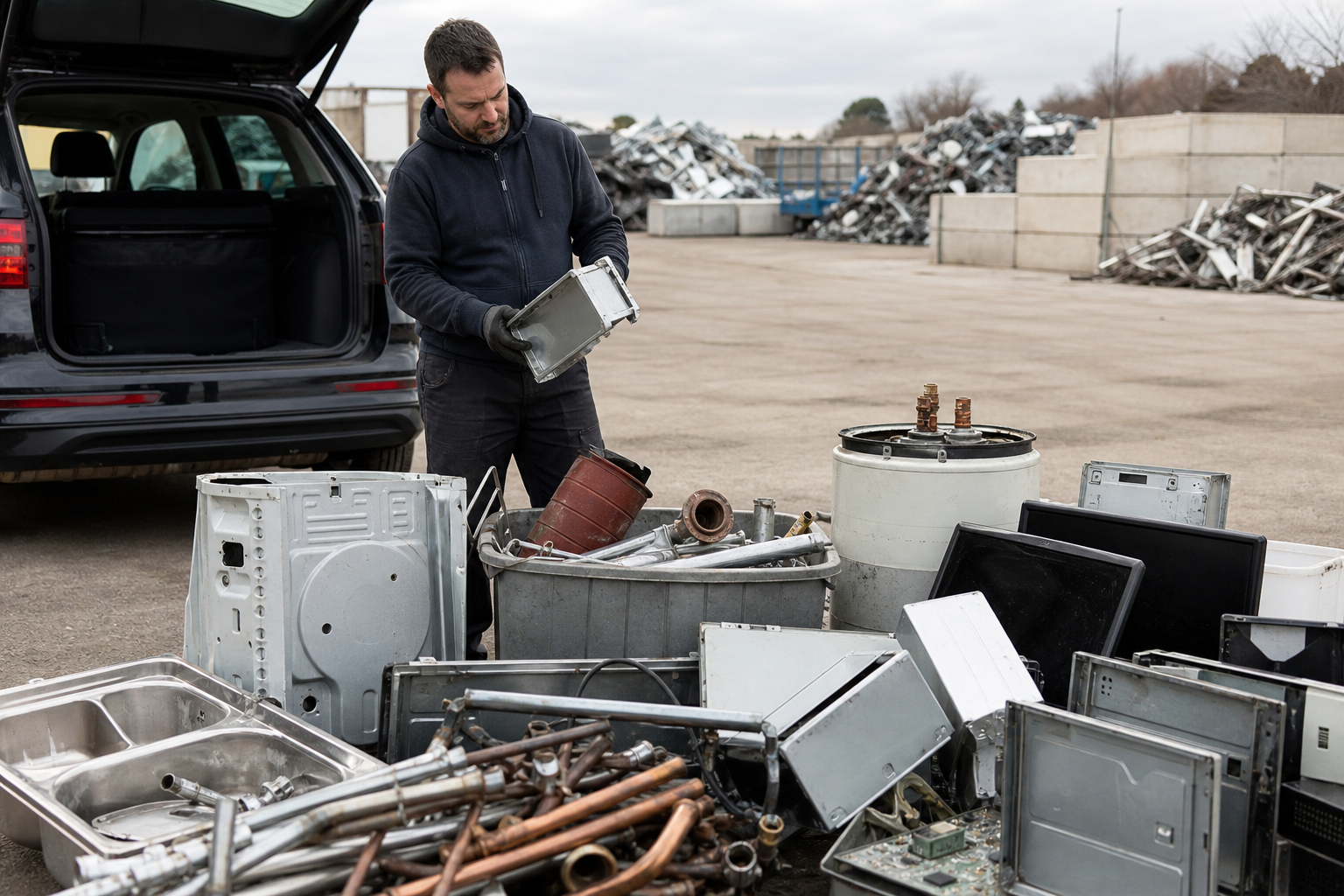
Common household scrap items include steel shelving, cast-iron cookware, copper pipes, brass fixtures, aluminum items, stainless steel, cables, motors, radiators, appliances, and qualifying electronics. Sort items by material, separate obvious non-metal parts, protect personal data on electronics, and confirm unusual or damaged items before bringing them to Quick Scrap Metal at 407 Rexdale Blvd in Etobicoke.
Quick Scrap Metal buys scrap metal, home appliances, and electronics for recycling. Whether an item qualifies for payment depends on its material, condition, category, accepted weight, and the current assessment at the yard.
Household Items to Check in Every Room

Walk through your home with two questions: does this item contain a useful amount of metal, and is a scrap yard the right route for it?
| Household item | Likely material | First action | Likely route |
|---|---|---|---|
| Stove, oven, dishwasher, washer, or dryer | Steel, stainless steel, aluminum, copper, wiring | Empty it and leave major components intact | Scrap yard, with acceptance confirmed for unusual or damaged units |
| Microwave | Steel, copper, aluminum, wiring, electronic components | Unplug it and do not open the casing | Confirm with the scrap yard or use an appropriate electronics route |
| Refrigerator, freezer, air conditioner, or dehumidifier | Steel, copper, aluminum, compressor components | Keep the sealed system intact and arrange handling before transport | Confirm first because refrigerants and compressors affect handling |
| Sink, faucet, shower fitting, or towel bar | Stainless steel, brass, copper, plated metal | Separate loose plastic, rubber, and glass where practical | Scrap yard if accepted and primarily metal |
| Steel shelving, filing cabinet, bed frame, or patio furniture | Steel or aluminum | Remove loose non-metal pieces and keep categories separate | Scrap yard or donation if still usable |
| Copper pipe, wire, aluminum extrusion, or metal duct | Copper, aluminum, steel | Separate each broad metal category | Scrap yard |
| Lawn mower, snow blower, BBQ, tool, or motor | Steel, aluminum, copper, cast iron | Consider fluids and unusual components before transport | Confirm the condition and category first |
| Computer, television, monitor, or printer | Steel, aluminum, copper, wiring, circuit boards | Remove accounts and personal data; do not dismantle unnecessarily | Electronics recycling or scrap yard after confirmation |
| Battery or battery-powered device | Lead, steel, lithium-containing or other battery materials | Keep batteries separate and intact | Specialized or confirmed battery handling |
Kitchen and dining areas
Check stainless-steel sinks, brass faucets, copper pipe, aluminum cookware, steel trays, cast-iron pans, range hoods, dishwashers, ovens, stoves, microwaves, and metal shelving. Aluminum and food cans are metal too, although ordinary household recycling may be more practical for small quantities.
Separate mostly metal items from glass, plastic, rubber, wood, and food residue where possible without taking the item apart.
Bathrooms, garages, and utility areas
Bathroom fixtures may contain brass, stainless steel, copper, or plated metal. Garages and basements often contain steel shelving, tools, ladders, lawn mowers, snow blowers, BBQs, motors, radiators, compressors, extension cords, wire, cast-iron parts, heating ducts, and metal storage bins.
Water heaters can contain steel, copper, aluminum, insulation, and connected fittings. Because size, condition, and attached equipment affect handling, confirm the route before moving one. Functional tools, furniture, and appliances may be worth donating or reusing instead of scrapping.
Renovation leftovers and furniture
Renovation piles commonly include copper pipe, insulated and bare wire, aluminum plate or extrusion, steel studs, ductwork, cast iron, brass fittings, stainless offcuts, and fasteners. Metal bed frames, tables, chairs, filing cabinets, shelving, and furniture brackets may also be suitable household scrap.
Remove only loose, obvious non-metal material. Do not dismantle items if doing so exposes fluids, wiring, batteries, sealed systems, or sharp edges.
How to Identify the Metal Before You Load It

Use four clues: magnet response, appearance, markings, and the item’s original use. These help separate likely ferrous materials such as steel and cast iron from likely non-ferrous materials such as copper, aluminum, brass, and some stainless steel.
Use a magnet as a first clue
A strong magnetic response suggests iron or steel. If a magnet does not stick, the item may be copper, aluminum, brass, or another non-ferrous material. Some stainless steels are magnetic and some are not, so a magnet cannot prove an alloy, grade, purity, or payout category.
Check colour, weight, markings, and context
Copper is often reddish-brown, aluminum is usually light and silver-coloured, and brass commonly looks yellow-gold. Paint, plating, oxidation, dirt, and mixed construction can make visual identification unreliable. Look for labels, stamps, wire markings, manufacturer information, and the item’s original use.
Keep copper, aluminum, brass, stainless steel, steel, cast iron, wire, appliances, and electronics in separate groups where practical. Sorting gives the yard a clearer starting point and prevents higher-value material from disappearing into a mixed category.
Kitchen and Laundry Appliances: What to Bring and What to Confirm
Microwaves, refrigerators, freezers, washers, dryers, dishwashers, stoves, ovens, water heaters, dehumidifiers, and air conditioners can contain recyclable steel plus copper, aluminum, motors, compressors, or wiring. They are mixed-material products, so do not assume every appliance receives the same treatment or payment.
Microwaves
A microwave may contain steel, copper wiring, aluminum, and electronic parts. Confirm the receiving route before transport. There is no verified promise that microwave recycling is free, and a scrap-metal buyer, electronics program, retailer, or other service may have different conditions.
Unplug the microwave, remove loose items, and leave the casing intact. Do not open it to remove the transformer or other parts. Describe any damage, moisture, burning, or unusual condition before transport.
Refrigerators, freezers, air conditioners, and dehumidifiers
These appliances may contain steel, copper, aluminum, motors, and compressors, but sealed systems and refrigerants affect handling. Keep them intact and confirm acceptance before loading. Do not cut refrigerant lines, remove a compressor, or release a sealed system.
Washers, dryers, dishwashers, stoves, ovens, and water heaters
These appliances commonly contain steel, with wiring, motors, aluminum, stainless steel, or copper in some components. Empty and clean them, remove loose items, and secure doors or moving parts. Confirm units with leaking fluids, exposed wiring, fire damage, or unusual built-in configurations.
Electronics, Cables, Motors, and Electrical Components
Computers, laptops, televisions, monitors, Blu-ray and DVD players, keyboards, peripherals, printed circuit boards, extension cords, cables, transformers, motors, and compressors may contain recoverable metal. Metal content does not guarantee a particular rate or acceptance category.
Before recycling a data-bearing device, back up anything needed, sign out of accounts, remove passwords or device locks where possible, and reset it. If sensitive information cannot be securely wiped, use a route that provides the level of data handling required.
Keep cables, circuit boards, and loose components together by type. Do not open damaged electronics, swollen devices, burned equipment, or sealed electrical components. Confirm unusual electronics before travelling.
Batteries and Other Items That Need a Separate Safety Decision
Batteries, lead, damaged electronics, leaking equipment, pressurized items, and fluid-containing products should not be mixed casually with ordinary household scrap. Confirm battery handling and the appropriate route before transporting these materials.
Keep intact batteries upright, protected from movement, and separate from loose metal. Do not open, cut, crush, puncture, burn, or place batteries loose in a box with tools and scrap. If a battery is cracked, leaking, swollen, hot, or giving off an unusual smell, stop handling it and confirm specialized handling before transport.
Choose the Right Route: Scrap Yard, Donation, Municipal Recycling, or Special Handling
Choose a scrap yard when an item is primarily metal, is a listed appliance or electronic category, and you want recycling or possible cash. Choose donation or reuse when it works and remains useful. Use household recycling routes for ordinary packaging and accepted recyclables, and specialized handling for hazardous, leaking, pressurized, refrigerant-containing, or damaged items.
- Scrap yard: copper pipe, brass fixtures, steel shelving, cast iron, aluminum, stainless steel, wire, motors, radiators, appliances, and qualifying electronics.
- Donation or reuse: working appliances, furniture, tools, shelving, and household goods.
- Household recycling: packaging and everyday recyclables that belong to the applicable local program.
- Special handling: leaking batteries, refrigerant equipment, damaged electrical items, pressurized containers, fluids, chemicals, and unknown hazards.
Potato-chip bags and milk cartons are household-packaging questions, not scrap-metal categories. Do not put them in a scrap-metal load. Check the current local household recycling program instead of guessing from appearance.
Why Household Scrap Payment Varies
Payment depends on material type, grade, cleanliness, attached non-metal, accepted weight, market conditions, and current yard pricing. A single online number cannot represent every pipe, appliance, wire bundle, or mixed load.
For example, a hypothetical load containing steel shelving, separated copper pipe, clean aluminum pieces, and one appliance should not be treated as one uniform material. Each category has different characteristics, and the appliance may contain non-metal parts that affect accepted weight and handling.
Separating categories and removing obvious loose contamination can make assessment clearer, but it does not guarantee a higher payment. Quick Scrap Metal describes market-based, material-specific pricing and cash on the spot for qualifying scrap. Its guidance on scrap yard prices in Etobicoke explains how preparation, metal type, grade, weight, and market conditions shape the result.
Plan a Smooth Visit to Quick Scrap Metal in Etobicoke
- Make an inventory. List appliances, metal furniture, renovation leftovers, electronics, cables, batteries, and unusual items.
- Photograph uncertain items. A clear photo and description can make acceptance questions easier to answer.
- Separate broad categories. Keep copper, aluminum, brass, stainless steel, steel, cast iron, wire, appliances, and electronics apart.
- Remove only loose non-metal. Do not dismantle sealed systems, batteries, damaged electronics, or hazardous components.
- Protect personal data. Sign out of accounts and reset data-bearing devices.
- Secure the load. Prevent appliances, sharp pieces, tools, and electronics from shifting.
- Confirm unusual items. Ask about damaged appliances, refrigerant equipment, batteries, transformers, unusual electronics, and large mixed loads.
Quick Scrap Metal is at 407 Rexdale Blvd in Etobicoke. Before visiting, confirm current hours and drop-off details with the business.
Questions Homeowners Commonly Ask
Can I bring a microwave to a scrap yard in Etobicoke?
Ask whether the yard accepts your microwave, but do not assume the service is free or that every condition qualifies. Unplug it, leave the casing intact, and confirm the receiving route.
Can refrigerators and air conditioners be recycled as household scrap metal?
They contain recyclable metal, but sealed systems and refrigerants require handling confirmation. Keep each appliance intact and do not cut lines or remove compressors.
How can I tell whether a household item is ferrous or non-ferrous?
Start with a magnet, then compare appearance, markings, weight, and original use. A magnetic response often suggests steel or iron, but cannot prove an alloy or grade.
Should I remove batteries or circuit boards before recycling electronics?
Do not remove them if doing so requires opening, cutting, crushing, or damaging the device. Keep components intact, protect data, and confirm the route for damaged or unusual parts.
Can I get cash for household appliances and metal items?
Qualifying scrap may receive cash on the spot after assessment, weighing, and categorization. There is no fixed household-item rate or guaranteed payout.
Make the Next Decision From Your Inventory
Group household items into metal, appliances, electronics, reusable goods, and special-handling materials. This shows which items are ready for assessment, which should be donated, and which need confirmation.
If you have an uncertain household load, contact Quick Scrap Metal before visiting to confirm the item category, current details, and appropriate scrap metal recycling services.