
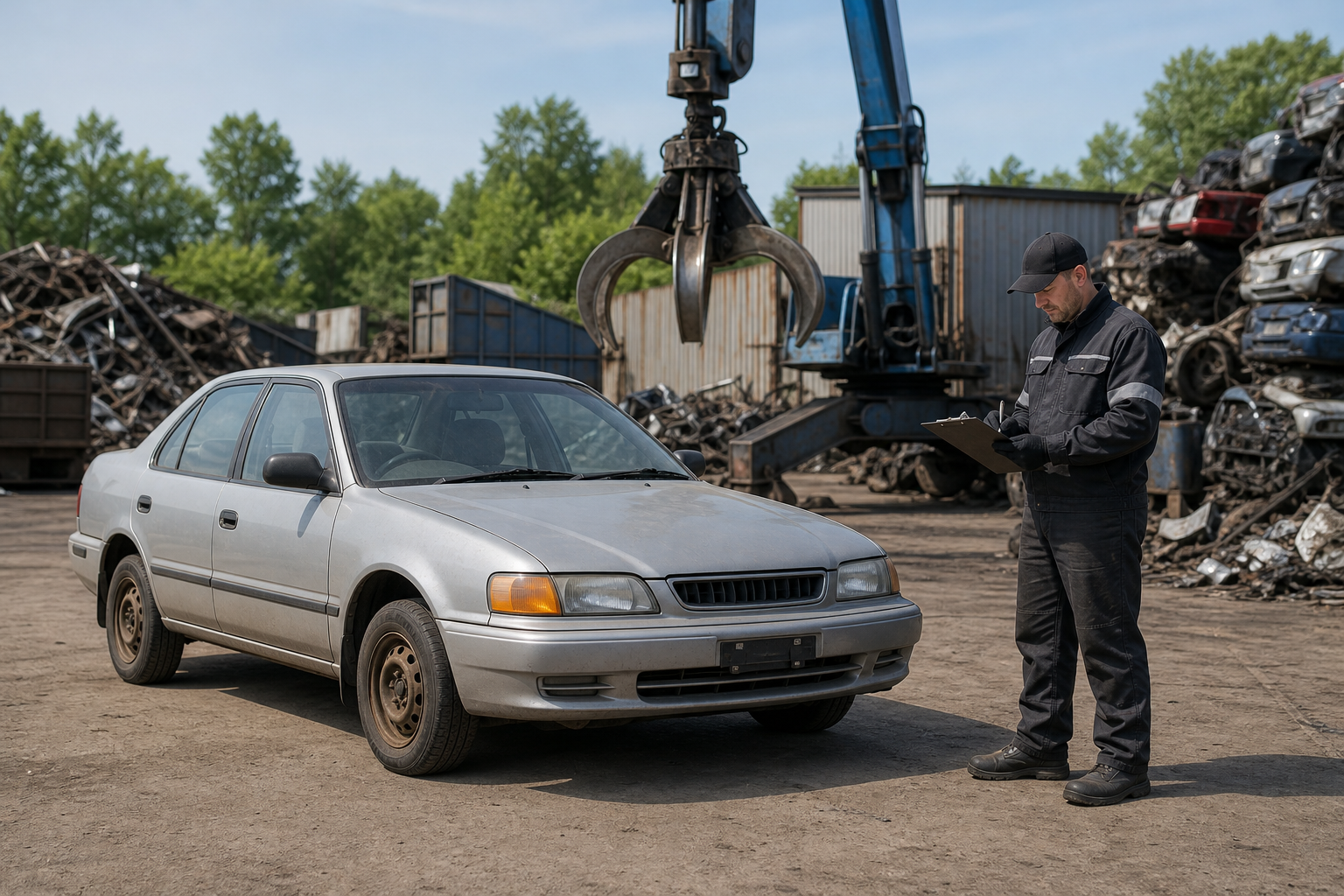
Scrap car valuation is not a single formula or guaranteed price. Start with the vehicle’s curb weight and metal content, then adjust for completeness, condition, reusable parts, access, paperwork, and current market conditions. The final offer can differ from raw metal value because collection, processing, labor, fluids, and resale potential also matter. Related reading: Brampton Home Valuation Service: Which Type of Property Value Do You Need?.
Scrap Car Valuation Starts With Three Different Numbers
When you ask what your old car is worth, you are usually comparing its metal-floor value, possible reusable-parts value, and final buyer offer.
Metal-floor value
This is the basic recovery value suggested by the vehicle’s weight, metal mix, and current scrap markets. Not every kilogram becomes paid metal because vehicles also contain glass, plastic, rubber, fluids, wiring, and other non-metal materials.
Reusable-parts value
A complete vehicle may have value beyond its metal. The engine, transmission, catalytic converter, wheels, tires, electronics, and body panels may matter when they are present, identifiable, potentially reusable, and in demand. Year, make, model, trim, and condition all influence that potential.
The final buyer offer
The final offer combines recoverable material and parts potential with handling costs, processing, collection requirements, market risk, and buyer margin. That is why two buyers can assess the same car differently.
For a deeper explanation of scrap car valuation factors, compare the vehicle’s weight, metal composition, reusable parts, documentation, and condition. Scrap yard prices also change with material type, grade, preparation, local demand, and commodity markets.
The Inputs That Move a Vehicle’s Value
Your vehicle’s weight matters, but it is only one input.
| Input | Why it matters | What to record |
|---|---|---|
| Curb weight and body type | Heavier cars, SUVs, vans, and trucks contain different quantities and mixes of recoverable material. | Vehicle type and approximate curb weight, if available. |
| Metal mix | Steel is common, while non-ferrous components can affect recovery value. | Known aluminum parts, copper-rich wiring, or unusual components. |
| Completeness | Missing major components can reduce both metal and parts potential. | Whether the engine, transmission, catalytic converter, wheels, tires, doors, and interior remain. |
| Running condition | A running, steering, and rolling vehicle may be easier to move, but running condition does not guarantee a higher offer. | Whether it starts, drives, steers, rolls, and brakes. |
| Parts demand | Some models have stronger demand for reusable components. | Year, make, model, trim, mileage if known, and major damage. |
| Damage | Flood, fire, collision, or vandalism can change the assessment and handling route. | Type and extent of damage. |
| Location and access | An accessible vehicle is easier to recover than one blocked in a garage, narrow lane, or soft ground. | Surface, access width, keys, and tow-vehicle access. |
| Market timing | Metal demand and processing conditions change. | Quote date and intended sale date. |
Weight does not determine value by itself. It sets part of the metal baseline, while completeness, reusable components, condition, access, and market conditions shape the final assessment.
Use This Vehicle Condition Decision Guide

Use the condition worksheet before requesting a valuation. It helps separate a complete vehicle with possible parts value from a stripped shell whose assessment depends mainly on remaining metal and recovery work.
| Vehicle situation | Record these details | Likely valuation emphasis |
|---|---|---|
| Running, steering, and rolling | Starts, drives, brakes, keys, warning lights, and visible damage. | Complete-vehicle or parts potential, plus metal value. |
| Non-running but complete | Whether the wheels roll, steering works, keys are available, and loading is possible. | Metal and parts potential, adjusted for recovery effort. |
| Damaged | Collision, flood, fire, vandalism, rust, or mechanical damage. | Remaining components, contamination, and handling requirements. |
| Partially dismantled | Removed engine, transmission, catalytic converter, wheels, battery, or interior components. | Remaining metal and any identifiable parts still present. |
| Stripped or difficult to access | Missing components, blocked access, surface type, clearance, and loading restrictions. | Metal recovery less loading, transport, and processing costs. |
Do not label a car only as “junk” or “not running.” “Complete non-runner with rolling wheels” gives a buyer much more useful information than a general condition label.
How the Final Offer Differs From Raw Metal Value
A buyer does not simply multiply total vehicle weight by a public steel rate. The assessment must account for what can be recovered and the work required before materials or parts enter the next stage.
- Collection or towing: Non-runners may need loading equipment or a flatbed.
- Loading difficulty: Vehicles that cannot roll or steer take more time to recover.
- Processing: Dismantling, sorting, crushing, depollution, and downstream handling create costs.
- Fluids and non-metal materials: Fuel, oil, coolant, glass, plastics, rubber, and upholstery are not saleable metal.
- Parts potential: Components add value only when condition and demand justify inspection and resale.
- Market risk and margin: Markets can change while the buyer covers operating costs and risk.
These factors make scrap car valuation an assessment, not a guaranteed calculation from one public number.
Worked Example: A Hypothetical Complete Non-Runner
Consider a hypothetical complete older sedan that does not start but still has its engine, transmission, catalytic converter, wheels, tires, interior, and body panels. It sits on a firm driveway with clear access, and the owner has the keys and ownership paperwork.
- Metal floor: Record the approximate weight category and note that the car is largely complete. Do not assign a dollar amount without a current local assessment.
- Parts potential: Record the year, make, model, trim, engine status, transmission status, catalytic converter presence, and visible damage.
- Final offer: Note the easy access, complete condition, non-running status, and available keys. Ask whether drop-off or pickup is more practical.
A stripped shell in a narrow backyard would produce a different assessment because missing components, difficult access, and extra loading work change the recovery situation.
Should You Sell the Car Whole or Remove Parts First?
Leaving the vehicle whole is usually simpler when you want one assessment, one loading plan, and one transaction. A complete car preserves the ability to evaluate its metal and reusable components together.
Removing parts can make sense only when you already have the tools, knowledge, time, storage, and a realistic buyer. Weigh possible part revenue against removal labor, transport, listing time, storage, and the reduced completeness of the remaining vehicle.
Do not assume that removing the catalytic converter, battery, engine, transmission, wheels, fluids, or other components will increase your total return. Confirm the plan with the intended buyer before stripping the car.
Prepare a Quote Request That Can Be Assessed Quickly

Provide enough detail to distinguish a complete non-runner from a stripped shell, repairable vehicle, or difficult recovery.
Vehicle details
- Year, make, model, trim, and mileage if known.
- Approximate curb weight or vehicle classification.
- Whether it starts, drives, steers, rolls, and brakes.
- Engine and transmission status.
- Whether the catalytic converter, wheels, tires, interior, doors, and major panels remain.
- Collision, flood, fire, vandalism, rust, or mechanical damage.
- Whether the vehicle is complete, partially dismantled, or stripped.
Location and access
- Vehicle location in Etobicoke, Toronto, or another GTA area.
- Surface type and available clearance.
- Whether another vehicle blocks access.
- Whether keys are available and wheels can turn.
- Parking, gate, height, timing, or loading restrictions.
Useful photos
Send clear photos of all four sides, the interior, dashboard, engine bay, wheels and tires, visible catalytic-converter area, missing components, and the vehicle’s access route. Photos do not replace inspection, but they make recovery conditions clearer.
Ontario Paperwork to Address Before the Sale
Ontario says a seller must obtain a Used Vehicle Information Package, ensure the VIN matches the vehicle permit, and check whether money is owing. See the official Ontario vehicle-selling requirements.
The vehicle permit, also called vehicle ownership, proves registered ownership. Ontario says sellers must change the vehicle status to “sold” through ServiceOntario using the VIN, sale date, and buyer information. See the vehicle permit change instructions.
Ontario describes an end-of-life vehicle as one managed for recycling, reuse for a purpose other than an operable vehicle, or disposal. Confirm buyer-specific identification, ownership, payment, plate, and handover requirements before the sale. Ontario’s end-of-life vehicle guidance provides regulatory context.
Match the Valuation Worksheet to Your Next Step
Once you have recorded the vehicle’s identity, condition, completeness, parts, access, photos, and paperwork status, you have the information needed for a more useful local assessment. Drop-off may suit an accessible vehicle you can transport safely, while pickup is worth discussing for a non-runner or difficult recovery.
Quick Scrap Metal is located at 407 Rexdale Blvd in Etobicoke. Ask about acceptance, availability, access requirements, documents, and collection terms before scheduling, then provide the details from your worksheet.
Scrap Car Valuation Questions Ontario Sellers Commonly Ask
How much is my scrap car worth without a fixed price?
Estimate the value category by recording weight, completeness, condition, parts potential, access, and the current market date. A buyer must assess the vehicle and processing route before giving a useful offer.
Does a non-running car still have scrap value?
Yes. State whether it rolls, steers, has keys, and remains complete because those details affect loading and assessment.
Should I remove parts before selling my car for scrap?
Usually, do not remove parts simply to increase the payout. Compare possible part value with labor, tools, storage, safety, and the lower completeness of the vehicle.
What information supports a more accurate quote?
Send the year, make, model, trim, running and rolling condition, completeness, engine and transmission status, catalytic converter status, damage, keys, location, access, ownership documents, and clear photos.
Does Ontario paperwork affect scrap car valuation?
Paperwork may affect whether the transaction proceeds smoothly, even though it is not a metal price. Address the Used Vehicle Information Package, VIN and permit match, money owing, registered ownership, and sold-status steps before handover.
Once you complete the worksheet, ask Quick Scrap Metal about its scrap car buying and recycling service and provide the vehicle details, photos, access information, and paperwork status.