
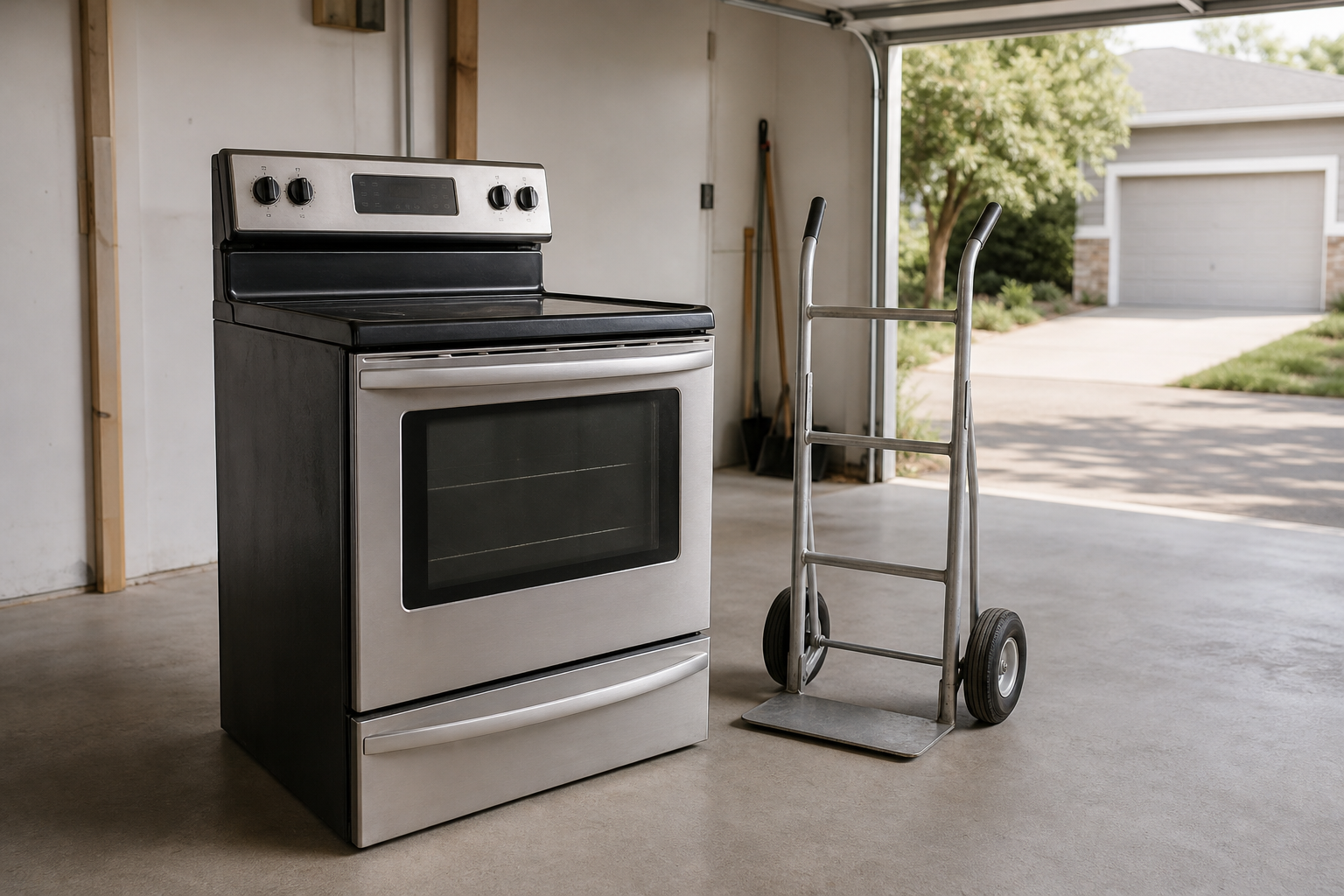
Yes, you may be able to recycle a broken oven for cash when a yard accepts the appliance and its recoverable materials. There is no guaranteed oven payout: the assessment depends on metal type, weight, grade, cleanliness, preparation, condition, and current market conditions, so confirm acceptance and current pricing before transporting it. Related reading: 6161 caldobake convection oven.
For an Etobicoke homeowner, landlord, renovator, or small contractor, the practical process is straightforward: choose the right disposal route, prepare only what is safe, plan the move, and bring the oven for assessment. Quick Scrap Metal buys and recycles home appliances, but confirm that your specific oven and condition fit its current intake requirements before travelling.
Choose the Route That Fits Your Oven
Scrap recycling is usually the best fit for an oven that is broken, unwanted, and no longer worth repairing, especially if you can move it safely. A working or readily repairable oven may be more useful through repair, resale, or donation, while a built-in unit may require removal planning before it can reach a yard.
| Oven situation | Route to consider | What to decide first |
|---|---|---|
| Broken freestanding oven that you can move | Scrap drop-off | Confirm acceptance, current pricing, and which loose parts should remain with it. |
| Built-in oven still attached to cabinetry or utilities | Removal or qualified disconnection, followed by recycling | Do not treat it like a freestanding appliance. Establish who will disconnect and move it. |
| Working oven in usable condition | Repair, resale, or donation | Compare the likely reuse value with the effort and cost of moving it. |
| Damaged, incomplete, or heavily contaminated oven | Scrap assessment or appliance disposal | Describe the condition before you travel so the receiving yard can explain the practical route. |
Quick Scrap Metal also handles other appliance and scrap categories, but each bulky item can have different preparation and acceptance requirements. For comparison, the questions that matter for an oven are similar to those for recycling an old furnace for cash: what material is present, how safely can it be moved, and what must be confirmed before arrival?
If the oven is part of a larger kitchen clear-out, separate it from refrigerators, water heaters, and electronics instead of assuming every appliance follows the same process. A water heater recycling decision, for example, can involve different handling questions from an ordinary freestanding oven.
Prepare the Oven Without Unnecessary Dismantling
The safest preparation is usually basic cleaning, emptying, and confirmation, not extensive dismantling. Removing parts in pursuit of a higher payout can create sharp edges, loose hardware, damaged wiring, and a harder load to transport without guaranteeing a better assessment.
Before moving the appliance
- Remove food, grease-heavy debris, cookware, trays, and anything loose inside the oven.
- Empty the storage drawer and check behind or underneath the unit for personal items.
- Identify whether the oven is freestanding, built in, electric, gas, or connected to another appliance.
- Arrange appropriate disconnection for electrical or gas connections. If the unit is hardwired, gas-connected, or built into cabinetry, use a qualified person for work beyond your competence.
- Tell the yard whether the oven is complete, partially dismantled, damaged, or missing major components.
What should happen to the common removable parts?
Leave racks, doors, cords, burners, insulation, and other components attached or separate according to the yard’s preference for that specific load. There is no supported rule that removing any one of these parts always increases payment. In many cases, keeping the appliance together makes transport simpler and lets the yard inspect it as received.
Keep loose racks, trays, knobs, and panels secured so they cannot slide out during loading. Do not cut wiring, break glass, remove insulation, or strip the oven merely to chase a higher scrap category unless the yard has specifically told you that a different preparation is wanted and the work can be done safely.
The same principle applies to other items in a mixed load: identify and protect them before transport. If you are also recycling a printer or another electronic appliance, use the separate preparation approach described in old printer recycling guidance, particularly for stored data and loose accessories.
What Determines a Broken Oven’s Scrap Value?
There is no universal amount that scrap yards pay for an oven. A yard may assess qualifying material using factors such as metal type, weight, grade, cleanliness, preparation, and current market conditions, so the reliable way to estimate your payout is to request a current assessment for the actual appliance.
In practical terms, an oven’s assessment can be influenced by:
- Total weight: A heavier unit contains more material to weigh, but weight alone does not set the payout.
- Metal mix: Steel and other ferrous metals make up much of a typical oven, while smaller components may contain stainless steel, aluminum, copper, brass, or other materials.
- Grade and cleanliness: Separating identifiable materials and removing loose non-metal debris can make inspection easier.
- Condition and completeness: Missing panels, motors, controls, racks, or other parts can change what the yard is assessing.
- Attached non-metal material: Glass, plastic, food residue, insulation, and other non-metal content may affect classification or handling.
- Preparation and handling: A safe, organized load is easier to receive than a damaged appliance with loose or hazardous parts.
- Market conditions: Scrap values change with market demand and downstream processing conditions.
For a more detailed explanation of how scrap metal prices are shaped, compare the oven’s weight, metal content, cleanliness, and preparation rather than relying on a generic per-pound figure found online.
The same logic applies if you are asking about an old furnace or another large appliance in the GTA. A current figure requires the item’s actual condition and material details, not just its brand, age, or original purchase price.
Transport a Heavy Oven Safely
A freestanding oven may be practical for drop-off if it is disconnected, empty, accessible, and can be loaded with suitable equipment and enough help. A built-in oven that remains attached to cabinetry or utilities, has damaged glass, or cannot be moved without awkward lifting is a different job and may be unsuitable for casual transport.
Before loading, measure the oven, doorways, stairs, vehicle opening, and the route between them. Protect floors and walls, secure the door and loose parts, and use an appliance dolly or other equipment designed for the weight. Do not rely on a single person to lift a bulky range from a basement, and do not place an unstable oven where it can shift during transit.
A simple transport decision
Hypothetical example: A freestanding electric range on the main floor, with a clear path to a suitable vehicle, may be a reasonable drop-off load after the power connection is handled appropriately. A built-in gas oven still fixed inside cabinetry, with a narrow stairway and no safe lifting equipment, should not be moved casually. In that situation, ask about available removal options and who is responsible for disconnection before planning a trip.
Quick Scrap Metal’s business information supports appliance-related recycling and household scrap removal, but oven pickup terms must be confirmed for your particular unit. Ask before loading if transport is the part of the job that makes recycling difficult.
What Happens at the Scrap Yard?
At a scrap yard, the usual process is to identify the material, weigh it, assess its grade and condition, and calculate the applicable payment for qualifying material. Ask the receiving yard how its process works for an oven so you know where to unload and which parts should be presented together.
- Arrival and identification: Tell staff that you have a broken oven and describe whether it is freestanding, built in, complete, or dismantled.
- Safe unloading: Follow staff direction and unload only where the yard indicates. Keep loose racks, glass, and other parts controlled.
- Weighing: The material is weighed for the relevant category or categories.
- Inspection: Staff assess metal type, grade, condition, cleanliness, attached materials, and handling requirements.
- Payment: Ask how the assessed material will be recorded and what payment method applies before completing the transaction.
A mixed load can be assessed differently from a clean, identifiable appliance. If you bring copper wire, aluminum, steel, electronics, or other scrap with the oven, keep the categories separated where practical so each material can be identified accurately.
Before You Go: Confirm These Details
Call ahead before moving a heavy oven. Ask whether the specific model or condition is accepted, which parts should stay attached, how the current assessment is determined, what payment process applies, whether pickup is available, and whether you should bring identification or other documents.
You can use this short script: “I have a (freestanding or built-in) (electric or gas) oven. It is (complete, damaged, or partly dismantled), and I can or cannot bring it to the yard. Do you accept this type, what should remain attached, and what should I confirm about the current assessment and payment?”
Quick Scrap Metal is at 407 Rexdale Blvd, Etobicoke, Ontario, near Highway 27 and Rexdale. The business advertises Sunday opening and late weekday closing. Confirm current hours and contact details directly before travelling.
What About Small Appliances, Refrigerators, and Old Computers?
Small appliances may be recyclable, but acceptance and payment depend on the item and its material content, so describe the appliance before bringing it. Do not assume that every small appliance has enough recoverable metal to produce cash or that every drop-off is free.
Fees, limits, and accepted categories vary by provider and product. If you are considering an electronics drop-off, contact the provider directly to confirm whether the item is accepted, whether charges apply, and whether any quantity limits or preparation requirements affect the handoff.
Refrigerators and mini refrigerators need separate confirmation before transport. Their size, components, and handling requirements differ from an ordinary oven, and you should not assume that a fridge is free to recycle or suitable for ordinary disposal. Ask the receiving service what it accepts, whether charges apply, and whether the unit must be handled in a particular way.
Old computers should be treated as e-waste rather than simply mixed into an oven load. Remove personal or business data before handoff, gather loose accessories, and ask about accepted equipment and drop-off instructions. Businesses with several computers can review e-waste recycling options for small businesses before arranging a larger load.
A Final Decision for Your Broken Oven
If the oven is no longer useful, prepare it by emptying it, arranging safe disconnection, securing loose parts, and avoiding unnecessary dismantling. Then confirm acceptance, current pricing, payment details, and transport options before choosing drop-off or asking whether removal is available for your situation.
For a local assessment, contact Quick Scrap Metal about its appliance recycling services before bringing the oven to 407 Rexdale Blvd in Etobicoke. That call gives you a practical next step without relying on a guaranteed payout or guessing how the appliance should be prepared.