
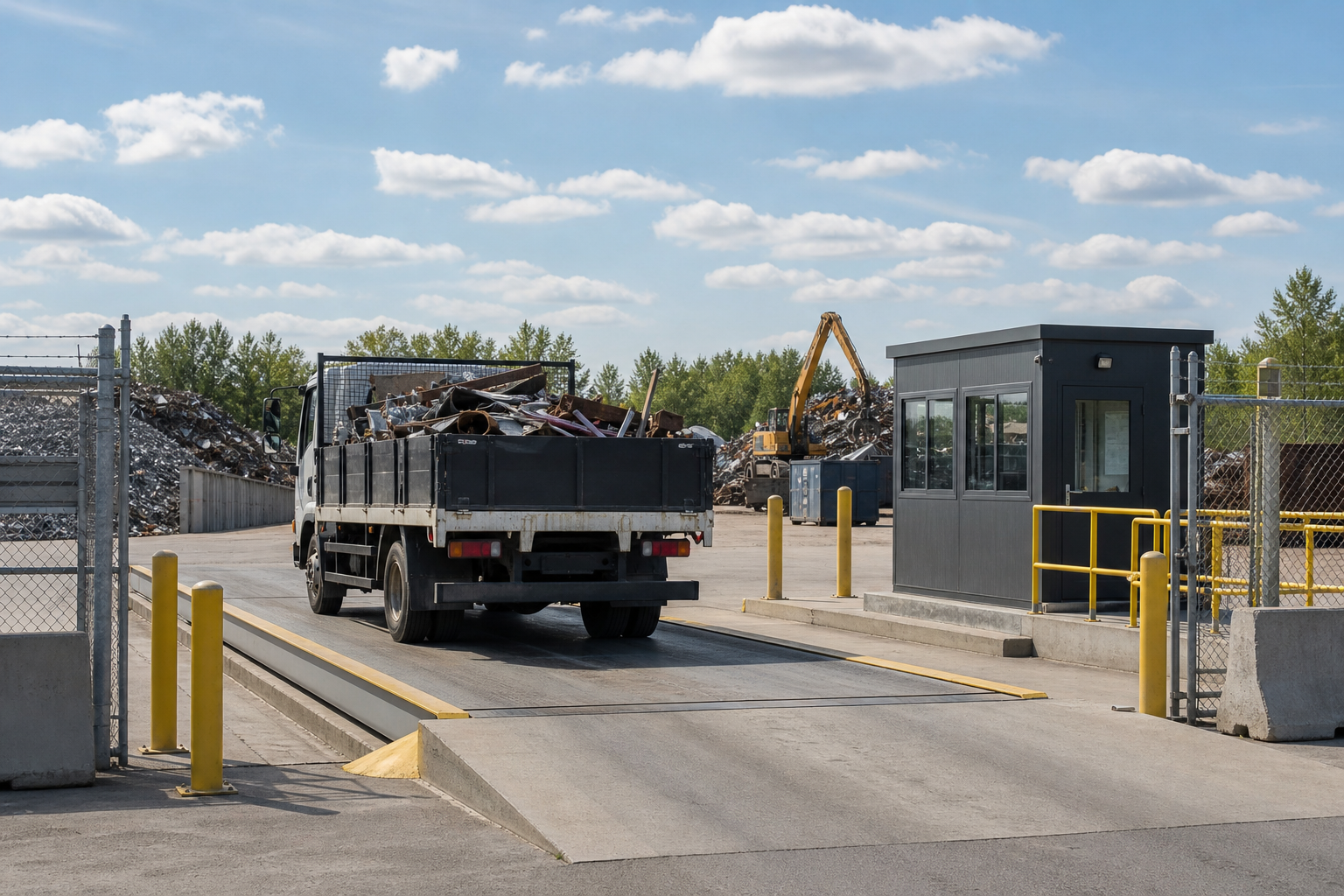
Weighbridge services use a vehicle scale to determine the weight of a truck, trailer, or load. In a scrap-metal transaction, the key calculation is net material weight: gross loaded weight minus tare empty weight. Quick Scrap Metal buys scrap metal, appliances, and electronics at 407 Rexdale Blvd in Etobicoke, but confirm vehicle suitability, load requirements, and weighing availability before travelling. Related reading: Metal fencing services in mission.
What Weighbridge Services Mean in Scrap Metal
A weighbridge is a large platform that receives a vehicle for static weighing. The vehicle is positioned on the platform, and the scale records its weight through an indicator or connected weighing system. Measurement Canada describes a vehicle weighbridge as a vehicle load-receiving element used for static weighing. Learn more about the vehicle weighbridge definition.
In customer-facing language, you may hear “truck scale,” “vehicle scale,” “scrap-metal weighing,” or “weigh and pay.” These terms describe the same basic idea: weighing a vehicle before and after material is unloaded so the material weight can be determined.
| Term | Plain-language meaning | Why it matters |
|---|---|---|
| Gross weight | The loaded vehicle, trailer, and material together | Shows the total weight before unloading |
| Tare weight | The empty vehicle and trailer weight | Provides the comparison needed to isolate the load |
| Net weight | Gross weight minus tare weight | Represents the material weight used in the transaction |
| Vehicle scale | A platform scale designed to weigh vehicles | Allows larger loads to be measured together |
| Scrap-yard weighbridge | A vehicle scale used with a scrap assessment or sale | Connects measured weight with material grading and payment |
| Highway weigh station | A transportation facility with a different public purpose | It is not the same as arranging a scrap transaction at a private yard |
Who May Need a Scrap-Yard Vehicle Scale?
A weighbridge-style process can help when scrap is too heavy, bulky, or numerous to weigh conveniently as individual pieces. It may suit a contractor bringing a loaded truck, a tradesperson with a trailer of offcuts, or a business organizing recurring metal loads.
- Homeowners with a pickup load: Ask whether your vehicle, material type, and load size fit the yard’s intake process.
- Tradespeople with a trailer: Describe the trailer, approximate load, and whether the materials are separated. Confirm access, vehicle dimensions, and appointment requirements.
- Contractors with bulky scrap: Explain the material, volume, access conditions, and whether the load includes appliances, machinery, or mixed metals.
- Businesses with recurring loads: Discuss containers, collection, handling, weighing availability, and payment documentation before dispatching a driver.
Quick Scrap Metal accepts a range of materials, including copper, aluminum, steel, appliances, and electronics. That does not automatically mean every vehicle, trailer, material combination, or standalone weighing request is available. Ask the yard to confirm suitability before loading.
How Weigh-In and Weigh-Out Works
The usual weigh-in and weigh-out model compares loaded and empty vehicle weights. Measurement Canada describes this type of system as weighing an inbound truck loaded or empty, then using the same scale to establish vehicle and material mass. Read the official description of weigh-in and weigh-out systems.
- Arrive with the load ready for assessment. Provide the vehicle and load details requested by the yard.
- Complete the loaded weigh-in. The loaded weight is recorded as the gross weight.
- Unload or proceed to material assessment. Metal types, cleanliness, preparation, and unusual items may affect the assessment.
- Complete the empty weigh-out. The vehicle and trailer are weighed again to establish tare weight.
- Calculate net material weight. Tare weight is subtracted from gross weight.
- Apply the material assessment. Net weight is considered alongside material type, grade, preparation, cleanliness, and current market conditions.
- Receive payment or documentation. Confirm the procedure and records for your particular load.
This is the general model, not a promise of Quick Scrap Metal’s exact sequence. A small drop-off, mixed load, commercial vehicle, or unusual material may be handled differently.
Gross, Tare, and Net Weight With a Simple Example
The basic formula is:
Gross weight – tare weight = net material weight
For a hypothetical example, a loaded truck and trailer weigh 7,500 kilograms. After unloading, the same vehicle and trailer weigh 3,000 kilograms. The net material weight is 4,500 kilograms.
- Gross weight: 7,500 kg
- Tare weight: 3,000 kg
- Net material weight: 4,500 kg
This example explains the arithmetic only. It is not a Quick Scrap Metal transaction and does not indicate a price. Net weight alone does not establish payment because the material must still be identified and assessed.
How Weighing Connects to Scrap-Metal Payment
Weight is one part of scrap valuation. Material type, grade, preparation quality, cleanliness, and current market conditions also affect the amount offered. A heavy load of mixed or contaminated material is not automatically worth more than a smaller load of clean, separately identified material.
Two loads may weigh the same while containing different proportions of copper, aluminum, steel, or other metals. Radiator value can likewise depend on metal composition, weight, cleanliness, and current commodity trends. Review the factors that shape scrap metal prices before requesting an assessment.
Sorting helps identify what is being weighed. Separate ferrous and non-ferrous materials where practical, keep distinct metals apart, and remove loose non-metal items only when doing so is safe and worthwhile.
Scrap-Yard Weighbridges Versus Highway Weigh Stations
A scrap-yard weighbridge supports a material transaction. A highway weigh station serves a different transportation oversight purpose. A scrap-yard scale helps determine the weight and value of material being assessed, while a highway station relates to vehicles travelling on public roads.
Do not assume that a highway station is a public weighing service for personal use. Its availability and operating rules depend on the station and applicable transportation requirements. Quick Scrap Metal should not be treated as a highway weigh station, and a vehicle scale does not establish standalone public weighing.
Prepare Before You Arrive
A short call before loading can prevent a wasted trip. Prepare the following information:
- Vehicle details: Identify the vehicle, trailer, approximate dimensions, and load accessibility.
- Material details: List the main metals, appliances, electronics, or automotive materials. Mention mixed, unusually bulky, wet, damaged, or attached items.
- Sorting: Separate obvious metal categories and keep e-waste, batteries, appliances, and special items identifiable.
- Service purpose: State whether you want to sell scrap, arrange collection, discuss a recurring load, or ask about weighing only.
- Business requirements: Ask about documents, tickets, booking, and payment arrangements.
- Access and handling: Ask about vehicle size, unloading equipment, appointment requirements, and material handling requirements.
Before travelling, describe unusual or potentially restricted materials and ask which route the yard recommends for them.
Commercial and Recurring Loads
Businesses with regular scrap may need to plan the container and handling route before discussing vehicle weighing. Quick Scrap Metal describes roll-off truck services, self-dumping hoppers, totes, and drums. Its roll-off containers range from 20 to 50 cubic yards.
Container capacity, collection, delivery, weighing, unloading, scheduling, and payment terms are separate details to confirm. Container service does not automatically establish weighbridge access or a particular weighing arrangement.
When you call, provide the material type, estimated volume, pickup or drop-off preference, site access, loading method, expected frequency, and arriving vehicle.
Local Details for Quick Scrap Metal in Etobicoke
Quick Scrap Metal is located at 407 Rexdale Blvd, Etobicoke, Ontario, near Highway 27 and Rexdale. The business serves customers in Toronto and the broader GTA.
The site notes Sunday service and late weekday closing. Holiday schedules and weighing availability can vary, so confirm the current hours and service arrangements before travelling.
Questions to Ask Before Booking or Driving Over
- Can you assess a scrap load from my vehicle and trailer?
- What vehicle dimensions, load sizes, or access conditions should I describe?
- Is weighing available for my specific scrap transaction?
- Do you accept the materials in my load, including mixed or unusual items?
- Should I separate metals, appliances, electronics, or batteries before arrival?
- Do I need an appointment, identification, business paperwork, or driver documents?
- How are gross, tare, and net weights shown on the ticket or transaction record?
- Are container, pickup, unloading, and weighing arrangements handled separately?
- What are the current hours for the day I plan to arrive?
Frequently Asked Questions About Weighbridge Services
Can I weigh my pickup truck at a scrap-yard weighbridge?
Possibly, but do not assume that a scrap yard offers standalone public weighing. Ask whether the pickup can be weighed as part of a scrap assessment or sale.
Can I use weighbridge services without selling scrap metal?
That depends on the facility’s policy. Quick Scrap Metal’s available service information supports scrap buying, assessment, and payment, but does not confirm a separate weigh-only service.
Is a scrap-yard weighbridge the same as a highway weigh station?
No. A scrap-yard weighbridge supports a material transaction, while a highway weigh station serves a different transportation oversight purpose.
Can Quick Scrap Metal weigh a trailer or commercial vehicle?
Confirm this directly before arriving. The business handles scrap materials and describes commercial containers and material-handling options, but not every vehicle size, trailer type, or weighing arrangement is confirmed.
What should I ask before bringing a mixed or bulky load?
Describe the vehicle, dimensions, material categories, load weight or volume, unusual items, unloading method, and whether you want to sell the material or only weigh it. Ask about acceptance, sorting, access, documents, booking, and payment records.
Do I need an appointment or special documents?
Requirements can depend on the vehicle, load, and purpose of the visit. Ask whether an appointment, identification, business paperwork, driver instructions, or other documents are needed.
Plan the Right Next Step for Your Load
For a small sorted load, prepare the material and ask Quick Scrap Metal whether it fits a scrap assessment at the Etobicoke yard. For a recurring or bulky commercial load, discuss the vehicle, container, collection, unloading, weighing, and documentation requirements before arranging transport.
Quick Scrap Metal is at 407 Rexdale Blvd in Etobicoke. To discuss containers and other material handling services, contact the business before travelling and confirm the weighing arrangement you need.