
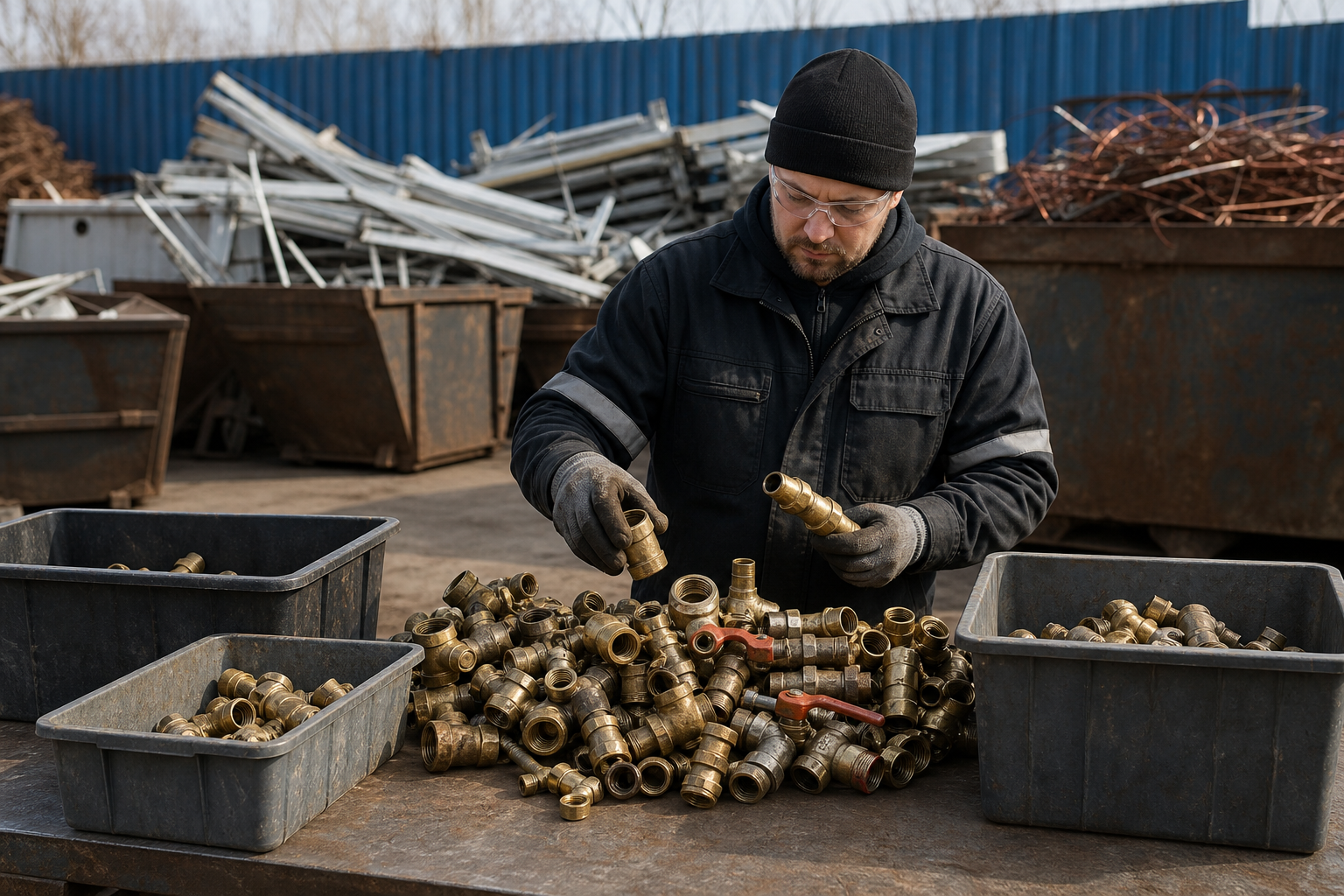
Brass scrap buyers assess the alloy, cleanliness, attached materials, weight, and current market conditions, so there is no permanent price per kilogram. Sort yellow brass, red brass, cartridge brass, turnings, and mixed items where practical, then ask Quick Scrap Metal for the current CAD rate and requirements before travelling to 407 Rexdale Blvd in Etobicoke. Related reading: Metal mesh for iron.
What brass scrap buyers assess before making an offer
A suitable brass buyer should explain which categories they accept, how they describe each grade, what affects the buying rate, and what you should confirm before loading your vehicle. Ask for the rate in Canadian dollars, the unit used, the material category, and whether the figure is an estimate or final assessed offer.
A buyer’s accepted-material list may include brass alongside other ferrous, non-ferrous, appliance, and electronic scrap categories. Quick Scrap Metal’s published information describes cash payments for qualifying scrap, appliances, and electronics at 407 Rexdale Blvd.
Do not choose a buyer solely because an advertisement says “best” or “top.” Compare like with like: the same brass grade, currency, weight basis, quantity, and condition. A clean, separated load should not be compared with mixed fittings containing steel, plastic, rubber, or fluids. For a Toronto-area comparison framework, review how scrap brass prices in Toronto vary by grade, cleanliness, market conditions, quantity, consistency, and buyer policy.
Questions to ask before choosing a buyer
- Is my described brass type currently accepted?
- What is today’s CAD buying rate for this grade?
- Should fittings, screws, plastic, rubber, or other attachments remain on the material?
- Are turnings, radiators, plumbing assemblies, or mixed loads handled differently?
- How will the material be assessed and weighed?
- What payment method is available for qualifying scrap?
- Do I need identification, ownership records, business documents, or other paperwork?
- What hours and vehicle-access details should I know before arriving?
Identify the brass in your load before you call
Color alone does not prove an alloy, but the item’s source, weight, surface, and attachments can help you describe it accurately. Use these categories as a preliminary guide. The buyer makes the final classification after inspecting the material.
| Likely category | Common examples | What to separate or ask about |
|---|---|---|
| Yellow brass | Taps, valves, fittings, locks, handles, and plumbing hardware | Keep clean pieces together. Remove accessible steel, rubber, or plastic only when safe and worthwhile. |
| Red brass | Some higher-copper valves, plumbing components, and specialized fittings | Keep it separate from yellow brass if reasonably confident, then ask how the buyer classifies it. |
| Cartridge brass | Brass sheet, cases, and thin formed components | Separate it from fittings and turnings. Describe its source. |
| Brass turnings | Machining shavings, chips, and production offcuts | Keep dry and contained. Ask about oily, wet, or mixed turnings before transport. |
| Bronze or similar alloys | Bearings, industrial parts, castings, and fittings | Do not assume bronze is brass. Keep questionable pieces separate for assessment. |
| Mixed brass | Unsorted fittings, hardware, and demolition scrap | Tell the buyer it is mixed. It may be assessed differently from consistent brass. |
| Brass-containing assemblies | Radiators, plumbing tear-outs, pumps, and multi-metal assemblies | Ask whether the complete item or separated components fit current intake requirements. |
Red brass generally has a deeper copper-red or brown tone than yellow brass, which is more golden yellow. That visual difference is only a clue. Oxidation, plating, paint, dirt, lighting, and mixed construction can make identification unreliable.
Common household and trade items include faucets, valves, pipe fittings, hose connectors, locks, door hardware, electrical components, radiators, and plumbing offcuts. Separate copper, aluminum, steel, stainless steel, and brass-looking plated items when you can identify them safely. A practical explanation of brass scrap price factors can help you describe the alloy and attached material more precisely.
Why brass offers vary, including the price of 1 kg
The price of 1 kg of brass is not permanent. A current offer depends on alloy grade, cleanliness, recoverable brass content, attached steel or plastic, fluids, quantity, consistency, market movement, processing costs, buyer policy, currency, and the reference date.
Recyclable brass can have monetary value, but different items do not have identical value. Clean fittings may be assessed differently from oily turnings, plated hardware, mixed plumbing assemblies, or brass and copper radiators.
One kilogram is approximately 2.205 pounds, but converting the unit does not correct for a different grade, currency, contamination level, or buyer policy. An online figure in dollars per pound for a named grade on a particular date is not automatically the amount you will receive for mixed fittings in Etobicoke.
Ask for today’s brass price in Etobicoke using a clear description such as “clean yellow brass fittings,” “mixed plumbing brass with steel attachments,” or “dry brass turnings.”
- Is the rate in CAD, and is it per kilogram or per pound?
- Which grade or category does it apply to?
- Is the weight gross or net of containers and non-brass material?
- Does it assume clean, dry, separated material?
- Will the final offer follow inspection and weighing?
Prepare brass for sale without over-dismantling
Prepare scrap by making it easier to identify without creating a new hazard. You do not need to dismantle every assembly or force apart a connection requiring specialist equipment.
- Identify the load. Separate likely brass from copper, aluminum, steel, stainless steel, electronics, and waste. List the main items and their source.
- Separate likely grades. Use labelled containers for yellow brass, red brass, cartridge brass, turnings, bronze, and questionable pieces. Label uncertain material “mixed brass for assessment.”
- Remove easy attachments. Take out loose steel screws, plastic handles, rubber pieces, and other obvious attachments only when they come away quickly and safely.
- Control fluids. Keep the load dry and do not transport leaking components. Ask before bringing an item that is oily, sealed, pressurized, or difficult to empty.
- Record unusual items. Photograph large assemblies and note approximate quantity, dimensions, visible attachments, turnings, or radiators.
- Secure the load. Use sturdy containers, prevent shifting, contain sharp edges, and load heavy items so they cannot fall when a hatch opens.
Stop if a component is leaking, pressurized, energized, sealed, contaminated, or connected to equipment you cannot isolate safely. Burning insulation, paint, or coatings creates hazardous smoke and can damage the material.
For further preparation ideas, brass scrap value tips can help you decide which sorting tasks are practical before requesting an assessment.
Clean brass, mixed brass, and assemblies: which route fits?
Choose the route that gives you a clear, safe description without spending more time dismantling than the possible improvement justifies. Clean, separated brass is easier to describe, while mixed loads and complete assemblies may be more practical to bring for assessment.
- Clean brass: Keep consistent fittings, valves, taps, or hardware separate and describe the category.
- Brass with attachments: Remove loose, accessible non-brass pieces when safe. Leave difficult or hazardous connections intact and ask how they should be handled.
- Mixed brass: Bring it as mixed material when you cannot confidently separate categories.
- Radiators and plumbing assemblies: Ask whether the complete item or separated components are accepted. They may contain brass, copper, steel, aluminum, fluids, and other materials.
- Turnings: Keep machining scrap dry and contained. Confirm requirements for oily, wet, or mixed turnings.
What to ask before travelling to a brass buyer
A short call can prevent a wasted trip, especially if your load contains mixed metals, turnings, radiators, fluids, or large assemblies. Give the buyer the material description, approximate quantity, and unusual conditions.
- Is this brass item or assembly accepted today?
- What current CAD rate applies to the grade described?
- Should yellow and red brass be separated?
- Should screws, plastic, rubber, plating, or other attachments be removed?
- Are wet, oily, leaking, pressurized, or sealed items permitted?
- What identification or documentation should I bring?
- What hours apply on my visit day?
- Will assessment happen before the final rate and payment are confirmed?
Quick Scrap Metal is at 407 Rexdale Blvd, Etobicoke, near Highway 27 and Rexdale. Confirm current hours and intake requirements directly before loading your vehicle.
What happens when you sell brass at the yard?
Bring a secure load, an accurate description, and any identification or paperwork the buyer requests. The transaction generally involves arrival and staff direction, material assessment, weighing, confirmation of the category and rate, and payment for qualifying scrap.
- Arrive prepared. Keep the load secured until staff direct you where and how to unload.
- Describe it accurately. Identify clean yellow brass, mixed fittings, turnings, radiators, or assemblies.
- Allow assessment. The buyer may review alloy clues, contamination, attachments, condition, and separate categories.
- Confirm the figures. Ask which weight, category, unit, currency, and rate were used, including any deduction.
- Clarify payment and records. Quick Scrap Metal describes cash payments for qualifying scrap. Confirm payment, receipt, identification, and documentation requirements.
Mistakes that make brass sales harder
- Calling every yellow metal copper: Brass, bronze, plated steel, and copper can look similar.
- Mixing brass with copper or steel: This obscures the recoverable brass.
- Comparing currencies or units: CAD per kilogram cannot be compared directly with USD per pound.
- Using an old online figure: A reference has a date, grade, and source. It is not automatically today’s offer.
- Assuming color proves grade: Plating, oxidation, and lighting can mislead you.
- Over-dismantling: Do not force apart pressurized, sealed, energized, leaking, or hazardous equipment.
- Arriving without a description: An item list, approximate weight, photos, and attachment notes improve quote requests.
Brass scrap buyer questions answered
How can you tell the difference between red and yellow brass?
Red brass usually appears deeper copper-red or brown, while yellow brass is more golden yellow. Visual identification is preliminary, so separate likely categories and let the buyer make the final classification.
Is scrap brass worth any money?
Yes, recyclable brass can have monetary value. The amount depends on grade, recoverable content, cleanliness, weight, market conditions, and buyer policy.
What is the price of 1 kg of brass?
There is no single permanent price. Request a current CAD quote for your specific grade and condition, comparing the same unit, currency, weight basis, and description.
Do I need identification or documents?
Ask before travelling because requirements depend on the material, seller, and transaction. Bring any identification, ownership information, business paperwork, or other documents specifically requested.
Can I sell brass mixed with other metals?
You may be able to bring mixed brass or assemblies for assessment, but acceptance and classification depend on current requirements. Describe attachments honestly and ask before transporting unusual, leaking, pressurized, or contaminated items.
Do I have to report scrap-metal sales in Canada?
Scrap-sale reporting requirements vary by situation and jurisdiction. Check applicable Canadian and local requirements with a qualified tax adviser.
Plan your Etobicoke brass drop-off
Write down the brass types, approximate quantity, attachments, unusual conditions, and questions about the current CAD rate, payment, identification, and documents. Confirm the day’s requirements with Quick Scrap Metal before travelling to 407 Rexdale Blvd in Etobicoke.
For information about scrap metal buying and current requirements, contact Quick Scrap Metal about its scrap metal buying service and describe your load clearly before arranging the drop-off.