
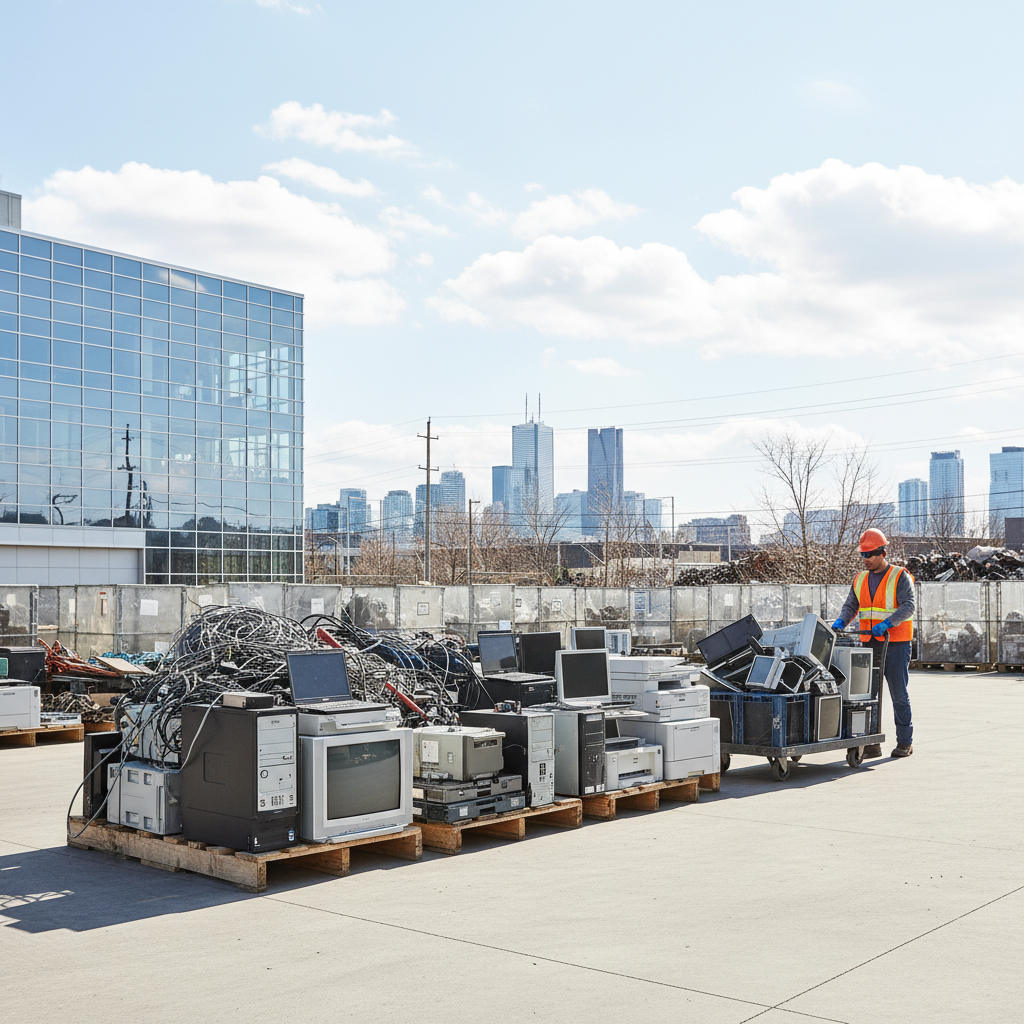
Electronics recycling services are the organized collection, sorting, and responsible processing of e-waste like computers, TVs, cables, and batteries. At 407 Rexdale Blvd in Etobicoke, Quick Scrap Metal offers convenient drop-off with extended hours, secure handling, and eco-friendly downstream partners so households and businesses can clear clutter safely and sustainably.
By Preet Dass • Last updated: 2026-05-07
Quick Summary
If you need fast, local electronics recycling in Etobicoke and the Toronto area, Quick Scrap Metal provides easy drop-off for computers, TVs, small appliances, and cables. Expect clear signage, quick check-in, data-safe handling, and responsible recycling. Use our checklist, prep items at home, and visit during extended weekday or Sunday hours.
Here’s what you’ll find in this complete guide and how to use it quickly.
- What it is: Plain-English definition of electronics recycling services and how we run them on-site.
- Why it matters: Safety, data security, and environmental benefits explained simply.
- How it works: A step-by-step process from trunk unload to verified downstream recycling.
- What we accept: Clear lists for computers, TVs, peripherals, batteries, and small appliances.
- Prep checklist: Actionable tips to speed up your drop-off and protect your data.
- Local tips: Etobicoke-specific advice, plus extended hours and easy access near HWY 27 & Rexdale.
Local considerations for Etobicoke
- Plan your visit outside weekend peak times near Woodbine Mall & Fantasy Fair; weekday evenings are often faster thanks to our late hours.
- Winter drop-offs: pack items in bins to keep moisture off electronics; wipe devices dry before unloading to prevent corrosion.
- For small offices in northwest Toronto, group laptops, cables, and keyboards by type; our team can unload by stream for quicker service.
What Are Electronics Recycling Services?
Electronics recycling services are end-to-end programs that collect, sort, and responsibly process electronic devices to recover metals, plastics, and glass while keeping hazardous components out of landfills. At Quick Scrap Metal, services include intake, safe data-handling procedures, material separation, and certified downstream recycling for e-waste streams.
In plain terms, it’s how we help you retire old tech the right way. We accept a wide range of devices and components, separate them by material, and work with vetted processors so valuable metals are reclaimed and harmful parts are contained.
- Core goal: Divert e-waste from landfills and recover reusable materials like copper, aluminum, and plastics.
- Scope: Household electronics, small office IT equipment, televisions/monitors, cables and wire, and select small appliances.
- On-site benefits: Fast unload, friendly staff, and immediate guidance about batteries, screens, and cords.
- Downstream focus: Partnering with responsible processors so materials stay in legitimate recycling loops.
Because we’re a full scrap yard as well, you can combine electronics with metal offcuts or appliances in one trip—saving time and reducing extra errands.
Why Electronics Recycling Matters
Electronics recycling reduces fire risk, avoids harmful landfill leakage, and recovers high-value metals for reuse. In Etobicoke and the greater Toronto metro, a reliable program also improves data security for homes and small offices by removing storage devices and handling batteries and screens with safer protocols.
Old tech often contains rechargeable batteries, printed circuit boards, and screens that need careful handling. When discarded improperly, these components can create safety hazards at home and in transit. Recycling brings order to that chaos.
- Safety first: Properly isolating batteries and packing fragile screens prevents punctures or breakage during transport.
- Environmental wins: Metals recovered from circuit boards and wiring reduce demand for virgin materials.
- Data protection: Removing or wiping drives lowers the chance of personal information exposure.
- Space back: Clearing piled-up devices frees shelves, closets, and storage rooms—especially before a move or renovation.
Our team sees this daily: a single drop-off can transform a cluttered garage into usable space in minutes.
How Electronics Recycling Services Work at Quick Scrap Metal
At our 407 Rexdale Blvd yard in Etobicoke, electronics recycling is a simple, assisted drop-off. You unload, we sort by stream, tag sensitive items, and move materials into secure bins for vetted downstream processors. Extended weekday hours and Sunday openings make timing easy for Toronto households and businesses.
Here’s the typical on-site flow from arrival to confirmation.
- Arrive and park: Follow yard signs to the electronics unloading area.
- Quick check-in: Our team reviews your items and points out any battery/screen handling steps.
- Data-sensitive tag: Laptops, desktops, and phones are flagged for drive removal or safe-handling direction.
- Stream separation: Cables, PCs, TVs, and small appliances go to clearly labeled pallets or bins.
- Battery isolation: Loose batteries move to a dedicated, insulated container.
- Weight and record: We document items by category for responsible downstream transfer.
- Responsible shipment: Materials go to qualified processors for dismantling and recovery.
To help you plan, compare the main ways to retire electronics below.
| Method | Best For | Pros | Considerations |
|---|---|---|---|
| Local drop-off (Quick Scrap Metal) | Mixed household/office e-waste | Fast unload, extended hours, combine with scrap metal | Bring items to 407 Rexdale Blvd |
| Retail take-back | Single devices or accessories | Convenient if buying new | Limited device scope; store policies vary |
| Municipal events | Community collection days | Neighborhood option | Infrequent schedules; lines can be long |
Prefer to prep first? Jump to our checklist below for wiping data, bundling cords, and safely taping battery terminals.
Accepted Electronics and Materials (What to Bring)
Bring computers, laptops, keyboards, mice, printers, televisions and monitors, Blu‑ray/DVD players, routers, cables and extension cords, and small appliances. We also accept peripherals and printed circuit boards. Ask our team about batteries and any device that contains a rechargeable cell before unloading.
Here’s a quick reference, aligned to how we sort materials on-site.
Computers and peripherals
- Desktops, towers, and small form-factor PCs
- Laptops, Chromebooks, and docking stations
- Keyboards, mice, webcams, and headsets
- Printers and home-office scanners
- Routers, switches, and home Wi‑Fi gear
- Computer recycling guidance (our internal guide)
Entertainment and display gear
- Televisions and monitors (LCD/LED)
- Streaming boxes and media players
- Blu‑ray/DVD players and game consoles
- TV recycling center tips (screen-handling basics)
Cables, wire, and small appliances
- Extension cords, HDMI/USB cables, and chargers
- Toasters, microwaves, and small kitchen appliances
- Window A/C units and dehumidifiers (handled carefully)
- Old tools with cords, range hoods, and dishwashers
- Electronics drop-off details (location and hours)
Printed circuit boards and components
- Green PCBs and attached components
- Power supplies and small transformers
- Engines, motors, and compressors from appliances
- Metal recycling in Etobicoke (combine metals + e-waste)
Not sure about a specific item? Bring a photo on your phone to show our team at check-in. We’ll direct you to the right bin or advise if special handling is needed.

Data Security and Safe Handling
For data-bearing devices, remove or wipe storage when possible. On-site, we tag laptops and towers for safe handling, isolate batteries, and protect screens from breakage. This reduces data exposure, fire risk, and injuries during transport and dismantling.
You control your data. If you can, sign out of accounts and remove storage (HDD/SSD) before drop-off. If not, let us know at check-in so we can flag your device for careful handling through downstream partners.
- Storage awareness: Laptops, desktops, and some set‑top boxes may contain drives; flag them to our team.
- Battery safety: Cover terminals on loose batteries with non-conductive tape and place them in our battery bin.
- Screen care: Keep TVs/monitors upright; avoid pressure points that can crack glass or LCD layers.
- Cord management: Coil and tie cables so they don’t snag during unloading.
For general best practices on electronics donation and recycling, see guidance from the U.S. EPA. It outlines common device types, reuse options, and safer end-of-life steps for households and small businesses.
Best Practices: Prep Your E‑Waste for a Faster Drop-Off
Prep at home to save time on-site: back up and sign out of devices, remove or wipe drives, coil cords by device, bag small parts, and tape battery terminals. Label fragile screens and load heavier items last so they’re easier to lift with our team’s help.
- Back up and sign out: Cloud or external drive backups; sign out of major accounts.
- Remove or wipe storage: If you can remove HDD/SSD, do it; otherwise perform a factory reset.
- Bundle by device: Keep the right charger and cords with the laptop or router they belong to.
- Bag loose parts: Screws, RAM sticks, and adapters go into a labeled zipper bag.
- Tape terminals: Use painter’s tape on 9V and other exposed battery terminals.
- Protect screens: Transport monitors upright with padding at corners.
- Declare special items: Tell us about A/C units, dehumidifiers, or devices with integrated batteries.
These steps make unloading faster and keep lines moving smoothly—especially helpful during weekend rushes.
Tools and Resources You Can Use
Use a simple checklist, labeled bins, and your phone’s notes app to inventory devices before you visit. For batteries, consult national drop-off information from Call2Recycle and keep a recurring calendar reminder to recycle old power packs every quarter.
Some practical resources to help you stay organized:
- Household checklist: List computers, TVs, peripherals, and batteries by room; check off as you load the car.
- Label bins: “Cables,” “Keyboards,” “Adapters,” and “Batteries” make on-site sorting quick.
- Battery guidance: Review Call2Recycle’s battery information for safe packing and drop-off reminders.
- One-stop trip: Combine e-waste with metal offcuts—see our ferrous metal recycling tips.
- Device-specific how‑tos: Our computer recycling guide and TV recycling tips cover common prep questions.
Prefer a quick orientation? Skim our electronics drop-off page for location, hours, and what to expect on arrival.
Case Studies: Real-World Drop-Off Scenarios
From a family clearing a basement shelf to a contractor bringing mixed e-waste after a renovation, electronics recycling services streamline the handoff. Sorting by stream, tagging data-bearing devices, and isolating batteries create a smooth, safer unload and a verifiable path to responsible recycling.
Homeowner: Closet clean-out in Etobicoke
- Situation: A family had two laptops, a broken LCD TV, a printer, and a bin of cables.
- Approach: They labeled cords and performed factory resets at home; we tagged the laptops for drive handling.
- Outcome: The unload took just minutes, and they left with a decluttered closet and peace of mind about data.
Contractor: Post-renovation mixed haul
- Situation: A small contractor finished a kitchen upgrade and brought a microwave, range hood, wiring offcuts, and old switches.
- Approach: We separated electronics from metal scrap streams to keep the line moving.
- Outcome: One visit covered appliances, cables, and metal—no juggling multiple facilities.
Small office: Device refresh in northwest Toronto
- Situation: A team upgraded monitors and laptops and needed same-day drop-off.
- Approach: They sorted peripherals by box and flagged laptops for careful handling.
- Outcome: Streamlined check-in preserved workflow, and the storage room was cleared for new equipment.
We see these patterns every week. With light prep, your own drop-off can be just as quick.

Eco Standards and Downstream Partners
Responsible electronics recycling services depend on vetted downstream processors and clear standards. We prioritize partners that follow recognized certifications and maintain traceable material flows so recovered metals, plastics, and glass return to legitimate manufacturing streams.
For national-level direction on donation and end-of-life, see the U.S. EPA’s electronics guidance. Battery-specific rules of thumb and drop-off programs are summarized by Call2Recycle. For broader recycling ethics and certification frameworks, explore the e‑Stewards standard.
In our experience, households and small offices don’t need to memorize acronyms. You need a trustworthy local handoff—and that’s what our team focuses on every day at 407 Rexdale Blvd.
Need a Fast, Local Drop-Off?
Bring your electronics to 407 Rexdale Blvd for a quick, guided drop-off. We’ll help unload, separate batteries, tag data-bearing devices, and move everything into the right bins for responsible recycling—often in just a few minutes from arrival to exit.
Plan your visit: Check our electronics drop-off page. Combine e-waste with scrap metal in one trip for a single, streamlined stop.
Key Takeaways
Electronics recycling services help you declutter safely, protect data, and support real material recovery. Prep devices at home, group cables, and flag batteries and screens. Then use Quick Scrap Metal’s extended hours at 407 Rexdale Blvd for a fast unload and responsible downstream recycling.
- Simple process: Arrive, check in, unload by stream.
- Data care: Remove or wipe drives when possible; tell us about any storage left inside.
- Battery safety: Tape terminals and use our dedicated bin.
- One-stop trip: Combine electronics with metal scrap to save time.
- Trusted standards: EPA guidance, Call2Recycle battery info, and e‑Stewards frameworks support safer outcomes.
Frequently Asked Questions
These quick answers cover the most common electronics recycling service questions we hear in Etobicoke and across the GTA, from accepted items to data safety and how to prep before you drive to our yard.
Which electronics can I drop off at Quick Scrap Metal?
Bring computers, laptops, keyboards, mice, printers, televisions and monitors, routers, cables, and small appliances. Show our team any batteries or devices with built-in cells so we can handle them safely on arrival.
How should I prepare data-bearing devices?
Back up, sign out, and remove or wipe storage if you can. If not, tell us at check-in so we can flag the device for careful handling and downstream data-safe processing.
Do you accept batteries with my electronics?
Yes—please tape exposed terminals and hand batteries to our team for placement in a dedicated, insulated container. We’ll keep them separate from devices for safer transport.
Can I combine e-waste with scrap metal or appliances?
Absolutely. We’re a full scrap yard, so you can bring electronics alongside metal offcuts or small appliances. Combining streams saves time and consolidates errands into one stop.
Conclusion
If you’re decluttering or upgrading tech, electronics recycling services give you a clear, safe path from trunk to responsible processing. Quick Scrap Metal’s Etobicoke location offers extended hours, friendly guidance at unload, and vetted downstream partners so your old devices become tomorrow’s raw materials.
Ready to go? Plan your route to 407 Rexdale Blvd and stop by during late-weekday or Sunday hours. Have questions about a tricky item? Bring a photo and ask at check-in—we’re here to help.
Friendly next step: Book your visit window and get directions on our electronics recycling page. Prefer talking to a person first? Swing by our yard near Flagstaff Park and we’ll walk you through the process.