
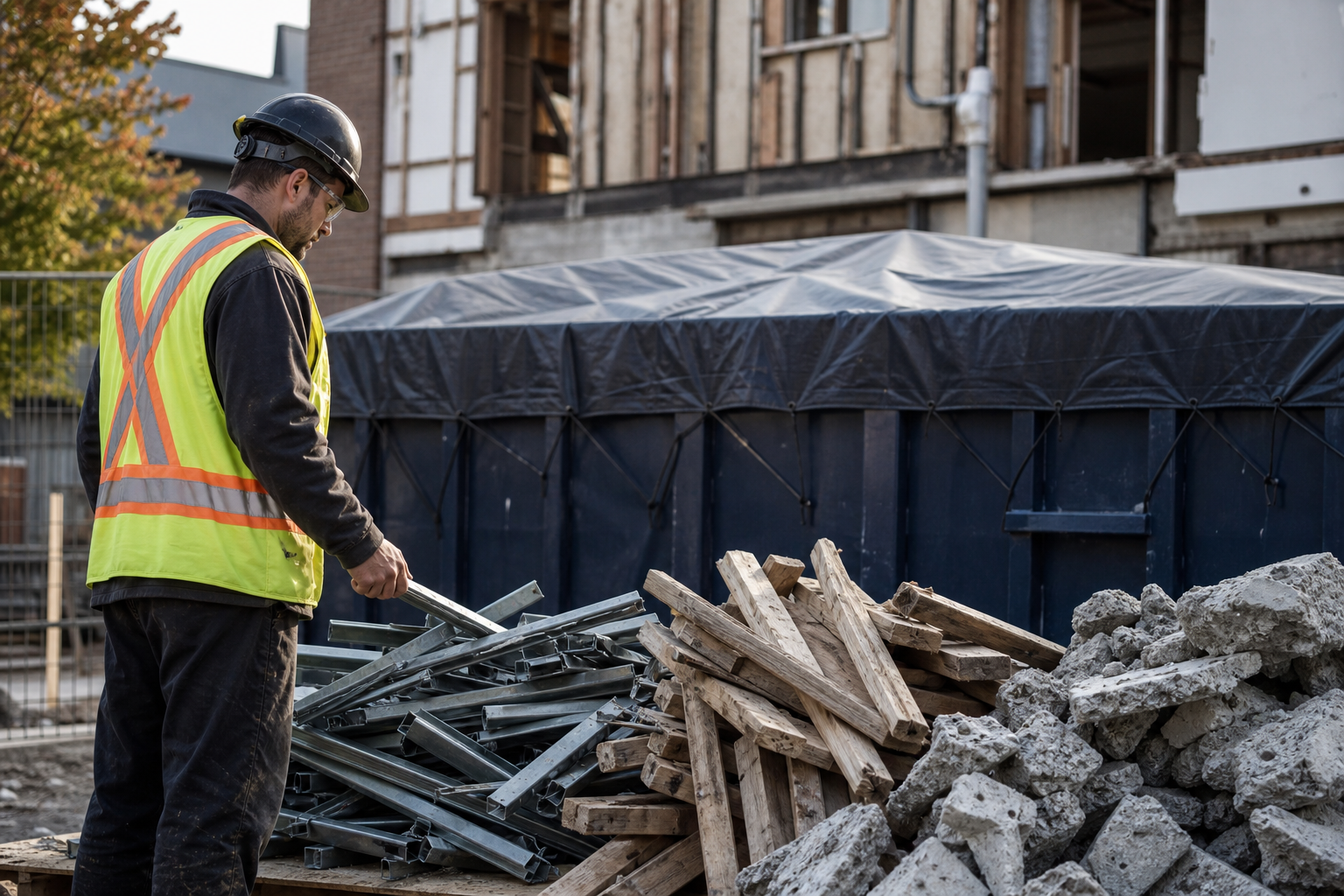
For construction and renovation projects, the right recycling arrangement depends on the materials being removed. Roll-off providers generally manage containers, hauling, recycling, and disposal for construction and demolition waste. Quick Scrap Metal is a specialized buyer and recycler for separated metals, appliances, electronics, automotive scrap, and other listed materials. It should not be assumed to provide roll-off bins or accept every type of construction debris.
Before booking, separate materials where practical and confirm acceptance, contamination rules, scheduling, pricing, and downstream handling. These seven checks can help contractors choose an appropriate GTA roll-off service and identify materials that may be better directed to a specialized scrap recycler.
1. Confirm exactly which materials the service accepts
Do not choose a roll-off service based only on the word “recycling.” Ask for a clear list of accepted materials and identify whether your load is clean, mixed, or subject to special handling. GTA construction-waste providers commonly describe services for concrete, brick, drywall, lumber, metal, soil, cardboard, packaging, shingles, and mixed construction and demolition waste.
Quick Scrap Metal lists ferrous metals such as steel and cast iron; non-ferrous metals such as copper, aluminum, brass, nickel, and stainless steel; cables, wire, transformers, engines, motors, radiators, siding, plate, and extrusion. It also lists computers, televisions, printed circuit boards, appliances, batteries, and automotive scrap. Review its scrap metal, appliance, and electronics services before assuming a material is suitable.
Concrete, brick, drywall, lumber, soil, shingles, and mixed demolition debris should not automatically be brought to a scrap yard. Confirm those materials with an appropriate roll-off provider.
2. Ask how sorting and contamination are handled

A cleanly separated load may be treated differently from one containing several waste categories. Before booking, ask whether the provider separates materials after collection, rejects unsuitable items, or applies different terms to contaminated loads.
- Are attached non-metal materials allowed on recyclable metal?
- Are paint, oil, refrigerants, batteries, chemicals, or other potentially hazardous items excluded?
- Will a mixed load be accepted, and how is it classified?
- What happens if the delivered material differs from the original description?
- Should appliances, electronics, wire, and loose metals be separated?
For metal loads, separating obvious categories makes the material easier to describe and helps you ask precise questions. See this scrap-selling checklist for Etobicoke before delivery.
3. Identify what should bypass the general roll-off
Combining every material can make it harder to recover metals or direct specialized items to the right processor. Create separate streams for identifiable scrap value or specific recycling requirements.
- Non-ferrous metals: copper, aluminum, brass, nickel, stainless steel, and clean wire.
- Ferrous metals: steel, cast iron, rotors, plate, extrusion, and structural offcuts.
- Equipment: motors, engines, transformers, radiators, compressors, and transmissions.
- Appliances: washers, dryers, air-conditioning units, stoves, ovens, dishwashers, and microwaves where accepted.
- Electronics: computers, laptops, televisions, monitors, peripherals, and printed circuit boards.
- Automotive scrap: eligible vehicle components or scrap cars where drop-off or pickup has been arranged.
Keep concrete, drywall, lumber, soil, shingles, packaging, and other unverified construction debris with the appropriate roll-off stream. Acceptance and pickup arrangements should be confirmed before transport. Contractors can also review these questions about cash for scrap metal.
4. Verify container, loading, and site-access requirements
Ask the roll-off provider about container type and size, placement, clearance, loading limits, access restrictions, and surface requirements. Clarify who loads the container, whether material may extend above it, and what happens if the truck cannot access the planned location.
These are roll-off service questions, not services that should be attributed to Quick Scrap Metal. Quick Scrap Metal’s verified location is a drop-off yard at 407 Rexdale Blvd in Etobicoke near Highway 27 and Rexdale; that does not mean it supplies containers or handles a full construction-site bin.
5. Match pickup and swap timing to the project schedule
Ask the roll-off provider how delivery, pickup, scheduled hauls, bin swaps, delays, and access windows are managed. Plan movement of separated metals or e-waste separately from the roll-off schedule.
Quick Scrap Metal publishes hours of 8:00 a.m. to 7:00 p.m. Monday through Friday, 8:00 a.m. to 5:00 p.m. Saturday, and 9:00 a.m. to 5:00 p.m. Sunday. Confirm current hours and whether your material requires arranged pickup through the contact page.
6. Clarify pricing, weight rules, and extra charges
Compare the full cost, not only the advertised container or haul charge. Ask whether the quote includes delivery, pickup, tipping or disposal, weight allowances, overages, contamination fees, minimums, extra pickups, and bin swaps.
Scrap pricing works differently. Quick Scrap Metal uses market-based, material-specific rates and cash payouts, but does not publish a fixed price list. Ask for current terms before travelling and do not rely on a generic rate for copper, aluminum, steel, or another category. This scrap-price checklist can help you prepare.
7. Ask where the material goes after collection
Ask what happens after collection, including how materials are sorted, which downstream processors are used, how special waste is handled, and whether diversion reports or certificates are available.
- Which materials are recycled, and which are sent for disposal?
- Are metals and e-waste separated before moving downstream?
- Can the provider supply weight tickets or diversion documentation?
- Are special or potentially hazardous items accepted?
Quick Scrap Metal positions its metal, appliance, and electronics services as responsible recycling, but the supplied information does not verify diversion reports, certificates, or a particular downstream processor. Ask directly if your project requires formal documentation. This eco-friendly recycling decision guide may also help.
A simple decision path for GTA contractors
Use a roll-off provider for containerized general construction or demolition waste and confirm its categories, access requirements, schedule, charges, and documentation. Use a separate scrap stream for eligible metals, appliances, electronics, and automotive scrap. Sort those materials before they are mixed with concrete, drywall, lumber, soil, shingles, or other debris, then confirm acceptance and current rates with the receiving recycler.
Quick Scrap Metal may be a suitable local option for the scrap portion of a project. It serves Toronto and the broader GTA, including Mississauga and Brampton, from 407 Rexdale Blvd in Etobicoke. Its listed services cover metals, appliances, electronics, and automotive scrap, but each load should be confirmed before delivery.
Frequently asked questions
Can Quick Scrap Metal provide a roll-off bin for construction debris?
The supplied information verifies drop-off and scrap-related services, not roll-off bin rental or delivery. Confirm container needs with a roll-off provider and contact Quick Scrap Metal separately about eligible scrap.
Which construction materials should contractors separate?
Separate identifiable metals, wire, motors, appliances, electronics, and automotive scrap from general debris. Confirm acceptance before transport.
What should contractors confirm before bringing scrap to a GTA yard?
Confirm accepted materials, current rates, contamination rules, hours, drop-off suitability, and whether pickup must be arranged.
Conclusion: choose by material, not just by container
The best contractor recycling arrangement matches each material stream to the right service. A roll-off provider may suit general construction debris and container logistics, while a specialized recycler may better suit separated metals, equipment, appliances, electronics, or automotive scrap.
Work through the seven checks: accepted materials, sorting, recovery opportunities, access, scheduling, complete pricing, and downstream handling. This reduces avoidable surprises and helps keep recoverable materials out of mixed loads.
To confirm accepted materials, current rates, drop-off suitability, or arranged pickup, contact Quick Scrap Metal before visiting 407 Rexdale Blvd, Etobicoke, Ontario M9W 6P8.