
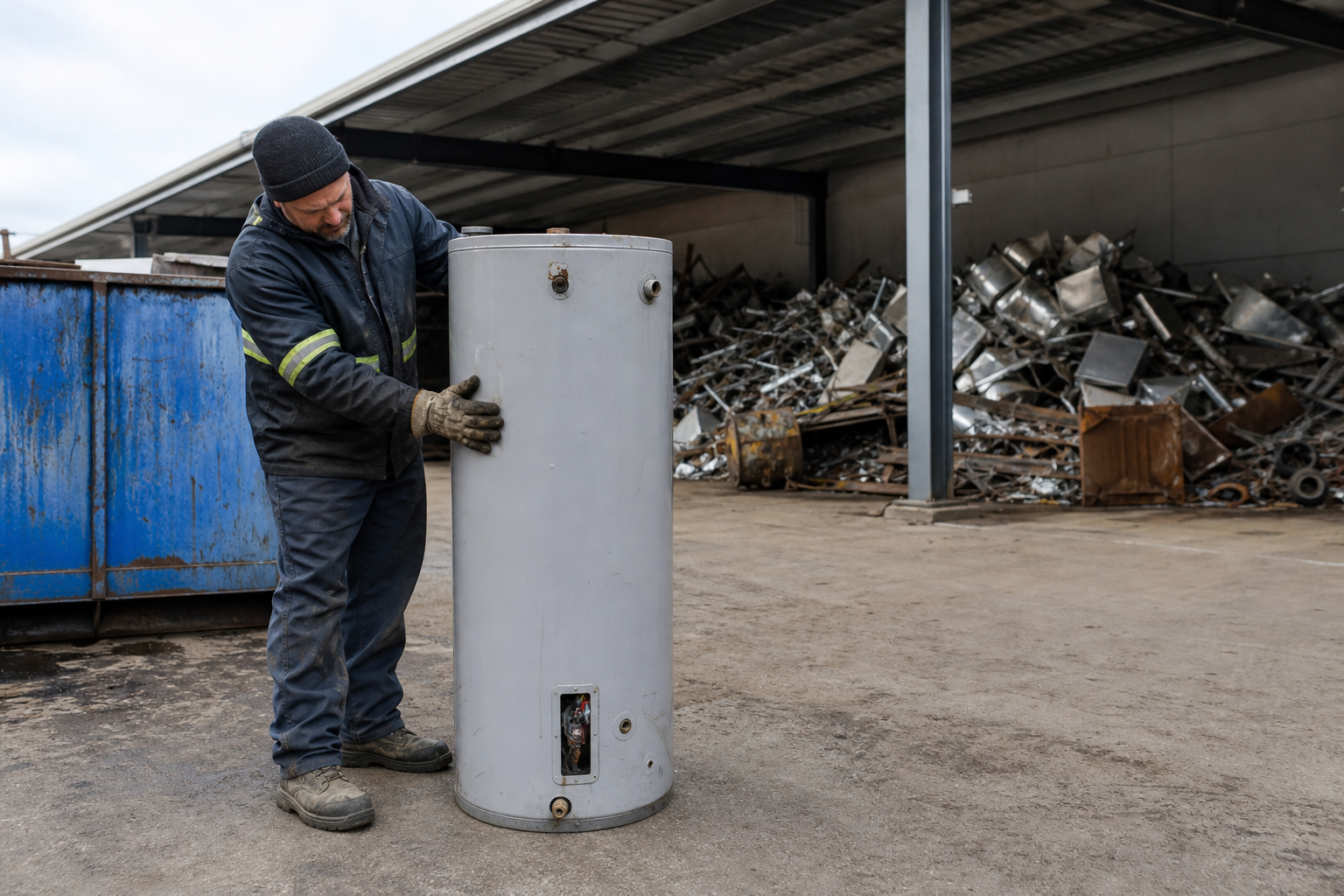
An old water heater may be recyclable as scrap metal, but the right route depends first on whether you own the unit, whether it has been safely disconnected and drained, and whether the receiving provider confirms acceptance. A 40-gallon capacity does not establish a fixed scrap value: the offer depends on the tank, fittings, wiring, weight, cleanliness, material separation, and current rates. Related reading: What to Do When You Notice Water Heater Failure Signs.
Start With Ownership and Condition
Before moving an old water heater, find out whether it belongs to you or a rental company, whether it is still connected, and whether water remains inside the tank. These details determine which disposal routes are realistic. Related reading: Can You Recycle an Old Furnace for Cash?.
If the tank is rented, do not treat it as ordinary scrap. Review the rental agreement and ask the provider about its return process, because a rental unit may need to go back through that company instead of being sold independently.
If you own the heater, identify its condition. Is it a standard tank-style water heater, an electric or gas model, or part of a larger boiler or heating system? A boiler and related equipment should be confirmed separately rather than assumed to follow the same route as a household storage tank.
Water-heater assessments can involve tank metal, fittings, insulation, wiring, and residual water. Confirm the required steps for disconnecting gas, electricity, and water before moving the unit.
Choose the Route That Fits Your Water Heater
Return a rented unit to its provider, consider scrap-yard drop-off when an owned tank is safely disconnected, drained, accepted, and transportable, and ask about removal when the tank cannot be moved safely to a vehicle. If none of these routes fits, contact an authorized local disposal provider before placing the appliance at the curb.
| Situation | Practical first step | What to confirm |
|---|---|---|
| Rental water heater | Ask the rental company about return or collection | Return location, appointment requirements, and who handles disconnection |
| Owned tank that is disconnected, drained, and easy to load | Ask a scrap yard about drop-off acceptance | Model acceptance, current assessment terms, hours, and required identification |
| Heavy tank, stairs, narrow access, or no suitable vehicle | Ask whether arranged removal is available | Pickup area, access requirements, fees or payment terms, and preparation responsibilities |
| Boiler or connected heating equipment | Request a separate assessment or disposal recommendation | Whether it is handled as a water heater, appliance, or specialized system |
Do not choose a route based only on the hope of receiving cash. Unsafe lifting, an unsecured load, or unauthorized removal from a rental agreement can cost more than it saves.
Prepare the Unit Without Creating a New Hazard
Arrange disconnection through an appropriately qualified person when the installation requires it. Homeowner preparation should begin only after the unit is safe to move.
- Confirm ownership. Check for rental markings, account information, or agreement paperwork.
- Arrange disconnection. Confirm who is responsible for the gas, electrical, and water connections.
- Drain residual water. A tank that still contains water is heavier and harder to handle.
- Inspect the outside. Look for leaks, sharp sheet-metal edges, loose insulation, exposed wiring, or damage.
- Leave sealed or unfamiliar systems intact. Do not open sealed components or dismantle parts to chase a higher scrap category.
- Plan the loading route. Measure doorways, account for stairs, and decide how the tank will be secured.
Safety note: Stop and arrange qualified handling if the unit is connected to gas or electricity, cannot be fully drained, leaks, or requires forceful cutting or dismantling. Water heaters are heavy, awkward objects with sharp metal and potentially hazardous connections.
Before moving the appliance, review the water heater removal requirements covering disconnection responsibilities, residual water, and assessment factors.
Which Parts Affect a Scrap Assessment?
A water heater may be assessed as a combination of tank metal, fittings, insulation, wiring, and residual water. The exact mix varies by unit, so do not assume every tank contains the same amount or grade of copper, brass, aluminum, or steel.
Some units have copper tubing or copper fittings, while others include brass valves, steel connections, wiring, or mixed attachments. If a copper or brass component is already removable and can be separated without unsafe work, keep it apart from the tank and identify it when requesting an assessment.
Clean, separated copper is easier to assess than copper mixed with steel, plastic, dirt, or other attachments. The factors described in this copper scrap pricing guide include grade, cleanliness, sorting, and market conditions.
Do not cut apart the tank or strip wiring solely to create separate piles. If a fitting is difficult to remove, leave it attached and describe it when you call.
Why a 40-Gallon Tank Has No Fixed Scrap Price
A 40-gallon water heater does not have a standard scrap value. The gallon rating describes capacity, not the amount of recoverable material or the price a buyer will offer.
- Total weight: More mass can mean more material, but weight does not identify grade or cleanliness.
- Tank metal: The main body may be treated differently from separate non-ferrous components.
- Fittings and wiring: Attached or separated parts can change the material mix.
- Insulation and contamination: Non-metal materials and residue affect recoverable content.
- Preparation: Clear separation makes inspection easier than a mixed, damaged, or wet load.
- Current market conditions: Scrap rates change, so an online average cannot guarantee today’s offer.
Ask for a current assessment based on the actual unit instead of relying on a generic price per tank. Capacity alone cannot answer how much money you will receive.
Drop-Off or Removal: Which Is More Practical?
Drop-off is usually the better route when the tank is owned, disconnected, drained, accepted by the yard, and easy to load into a suitable vehicle. Removal is more practical when the unit is in a basement, behind tight access, on stairs, or too heavy for the people and equipment available.
Consider the tank’s dimensions, distance to the yard, vehicle access, and whether it can be secured upright or otherwise prevented from shifting. A drained tank can still be difficult to lift through a doorway or down steps.
Quick Scrap Metal describes scrap-metal and appliance drop-off at its Etobicoke location. Water-heater pickup availability and terms should be confirmed for the specific unit before you plan around them.
What to Confirm Before Travelling to Quick Scrap Metal
Call or message before loading the tank. Acceptance, price, pickup, and handling terms can vary by model and condition.
- State that it is an owned or rented gas or electric water heater.
- Give the tank size if known, such as 40 gallons.
- Say whether it is disconnected and drained.
- Describe attached copper, brass, wiring, insulation, leaks, or visible damage.
- Ask whether that model is accepted for scrap drop-off.
- Ask whether pickup is available and what access or charges apply.
- Ask what identification or paperwork to bring.
- Confirm current hours and whether assessment occurs on arrival.
“I have an owned (gas/electric) water heater in (Etobicoke or your location). It is approximately (size) gallons and is (disconnected and drained/not yet disconnected). It has (copper tubing, brass fittings, wiring, insulation, leaks, or other details). Do you accept this model for drop-off, is pickup available, what paperwork is needed, and what are your current hours?”
Plan an Etobicoke Drop-Off
Quick Scrap Metal is located at 407 Rexdale Blvd, Etobicoke, Ontario. The yard is open Sundays and closes late on weekdays.
Confirm acceptance and current hours before loading the tank, especially for a weekend visit or a large appliance. Keep the unit stable, contain loose parts, and allow staff to identify the tank and attached materials.
Questions Homeowners Ask About Old Water Heaters
How do I get rid of my old hot water heater?
First confirm whether it is owned or rented. Return a rental through the provider. For an owned unit, arrange qualified disconnection and draining, then confirm scrap-yard drop-off or removal before transporting it.
Does a 40-gallon water heater have a standard scrap value?
No. The actual assessment depends on weight, tank metal, fittings, wiring, insulation, cleanliness, separation, completeness, and current material rates.
Can I take a rental water heater to a scrap yard?
Do not assume you can sell a rental tank. Check the agreement and ask the rental company about its return process first.
Should I remove copper fittings from an old water heater?
Separate copper or brass only when the component is already removable and doing so requires no unsafe cutting or dismantling. Keep separated material apart and describe attached fittings when requesting an assessment.
Can Quick Scrap Metal pick up my old water heater?
Ask Quick Scrap Metal about the specific tank, location, access, preparation, and applicable terms before assuming collection is available.
If you own an old water heater, contact Quick Scrap Metal to ask whether that specific unit is accepted and which drop-off or removal options apply. The relevant appliance recycling and removal service page can help you frame the ownership, fuel type, size, condition, and access details to discuss.