
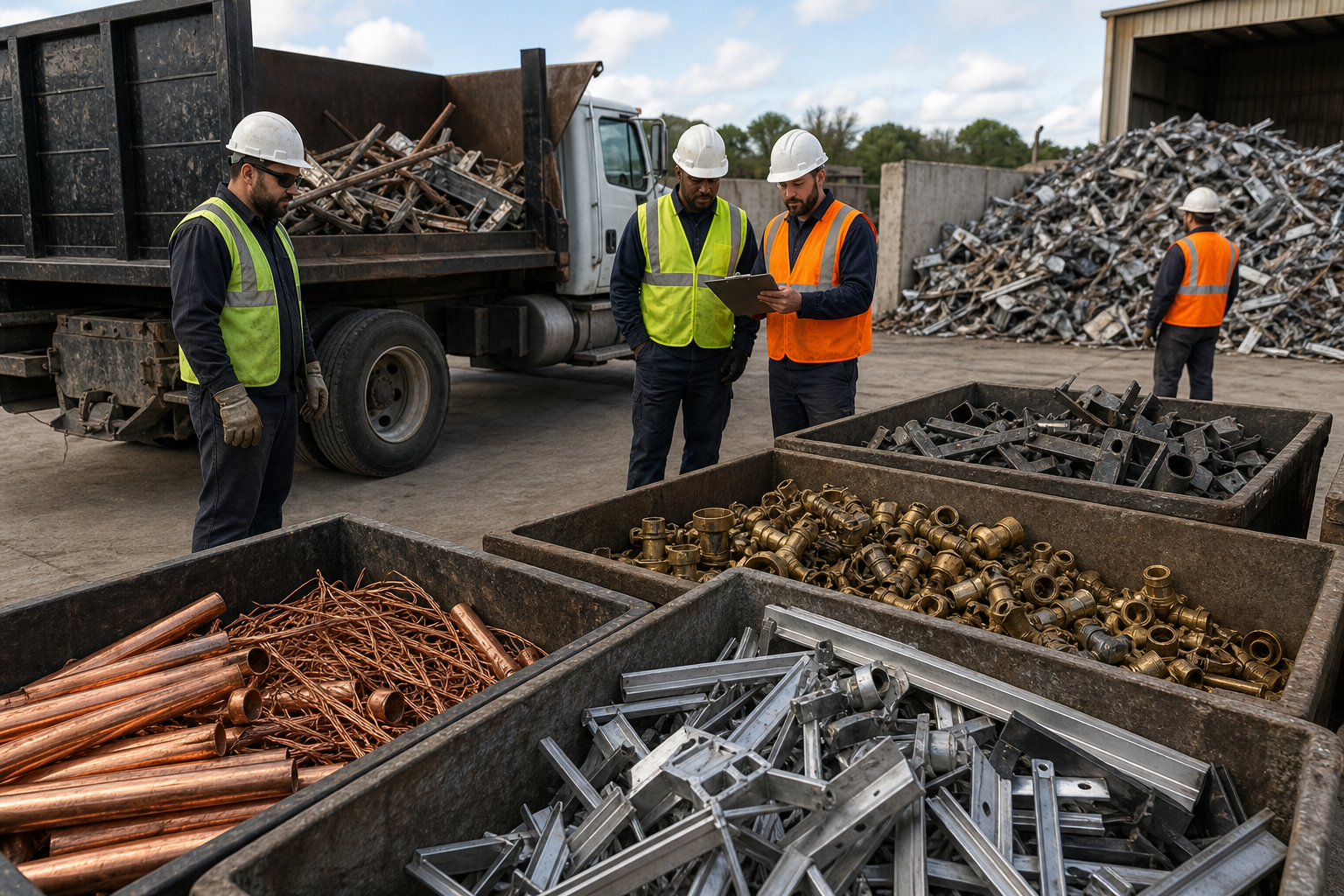
Scrap metal brokerage usually means an intermediary helps arrange the sale, movement, or end-market placement of commercial scrap between a supplier and a buyer or processor. A direct scrap-yard sale is simpler for many smaller or ready-to-transport loads: Quick Scrap Metal buys qualifying scrap, appliances, and electronics at 407 Rexdale Blvd in Etobicoke, assesses material by type and condition, and describes on-the-spot cash payment for qualifying scrap. The right route depends on volume, material complexity, pickup needs, frequency, and logistics support.
What “scrap metal brokerage” means in plain language
Scrap metal brokerage is a commercial arrangement in which a broker helps connect a scrap supplier with a buyer, processor, mill, smelter, or other end market. The broker may compare buyers, negotiate commercial terms, coordinate transportation, consolidate material from several locations, or place a specialized or recurring load.
A broker is not necessarily the same business as the yard that weighs or processes your material. The broker may coordinate the transaction while another company handles collection, sorting, grading, processing, or final purchase. Responsibilities, fees, payment timing, and paperwork depend on the arrangement.
Quick Scrap Metal is verified as a scrap buyer and recycler with an Etobicoke drop-off location. Its purchase and recycling of metals, appliances, electronics, and other qualifying materials are supported, but the available information does not establish that it offers brokerage contracts or intermediary end-market placement.
Broker, scrap yard, or online marketplace: what changes for the seller?
A direct yard sale usually gives you a shorter path from material to assessment and payment. Brokerage and online marketplace routes can create more options for commercial loads, but they can also add communication, transport, timing, and payment variables.
| Route | Often fits | What you gain | What to clarify |
|---|---|---|---|
| Direct scrap-yard sale | Sorted loads you can transport to a local yard | Fewer parties, direct assessment, and a simpler drop-off | Accepted materials, grade, weighing, payment, identification, and hours |
| Broker-style commercial arrangement | Recurring volumes, multiple sites, specialized alloys, or complicated logistics | Potential coordination between suppliers, transport providers, and buyers | Buyer, weighing point, deductions, fees, payment timing, and rejected-load responsibility |
| Online marketplace | Unusual items, reusable equipment, or material suited to a specific buyer | Access to individual buyers and possible reuse value | Reliability, transport, fraud risk, removal effort, and whether the offer is for reuse or scrap |
For a small quantity of clean copper, aluminum, brass, or steel, an online marketplace may create more work than value. A direct buyer can be more practical because you avoid listings, waiting, and separate meetings.
A commercial seller with steady production offcuts may need a different conversation. A broker-style arrangement can be worth investigating if the load is recurring, spread across locations, difficult to move, or valuable only after accurate separation and end-market matching. That does not guarantee a higher payment. It means the logistics and buyer-selection problem deserves a detailed review.
Which route fits your load?
Choose a direct drop-off when the material is sorted, safe to transport, and practical to unload at a local yard. This is usually the clearest route for a contractor with separated steel, copper, aluminum, or brass.
Ask about a pickup discussion when material is bulky, inaccessible, spread across a property, or too heavy for your vehicle. Describe the item, quantity, location, access route, and whether it is loose, palletized, boxed, or attached to equipment. Pickup availability and terms must be confirmed for the specific load.
Investigate brokerage-style coordination when you have recurring commercial volumes, multiple locations, unusual alloys, several material streams, or a need to coordinate transport and buyers. Ask for the commercial process in writing before moving material, including who is purchasing it and how the final assessment will be determined.
- Sorted demolition metal: Start with a direct yard assessment if you can transport it efficiently.
- Mixed construction scrap: Photograph the load and separate obvious metal from general waste before asking which route fits.
- Recurring manufacturing offcuts: Provide material type, estimated weekly or monthly volume, dimensions, and collection frequency.
- Specialty alloys: Keep grades separate and provide markings, test information, or representative photos if available.
- Appliances and electronics: Describe each category before transport because acceptance and handling can differ by item.
- Lead-acid batteries: Keep units intact and disclose damaged, leaking, swollen, or unusual batteries before arranging transport.
How the scrap-selling process works from inquiry to payment
A useful scrap transaction begins with a material description, not a guessed price. State what you have, how much you have, where it is, whether it is sorted, and whether you need drop-off or collection.
- Describe the load: List each metal family, appliance type, electronic category, battery type, or vehicle.
- Share practical details: Provide approximate weight or volume, photographs, dimensions, visible markings, and number of loads.
- Confirm the route: Ask whether to drop off, whether pickup is available, and what preparation is required.
- Prepare and secure it: Separate grades, remove loose attachments where safe, and prevent shifting during transport.
- Arrive or arrange collection: Follow receiving instructions and keep the load secured until directed to unload.
- Identify and sort categories: Material may be separated into grades before weighing.
- Weigh and assess: The rate depends on material, condition, weight, and current buying conditions.
- Complete payment and records: Ask which payment method, identification, receipt, weight ticket, or commercial record applies.
The Etobicoke yard is at 407 Rexdale Blvd. Its site describes cash payment for qualifying scrap, but a brokerage arrangement would require separate confirmation of its parties, terms, payment timing, and records.
How scrap metal pricing is assessed
Scrap pricing is not one rate for everything metallic. An assessment can reflect metal family, alloy or grade, cleanliness, contamination, form, net weight, total volume, current demand, transport, handling, and buyer policy.
Aluminum is a useful example. Extrusion, sheet, cast aluminum, wheels, siding, cans, and wire are different categories. The guidance on aluminium scrap value explains why grade, weight, preparation, demand, and local conditions matter.
Brass also needs separation. Yellow brass, red brass, cartridge brass, and mixed brass can receive different assessments because copper content, attachments, contamination, and form vary. Review the factors behind the brass scrap price before requesting an assessment.
Heavy ferrous material illustrates why weight alone is not enough. Black cast iron, cast iron #2, auto cast, and rotors may be distinct categories, while rubber, oil, concrete, and other attachments can affect grading. A published cast iron price per pound is a reference, not a guaranteed payout.
Lead-acid batteries are assessed using battery type, weight, recoverable lead, condition, contamination, sorting, and market demand. Keep them intact, upright, contained, and with terminals protected during transport. See the guidance on lead battery scrap value.
Will scrap metal prices rise in 2026?
No reliable local assessment can promise that scrap prices will rise during 2026. Rates respond to commodity markets, regional supply and demand, processing costs, transportation, buyer requirements, and the grade and condition of the material.
Treat an online price as dated context rather than a guaranteed offer. Request a current assessment when you are ready to sell.
What materials can a local buyer assess?
Quick Scrap Metal describes buying and recycling copper, aluminum, steel, brass, stainless steel, electronics, and e-waste at its Etobicoke location. Its broader service information also covers cast iron, wire and cable, batteries, motors, and appliances.
A mixed load can contain several value categories, but a buyer still needs to know what is in it. Separate copper from steel, aluminum from ferrous attachments, brass from bronze, and electronics from general metal where safe. Review accepted scrap-metal categories before loading an unusual item.
Describe refrigerators, air-conditioning units, batteries, contaminated equipment, sealed components, transformers, and damaged electronics before travelling. Acceptance, handling, and pickup terms may differ by item.
Three commercial situations and the practical next move
A renovation contractor with sorted steel and copper
Hypothetical example: A contractor has one truckload of separated steel framing, copper pipe, and brass fittings from a renovation. The material is dry, accessible, and ready to transport.
A direct yard assessment is the logical first route. Photograph each category, estimate the weight, keep non-ferrous metals separate, and ask about acceptance and documentation before leaving the site.
A manufacturer with recurring aluminum offcuts
Hypothetical example: A small manufacturer produces clean aluminum extrusion offcuts weekly. The material is stored in labeled bins, but the business needs a repeatable collection or delivery routine.
Provide alloy information if known, bin dimensions, estimated weekly weight, collection frequency, loading equipment, and service location. The buyer can then explain whether a recurring direct arrangement is practical or whether another commercial route needs consideration.
A property manager clearing appliances, electronics, and batteries
Hypothetical example: A property manager has washers, a stove, computers, monitors, cables, and lead-acid backup batteries from several buildings.
Create an inventory by location and category before asking about transport. Include access details, stairs or loading restrictions, item counts, battery condition, and photographs. Drop-off may work after consolidation, while collection or coordinated commercial handling may be more practical if sites cannot be cleared together.
Prepare a quote-ready scrap inquiry
A complete inquiry helps a buyer decide whether direct drop-off, a confirmed pickup discussion, or another route fits. It also prevents a vague description such as “a truck full of metal” from producing an unusable answer.
- Seller details: Name, business type, phone, email, and preferred reply method.
- Material categories: Steel, copper, aluminum, brass, stainless steel, cast iron, batteries, appliances, electronics, vehicles, or other items.
- Quantity: Weight, pieces, bins, pallets, dimensions, or truck-load estimate.
- Sorting status: Separated by grade, partly mixed, attached to equipment, or mixed with non-metal material.
- Condition: Clean, painted, oily, wet, damaged, complete, dismantled, leaking, or contaminated.
- Photos and markings: Wide photos, close-ups, labels, alloy markings, and representative pieces.
- Location and access: Address, loading area, stairs, gates, clearance, dock access, and equipment.
- Timing and frequency: One-time cleanout, weekly offcuts, monthly loads, or several site visits.
- Preferred route: Drop-off, possible pickup, or guidance before moving material.
- Records: Ask about identification, receipts, weight tickets, invoices, and business documentation.
For bronze or other copper-alloy loads, separate alloy families and keep turnings dry. This bronze value guide explains why alloy family, cleanliness, weight, form, and demand affect assessment.
Hello, I have (material categories) from (business or project type) at (location). The estimated quantity is (weight, volume, number of bins, or number of items). The load is (sorted or mixed), and it is (clean, attached, contaminated, damaged, or other condition). I have attached (number) photos showing (grades, markings, and access). I need (drop-off guidance, a pickup discussion, or an assessment) by (date or frequency). Please advise what you accept, how the material should be prepared, what identification or records are required, and what details you need to assess the load.
Payment, identification, and records: what to clarify before moving material
A seller can receive cash for qualifying scrap through a direct yard transaction when the buyer offers that payment method. Quick Scrap Metal describes on-the-spot cash payment for qualifying scrap, but the final amount depends on accepted material, assessment, weight, and current buying conditions.
Do not assume a brokerage-style arrangement uses the same process. Ask who pays you, when payment is released, whether deductions or fees apply, how rejected material is handled, and which weight or grade controls the final amount.
Ask what identification, receipt, weight ticket, invoice, or business record is required. Requirements can differ by transaction type and material.
For batteries, transport intact units upright in a stable container with terminals protected. Do not place leaking, swollen, hot, or badly damaged batteries in a vehicle without describing the condition and confirming the handling route.
Finding a local scrap buyer in Etobicoke and the GTA
Quick Scrap Metal is located at 407 Rexdale Blvd in Etobicoke and serves customers in Etobicoke, Toronto, Mississauga, Brampton, and the broader GTA. Confirm current hours, acceptance, and exact drop-off arrangements before visiting.
For a direct visit, prepare your material categories, estimated quantity, and sorting status. Confirm acceptance and exact drop-off or pickup arrangements for unusual, bulky, damaged, or multi-location loads before travelling.
Questions businesses should ask before choosing a scrap route
Can a small business get cash for scrap metal without using a broker?
Yes. A small business can ask a direct scrap yard whether it buys the material and pays qualifying sellers on site. A broker is not necessary for every commercial load, especially when material is sorted and easy to transport.
What information should I send when requesting a commercial scrap quote?
Send material categories, estimated weight or volume, photographs, condition, sorting status, location, loading access, timing, frequency, and preferred route. Include alloy markings or test information when the grade is specialized.
Does a mixed load need to be sorted before a scrap assessment?
It does not always need to be fully dismantled, but separating obvious categories usually makes assessment easier. Remove loose attachments only when safe and worthwhile, and describe mixed or unusual loads before transport.
Who buys commercial scrap metal near Etobicoke?
Quick Scrap Metal buys qualifying scrap metal, appliances, and electronics at its Etobicoke location. Businesses should provide load details and confirm whether direct drop-off or a specific pickup discussion fits their material and access conditions.
Can Quick Scrap Metal assess appliances, electronics, batteries, and metal in one inquiry?
You can describe all those categories in one inquiry because Quick Scrap Metal’s stated services cover metals, appliances, electronics, and batteries. List each category separately and ask about acceptance, preparation, transport, and records.
Choose the route that matches your material and logistics
Use a direct yard sale when your load is sorted, transportable, and ready for assessment. For recurring volumes, several locations, difficult access, or specialized materials, send a complete commercial inquiry before arranging transport so the receiving route and terms are clear.
Quick Scrap Metal can be contacted about its scrap buying and recycling services with your material types, estimated volume, location, access details, and preferred timing.