
Last updated: October 2026
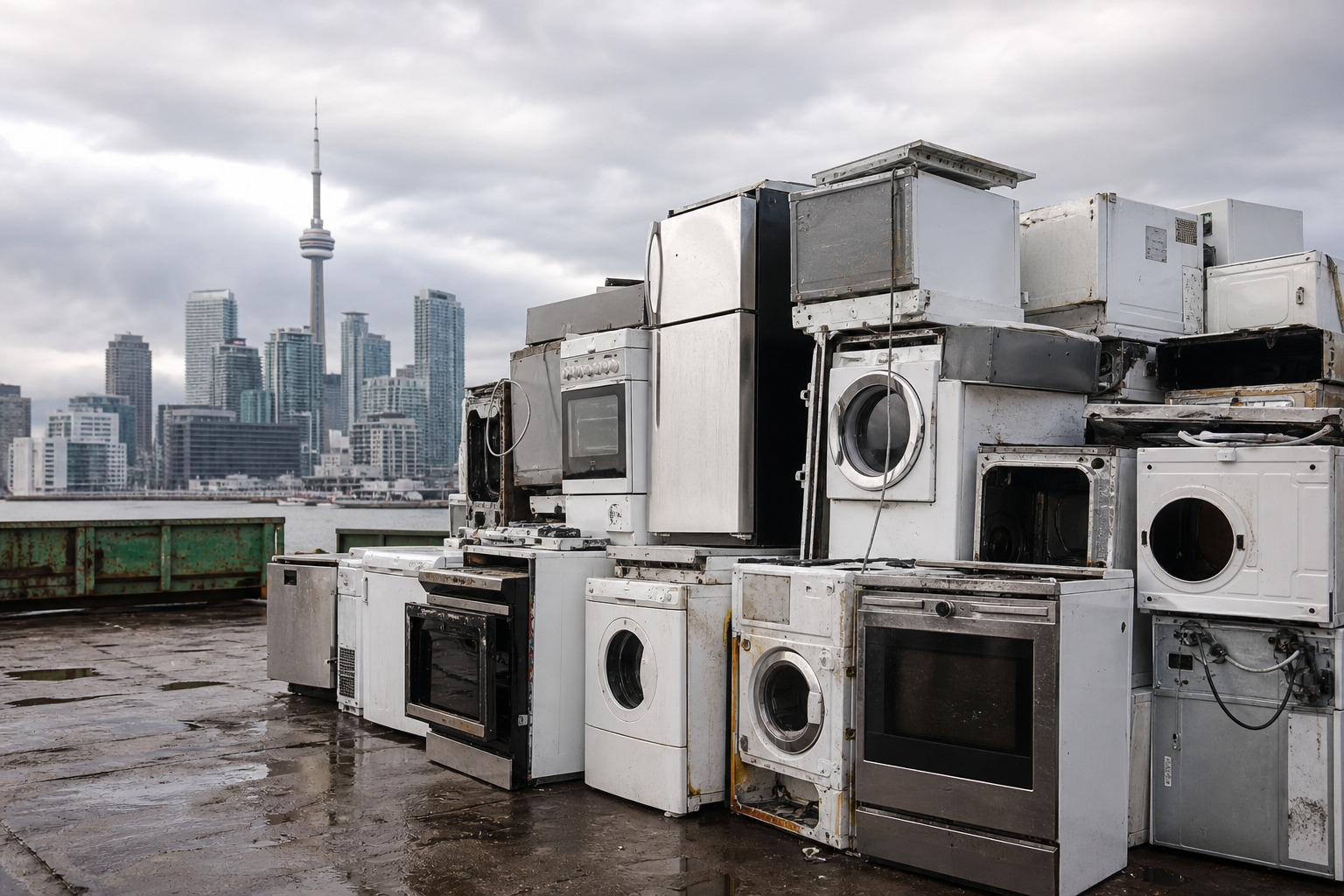
A broken refrigerator, worn-out stove, or failed washing machine is difficult to move and too bulky for ordinary household disposal. The most practical route depends on whether the appliance still works, how safely it can leave the property, and whether you have a suitable vehicle and help.
This scrap appliance recycling Toronto guide explains what commonly belongs in an appliance load, how to prepare it, what changed in Toronto’s disposal system from January 1, 2026, and how to plan a drop-off or pickup with Quick Scrap Metal. It also covers refrigerants, electronics, privacy on connected appliances, and a final checklist for a cleaner handoff.
Choose the right route before moving the appliance
Start by deciding whether the item should be reused, collected as oversized waste, or taken to a scrap and recycling facility. A working appliance in safe condition may be suitable for donation or resale; Toronto’s material-exchange information also includes household appliances and electronics as items that can remain in circulation.
If reuse is not realistic, a scrap yard can be convenient when you have several metal items or access to a truck. Pickup is worth asking about when the appliance is in a basement, behind stairs, or too heavy to load safely. Quick Scrap Metal is located at 407 Rexdale Blvd in Etobicoke and serves Toronto, Mississauga, Brampton, and the broader GTA.
Toronto’s municipal options should be checked separately from private scrap recycling. The City identifies appliances among oversized metal items and advises residents to remove doors from refrigerators, ovens, and other appliances before collection. Because depot rules changed in 2026, confirm the current route before loading a vehicle rather than relying on older disposal instructions.
What counts as a scrap appliance?
Scrap appliances are generally large household or commercial units containing recoverable steel, stainless steel, aluminum, copper, wiring, motors, or electronic components. Common examples include:
- Refrigerators, freezers, stoves, ovens, ranges, dishwashers, microwaves, and range hoods.
- Washing machines and clothes dryers.
- Air conditioners and dehumidifiers.
- Barbecues without propane tanks, lawn equipment, tools, compressors, and other metal household items.
Ontario’s electrical-and-electronic-equipment rules include household appliances such as air conditioners, clothes dryers, clothes washers, dishwashers, freezers, microwaves, refrigerators, and stoves. That does not mean every item should be placed in the same pile: electronics, batteries, and cooling equipment may require separate handling.
Before loading, make a short inventory. Note the appliance type, approximate size, whether it contains a compressor or cooling system, and whether you are adding cables, motors, computers, televisions, or other e-waste to the same trip.
How to prepare appliances for recycling
Preparation prevents leaks, cuts, damaged floors, and delays at the receiving facility. Use this sequence before the appliance reaches the driveway or loading area.
- Disconnect utilities safely. Unplug the unit and shut off water, gas, or other supplies as applicable. Do not disconnect a gas line or unfamiliar connection unless you are qualified to do so.
- Empty and clean it. Remove food, clothing, dishes, shelves, racks, and loose debris. Defrost refrigerators and freezers completely so melting ice does not create a leak during transport.
- Drain residual water. Drain washers, dishwashers, dehumidifiers, and similar equipment as far as practical. Keep towels or a container available for trapped water.
- Secure removable parts. Bag small fasteners and tape or tie loose cords. Remove cabinet shelving and other loose or heavy pieces when the collection instructions call for it.
- Make doors safe. Follow the receiving or municipal collection instructions. Toronto’s oversized-item guidance says to remove doors from refrigerators, ovens, and other appliances; do not leave an unsecured door that could swing during movement.
- Measure the route. Check doorways, elevator openings, stairs, turns, and the vehicle or trailer. Protect floors and walls before using a dolly.
- Photograph identifying details. A quick photo of the appliance and model label can help when asking whether a facility accepts it or when arranging a collection.

Special handling for refrigerators, air conditioners, and electronics
Do not puncture, cut, crush, or dismantle a refrigerator, freezer, air conditioner, or dehumidifier casually. Ontario’s refrigerant regulation restricts the dismantling, destruction, incineration, landfilling, or dumping of refrigeration equipment unless the required notice and handling conditions apply. Ask the receiving facility how it wants cooling equipment delivered.
Electronic controls and wiring should also be kept out of an improvised mixed pile when possible. The current Ontario electrical-and-electronic-equipment framework covers collection sites and resource recovery, so separate computers, televisions, printed circuit boards, and small electronics from large metal appliances and identify them when you arrive.
Smart appliances may retain Wi-Fi credentials, user profiles, device names, or links to voice assistants. Factory-reset the unit, remove detachable smart modules or storage, and unlink it from home accounts before handing it over. Data wiping is especially important for computers, laptops, and televisions with connected features.
Drop-off or pickup: which option fits?
| Choose | Most suitable when | Plan for |
|---|---|---|
| Scrap-yard drop-off | You have a safe vehicle, several items, and help with loading. | Secure the load, separate broad material categories, and follow yard directions. |
| Arranged pickup | The appliance is unusually heavy, difficult to access, or unsafe to carry down stairs. | Confirm what can be collected together and stage items where the crew can reach them. |
| Municipal oversized collection | You want to use Toronto’s household collection route for an eligible oversized metal item. | Review current instructions, remove doors as directed, and check scheduling requirements. |
| Reuse or donation | The appliance works safely and is still suitable for another household. | Describe its condition accurately and arrange a handoff before moving it. |
Drop-off gives you more control over timing and can combine an appliance clear-out with scrap steel, copper, aluminum, brass, cables, or motors. Pickup reduces the risk of lifting a washer or refrigerator through narrow hallways, but you should confirm service availability, access requirements, and which categories may travel together.
For Toronto residents, municipal information is particularly important after the January 1, 2026 changes. City drop-off depots no longer accept residential recycling in the former way, while appliances remain identified within current metal and oversized-item information. Check the City’s latest instructions before making a special trip.
What to expect at a recycling yard
A typical yard visit is easier when the load is stable and its categories are clear. Follow posted traffic directions and ask staff where appliances, loose scrap, and electronics should go.
- Arrive prepared. Wear closed-toe shoes and work gloves, and keep the load secured until staff indicate where to unload.
- Confirm categories. Tell staff if you have a refrigerator, air conditioner, e-waste, batteries, or a mixed-metal load.
- Unload in the assigned area. Stay clear of moving equipment, loading zones, and other vehicles. Do not climb into an unsecured truck bed.
- Separate where directed. Large appliances, electronics, batteries, and loose cables may need different handling streams.
- Ask questions before leaving. If you are unsure about a component or a future load, clarify the category while the item is available.
Keep children and pets away from unloading areas. If a load includes small motors, wire, or circuit boards, pack them in sturdy boxes or containers rather than leaving loose pieces on top of heavy appliances.
Safety rules for moving heavy appliances
Large appliances can tip, slide, or expose sharp metal when damaged. Use a suitable dolly, secure the appliance to it, and get enough help for the weight and route instead of trying to complete a long carry alone.
- Wear gloves, long sleeves, and sturdy footwear; add eye protection when rust, broken glass, or debris is present.
- Keep refrigerators and freezers upright as much as practical and secure them during transit.
- Use straps on ramps, trailers, and truck beds. Recheck the load after a short distance.
- Keep hands and feet clear when lowering an appliance over a threshold or down a ramp.
- Do not place loose batteries, chemicals, propane tanks, or household trash inside an appliance.
If stairs, tight turns, or damaged flooring make the move questionable, stop and arrange appropriate help. Saving a trip is not worth a back injury or a damaged building entrance.
How to organize a combined scrap load
Appliance recycling often happens during a garage, basement, renovation, or business cleanout. Grouping materials can make transport efficient, but only if the load remains safe and easy to identify.
- Ferrous metal: steel appliances, tools, radiators, shelving, and other magnetic metals.
- Non-ferrous metal: copper, aluminum, brass, stainless steel, and suitable fittings.
- Wire and motors: coil cables, contain small motors, and keep sharp ends contained.
- E-waste: computers, monitors, televisions, keyboards, and printed circuit boards in separate boxes.
- Batteries: keep terminals protected, store batteries upright where appropriate, and identify them before unloading.
Place heavy items low and fragile electronics high or in separate containers. Labels such as “cables,” “motors,” and “e-waste” help staff direct the load without opening every box.
Cost and planning factors to check first
There is no single answer for every appliance load. The number and size of units, accessibility, transport distance, material mix, and whether loading help is needed can all affect the practical value of a drop-off or pickup.
Before arranging service, prepare the appliance count, approximate dimensions, address or access details, and a list of additional materials. Ask whether the items can be collected together, whether cooling equipment needs special preparation, and how the load should be staged. Avoid assuming that every facility accepts every component simply because it is made of metal.
If you are using a municipal option, check the current City instructions, collection schedule, and preparation requirements. If you are using a private yard, confirm the accepted categories and the process for weighing or assessing the load before you move everything outside.
Final scrap appliance recycling checklist
- Decide between reuse, municipal collection, drop-off, and pickup.
- List each appliance and identify refrigerators, freezers, air conditioners, and dehumidifiers.
- Unplug appliances and arrange safe disconnection of water or gas services.
- Empty, defrost, drain, and clean each unit.
- Remove or secure shelves, racks, doors, cords, and other loose parts as instructed.
- Reset connected appliances and unlink accounts.
- Separate e-waste, batteries, cables, and loose scrap from large appliances.
- Measure the route, recruit help, and use a dolly and straps.
- Confirm current Toronto instructions or private-yard acceptance before transport.
FAQs about scrap appliance recycling in Toronto
What should I do with an old refrigerator in Toronto?
First decide whether it can be reused; if not, arrange an appropriate scrap, recycling, or oversized-item route. Empty and defrost it, disconnect it safely, keep it upright as much as practical, and ask how the receiving service handles refrigerant equipment. Toronto’s current oversized-item guidance also says to remove appliance doors as directed.
Can I take a washer, stove, and electronics in the same trip?
Often, a combined trip can be practical, but the materials should be separated and identified. Keep large appliances apart from boxed computers, televisions, circuit boards, cables, and batteries, and confirm acceptance before loading everything.
Do Toronto drop-off depots still accept residential recycling?
Toronto’s disposal system changed on January 1, 2026, and City drop-off depots no longer accept residential recycling in the former arrangement. Appliances still appear in the City’s current metal and oversized-item information, so residents should check the latest instructions for the specific item and route before visiting a depot.
Should I remove an appliance door before recycling?
Follow the instructions for the route you choose. Toronto’s oversized-item guidance says to remove doors from refrigerators, ovens, and other appliances, while a private receiving facility may provide its own preparation instructions. Never transport an appliance with a door that can swing open or create an entrapment hazard.
Can Quick Scrap Metal help with household appliances?
Quick Scrap Metal responsibly recycles home appliances along with scrap metal and a range of electronics and e-waste. It operates at 407 Rexdale Blvd in Etobicoke and serves Toronto and the wider GTA. Contact the business with your item list and access details to discuss the appropriate drop-off or collection option.
Plan your appliance handoff
Prepare an item list, confirm the current acceptance requirements, and contact Quick Scrap Metal to discuss the safest next step for your old appliances and related scrap.