
Last updated: October 2026
By Preet Dass · Updated for the current Ontario vehicle-transfer process
When Scrap Car Removal Makes Sense
Scrap car removal is usually the practical choice when repair costs, safety concerns, storage problems, or transport difficulties outweigh the vehicle’s remaining usefulness. A car may qualify for removal after a collision, major engine or transmission failure, severe rust, a failed inspection, or a long period of inactivity. It does not need to be complete, running, or attractive to be considered for recycling.
Removing an unwanted vehicle also solves problems that are easy to postpone. A car left on a driveway takes up valuable space, can collect water and debris, and may become harder to move as tires lose air and components deteriorate. In a condo or townhouse setting, an immobile vehicle can also create access, parking, or loading-zone complications.
Quick Scrap Metal serves customers from its yard at 407 Rexdale Blvd in Etobicoke, with service reaching Toronto and the broader GTA. The business also accepts scrap metal, appliances, electronics, and e-waste, which can make one visit useful for more than a single vehicle.
Signs that removal is more sensible than another repair
- The vehicle has a major mechanical or collision problem and is not safe to drive.
- Repair estimates are difficult to justify for the vehicle’s age or condition.
- The car has been parked for an extended period and will not start or roll.
- You no longer have room to store it or do not want to keep paying for insurance and maintenance.
- The vehicle is missing parts, has a dead battery, flat tires, or no available key.
Removal is not the same as abandoning a vehicle. The owner should arrange the transfer with a legitimate recycler or scrap yard, keep the relevant records, and handle plates and vehicle status properly. If ownership is unclear, resolve that issue before scheduling whenever possible.
How the Scrap Car Removal Process Works
The process is straightforward: choose pickup or drop-off, provide basic vehicle details, prepare ownership paperwork, and make the loading area accessible. The vehicle is then inspected for safe handling, loaded or received at the yard, and directed through depollution and material recovery. The exact timing depends on access, vehicle condition, and scheduling, so giving accurate information in advance helps avoid delays.
1. Choose pickup or drop-off
Pickup is generally the better option for a non-running vehicle, a car with flat tires, or a vehicle located where arranging a separate tow would be inconvenient. Drop-off can work well when the car rolls safely and you already have access to suitable transport. If you are unsure, describe the vehicle’s condition, location, and access route before booking.
2. Share the details needed for planning
Be ready to explain the vehicle’s make, model, approximate location, running condition, tire condition, and whether the keys are available. Mention narrow driveways, underground parking, gates, steep approaches, condo loading windows, or vehicles that are blocked by another car. These details help the team determine how to approach the vehicle safely.
3. Verify ownership and prepare the site
Have the vehicle portion of your ownership document and valid identification available. Remove personal property and clear a path around the vehicle. For a pickup, the driver needs enough room to position the flatbed or recovery equipment without endangering people, nearby cars, buildings, or overhead lines.
4. Load or receive the vehicle
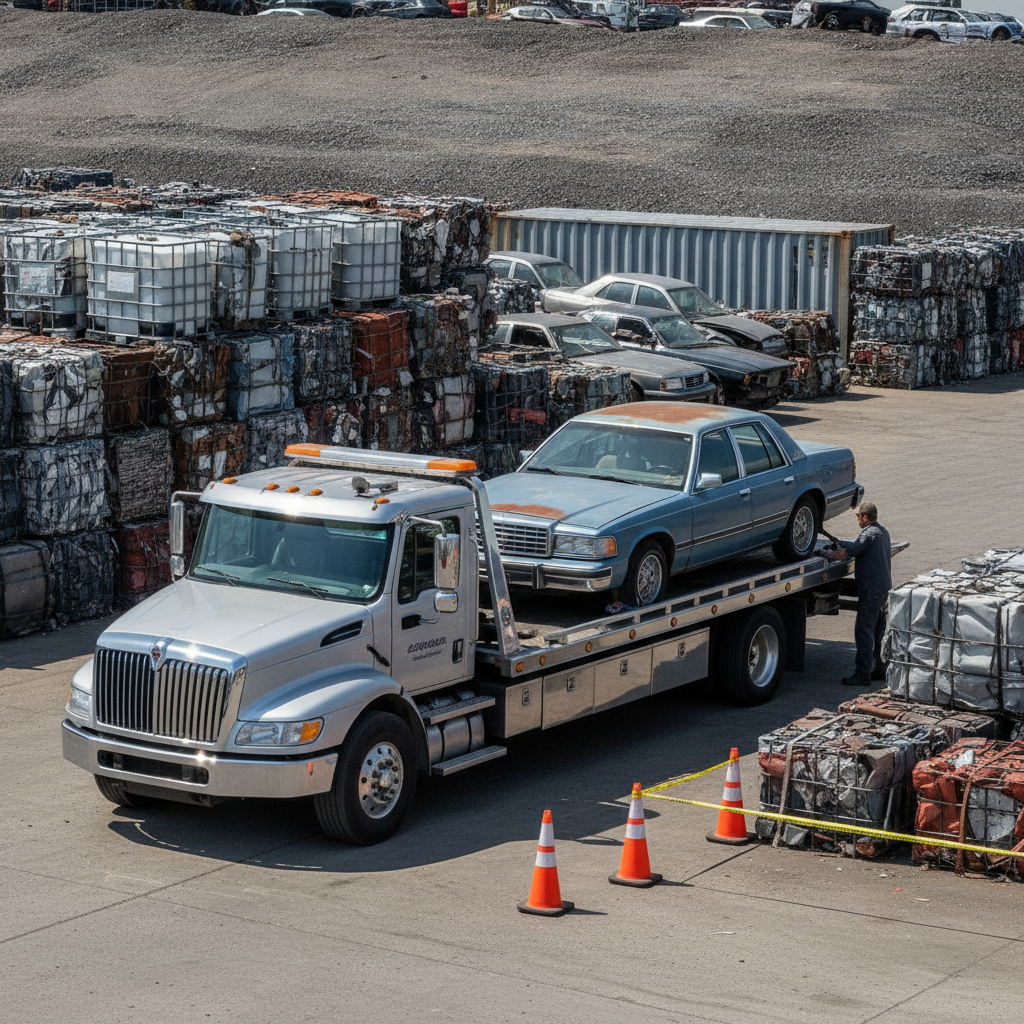
A non-running vehicle may be moved with a winch, wheel straps, or other appropriate equipment. A key is useful but is not always required; tell the team ahead of time if it is missing. At a drop-off, follow the yard’s directions and keep people away from the active loading and unloading area.
5. Depollute and recover materials
End-of-life vehicles contain fluids and components that should not be released onto a driveway or disposed of with ordinary household waste. A controlled recycling workflow separates recoverable metals and other materials while addressing batteries, fluids, refrigerants, and remaining parts appropriately. Ferrous and non-ferrous metals can then move into downstream recycling streams.
6. Keep your closing records
Keep any receipt, transfer confirmation, or other documentation provided for your records. Contact your insurer and update the vehicle’s status as appropriate. A clean paper trail is especially important when the ownership document, plate status, or vehicle registration details do not match your current information.

How to Prepare Your Vehicle Before Pickup
Good preparation reduces the time spent searching for documents, moving obstacles, and checking the vehicle. It also protects you from accidentally leaving behind valuables or paperwork. Use the following checklist the day before pickup or drop-off.
Clear the cabin, trunk, and storage areas
Check the glovebox, centre console, door pockets, under-seat areas, trunk, spare-wheel well, and any aftermarket storage. Look for sunglasses, tools, documents, child seats, toll devices, chargers, garage remotes, and personal data on electronics. Once the vehicle leaves, recovering small items may be difficult.
Gather keys and ownership documents
Put every available key and fob together, even if the vehicle does not start. Keep the ownership document and identification separate from items that will remain in the car. If the registered owner cannot attend, ask in advance what authorization or additional paperwork may be needed rather than assuming a verbal instruction is enough.
Remove plates and check the permit
Ontario plates generally remain with the owner when a vehicle is sold, rather than transferring with the vehicle. Remove them before pickup or drop-off unless a specific instruction applies to your situation. Store the plates and the plate portion of the permit safely while you complete the required provincial steps.
Make the access route safe
Move other vehicles, bins, trailers, bicycles, pallets, and outdoor furniture away from the loading area. Unlock gates and arrange building or security access before the truck arrives. In winter, clear snow and ice from the approach; in warmer months, trim or move branches that could interfere with equipment.
Document the vehicle’s condition
Take photographs of the exterior from several angles, the dashboard or VIN area, and any significant damage. The images are useful for your own records and can help clarify the vehicle’s condition before pickup. Do not remove components or fluids yourself unless you are equipped and authorized to do so safely.
For a car with flat tires, no key, or a blocked position, provide those details before the appointment. The more accurately the condition is described, the less likely the driver will need to change the loading plan at the property.
Ontario Paperwork, Plates, and Vehicle Status
Vehicle removal in Etobicoke still involves an ownership and registration trail. Ontario’s official guidance explains the documents and steps involved when a vehicle is sold, including the Ontario used-vehicle ownership transfer requirements. Review the current provincial instructions for your circumstances because the correct paperwork can differ when a vehicle is jointly owned, inherited, leased, or subject to a lien.
Keep the ownership information consistent
The name on the vehicle documentation should align with the person arranging the transfer. If the owner has moved, changed a name, passed away, or cannot attend, ask ServiceOntario or the receiving business what supporting documentation is required. Do not rely on an old address or an informal note when formal authorization is needed.
Handle plates separately
When a vehicle is sold, the owner normally keeps the licence plates and the plate portion of the permit. Plates may be registered to another vehicle, returned, or handled according to the owner’s circumstances. Do not leave plates in the car simply because it is being removed; confirm the current provincial direction if your situation is unusual.
Update the vehicle’s status
Ontario’s guidance also explains how to change information on a vehicle permit after a sale. Depending on the transaction, you may need to update the status to “sold” and provide the original permit along with information about the vehicle and transaction. Keep copies or confirmations of what you submit.
Check for liens and insurance obligations
A lien can complicate a transfer, so resolve or document it before arranging removal. After the vehicle has been transferred or removed, contact your insurer about cancelling or changing coverage. The scrap yard can help explain its receiving process, but government registration and insurance decisions remain the owner’s responsibility.
If you are uncertain about a document, contact the relevant provincial office before the scheduled appointment. A short pre-check is safer than arriving with paperwork that cannot establish ownership.
Pickup or Drop-Off: Which Is Better?
Neither option is universally better. Choose based on whether the car can move, how much space is available, and whether transporting it yourself is safe and practical. The comparison below gives a quick decision rule.
| Option | Best choice when | What to prepare | Main consideration |
|---|---|---|---|
| Pickup | The car is non-running, damaged, blocked, or difficult to transport | Clear approach, ownership documents, keys if available, access instructions | The truck needs a safe loading position and enough clearance |
| Drop-off | The car rolls and you already have suitable transport | Ownership documents, plates removed as required, personal items cleared | You are responsible for arranging the vehicle’s journey to 407 Rexdale Blvd |
Pickup is often simplest for a vehicle with a dead battery, missing key, flat tires, or no safe way to drive. Drop-off may be convenient for a rolling vehicle when you are already visiting the yard with other materials. Quick Scrap Metal’s scrap car service information for Etobicoke can help you compare the local process before choosing an option.

What Happens to the Vehicle and What Else You Can Recycle
Scrap car removal is more than towing a car away. The useful objective is to separate materials and manage items that should not enter general waste. Vehicles commonly contain substantial steel, along with aluminum, copper, wiring, batteries, fluids, glass, plastics, and reusable components.
Vehicle materials
Steel body panels, frames, cast components, and other ferrous materials can be sorted for metal recycling. Non-ferrous materials such as aluminum, copper, brass, nickel, and stainless steel may also have separate recovery pathways. The composition and condition of each vehicle vary, especially when parts are missing or the car has already been dismantled.
Fluids, batteries, and refrigerants
Oil, coolant, fuel, brake fluid, transmission fluid, and other vehicle fluids should be managed through an appropriate depollution process. Batteries and refrigerants also require careful handling. Do not drain a vehicle onto pavement or place automotive fluids in household recycling bins.
Other items for a combined visit
Quick Scrap Metal accepts a broad range of ferrous and non-ferrous materials, including steel, cast iron, rotors, transmissions, copper, aluminum, brass, radiators, and stainless steel. The scrap metal recycling information explains how other household and business materials can fit into a yard visit.
Depending on the item and current receiving requirements, appliances such as washers, dryers, ovens, dishwashers, air-conditioning units, and range hoods may also be accepted. Computers, televisions, monitors, circuit boards, cables, and related equipment can be reviewed through the electronics recycling service information before you load the vehicle or make a separate trip.
For larger cleanouts, separate loose materials by type and keep sharp, leaking, or heavy items secured. Ask about anything unusual before arriving, particularly if it contains pressurized components, hazardous residue, or mixed materials that are difficult to identify.
Planning Scrap Car Removal in Etobicoke and the GTA
The yard is located at 407 Rexdale Blvd in Etobicoke, near the Highway 27 and Rexdale area. Customers may come from across Toronto and the GTA, including Mississauga and Brampton, but the practical details of the pickup location matter more than the municipality on the address.
Plan for traffic and property access
Give yourself extra time if the vehicle is near a busy commercial area, a shared driveway, or a building with a scheduled loading zone. At a condo or apartment, confirm elevator, loading-bay, security, and time-window requirements before arranging a pickup. A flatbed cannot safely improvise around a blocked gate or a vehicle parked too close to another car.
Account for weather and daylight
Snow, ice, rain, and poor visibility can change the safest approach. Clear the driveway and identify slippery areas before the truck arrives. If the vehicle is behind a fence or in a dark parking area, provide lighting and access instructions where possible.
Combine related recycling tasks
One appointment can be an efficient opportunity to clear a dead car, workshop offcuts, old appliances, or eligible electronics. Keep the vehicle paperwork separate from the loose materials, and load heavy objects so they cannot shift during transport. If you need general scrap removal rather than vehicle service, the Etobicoke scrap removal information covers that adjacent task.
How to Avoid Common Removal Delays
Most avoidable delays come from access or paperwork rather than the vehicle itself. Confirm the appointment window, provide a complete address, and explain whether the car is in a garage, alley, underground structure, or behind another vehicle.
- Do not leave personal items, ownership documents, or plates inside the vehicle.
- Do not describe a car as accessible if the driver must first move another vehicle.
- Do not assume a missing key, flat tire, or locked steering wheel will be obvious from the booking.
- Do not drain fluids or dismantle safety-sensitive parts without the right equipment.
- Do not promise access to a condo loading area until building management has approved it.
Before the truck arrives, send any updated instructions and keep your phone available. If conditions change, such as a new obstruction or a vehicle that has been moved, communicate that change promptly.
Frequently Asked Questions About Scrap Car Removal
Can a scrap car be removed if it does not run?
Yes, a non-running vehicle can often be collected with recovery equipment such as a winch and wheel straps. Tell the team whether the car rolls, whether the tires hold air, and whether the steering wheel is locked. Clear the route and keep people away from the loading area.
Can you remove a car without its key?
A missing key does not automatically prevent removal. The loading method may need to account for a locked steering wheel, transmission position, or non-rolling wheels, so mention the missing key when scheduling. Have proof of ownership ready even when the key is unavailable.
Do I keep my Ontario licence plates?
In a typical vehicle sale, the owner keeps the licence plates and the plate portion of the permit rather than leaving them with the vehicle. Remove them before pickup or drop-off and follow current Ontario instructions for reuse or return. Unusual ownership or registration situations should be checked with the province.
What documents should I bring?
Bring the vehicle ownership document and valid identification, along with any additional authorization required if you are acting for someone else. Keep records of the transfer or receipt provided. If the name, address, lien information, or ownership status is unclear, resolve it before the appointment.
Can I bring metal or electronics with the vehicle?
Quick Scrap Metal accepts many types of scrap metal, appliances, and electronics, subject to its receiving requirements. Separate loose materials, secure the load, and check the relevant service information before arriving. Keeping paperwork and recyclable materials in separate places makes the visit easier to manage.
Should I choose pickup or drive to the Etobicoke yard?
Choose pickup when the car is unsafe, non-running, blocked, or impractical to transport. Choose drop-off when it rolls and you have a safe, suitable way to bring it to 407 Rexdale Blvd. The condition of the vehicle and the access route should determine the choice, not just the distance.
Final Scrap Car Removal Checklist
Before confirming the appointment, use this short checklist:
- Confirm whether pickup or drop-off is safer and more convenient.
- Remove personal property, toll devices, remotes, and important documents.
- Gather ownership paperwork, identification, keys, and any authorization.
- Remove and store licence plates according to current Ontario requirements.
- Tell the team about flat tires, missing keys, blocked access, or underground parking.
- Clear snow, vehicles, bins, gates, and other obstacles from the loading path.
- Photograph the vehicle and retain your transfer or receipt documentation.
- Contact your insurer and update the vehicle’s registration status as appropriate.
These steps make scrap car removal more predictable while helping protect your records and personal property. They also give the recycling team the information needed to handle the vehicle safely.
Arrange Your Scrap Car Removal
When an unwanted vehicle is taking up space in Etobicoke or elsewhere in the GTA, start with its condition, access route, and ownership paperwork. Quick Scrap Metal can help you plan a pickup or drop-off at 407 Rexdale Blvd and combine vehicle removal with eligible metal, appliance, or electronics recycling. Contact Quick Scrap Metal to plan your next visit.