
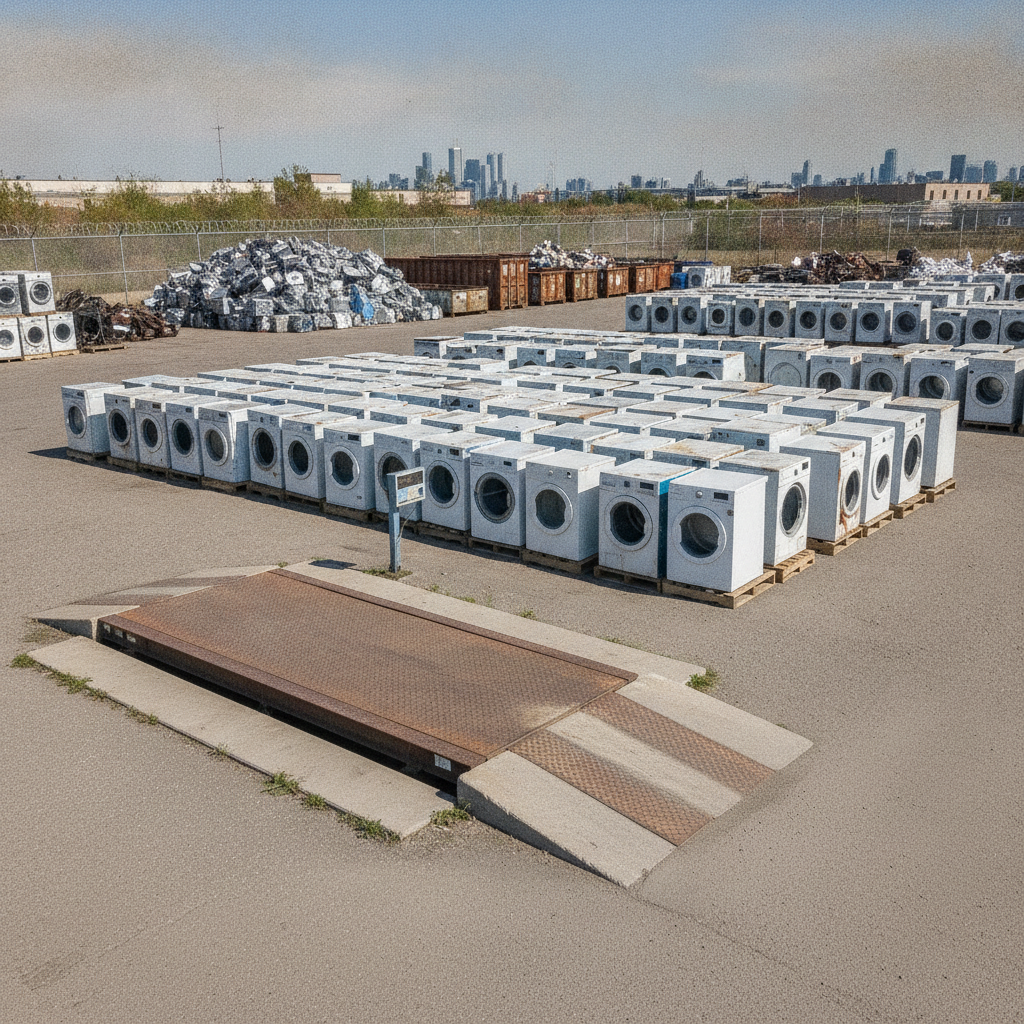
Washing machine scrap price refers to the value you receive for a washer’s recoverable metals. At Quick Scrap Metal (407 Rexdale Blvd, Etobicoke), washers are graded by weight, metal mix, and condition, then paid out on the spot. Bring complete units for faster service, responsible appliance recycling, and a safe, no-hassle drop-off in Toronto.
By Preet Dass — Quick Scrap Metal
Last updated: June 22, 2026
Summary
The scrap value of a washing machine depends on its weight, the ferrous vs. non-ferrous metal mix, completeness (motor and wiring intact), and cleanliness. For the best experience, deliver a drained, complete unit to a trusted Etobicoke yard like Quick Scrap Metal for same-day payout and certified, eco-friendly recycling.
If you want a quick, confident drop-off in Etobicoke, we make it EASY | FAST | CONVENIENT. You’ll learn how scrap grading works, what parts matter most, and how to prepare your washer to save time at the scale and support responsible recycling across Toronto and the GTA.
- Primary factors: weight, metal composition, completeness, contamination
- Best prep: drain water, remove loose debris, keep motor/wires attached
- Local tip: Use our drive-in access off HWY 27 & Rexdale for simple unloading
- Service fit: We buy appliances plus metals and e-waste in one stop
What is “washing machine scrap price”?
“Washing machine scrap price” is the amount a recycler pays for a washer’s metal content. It’s typically graded as mixed appliance steel with added value from copper motors and wiring. Condition, weight, and whether the unit is complete influence the total, which is paid after safe, on-site separation and weighing.
In plain terms, your washer is a bundle of recoverable metals. Most of the body is steel, the motor contains copper windings, and certain parts include aluminum and stainless steel. The cleaner and more complete the appliance, the smoother the evaluation. At our Etobicoke yard, you get clear steps and quick cash for qualifying scrap.
Related reading: see our scrap metal prices overview and how we handle scrap metal recycling across Toronto.
Why washing machine scrap value matters
Recycling a washer redirects heavy metals from landfills, reduces raw material demand, and puts money back in your pocket. It also frees up space quickly. Using a reputable Etobicoke yard ensures safe handling of residual water, oils, and electronics while maximizing the metal value in one efficient trip.
Here’s the thing: washers are heavy, metal-rich appliances that take up valuable room. Dropping them at 407 Rexdale Blvd means quick access, extended hours, and on-the-spot payouts. It’s a simple way to declutter, recover value, and support circular metal flows for Toronto and the GTA.
- Environmental win: Steel and copper are highly recyclable, lowering mining demand.
- Space back: Removing a bulky unit can free several square feet in basements or garages.
- Safety & compliance: Professional yards handle residual fluids and components responsibly.
- Time savings: One-stop drop-off for appliances, metals, and electronics means fewer trips.
To streamline your day, pair an old washer with other scrap—cords, faucets, or small appliances. Our Etobicoke scrap recycling guide explains how to stage mixed loads so unloading is fast and safe.
How washing machine scrap works at the yard
When you arrive, we confirm the appliance type, check condition, and route you to the scale. Washers are graded primarily as ferrous (steel) with bonus non-ferrous value from motors and wiring. Clean, complete units move faster through weighing, unloading, and payout with certified recycling documentation.
In our experience, drop-offs go quickest when the unit is drained and clear of loose items. We look for intact motors, cords, and internal wiring because they concentrate copper. If parts are missing, the load is still recyclable, but the non-ferrous contribution is lower. Either way, you leave with a same-day result.
What’s inside a typical washer
- Cabinet and frame: Mostly steel; the bulk of the weight.
- Drum/tub: Often stainless steel; resists corrosion and adds recovery value.
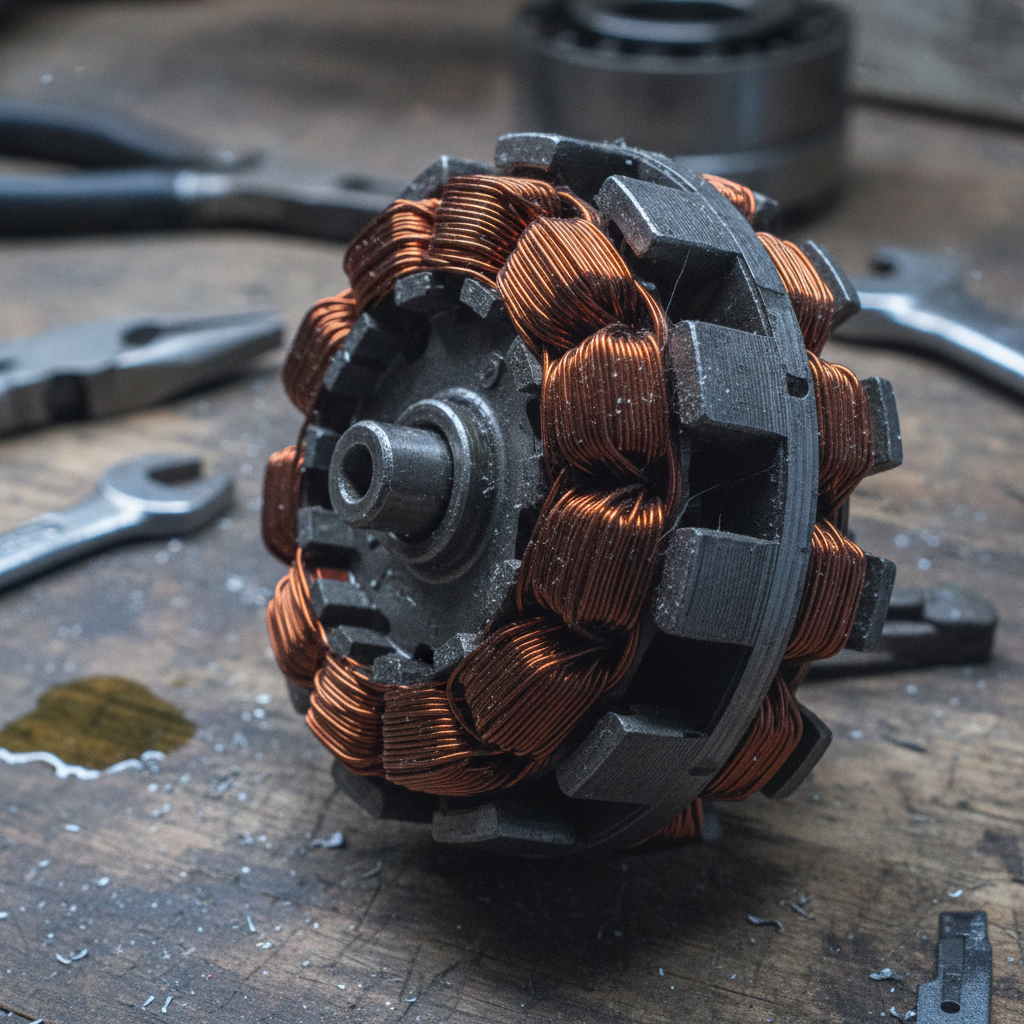
- Motor and pump: Contain copper windings and some aluminum.
- Wiring harness and cord: Insulated copper wire; valuable non-ferrous metal.
- Counterweights: Concrete or cast components; handled appropriately in processing.
- Control boards: Small e-waste component; we recycle electronics responsibly.
Here’s a quick comparison of core parts and their common materials.
| Component | Primary metal | Handling tip | Impact on scrap value |
|---|---|---|---|
| Cabinet/Frame | Steel (ferrous) | Keep intact for faster grading | Base value; drives most weight |
| Drum/Tub | Stainless steel | No need to disassemble | Adds stability to grading |
| Motor | Copper windings | Leave attached inside unit | Boosts non-ferrous contribution |
| Wiring & Cord | Insulated copper | Don’t strip insulation | Consistent add-on value |
| Pump/Compressor | Aluminum/Copper mix | Safe to leave in place | Supplemental non-ferrous |
| Control Board | Mixed e-waste | Handled as electronics | Small, but recovered properly |
For a deep dive on metals in household items, explore our steel scrap value guide and the broader metal junk yard overview.
Types and methods: drop-off, pickup, and preparation
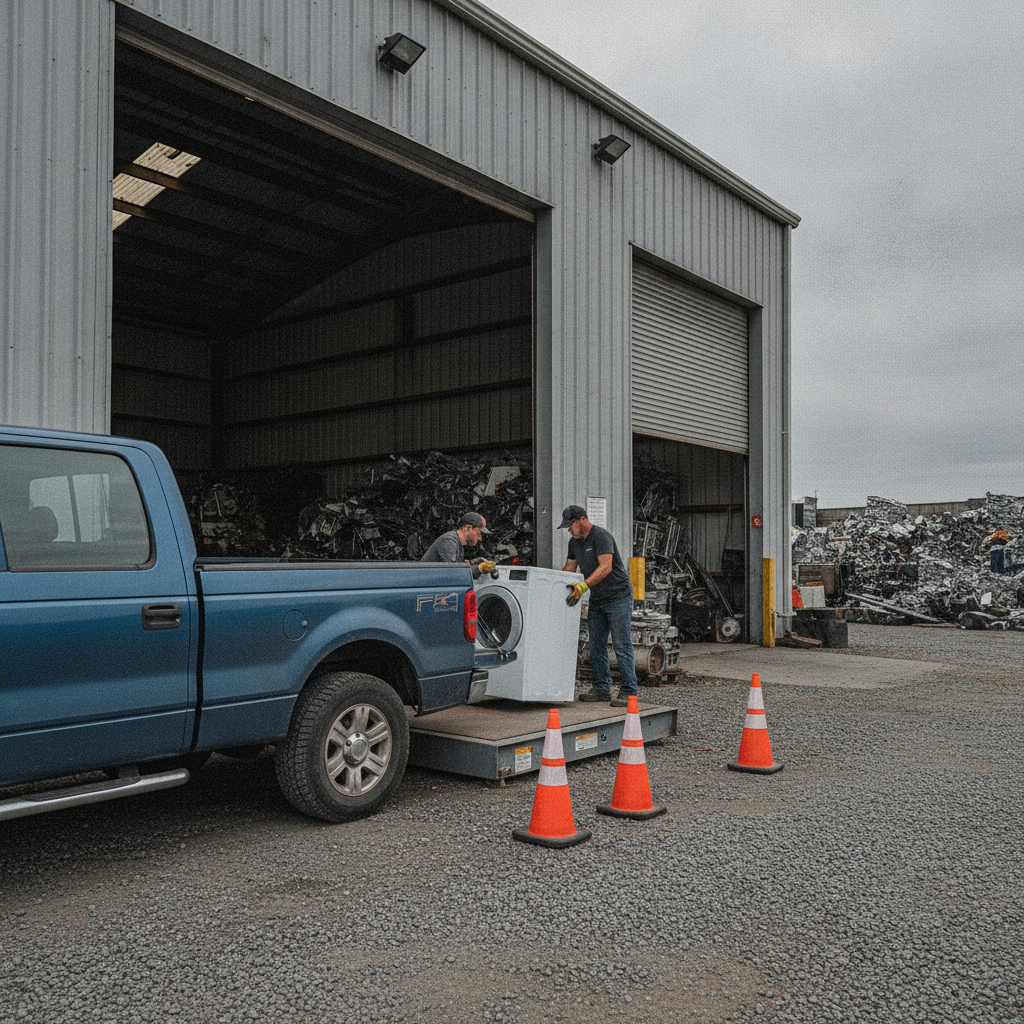
The fastest method is drop-off: bring a drained, complete washer to 407 Rexdale Blvd for weighing and immediate payout. For bulk cleanouts or combined loads, ask about household scrap removal or pairing with scrap car drop-off/pickup to clear space and consolidate recycling in one trip.
Washer types we commonly see
- Top-load units: Often heavier frames; straightforward to load in pickups or vans.
- Front-load units: Typically feature stainless drums; secure doors during transport.
- Compact/portable: Lighter builds; still worth recycling with other metals.
Preparation checklist (quick win)
- Unplug and disconnect hoses; drain any remaining water.
- Remove loose debris from inside the drum; keep the motor and wires attached.
- Tape the door shut; secure hoses and cord to prevent tripping hazards.
- Stage near your garage or driveway for easy loading and unloading.
- Load safely; use straps, dollies, and a second person when needed.
Drop-off vs. other options
- Drop-off at our yard: Fastest, most predictable experience; one scale, one payout, one receipt.
- Household scrap removal: Helpful when you’re clearing multiple rooms or moving.
- Consider repair (if functional): If a fix keeps it in service, that’s often the greener choice; see this washer repair service resource.
Need help deciding? Our team can suggest whether to pair your washer with small appliances, cords, or radiators to speed up a single, efficient visit. Review our junk removal and price-boosting guide for staging tips.
Best practices to maximize washer scrap value
Keep the appliance complete, clean, and drained. Secure doors and hoses, and avoid stripping wires. Bundle other metals for one trip. These small steps reduce handling time, protect non-ferrous content, and support quicker grading and payout at our Etobicoke location.
Simple actions with outsized impact
- Don’t strip wiring: Insulated wire is graded efficiently; removing insulation wastes time and can reduce safety.
- Bring the motor intact: Motors concentrate copper; leaving them attached is almost always the better play.
- Drain and dry: Standing water slows handling and adds non-metal weight.
- Combine compatible items: Toss in faucets, aluminum siding offcuts, or extension cords for a single unload.
Local considerations for Etobicoke
- Traffic ebbs and flows near HWY 27 & Rexdale; plan drop-offs around peak commute times for smoother yard access.
- Winter brings ice and snow; secure appliances in trucks and use gloves for better grip when unloading.
- Weekends can be popular; consider weekday evenings to leverage our extended hours. If you’re nearby, note proximity to Woodbine Mall & Fantasy Fair when planning errands.
For a broader look at getting more from every trip, see our practical walkthrough on how to get the best price in Etobicoke. It pairs well with our metal junk yard guide when you’re bundling mixed loads.
Tools and resources for smoother appliance recycling
Use a hand truck, lifting straps, and duct tape to secure doors and cords. Pre-sort any extra metals and e-waste. If a repair keeps the washer running, consider that path; otherwise, leverage local guides and our extended hours to make one efficient, safe recycling trip.
- Gear to have: Hand truck, work gloves, ratchet straps, moving blankets, utility tape.
- Reference how-to: Basic cleaning steps before transport help; see this appliance cleaning guide for simple prep ideas.
- Other recycling goals: If you’re also clearing a vehicle, different programs apply; browse these scrap car recycling services for comparison, then bring metals and small appliances to us.
Bookmark our Toronto-focused pages for efficient planning: the Etobicoke recycling overview and our electronics recycling centers post, which explains how we handle PCs, TVs, and small boards from appliances.
Case studies: Etobicoke and Toronto homeowners and pros
Real results come from simple steps: bring complete units, stage for easy unloading, and combine metals in one trip. In Etobicoke and across Toronto, homeowners and contractors use Quick Scrap Metal to clear space quickly and turn bulky appliances into responsible, documented recycling outcomes.
Homeowner in Rexdale: Washer plus cords
A homeowner in Rexdale rolled in a front-load washer with a small bin of extension cords and faucets. Because the motor and wiring were intact and the unit was drained, grading and unloading were quick. They left with same-day paperwork and space reclaimed in the basement—one stop, done.
Small contractor: Laundry duo after a renovation
After replacing a laundry set on a multi-unit project, a contractor dropped off two washers and a stack of aluminum offcuts. Pairing appliances with non-ferrous scrap meant a single weigh-in and unload. The extended evening hours made it easy to swing by after the jobsite wrapped.
Property manager: Seasonal cleanout
During a spring cleanout, a property manager staged three older washers with mixed metals and a few small electronics. Our team routed them efficiently through the scale and provided documentation for their sustainability report—simple, repeatable, and responsible for a portfolio that values ESG metrics.
Frequently Asked Questions
Have questions about scrapping a washer in Etobicoke or Toronto? These quick answers cover preparation, what to bring, and how drop-off works at 407 Rexdale Blvd. For anything not covered here, call or visit during our extended hours.
Do I need to remove the washer’s motor or cut the cord?
No. Leave the motor, cord, and internal wiring attached. These parts contain non-ferrous metals like copper that we grade efficiently on-site. Keeping the unit complete speeds up your drop-off and helps capture more recyclable material.
Should I drain and clean the washer before bringing it in?
Yes. Drain any remaining water and remove loose debris from the drum. A clean, dry unit is safer to handle, weighs accurately, and moves faster through the yard, which helps us process your payout quickly.
Can I drop off multiple appliances and metals together?
Absolutely. We’re a one-stop drop-off for appliances, ferrous and non-ferrous metals, and many electronics. Combine items like washers, microwaves, cords, and faucets to streamline one weigh-in and unload at our Etobicoke yard.
Do you offer pickup for large cleanouts?
For household scrap removal or scrap vehicle drop-off/pickup, contact us to discuss options. Many customers pair appliance drop-offs with other services to clear space in one coordinated effort.
Conclusion and next steps
To recycle a washer confidently, bring a complete, drained unit to Quick Scrap Metal in Etobicoke. You’ll get streamlined weighing, same-day results, and responsible processing. Combine other metals or e-waste to make one efficient trip and reclaim space at home or on the job.
Here’s your simple plan to act today:
- Stage your washer near an exit; tape doors and secure cords.
- Bundle small metals and electronics for one stop.
- Head to 407 Rexdale Blvd and follow signs to the scale.
- Ask our team about extended weekday hours or Sunday options.
Key takeaways:
- The phrase washing machine scrap price refers to recoverable metal value.
- Weight, ferrous/non-ferrous mix, and completeness guide grading.
- Drained, intact appliances move faster and are safer to handle.
- Quick Scrap Metal offers appliance, metal, and electronics recycling in one stop.
Ready to clear space? Visit us in Etobicoke—near HWY 27 & Rexdale—for an easy, documented drop-off. Prefer a quick chat first? Stop by our homepage to confirm hours and directions.