
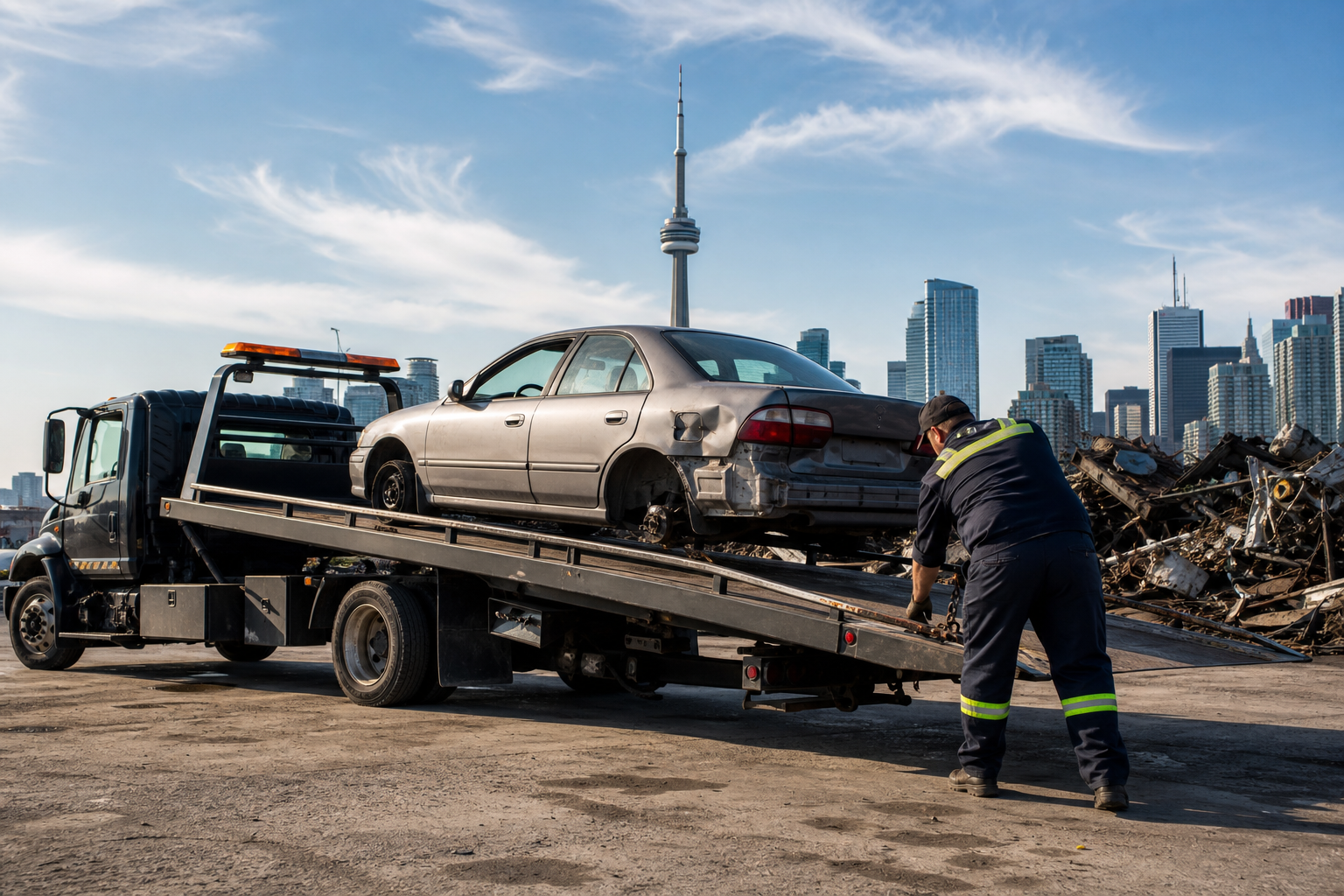
Quick answer: where to drop off a scrap car in Toronto
If you need to dispose of a scrap vehicle in Toronto, the fastest paths are either (1) driving it to a licensed local scrap yard that accepts end‑of‑life vehicles for same‑day processing or (2) arranging a pickup from a commercial scrap‑car service that serves the GTA. Both options typically include a vehicle inspection, weighing and valuation for recoverable metal and parts, and a payment method once the yard’s paperwork is complete. Read the sections below to decide which approach fits your situation and to prepare the vehicle before transfer; see the final section for a local Etobicoke yard you can contact directly.
Drop-off vs arranged pickup: which option fits you
Deciding whether to drive the car to a yard or book a pickup usually comes down to condition, convenience, timing and cost:
- Condition — If the vehicle is driveable or can be safely towed on its wheels, drop‑off will often be quicker. If it’s severely damaged, immobilized, or located where towing is difficult, schedule a pickup so the operator can bring winches and flatbeds.
- Convenience — Pickup avoids the effort of moving the car yourself; drop‑off gives you control over timing and often faster settlement if you want to complete the transaction the same day.
- Timing — Drop‑offs are typically completed during yard hours and may be done the same business day. Pickups require scheduling and route coordination and may take longer depending on provider availability.
- Costs and quotes — Pickup terms vary: some providers include towing in the purchase price, others charge a separate fee. Always request a written quote that specifies whether towing is included and whether there are any access or lift fees. For a provincial overview of pickup providers and common arrangements, consult Cash For Scrap Cars Ontario for local options and what to expect.
Bottom line: if the car can be moved and you want speed, drop it off; if it can’t be moved or you prefer not to drive it, arrange pickup after confirming fees and included services.
Prepare your car: seller checklist before drop-off or pickup
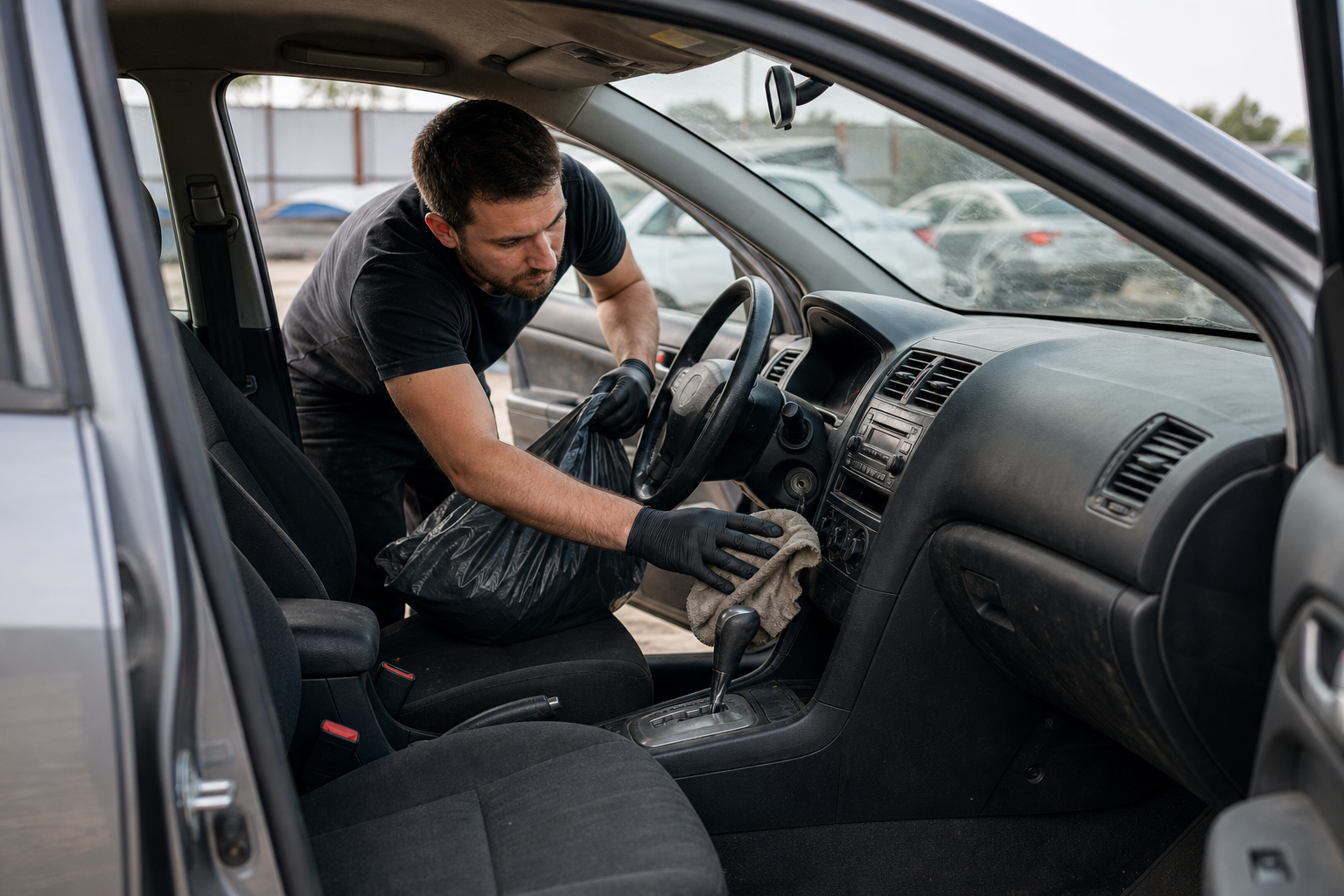
Arrive prepared to speed the transaction and avoid delays. Complete these steps before you go or before the tow truck arrives:
- Keys and access — Have keys available so the yard can safely move or secure the vehicle; many yards won’t accept vehicles without keys.
- Remove personal items — Search glove box, trunk, under seats and floor mats. Remove documents, electronics, medications and valuables before handover.
- Secure small parts and batteries — Place loose parts, portable batteries and tools in a box. Many yards will handle vehicle batteries but prefer them contained; if you remove them, label and secure them to avoid loss or confusion.
- Airbags and hazardous items — Do not attempt to remove airbags or sealed components yourself; advise the yard of any deployed or missing airbags. Keep loose containers of oil, coolant or fuel secured and disclose them to the operator so they can handle them safely.
- Photos and odometer — Take time‑stamped photos of the exterior, interior and odometer reading; note visible damage and the fuel level. Photos can help if there is a later dispute about condition or missing items.
Tip: keep a photocopy or digital photo of the ownership paperwork in case you need to show it remotely to a pickup operator before they arrive.
Arrival and yard logistics: timing, flow, inspection and pricing
Plan your drop‑off to reduce wait times and smooth the on‑site experience. Weekday mornings are usually less crowded than late afternoons and Saturdays; aim for a time shortly after a yard opens if you want to avoid peak traffic. When you arrive expect a short queue, a weigh‑in and a visual inspection to confirm the vehicle’s condition and any non‑metal components.
Typical on‑site flow (example): you drive in or are guided onto a scale, staff perform an inspection to note missing parts or hazardous materials, they calculate a value based on recoverable metals and parts, paperwork is completed, and payment is issued according to the yard’s accepted methods. Pricing is market‑based and material‑specific rather than a single fixed list; many yards publish or reference current benchmarks so sellers can get a sense of prevailing rates—check current scrap metal prices toronto before you go to set expectations.
Payment options vary by yard. Some offer immediate cash payments for qualifying scrap, while others may issue certified cheques or e‑transfers depending on the seller’s and yard’s preferences and any regulatory requirements. If immediate cash is required, confirm the yard’s policy in advance so you know whether your vehicle qualifies.
On safety: follow yard signage and staff directions, keep a safe distance from heavy equipment, and ensure children or pets stay in your vehicle while staff handle the car.
Regulatory checks: Ontario rules to review before surrendering a vehicle

Before transferring an end‑of‑life vehicle, consult the provincial rules and user guides that cover registration, site operations and licensing:
- O. Reg. 85/16 (registrations under Part II.2 of the Act for end‑of‑life vehicles) explains registration and compliance provisions for operators and disposal sites—review this regulation to understand obligations related to end‑of‑life vehicles.
- The Ontario government’s End‑of‑life vehicle waste disposal site user guide for the Environmental Activity and Sector Registry (EASR) provides practical guidance for operators and users of disposal sites, including recordkeeping and safe handling expectations.
- R.R.O. 1990, Reg. 595 (Garage Licences) includes licensing rules for premises that buy and wreck motor vehicles and shows fee provisions for licences to buy and wreck motor vehicles.
These sources describe legal and administrative steps that might apply to the yard and to you as the seller; they do not replace direct confirmation from your municipal office or the yard. If you have specific compliance questions—such as whether a particular yard holds an Environmental Compliance Approval or an EASR registration—ask the operator for documentation or a regulatory reference before you transfer the vehicle.
Frequently asked questions
Do I need any paperwork to scrap a car in Ontario and what should I bring?
Yes. Bring proof of ownership (the vehicle permit) or a completed transfer form as required locally, plus photo ID. Exact requirements vary by yard and municipality, so call ahead to confirm whether additional forms or signatures are needed.
Will a yard pick up my scrap car and is pickup free or charged?
Many operators in the GTA offer arranged pickup, but terms differ: some include towing in the purchase price while others charge separately. Always request a written quote that clarifies whether pickup is included and whether any access fees apply.
How is payment calculated and when will I get paid?
Payment is usually based on vehicle weight and the market value of the recoverable metals and parts. Expect an inspection and weigh‑in before a final offer is made; payment typically follows completion of paperwork. If you need cash immediately, verify the yard’s “cash on the spot” criteria ahead of time.
What should I do with license plates and insurance before surrendering my vehicle?
Rules for plates and insurance vary by municipality. In many cases you must remove or surrender license plates and notify your insurer to cancel or transfer coverage. Contact your municipal licensing office or insurer to confirm local procedures before you hand the vehicle over.