
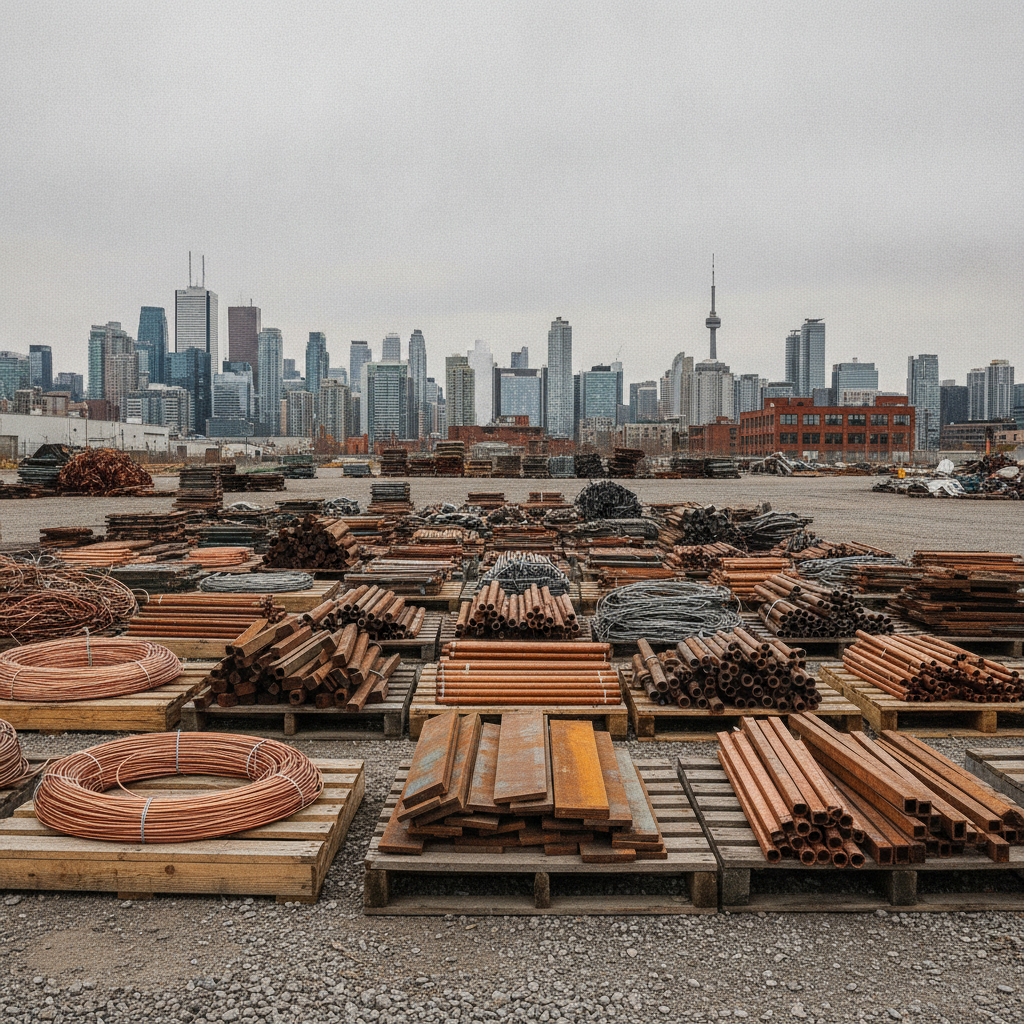
Scrap copper is non-ferrous metal recovered from wire, pipe, and components that can be sorted into grades for higher payouts. When you separate clean copper by type and remove contaminants, you increase value and speed up drop-off at 407 Rexdale Blvd in Etobicoke. Quick Scrap Metal buys copper fast and recycles it responsibly.
By Preet Dass • Last updated: 2026-06-15
Overview: Sorting Scrap Copper for Better Pay
Sort scrap copper by grade before you arrive: bare bright, #1, #2, and insulated wire. Keep each type clean, dry, and separate in labeled containers. This simple prep reduces downgrades, speeds up unloading at our Etobicoke yard, and helps you earn better pay without extra work on-site.
Here’s what you’ll get from this complete guide and how it aligns with Quick Scrap Metal’s EASY | FAST | CONVENIENT promise.
- Understand copper grades (bare bright, #1, #2, insulated wire) and what qualifies.
- Follow a simple home sorting workflow that prevents downgrades.
- Use tools and safety tips to strip wire efficiently and safely.
- Know what to remove: solder, paint, fittings, oil, steel, and plastic.
- See real scenarios for homeowners, contractors, and local businesses.
- Plan a smooth, quick drop-off at 407 Rexdale Blvd in Etobicoke.
Table of contents
- What is scrap copper?
- Why sorting copper matters (Etobicoke & Toronto)
- How selling copper to Quick Scrap Metal works
- Types of copper scrap: grades and categories
- Best practices to maximize payouts
- Tools and resources for prep
- Case studies and local examples
- Frequently asked questions
- Conclusion and next steps
What is scrap copper?
Scrap copper is reclaimed copper from wires, plumbing pipes, motors, and electronics that’s resold for recycling. It’s one of the most valuable household metals because it retains quality after processing. Sorting by grade (bare bright, #1, #2, insulated) protects its value and speeds up intake at professional yards.
At Quick Scrap Metal, we buy copper from homeowners, trades, and local businesses across Etobicoke, Toronto, Mississauga, and Brampton. Our team accepts both ferrous and non‑ferrous metals, but copper is uniquely rewarding when it’s prepared well. Clean, separated copper keeps the recycling stream efficient and reduces rework.
If you’re new to selling copper, start simple. Separate wire from pipe, and keep anything with solder or paint in its own bin. When in doubt, bring it—we’ll identify it on-site and explain the next step so your future loads are even cleaner.
For dedicated wire prep tips and examples, see our copper wire recycling guide to learn which insulation types strip quickly and which are better sold as-is.
Why sorting copper matters (Etobicoke & Toronto)
Sorting copper in advance prevents downgrades and delays. In Etobicoke and the Toronto metro, clean, separated copper moves through scales faster, keeps grading objective, and supports responsible recycling. It also helps you avoid re-sorting on a busy yard floor, saving trips and time.
Why this matters for you:
- Objective grading: Clean, single‑type bins make identification clear. Less debate, faster results.
- Lower contamination risk: Oil, solder, paint, and steel fittings can push material down a grade; removing them pays off in saved effort later.
- Time on-site: Sorted, labeled containers help our team unload and weigh quickly—handy when you’re on a tight schedule.
- Eco impact: Copper is fully recyclable. Keeping plastics and residues separate supports cleaner downstream processing.
In our experience serving Etobicoke, two things trip people up: paint on old pipe and mixed hardware in bins. A quick magnet test for steel and a few minutes with a utility knife for labels or tape can save you a return visit.
Ready to sell? If you’ve got a focused copper load, you can sell scrap copper in Etobicoke and be back on the road fast. If it’s a bigger mixed-metal cleanout, sort copper first to lock in the easy win.
How selling copper to Quick Scrap Metal works
Bring your sorted copper to 407 Rexdale Blvd. We’ll guide you through unloading, weighing, and grading. Keep bare bright, #1, #2, and insulated wire separate in labeled bins. Have a magnet handy for steel. You’ll get quick service, immediate feedback, and on-the-spot payment for qualifying loads.
Here’s a simple step-by-step to streamline your trip.
- Pre-sort at home: Group by bare bright wire, #1 pipe (no solder/paint), #2 pipe (with solder/paint), and insulated wire by thickness.
- Remove obvious contaminants: Unscrew brass or steel fittings, drain any oil from compressors, and cut off heavy plastic end caps.
- Label bins or bags: Quick markers like “Bare Bright” or “#1 Pipe” make check-in fast.
- Load smart: Heaviest bins at the bottom; coils secured with zip ties to avoid tangles.
- Arrive and check in: Our team directs you to the right bay. We weigh, grade, and process promptly.
Two practical notes from our yard crew: keep wet or muddy materials separate to prevent mess and slippage, and avoid tossing copper with sharp screws attached into soft bags—they’ll tear and slow unloading.
Planning a larger cleanout? Review our scrap metal recycling overview for mixed loads and household drop-offs across the GTA. If you’re primarily wire, this copper recycling center page outlines what qualifies as “bright” versus coated wire.
Local considerations for Etobicoke
- Traffic patterns near HWY 27 & Rexdale vary on weekends. Mid-mornings between Woodbine Mall & Fantasy Fair openings and lunch often move fastest.
- Winter prep: wipe moisture from pipe and wire before loading; dry, clean copper helps keep grading consistent during freezing temps.
- Neighborhood tip: if you’re combining a park drop-off day with family time at Flagstaff Park, load copper first and keep plastics bagged separately to avoid mix-ups.
Types of copper scrap: grades and categories
Copper grades reflect cleanliness and form. Bare bright is clean, uncoated, shiny wire; #1 copper is clean pipe or wire with minimal oxidation; #2 copper has solder, paint, or residue; insulated wire is copper with plastic jacketing. Sorting by these categories protects value and speeds yard processing.
Yards use practical, visual rules. The goal is consistency, not perfection at home. Here’s a quick reference you can rely on while you prep:
| Grade | What it is | Common sources | Typical contaminants | Prep tips |
|---|---|---|---|---|
| Bare Bright (Millberry) | Shiny, uncoated copper wire, usually 12 AWG or thicker, no solder or tarnish | Stripped house wire, grounding wire, bus bar strands | Oil, soot, tape residue, slight oxidation | Coil neatly; wipe residue; avoid mixing any tinned or lacquered wire |
| #1 Copper | Clean pipe/tube or wire without solder, paint, lacquer, or heavy oxidation | Plumbing offcuts, HVAC copper tube, clean pigtails | Brass fittings, paint overspray, flux, labels | Cut off fittings; scrape paint spots; keep dry and separate from #2 |
| #2 Copper | Copper with solder, paint, light corrosion, or minor residues | Old plumbing, demo pipe, painted tube, stained wire | Soldered joints, tar/adhesives, scale, sealants | Bundle separately; remove loose debris; don’t mix with #1 |
| Insulated Copper Wire (High-Grade) | Thick-strand copper with thin insulation; high copper-to-jacket ratio | Romex inner conductors, large appliance leads | Plugs, aluminum connectors, steel armoring | Snip off plugs; strip only if safe and efficient; keep coils tidy |
| Insulated Copper Wire (Mid-Grade) | Moderate copper content under standard insulation | Extension cords, lamp cords, small appliance cords | Molded plugs, adapters, mixed metals | Bundle by length; remove obvious attachments; avoid tangles |
| Insulated Copper Wire (Low-Grade) | Thin strands, heavy jacketing, or mixed conductor metals | Data cable, some coax, multi-layer wire | Steel braid, foils, connectors | Sell as-is unless you’re skilled with strippers; keep separate from high-grade |
| Copper Radiators/Coils | Copper fins/tubes, sometimes mixed with brass or steel | Older HVAC units, heaters, radiators | Steel side plates, coolant residue | Drain fluids; remove steel where safe; keep clean and dry |
Want more depth on grading rules and what typically increases value? Explore our copper scrap value guide for examples you can compare against your load.
Best practices to maximize payouts
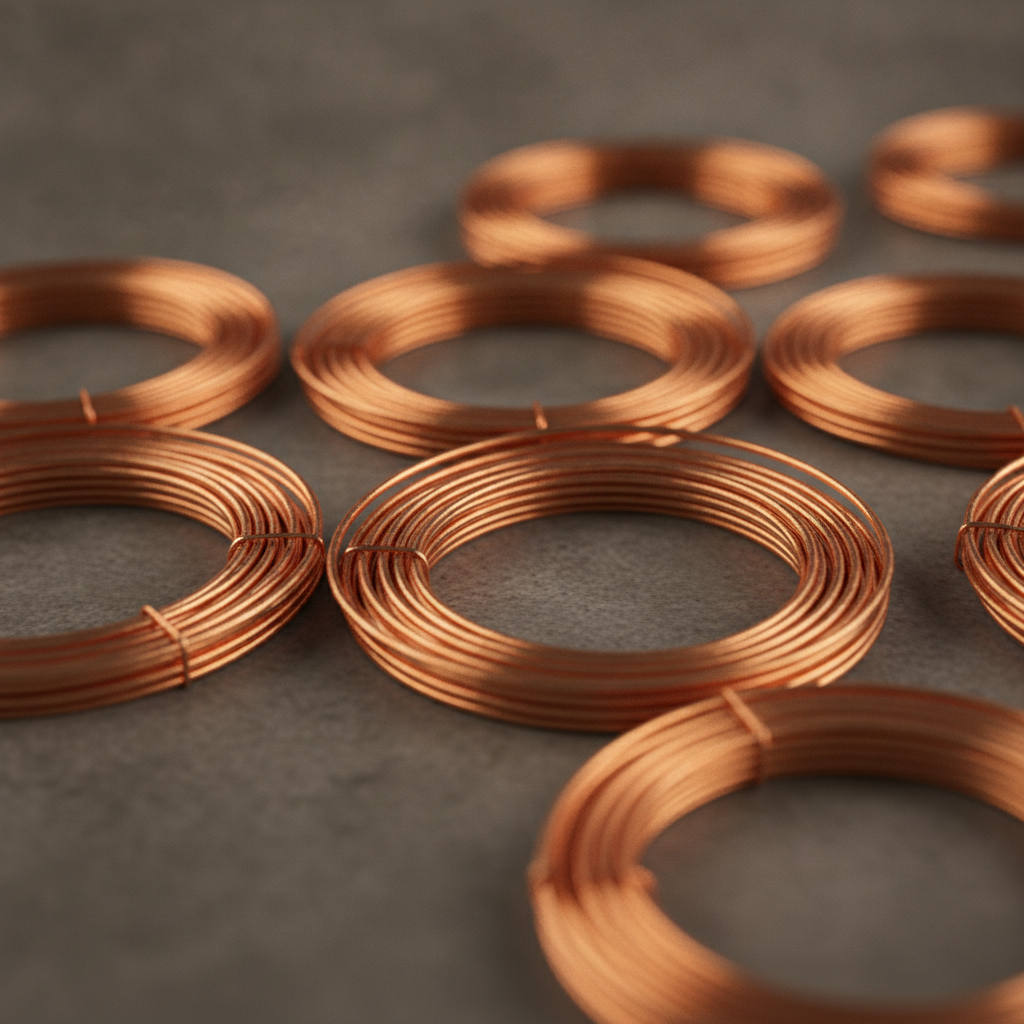
Keep copper clean, dry, and separated by grade. Remove steel or brass fittings, cut away heavy plugs, and avoid mixing #1 with #2. Label bins clearly and coil wire to prevent tangles. These small habits protect value and shorten your yard visit.
Preparation habits that earn results
- Label first, then load: When every bin is labeled at the start, you avoid mixing materials as you go.
- Use a magnet test: A $5 magnet instantly flags steel screws, hose clamps, or mixed hardware hiding in bins.
- Coil, don’t knot: Tangles slow grading and can nick insulation, changing how wire is categorized.
- Protect bare bright: Keep it in clean totes to avoid oil or soot contact that can trigger downgrades.
What to remove—and what to leave
- Remove: Brass/steel fittings, molded plugs, excessive tape, plastic mounts, and obvious adhesives.
- Leave (usually): Uniform factory lacquer on decorative wire (we’ll assess); complex data cable that’s time‑intensive to strip.
- Decide case-by-case: Thick Romex and heavy-gauge conductors often strip efficiently with the right tool; thin lamp cord usually sells better intact.
Safety first—always
- Wear cut‑resistant gloves and eye protection; keep a first‑aid kit in your truck.
- Use a stable workbench and mount your wire stripper securely; never hand‑feed near blades without guards.
- Disconnect appliances fully; confirm capacitors in electronics are discharged before handling.
For a broader approach to maximizing results across metals, our team shared additional tips in this Etobicoke seller’s guide. It matches the yard flow on busy days.
Tools and resources for prep
You don’t need a pro shop to sort copper well. Basic bins, a magnet, a utility knife, and an entry-level wire stripper cover most tasks. Add zip ties, rags, and a permanent marker for labeling to keep everything tidy and fast to unload.
Simple kit for most sellers
- Stackable bins: One each for bare bright, #1, #2, and insulated wire; lids keep rain out.
- Hand tools: Utility knife, side cutters, adjustable wrench, and a permanent marker for quick labels.
- Magnet and scale: A pocket magnet for steel checks; a small scale helps you plan trips and avoid overloads.
- Wire handling: Zip ties for coils; rags to wipe oil or dust before loading.
When to use a wire stripper
- Choose a consistent gauge for each stripping session; avoid switching sizes repeatedly.
- Prioritize heavy-gauge conductors and short lengths with high copper content.
- Work in good light and wear gloves; stripped copper should go directly into a clean, labeled tote.
If you’re moving mostly wire, our wire recycling guide shows which insulations peel easily and which ones are better sold intact. For Etobicoke‑area sellers bringing a mix of metals, see our recycling pointers page for yard flow and prep do’s and don’ts.
Related resources other customers use for adjacent needs include local scrap car specialists who simplify end‑of‑life vehicle logistics. If a cleanout involves a vehicle, review scrap car removal services to plan towing and paperwork. For construction pros curious about metal lifecycles beyond copper, this steel studs overview offers helpful context on material handling in the GTA.
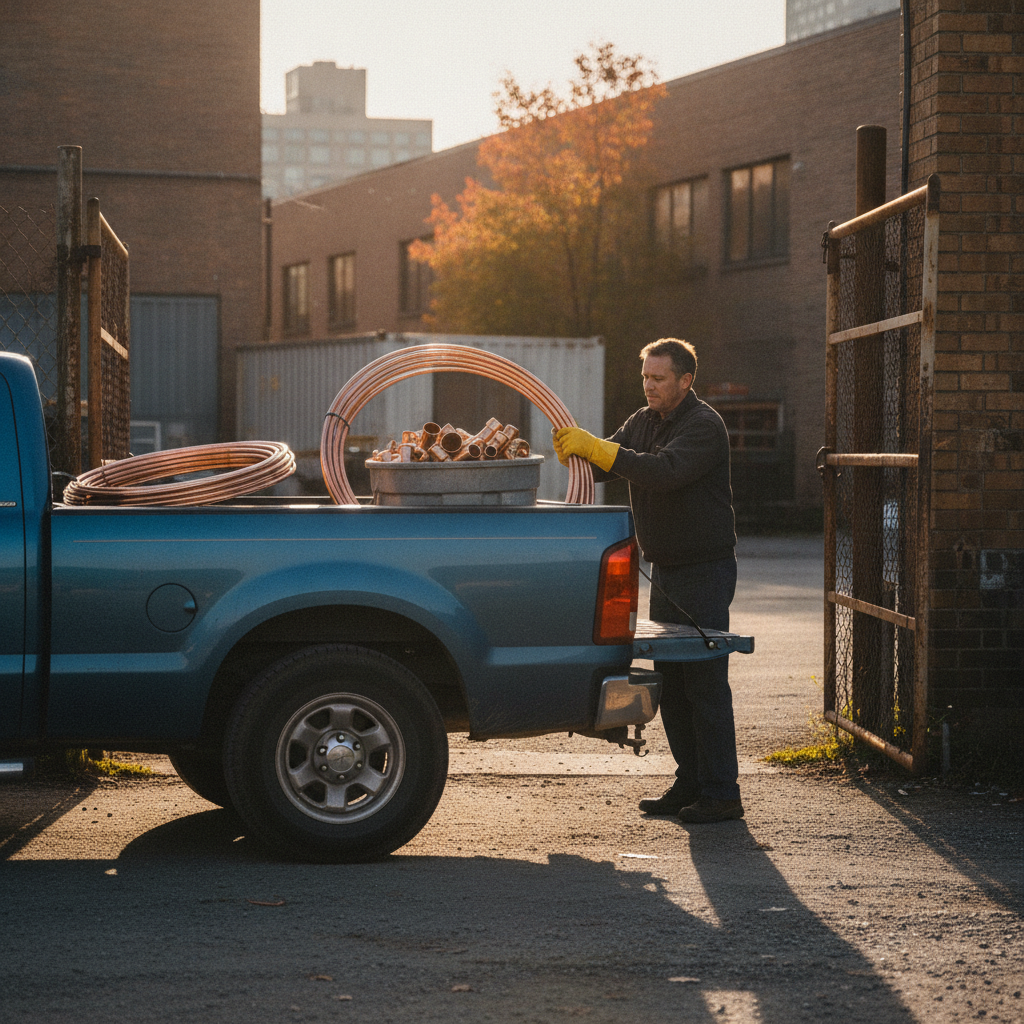
Soft CTA: Not sure how to classify your copper? Swing by our yard with a small sample. We’ll show you how to sort the rest so your next load moves even faster.
Case studies and local examples
Real Etobicoke sellers earn more with simple prep. Clean, labeled bins, fittings removed, and wire coiled neatly lead to faster grading and better outcomes. These mini case studies show how homeowners, trades, and small businesses turn clutter into quick, responsible recycling wins.
Homeowner basement cleanout
A homeowner near Rexdale brought three bins: mixed pipe, cords, and stripped wire. After a five‑minute review at the yard, they separated painted pipe (#2) from clean offcuts (#1) and kept bright wire protected in a tote. Result: quicker weigh‑in and a smoother experience. Next trip, they arrived fully sorted.
Contractor renovation offcuts
An HVAC contractor bundled copper tube by diameter and kept brass fittings in a separate pail. They used a magnet to catch steel hangers. With labeled bins, unloading took minutes. Their crew now keeps a “#1 only” bin on each job site to avoid accidental mixing with painted or fluxed pipe.
Electronics and wire drop-off
A local repair shop collected cords, power supplies, and wire spools monthly. They trimmed molded plugs from heavy wire and left low‑grade data cable intact. The shop used zip ties to coil cable by length, which made grading fast and tidy.
For vehicle retirement connected to a shop closure, they used a local scrap car partner for towing and documents, then brought the copper wiring and radiators to our yard at 407 Rexdale Blvd.
Frequently asked questions
These quick answers cover how to identify copper grades, what to remove before drop-off, and how to plan your visit. Bring what you have—even if it’s mixed—and we’ll help you sort so future trips are faster and cleaner.
What qualifies as bare bright copper?
Bare bright is clean, uncoated copper wire—usually 12 AWG or thicker—with a shiny, untarnished surface. No solder, lacquer, or tin. Coil it neatly in a clean bin to keep it separate from #1 copper and insulated wire.
Should I strip all my copper wire?
No. Focus on heavy-gauge conductors that strip quickly and cleanly. Thin cords and complex data cables are often better sold intact. If you’re unsure, bring a small sample—our team will advise which approach saves you time.
Can I bring copper mixed with other metals?
Yes. We accept mixed loads. Keep copper in separate, labeled bins when possible. Brass, steel, and aluminum should be set aside to avoid downgrades. We’ll help you identify each item at the yard.
Do you take appliances and electronics with copper?
Yes. We responsibly recycle appliances and a wide range of electronics and e‑waste. Drain fluids and disconnect cords when safe. For big cleanouts, separate copper-rich items like motors and radiators for faster grading.
Where can I drop off scrap copper in Etobicoke?
Bring your sorted copper to Quick Scrap Metal at 407 Rexdale Blvd in Etobicoke. We serve Toronto and the broader GTA with extended hours, including Sundays and late weekdays for convenience.
Conclusion and next steps
Sorting copper by grade, keeping it clean, and labeling bins leads to faster grading and better results. Focus on bare bright, #1, #2, and insulated wire categories, remove obvious contaminants, and load smart. You’ll save time and support responsible recycling in the GTA.
Key takeaways
- Separate by grade: bare bright, #1, #2, and insulated wire.
- Remove fittings and heavy plugs; keep loads dry and labeled.
- Coil wire neatly and protect bright copper from residues.
- Plan drop-off during lighter traffic near HWY 27 & Rexdale.
Next steps:
- Do a 15‑minute home sort using the table above.
- Set up four stackable bins and a magnet in your garage.
- Bring a small sample if you’re unsure—our team will walk you through it.
Ready when you are. Visit us in Etobicoke to turn your copper into quick, responsible recycling momentum—EASY | FAST | CONVENIENT.