
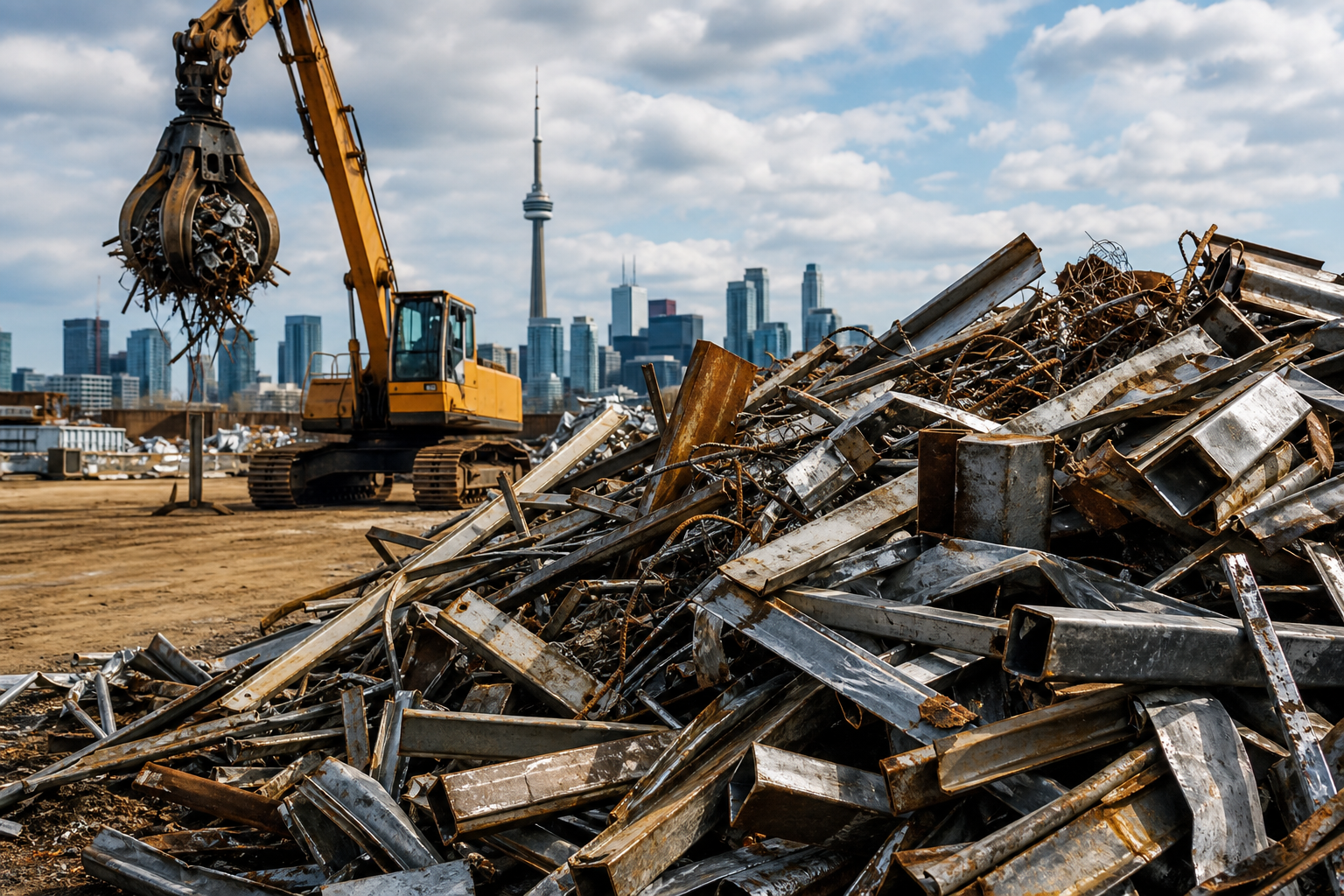
If you are cleaning up a job site, clearing a garage, or retiring old equipment, you will quickly encounter a central question: how are scrap steel prices Toronto sellers see at the scale actually determined? While posted rates move, the logic behind them is consistent. This article explains the key drivers, the steel grades most yards use, how material is weighed and classified, and the simple prep steps that can help you earn a better return for the same load.
What sets scrap steel prices in Toronto
Scrap steel is a commodity. Prices reflect what downstream buyers—mills, foundries, and export markets—are paying for each grade after costs. The number you see on a yard’s price board is a function of several inputs that tend to move together:
- Mill demand and capacity: When domestic mills are busy and hungry for feedstock, yards can pay more. If mills cut output or maintenance shuts capacity, prices can soften.
- Export versus local differentials: When overseas bids beat domestic alternatives (after freight), local prices often track higher. The opposite is true when export demand fades.
- Grade quality: Clean, consistent grades command higher values than mixed or contaminated loads because they need less processing and yield better furnace results.
- Processing, transport, and handling costs: Cutting, shearing, sorting, and hauling all cost money. Heavier, denser steel that ships efficiently can support stronger buy prices than light, bulky pieces that are expensive to move.
- Market volatility and timing: Benchmark indices and dealer bids move week to week. Prices can change between the day you call and the day you arrive.
The takeaway: even when you cannot control the market, you can influence two levers—grade and cleanliness. Presenting the right material in the right category, with minimal contamination, goes a long way toward maximizing the return you get under prevailing scrap steel prices Toronto yards are paying.
Common steel grades and how they’re paid
Every buyer publishes or quotes by grade. Names vary slightly, but most categories fall into the buckets below. Knowing them helps you separate material before you arrive and avoid having higher-value pieces downgraded into a mixed load.
- Heavy Melt Steel (HMS): Typically larger, thicker sections of steel (for example, beams, plates, heavy machinery parts) cut to acceptable dimensions. Denser and cleaner HMS can price better than light tin.
- Shreddable/Unprepared Steel: Mixed, lighter gauge steel suitable for shredding—appliances without non-metal internals, light structural offcuts, fencing, and similar items. Expect different pricing than HMS because density and yield differ.
- Plate and Structural (P&S): Heavy plate, structural shapes, and industrial offcuts that meet size and thickness rules. Usually among the stronger ferrous grades due to density and furnace efficiency.
- Cast Iron/Rotors: Brake rotors, engine blocks, and other cast items sold separately. Cast has its own value profile and is often weighed distinct from steel.
- Prepared vs. Unprepared: Many yards differentiate “prepared” (cut to spec dimensions) from “unprepared” (oversized) steel. Prepared commands more because it saves cutting and handling time.
- Stainless Steel: Not a carbon steel grade, but frequently confused with it. Stainless is a different category with separate pricing and testing; mixing it with mild steel can trigger downgrades.
Each category has size, thickness, and contamination thresholds. For example, a beam with welded-in copper pipe would not be “clean” HMS until the copper is removed. A mixed pile of wire, aluminum siding, and steel may be purchased as “tin/iron mixed” at a blended value or separated into higher-paying streams if you do the sorting.
How scrap yards weigh and grade steel
Understanding what happens between the gate and the scale can help you prepare a load that receives the right grade the first time.
- Initial inspection: Staff assess safety (no fluids, pressurized cylinders, or live electronics), obvious contaminants (wood, rubber, concrete, wire insulation), and whether the load appears mixed.
- Weigh-in and offload: Trucks are weighed in and out on a certified scale, or smaller loads may use a platform scale. Net weight is the difference.
- Grade confirmation: After offloading, a closer check confirms the grade: thickness, dimensions, alloy type, and contamination. Magnets, spark tests, and alloy analyzers may be used for non-ferrous and stainless separation.
- Adjustments and downgrades: If material does not meet size or cleanliness specs, it can be downgraded to a lower-paying category or subject to deductions for non-metal weight (for example, concrete or dirt).
- Ticket and payout: The yard issues a ticket detailing the weights and categories and pays according to current yard rates.
The process rewards preparation. When material is sorted and cut to spec, you save time at the yard, reduce the risk of downgrades, and better align with the top of what scrap steel prices Toronto buyers can pay for that grade on the day.
Timing your sale: seasonality and cycles
While no one controls commodity cycles, sellers often ask whether timing matters. Three patterns commonly affect ferrous scrap:
- Monthly buying cycles: Many mills and brokers set buy programs on monthly intervals. Prices can reset early in the month as trades conclude.
- Project calendars: Construction and demolition activity influence local flows. When supply surges, prices can ease; when inflows tighten, they can rise.
- Weather impacts: Severe weather can restrict collection and transport, occasionally firming prices; mild conditions can do the opposite by increasing supply.
You cannot predict every move, but you can avoid preventable misses. If you hear prices may change soon, consider calling ahead the morning you plan to haul. A quick check reduces surprises at the scale.
Preparation checklist to improve your return
Small, consistent steps can translate into a noticeably better ticket—especially when markets are tight. Use this simple checklist before you load:
- Sort by material type: Separate carbon steel from stainless, cast iron from steel, and remove any non-ferrous items (aluminum, copper, brass). Mixing grades usually means the whole pile earns the lowest common denominator.
- Remove contaminants: Strip off wood, rubber, glass, insulation, plastic housings, and concrete. Expect deductions for non-metal weight if you do not.
- Cut to size where practical: Oversized beams, plate, and machinery sections typically price better when cut to “prepared” dimensions.
- Drain and depollute: Fluids, fuel tanks, and pressurized cylinders are safety hazards and often not accepted attached to steel. Remove them safely and legally before arrival.
- Bundle light tin: Compressing or bundling light-gauge steel improves density and handling, which can help align your load with the intended grade.
- Keep scales and access clear: Load so the heaviest items are accessible and safe to unload. Clear presentation reduces handling and debate at grading time.
- Keep a clean truck bed: Dirt, gravel, and debris add weight but not value; they can trigger deductions.
These steps do not change the market, but they protect your value inside the market you are selling into.
Mistakes that cost sellers money
Avoiding a few common pitfalls helps ensure you capture the full value of current scrap steel prices Toronto buyers are offering:
- Arriving with mixed metals: A pile containing steel, stainless, and aluminum often gets graded as mixed light iron unless sorted.
- Leaving non-metal attached: Concrete footings, rubber tires, or copper wiring welded or bolted to steel will drag the entire grade down.
- Overlooking cast iron separation: Rotors and cast pieces usually price separately; combining them with light steel can cost you.
- Ignoring size specs: Unprepared, oversized pieces may drop into a lower category; a few cuts can be worth the effort.
- Not asking about restricted items: Some components (for example, tanks or sealed containers) require special handling or may be refused when attached to steel.
- Relying on week-old numbers: Prices move. A quick same-day check helps set expectations before you haul.
Simple pricing conversation template
When you call a yard for a quote, have a short script ready. Clear details help the buyer give you the most accurate guidance available at that moment:
- Describe the grade: “I have heavy plate and structural steel, cut to [approximate] dimensions.”
- Confirm cleanliness: “No wood, rubber, or concrete attached; bolts and non-ferrous removed.”
- Estimate the weight and density: “About 1,500 kg loaded tightly on a tandem trailer.”
- Ask about current yard rates and any deductions: “What are you paying today for prepared P&S and for mixed light shred? Any size or contamination deductions I should know?”
- Clarify restricted items: “Any items I need to remove or handle separately before I arrive?”
Taking two minutes to align on these points reduces surprises and helps you choose the best time to sell.
FAQ
Do heavier, denser steel loads really pay more?
Within the same grade, denser shipments are cheaper for buyers to handle and transport. That efficiency is reflected in how categories are defined and priced. Dense, clean heavy melt or plate and structural generally benchmarks higher than light, mixed tin because it yields better furnace results per trip.
Why was my load downgraded at the yard?
Downgrades usually trace back to size, contamination, or mixing. If pieces exceed maximum dimensions for a grade, contain non-metal attachments (wood, plastic, concrete), or include different metals, the entire load can be reclassified to a lower-paying category or subject to deductions for non-metal weight.
How often do scrap steel prices change?
Ferrous prices commonly move with monthly trades and can adjust intra-month based on mill programs and export bids. Because of this, posted numbers can shift within days. If timing matters for your project, call the yard the morning you plan to haul to confirm current rates.
Is stainless steel the same as regular scrap steel?
No. Stainless is a different alloy family (typically containing chromium and nickel) and is purchased under separate categories and prices. Mixing stainless with mild steel can lead to a downgrade of the whole load. Keep stainless, carbon steel, and non-ferrous metals separated.
What’s the best way to prepare appliances containing steel?
For steel value, remove obvious non-metal parts when practical and ensure there are no fluids or sealed tanks. Many appliances also contain non-ferrous components (for example, copper windings or aluminum) that should be separated if you want to sell them under those categories.