
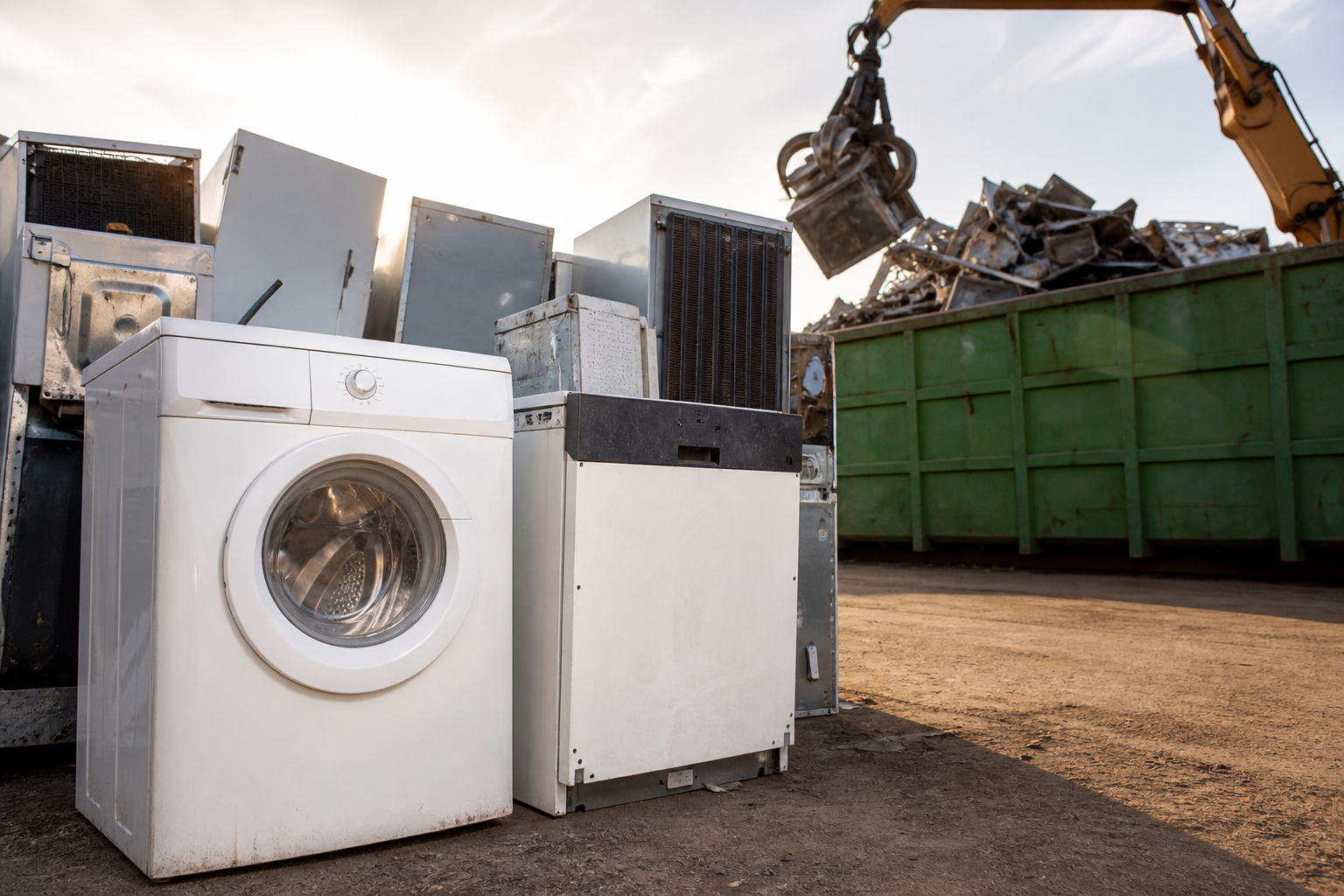
If you’ve got a dead fridge, a clunky washer, or a microwave that’s past its prime, you might be wondering how to recycle old appliances for cash without creating a mess or risking a fine. This step-by-step playbook walks you through what typically gets accepted, how to prepare and sort items safely, and how to choose a responsible drop-off option so valuable metals are recovered and hazards are handled correctly.
What typically qualifies for paid appliance recycling
Scrap buyers and recycling drop-off locations commonly accept a wide range of household appliances and appliance-like items because they contain recoverable metals. While acceptance varies by location, the following categories are commonly taken:
- Large white goods: refrigerators, freezers, ranges/ovens, washers, dryers, and dishwashers
- Medium appliances: microwaves, range hoods, dehumidifiers, air conditioners (window/portable units), and space heaters
- Outdoor and shop gear with metal content: BBQs, lawn mowers, snow blowers, and old tools
- Mixed-metal household fixtures: faucets, stainless sinks, and range hoods
Inside many appliances you’ll find steel, stainless steel, aluminum, copper windings, brass fittings, and sometimes electric motors or compressors—materials with established recycling markets. The purer and better sorted the metal content, the more efficient the recycling and, in many cases, the stronger your payout.
Prepare safely before you move anything
Appliances can be heavy, awkward, and sometimes hazardous if they contain refrigerants, oils, or sharp edges. Before loading up, take a few sensible safety steps:
- Unplug and clean: Disconnect from power, remove food, liquids, and loose shelves. Wipe away residue that could leak during transport.
- Secure doors and cords: Tape doors shut and tie or tape cords to prevent tripping hazards.
- Protect yourself: Wear gloves, closed-toe shoes, and eye protection when moving, cutting, or dismantling.
- Use proper lifting: Team lift large items, use a dolly with straps, and keep a clear path to the vehicle.
- Avoid puncturing sealed systems: Don’t drill, cut, or vent sealed cooling lines or tanks. Refrigerants and oils should be handled by qualified facilities.
If you’re not sure about the contents of an appliance (for example, whether it still contains refrigerant), leave it intact and let a qualified facility handle anything pressurized or sealed.
Sort for better recycling outcomes
Good sorting makes your drop-off smoother and can help ensure materials are recycled efficiently. You don’t have to fully dismantle appliances, but simple preparation goes a long way:
- Group by item type: Keep large appliances together and smaller electronics or fixtures in separate boxes or bins.
- Remove loose non-metal parts: Take out plastic bins, glass shelves, or wood trims and keep them separate to reduce contamination in the metal stream.
- Isolate obvious non-ferrous metals: If safe to do so, collect aluminum parts (e.g., some panels), copper wires, and brass fittings in clearly labeled bags or containers.
- Bundle wires and cords: Trim clean copper wire from housings only if you’re comfortable and it can be done without damaging tools or causing hazards. Keep insulated wire together.
- Keep motors and compressors intact if unsure: Many contain valuable metals but may also contain oils. If you’re not familiar with safe removal, keep them attached to the appliance.
Clear labeling—“aluminum,” “copper wire,” “steel”—helps receiving staff process materials faster and may reduce the time you spend onsite.
Know what not to remove
Some components are better left to a qualified facility because they require special handling:
- Refrigerants and sealed lines: Don’t open or vent any sealed system in fridges, freezers, dehumidifiers, or AC units.
- Oils and fluids in compressors or motors: Avoid draining unless you have the right setup and knowledge. Keep the unit upright in transport where possible.
- Glass wool insulation or sharp panels: Don’t rip or cut into cabinetry if it risks injury or releases fibers.
Leaving these materials intact helps ensure environmental compliance and safer processing.
Identify metals with simple checks
When you’re deciding how to recycle old appliances for cash, recognizing common metals helps you sort quickly:
- Steel and iron: Magnetic and commonly found in appliance frames and drums.
- Stainless steel: Usually non-magnetic or weakly magnetic; common in sinks, some panels, and hardware.
- Aluminum: Lightweight, non-magnetic; found in fins, panels, and some frames.
- Copper: Distinct reddish color in wires and windings; typically inside motors and compressors.
- Brass: Yellowish metal found in plumbing-style fittings and valves.
You don’t need professional tools—just a small magnet and a bit of visual inspection. Keep magnets handy to separate ferrous (magnetic) from non-ferrous (non-magnetic) materials.
Documentation and data: wipe, remove, or destroy
While most appliances don’t store personal data, some connected devices—like “smart” washers, fridges, or thermostats—may hold Wi‑Fi credentials or usage logs. If your appliance has a screen, memory card, or app pairing:
- Factory reset or remove user accounts from the device and its app.
- Remove any memory cards or USB sticks.
- Wipe personal labels or taped notes that include addresses, phone numbers, or codes.
For add-on devices like smart plugs or hubs, clear and remove them before you recycle the main unit.
Transport and loading tips
Getting bulky appliances to a drop-off site safely protects you, your vehicle, and the recycling facility’s staff.
- Plan your route and timing: Avoid peak traffic if hauling a trailer or tall load.
- Use a suitable vehicle: Vans, pickups, or trailers with tie-down points make large items safer to move.
- Stabilize the load: Use ratchet straps, moving blankets, and wheel chocks for rolling appliances.
- Keep items upright when needed: Some equipment, like refrigerators, transports best upright to reduce the risk of fluid leaks.
- Bring basic tools: Gloves, a utility knife, zip ties, and a magnet help with last-minute sorting.
Choosing a drop-off option
You have several practical routes to recycle appliances for cash. Availability and requirements vary by location, but these are the common paths:
- Local scrap buyers and recycling centers: They typically accept metal-bearing appliances and may offer payment based on material type and weight.
- Community or municipal programs: Some areas host periodic collection events. These may or may not include payment but can be convenient for responsible disposal.
- Retailer take-back: When purchasing a replacement, some retailers offer haul-away. Payment is less common, but it simplifies logistics.
- Specialty recycling for cooling appliances: Fridges, freezers, dehumidifiers, and AC units often require documented handling of refrigerants.
Before you go, confirm what your chosen site accepts, whether items must be drained or prepped, and any identification you should bring for payment.
Common questions to ask before you go
- What appliance types do you accept as-is, and which need special handling?
- Do you accept items with refrigerants intact?
- Should I remove doors, shelves, or cords beforehand?
- How do you prefer materials sorted on arrival?
- What payment forms are available and what identification is required?
- Is there a minimum or maximum load size for drop-off?
Getting clear answers helps you avoid multiple trips and ensures your materials are processed efficiently.
Optimize your payout ethically
Maximizing value doesn’t have to be complicated. Focus on clean, safe sorting that supports responsible recycling:
- Keep materials clean: Remove obvious dirt, food, and non-metal attachments when practical.
- Separate ferrous and non-ferrous: Group magnetic steel apart from aluminum, copper wires, brass fittings, and stainless pieces.
- Bundle like-with-like: Coiled wire together, motors together, and loose hardware in labeled containers.
- Avoid risky dismantling: If a step could release refrigerant, oil, or cause injury, leave it to a qualified facility.
This approach supports safer processing and can lead to smoother intake and payment.
Environmental considerations
Appliances can contain materials that need careful handling. Responsible recycling keeps metals in circulation and reduces the chance of improper dumping. Keep in mind:
- Never dump appliances outdoors: Abandoned items can leak fluids, attract pests, and pose safety risks.
- Don’t burn or cut with torches at home: This can release harmful fumes and create fire hazards.
- Use reputable drop-off sites: Look for facilities that explicitly accept appliances and e‑waste and can handle refrigerants where applicable.
Doing it right helps ensure metals, plastics, and glass are managed responsibly and that any hazardous substances are captured in controlled systems.
What to bring on drop-off day
- Government-issued ID if payment is offered and identification is required
- Gloves and a magnet for quick sorting
- Labels or markers for containers with mixed hardware
- Any paperwork requested by the site (for example, a simple item list)
Having the right items on hand speeds up your visit.
FAQs
Do I need to remove refrigerant from fridges or AC units myself?
No. Don’t puncture or open sealed systems. Many qualified facilities manage refrigerants during processing. Check acceptance rules in advance and transport the unit intact.
Is it worth stripping an appliance for copper before I go?
Only if it can be done safely and without disturbing sealed systems or oils. Simple, low-risk steps—like gathering accessible cords and clearly separating loose aluminum or brass fittings—are often enough. If in doubt, keep components attached and let the facility handle it.
What if my appliance is rusty or missing parts?
Most metal-bearing appliances remain recyclable even if worn or incomplete. Remove loose debris, keep any fluids contained, and disclose the condition when you arrive so staff can direct you to the right drop-off lane.
Can I mix appliances with other scrap metal?
You can, but sort clearly. Keep appliances together, non-ferrous metals in labeled containers, and general steel separate. Good organization helps with efficient processing.
Will I always get paid for every appliance?
Payment policies vary by location, item type, and condition. Some programs prioritize responsible disposal over payouts, while many scrap buyers offer payment based on the recoverable metals. Confirm details before your visit.
Final checklist before you head out
- Confirm acceptance for your specific items and any prep requirements.
- Group appliances by type; separate obvious non-ferrous metals.
- Tape doors and cords, and secure loose parts.
- Load safely with proper tie-downs; keep units upright if recommended.
- Bring ID and any requested paperwork for payment.
With a little preparation, you can clear space at home, support responsible recycling, and potentially turn unwanted appliances into cash.