
A buyer guide for metal removal decisions
Short answer: Choose metal junk removal by matching the provider to the actual load. Photograph and sort the items, identify anything with fluids, refrigerant, batteries or personal data, confirm accepted and excluded materials, compare drop-off with pickup, document access conditions, and get the quote basis and handover paperwork in writing. For a scrap vehicle, verify ownership, plates, lien and transfer steps with current Ontario sources before collection.
A phrase such as “metal pickup” can describe very different jobs: a few clean steel pieces at the curb, appliances inside a basement, mixed renovation debris, electronics, industrial offcuts or a non-running vehicle. A low headline quote means little if the load, access and exclusions were never defined.
This buyer guide is separated from Quick Scrap Metal’s existing junk-removal and scrap-car explainers. It focuses on choosing a route and provider: scope, evidence, questions, red flags and stop conditions. It does not publish scrap prices, promise free pickup or assert a licence, environmental approval, service boundary or same-day availability.
Inventory the load before requesting removal
Start with evidence a provider can evaluate. List item type, approximate quantity, dimensions where material is bulky, location on the property and whether the item is loose, attached, filled, leaking or difficult to move. Add wide and close photographs without exposing licence plates, documents, addresses or personal information.
Separate clean metal from mixed garbage. Put ferrous and non-ferrous material in different groups only when you can do so safely. Keep appliances, electronics, batteries, pressurized cylinders, fluid-containing equipment and vehicles as separate categories. Do not label an item “all metal” if it includes glass, insulation, refrigerant, oil, fuel, concrete, wood or hazardous residue.
Quick Scrap Metal’s current homepage says its Etobicoke yard buys ferrous metals, non-ferrous metals, appliances and listed electronics. That live list is useful for an initial sort, not blanket acceptance. Confirm each unusual item, load size and condition through the current contact route before moving it.
Choose drop-off or pickup based on the complete job
| Route | May fit when | Questions that decide it |
|---|---|---|
| Yard drop-off | The load is accepted, transportable and safely secured | Hours, unloading process, scale order, ID, vehicle limits and wait conditions |
| Scheduled pickup | Items are bulky, numerous or cannot be transported safely | Service area, minimum load, access, labour, equipment, window and cancellation |
| Scrap-vehicle pickup | The vehicle is non-running or unsafe to drive | Ownership, VIN, keys, rolling condition, location, tow access and handover record |
| Special recycling route | The load includes batteries, electronics, hazardous products or another regulated stream | Which operator accepts the exact product and under what preparation rules |
Quick Scrap Metal currently publishes a yard address and service categories on its owned homepage. The existence of a pickup article does not mean every load qualifies, every location is covered or removal has no charge. Ask for the current decision in writing.
Confirm accepted, excluded and separately handled materials
Send the inventory and ask the provider to mark each category accepted, excluded or requiring a separate route. Pay attention to sealed tanks, propane cylinders, paint, chemicals, contaminated drums, tires, refrigerant appliances, batteries, electronics and material from commercial or industrial processes.
Ontario’s Resource Productivity and Recovery Authority provides a Where to Recycle map for batteries, electronics, household hazardous waste, lighting and tires. It advises following site protocols and calling ahead. Use it when a component does not belong in an ordinary metal load or when the chosen provider does not accept it.
Do not hide an excluded item in a mixed load. That can create a safety problem, rejected pickup or disputed charge. Ask whether personal data must be removed from electronics and whether storage media are destroyed, returned or excluded.
Describe access, lifting and site conditions
A curbside washer is not the same job as a boiler in a basement. Identify stairs, elevator bookings, narrow gates, soft ground, low wires, traffic, parking restrictions, snow, locked areas, tenants, pets and any need to enter the building. Measure the tightest doorway or route when an item is large.
Ask who disconnects, drains, cuts, dismantles or carries each item. Confirm whether the quote assumes the material is already outside and accessible. If property protection matters, document floors, walls, landscaping and the agreed route. Commercial sites should identify induction, personal protective equipment, loading zones and authorized contact.
A provider should be able to explain the vehicle or equipment needed and the condition that would require rescheduling. Stop if the plan depends on unsafe lifting, dragging through occupied space or blocking a public road without authorization.
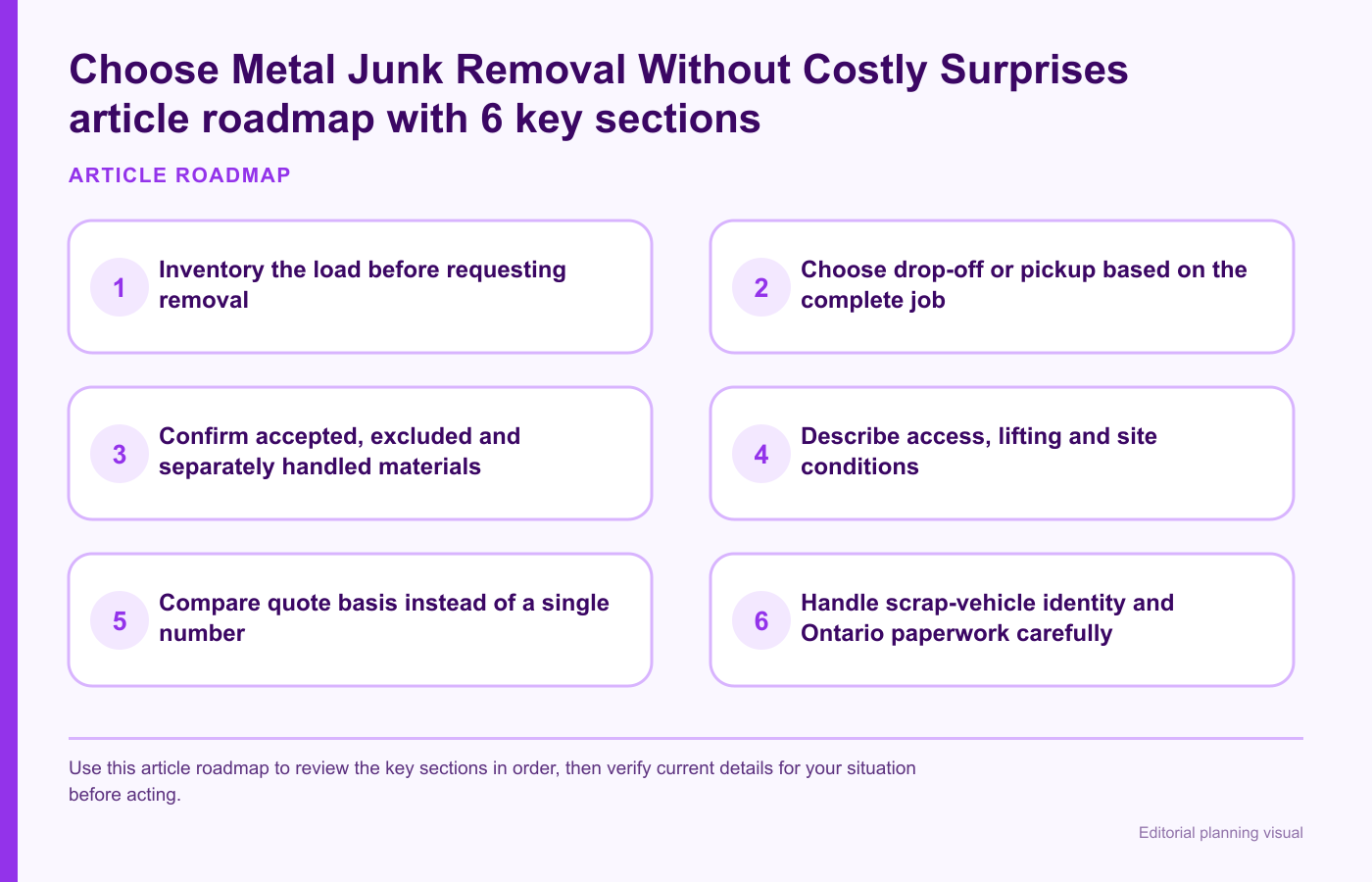
Compare quote basis instead of a single number
Ask whether the amount is a purchase offer for material, a removal charge, an estimated net amount or a range that changes after grading and weighing. Confirm which factors can change it: metal grade, contamination, missing components, actual weight, stairs, distance, labour, equipment, wait time or additional items.
For paid material, ask how categories are weighed and whether a scale record is provided. For removal, ask what labour and transportation are included. For a vehicle, ask whether towing is included, what happens if it will not roll and when title or permit documents change hands. Keep taxes and payment method clear.
Scrap commodity values and business terms change. This article intentionally includes no price table. A current written scope is more useful than an old “top cash” claim.
Handle scrap-vehicle identity and Ontario paperwork carefully
Before scheduling, confirm the registered owner, Vehicle Identification Number, permit status, keys, plate status, lien or financing position and whether anyone else has authority over the vehicle. Do not arrange removal of a vehicle you do not own or have documented authority to transfer.
Ontario’s current used-vehicle sale guidance explains the seller’s document and plate responsibilities for a sale, including checking the VIN, providing the applicable transfer documents and keeping the plates. A scrap transaction can have facts that differ from an ordinary used-vehicle sale, so confirm the correct ServiceOntario steps for the actual handover.
Ontario also publishes a process to change a vehicle’s status to sold. Keep the bill of sale or receipt, name of the receiving business, date, VIN and any transfer confirmation. Remove personal items, toll transponders and documents. Do not leave plates unless an authoritative current instruction for the specific transaction says to do so.
Prepare the load without unsafe dismantling
- Keep people away from unstable piles, sharp edges and moving equipment.
- Do not cut sealed tanks, pressurized components or unknown containers.
- Do not vent refrigerant or drain fuel, oil or chemicals unless qualified and authorized.
- Disconnect an appliance only when the correct trade responsibility is clear.
- Cap or contain minor residue as directed; report leaks before pickup.
- Secure loads for transport and stay within vehicle and road limits.
- Follow staff direction at the yard and remain outside equipment operating zones.
If the material cannot be prepared safely, tell the provider exactly what is attached or inside. Specialized handling may be necessary. “Metal” does not erase electrical, chemical, pressure, structural or traffic hazards.
Ask these questions before choosing a provider
- Do you accept every item shown in the inventory?
- Which items require a different recycling stream?
- Is pickup available for this address, quantity and access?
- What labour, disconnection, loading and cleanup are included?
- How is the purchase amount or removal charge calculated?
- What can change the amount after arrival?
- What insurance, authorization, licence or approval applies to this exact work?
- Who is responsible for spills, damage and rejected material?
- What receipt, scale record or vehicle handover document will I receive?
- What is the cancellation or rescheduling rule?
Verify credentials with the issuing body rather than accepting a logo or generic “licensed” wording. The correct authorization can depend on whether the job is transport, towing, waste management, refrigerant work, electrical disconnection or another service.
Use this metal-removal selection table
| Evidence | Proceed when | Stop when |
|---|---|---|
| Accepted-item confirmation | Every material has a written route | Hazardous or unknown items are ignored |
| Access plan | Labour, equipment and route are defined | The crew expects a different site condition |
| Quote basis | Price variables and included work are clear | Only a headline amount is provided |
| Vehicle documents | Owner, VIN and handover steps align | Ownership or lien questions remain |
| Completion record | Receipt or weight record is available | No record will identify the transaction |
Red flags and metal-removal mistakes to avoid
- Calling mixed waste “scrap metal.” List non-metal and hazardous components.
- Assuming pickup is free. Value, distance, quantity and labour can change the route.
- Accepting an unqualified price promise. Ask for the grading and weighing basis.
- Cutting or draining items yourself. Unknown pressure, chemicals and refrigerants create hazards.
- Handing over a vehicle without a record. Preserve identity and transfer documents.
- Relying on an unverified licence claim. Confirm the relevant authority and current status.
Frequently asked questions
Will every metal item have recycling value?
No. Value depends on material, grade, contamination, quantity, market conditions and handling cost. Some items may require a charge or separate route. Confirm the current terms for the actual load.
Can electronics go with a metal pickup?
Only when the provider confirms the specific electronics and handling process. Use the RPRA map for Ontario recycling routes and protect or erase personal data before handover.
Can a scrap car be removed without keys?
Equipment may make some non-key removals possible, but do not assume it. Disclose whether the vehicle rolls, steers, brakes and can be accessed, and confirm ownership and the tow plan in writing.
Request a load-specific decision from Quick Scrap Metal
Photograph and categorize the load, then review Quick Scrap Metal’s current services page and drop-off route. Use the owned contact page to confirm accepted materials, service area, access, price basis, documents, current hours and availability before moving anything.
General consumer information only, not legal, environmental, hazardous-materials, towing, tax or safety advice. Current prices, licences, approvals, acceptance, service area and availability require direct verification.