
Last updated: October 2026
Metal recycling means collecting, sorting, and processing discarded metal so it can return to manufacturing instead of being treated as general waste. For residents, renovators, tradespeople, and small contractors in Etobicoke, the main decision is usually simple: identify what can be recycled, prepare it safely, and choose a drop-off option that accepts the whole load.
Quick Scrap Metal is located at 407 Rexdale Blvd in Etobicoke and serves customers from Toronto, Mississauga, Brampton, and the broader GTA. The business accepts ferrous and non-ferrous metals, appliances, electronics, and scrap cars, with extended weekday hours and Sunday service. Its stated hours are Monday to Friday from 8 a.m. to 7 p.m., Saturday from 8 a.m. to 5 p.m., and Sunday from 9 a.m. to 5 p.m.
| Question | Practical answer |
|---|---|
| Where is the yard? | 407 Rexdale Blvd, Etobicoke, Ontario |
| What is accepted? | Ferrous and non-ferrous metals, e-waste, appliances, and scrap cars |
| When is it open? | Weekdays 8 a.m.–7 p.m.; Saturday 8 a.m.–5 p.m.; Sunday 9 a.m.–5 p.m. |
| How is material valued? | By material category, cleanliness, separation, weight, and current market conditions |
| How is payment handled? | Qualifying scrap is paid on the spot after weighing and grading |
What Metal Recycling Means for Etobicoke Residents
Metal recycling recovers usable material from objects that might otherwise occupy storage space or enter the waste stream. A scrap yard separates grades, prepares material for downstream processors, and sends metal back into industrial manufacturing. The process can apply to a single bag of copper wire, a renovation load, a household appliance, or an end-of-life vehicle.
The environmental case is straightforward: recycling reduces the need to extract and refine new raw materials. The U.S. EPA recycling guidance provides general background on resource conservation and waste reduction. Local handling still matters, because safe loading, proper separation, and responsible processing determine whether a material is recovered efficiently.
For customers, the financial side depends on the material’s category and condition. Copper, brass, aluminum, and some stainless materials are generally treated differently from common steel or mixed ferrous scrap. The final return is not determined by the object’s original retail price; it is based on the recoverable metal, its grade, its weight, and applicable market conditions.
What Materials Are Accepted at an Etobicoke Scrap Yard?
Quick Scrap Metal’s acceptance list covers the categories most likely to appear in a home cleanout, renovation, maintenance job, or vehicle disposal. If an item combines several materials, bring it separated where practical or ask the yard how it should be handled before unloading.
Non-ferrous metals
Non-ferrous metals do not primarily consist of iron and are often separated into distinct grades. Typical examples include copper pipe and wire, aluminum plate and extrusion, brass fittings and faucets, nickel alloys, and stainless steel. Keep insulated wire, bare copper, cast aluminum, and aluminum extrusion apart when you can, because visible differences in composition and attachments may affect grading.
Ferrous metals
Ferrous material includes steel and iron-based items such as tin, cast iron, rotors, auto cast, heating ducts, engines, motors, transmissions, compressors, and structural pieces. A basic magnet test can help identify many steel items: if a magnet sticks, treat the item as ferrous unless the yard advises otherwise. Do not rely on the test to identify every alloy or to replace professional grading.
Electronics and e-waste
Common accepted electronics include computers, laptops, televisions, monitors, printed circuit boards, keyboards, Blu-ray or DVD players, cables, wire, and lead-acid batteries. Pack small components so they do not scatter during transport. Keep televisions and monitors stable, and do not dismantle items that could expose hazardous components unless you are equipped and trained to do so.
For a category-specific checklist, review the business’s electronics recycling information. It can help you identify computers, PCBs, cables, and other equipment before combining them with a broader metal load.
Appliances, equipment, and vehicles
Accepted household items can include washers, dryers, dishwashers, microwaves, stoves and ovens, air-conditioning units, range hoods, snow blowers, barbecues, and old tools. Scrap cars, engines, and vehicle components can also be handled through drop-off or arranged pickup options. Remove personal belongings before bringing a vehicle, and confirm the documentation and pickup requirements for a non-running car.

How the Metal Recycling Drop-Off Process Works
A well-prepared visit usually follows five steps: sort, load, check in, weigh and grade, then collect payment. The exact traffic pattern can vary with yard conditions, so follow staff instructions when you arrive.
- Sort at home. Separate copper, aluminum, brass, stainless steel, and common steel. Keep electronics and appliances in stable groups rather than scattering small pieces through the vehicle.
- Load safely. Use bins, totes, or strong boxes for small items. Secure the load so it cannot shift or fall during the drive. Toronto’s drop-off guidance also emphasizes that loads should be properly secured when transported.
- Check in at the yard. Follow the entry and scale directions. Tell the team if your load contains bulky appliances, e-waste, a vehicle, or material that needs clarification.
- Unload by category. Staff can direct you to the appropriate area. Keeping categories separate makes the unloading and grading process easier to follow.
- Receive the result. Material is weighed and assessed by category and condition. Qualifying scrap is paid on the spot according to the applicable grade and current terms.
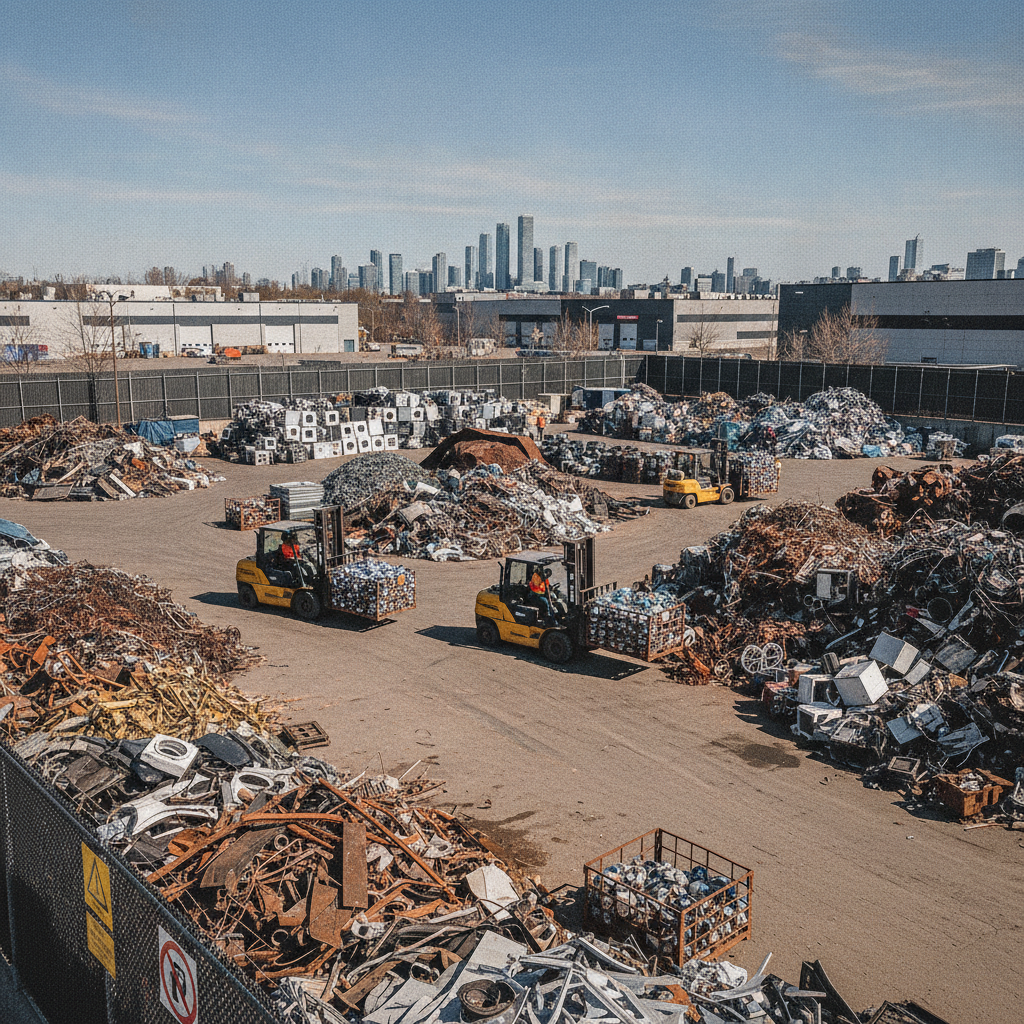
Expect an active industrial setting with vehicles, loaders, scales, and designated material areas. Wear closed-toe footwear, keep children and pets away from operating equipment, and never walk into a restricted area to retrieve an item. If you are bringing a heavy appliance or a large vehicle component, ask about the safest unloading method before moving it.
For a more detailed visit overview, use the Etobicoke scrap yard guide. Customers planning a full cleanout can also consult the household scrap removal guidance before arranging transportation or pickup.
What Affects a Metal Recycling Payout?
Your return depends on more than the total size of the load. Material type, weight, cleanliness, separation, attachments, and market conditions all influence how scrap is assessed. A large pile of mixed light steel may be worth less than a smaller, clearly separated quantity of higher-value non-ferrous metal.
Separate valuable categories first
Start with copper, brass, aluminum, stainless steel, and clean steel. Keep bare copper apart from insulated copper wire, brass apart from copper, and aluminum extrusion apart from cast aluminum when possible. Clear categories help the yard grade the material rather than treating the entire load as an uncertain mixture.
Remove non-metal attachments safely
Plastic, rubber, wood, fabric, and excessive dirt can make material harder to grade. Remove obvious attachments only when doing so is safe and does not expose fluids, sharp edges, refrigerants, batteries, or other hazards. A few minutes spent removing steel screws from aluminum extrusion or separating brass valves from fixtures may make the load easier to assess.
Decide whether stripping wire is worthwhile
Stripping wire takes time, so consider the quantity and gauge before starting. A substantial amount of heavy-gauge wire may justify the work, while a small handful may be better left intact and sorted with similar cable. If you are unsure, bring the material as collected and ask how it will be categorized.
Check current conditions before a large trip
Metal values change with market conditions, material grade, and the quantity presented. The scrap metal prices information page offers general context and preparation guidance rather than a guaranteed quote. For a large commercial or mixed load, confirm the current process directly before loading the vehicle.
How Private Scrap Yards Differ from Toronto Drop-Off Depots
A private scrap yard and a City of Toronto Drop-Off Depot serve different purposes. A scrap yard is designed to receive recoverable materials, sort them by grade, and pay for qualifying scrap. A municipal depot is a disposal and collection option with its own eligibility rules, accepted materials, and fees.
Toronto’s Drop-Off Depots information explains the city’s depot network and transportation requirements. The city’s accepted-items guidance says that metal items may include auto parts, bicycles, lawnmowers, appliances, tools, pipes, and cable, while household recycling rules can differ from depot rules.
As of January 1, 2026, Toronto states that its Drop-Off Depots accept recycling from commercial properties, charities, institutions, religious organizations, and City departments, agencies, and corporations. Residents should check the current municipal guidance before making a trip, particularly if they are deciding between curbside collection, a depot, and a private yard.
Municipal disposal may also involve fees. Toronto’s published Drop-Off Depot fee information lists a metal and yard waste fee per tonne, while household hazardous waste and electronic waste drop-off is listed separately. Those municipal charges should not be confused with a private scrap yard’s grading and payment process.
Businesses handling recycling facilities or storing and processing waste should also review Ontario’s requirements. The province explains when an Environmental Compliance Approval may be required and provides broader information about environmental permissions. Those rules apply to facility operations, not as a substitute for customer instructions about preparing a household load.

How to Prepare Metal for Recycling in Etobicoke
Preparation should make the load safer and easier to grade, not create unnecessary work. Begin with a quick inventory, then use the following checklist for the categories you actually have.
- Use labelled containers. Put copper, aluminum, brass, stainless, and steel in separate bins, bags, or sections of the vehicle.
- Keep small pieces contained. Bolts, fittings, cables, and circuit boards are easier to unload from boxes or totes than from a loose truck bed.
- Secure large objects. Tie down appliances, sheet metal, pipes, and vehicle components so they cannot move during transport.
- Remove personal information. Delete data from computers and phones where practical, and remove personal belongings from appliances and vehicles.
- Manage fluids carefully. Do not spill oil, refrigerant, fuel, or other fluids. Ask about any item that may still contain them instead of improvising a drain or dismantling process.
- Plan around your schedule. The yard’s late weekday hours and Sunday opening can help customers avoid trying to unload during a rushed workday.
Customers travelling from north Etobicoke may want to plan around traffic near the Woodbine Mall corridor. Weekday mid-morning can be a useful time for a flexible visit, while weekend cleanouts may produce more traffic and larger loads. This is a planning suggestion rather than a guarantee of wait time; conditions change with weather, construction, and yard volume.
If you are comparing local providers, a recycling companies guide can help you think through location, accepted materials, pickup availability, hours, and whether the facility is suited to a household load or an industrial account. The right choice is the one that matches your material and transportation needs, not simply the closest listing.
Frequently Asked Questions About Metal Recycling
What should I separate first before visiting a scrap yard?
Separate copper, aluminum, brass, stainless steel, and common steel first. Then group e-waste, appliances, and vehicle components so staff can identify them quickly. You do not need to dismantle every object; safe, obvious separation is usually more useful than time-consuming preparation.
Does Quick Scrap Metal accept appliances and electronics with metal?
Yes. The accepted categories include common appliances such as washers, dryers, dishwashers, microwaves, stoves, air-conditioning units, and tools, along with electronics such as computers, televisions, monitors, PCBs, keyboards, cables, and wire. Keep fragile screens secure and ask about any item containing fluids or batteries.
How do I prepare a scrap car for recycling?
Remove personal belongings and license plates, and have the ownership documents or other required vehicle information ready. If the car does not run, ask about arranged pickup before moving it. Do not attempt unsafe fluid removal or dismantling; confirm the appropriate preparation steps with the yard.
Can I bring a mixed load from a home cleanout?
Yes, a mixed load can include metal, an appliance, electronics, and vehicle-related items, but separating the categories before arrival makes unloading and grading easier. Use strong containers for small pieces and secure bulky items in the vehicle. If the load includes an unusual object, contact the yard before travelling so you can confirm acceptance and handling instructions.
Plan Your Metal Recycling Drop-Off
Metal recycling is easiest when you know what you have, separate the main categories, and secure the load before leaving Etobicoke or the surrounding GTA. Quick Scrap Metal provides one location for common metals, e-waste, appliances, and scrap cars, with extended hours and on-the-spot payment for qualifying material after weighing and grading.
For current acceptance or pickup questions, contact Quick Scrap Metal before loading an unusual, bulky, or non-running item.