
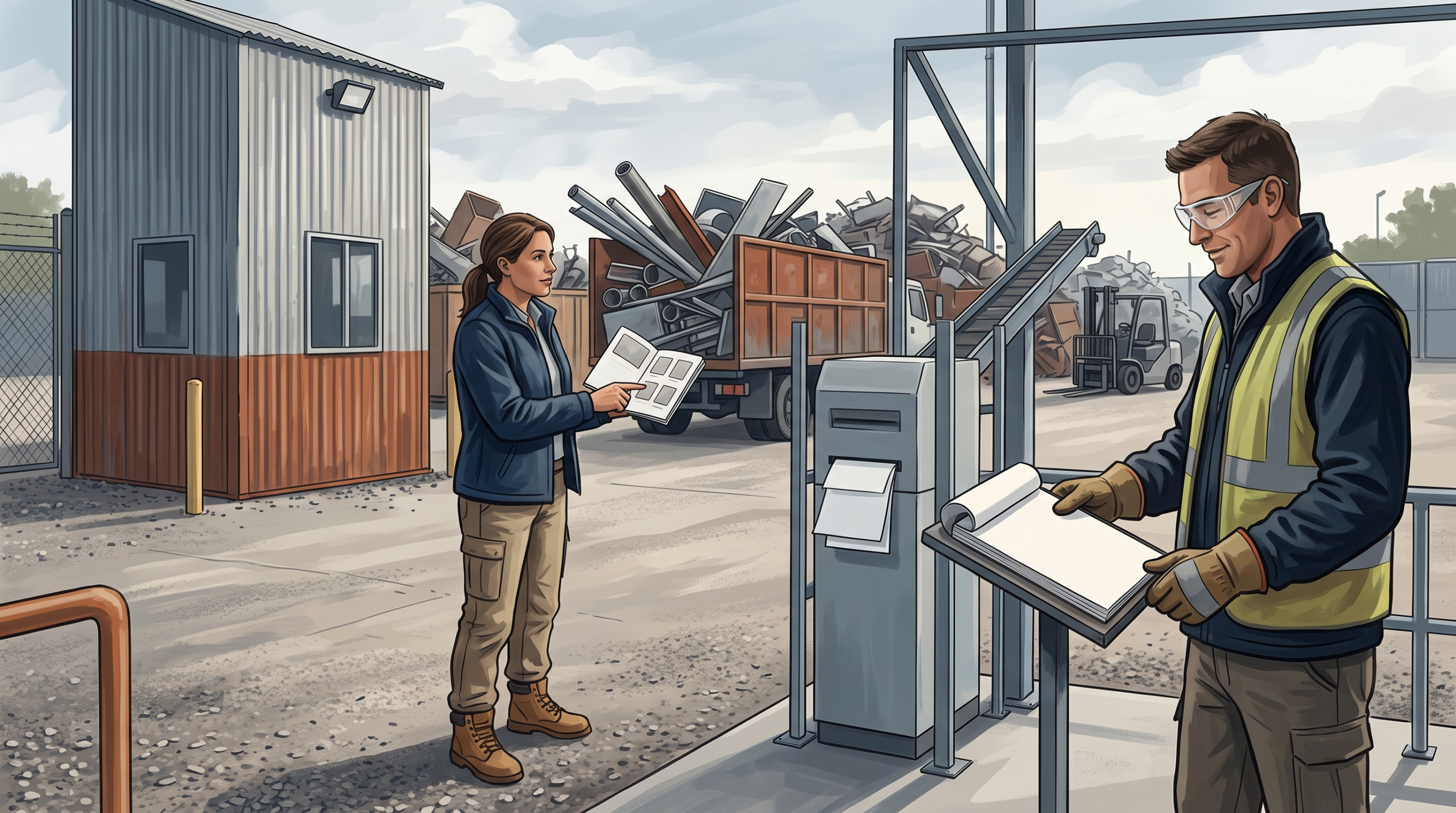
Scrap yard buyer guide
Short answer: Choose a scrap yard by describing your exact load before you travel, then compare written acceptance rules, preparation, weighing, grade, deductions, payment, documentation and pickup or drop-off terms. For a vehicle, establish ownership and towing requirements separately. A posted headline price never tells you the final value of an unidentified or mixed load.
The nearest gate is not automatically the best destination for a pile of metal. A useful scrap-yard comparison starts with what you have, whether it is clean and separated, who owns it, how it can be moved, and whether it contains batteries, fluids, refrigerants or electronics that need a different path. This guide focuses on the questions that prevent a wasted trip and make two quotes more comparable without inventing a current price or material list.
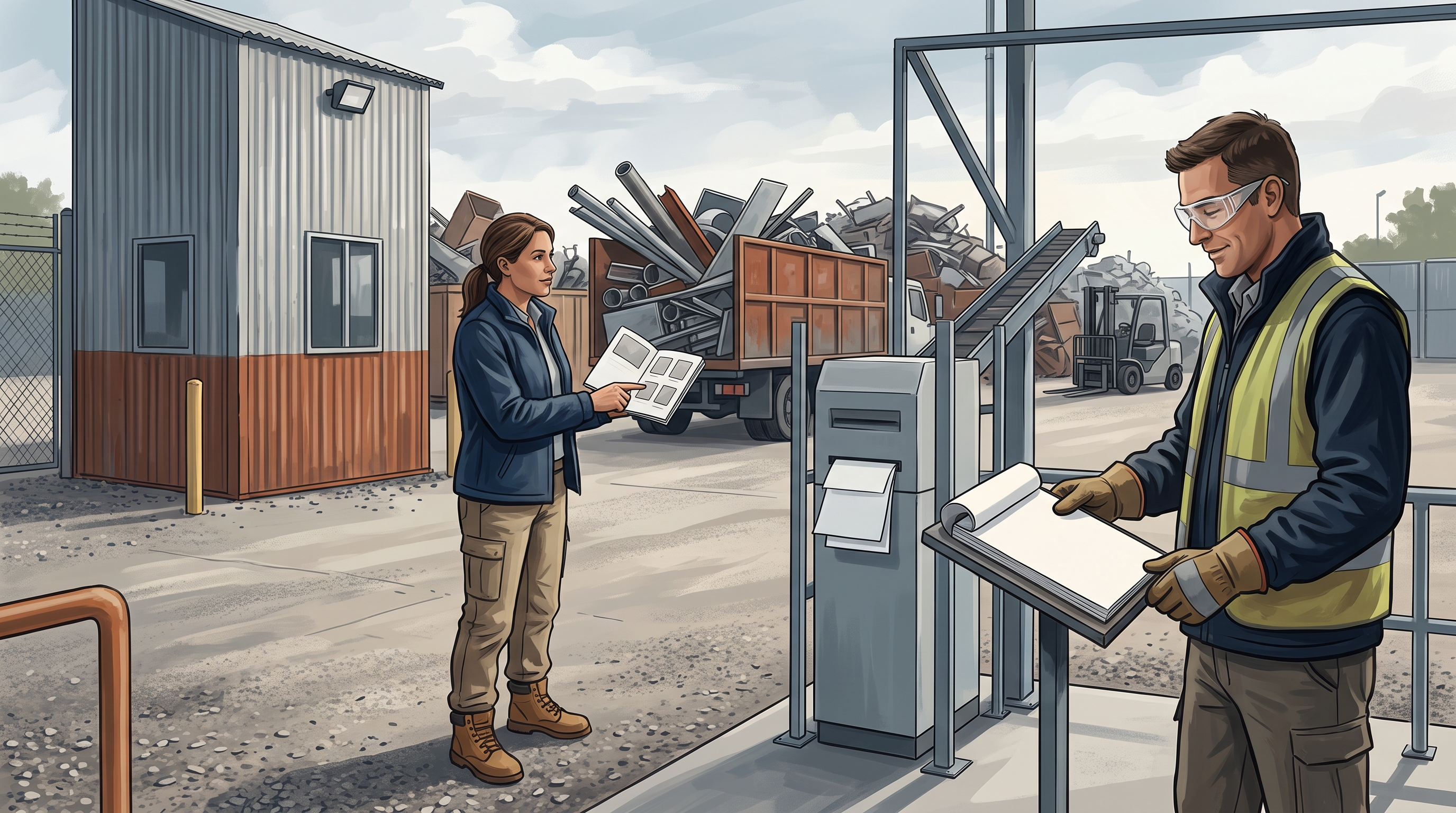
Inventory the load before calling a yard
Photograph the whole load and the labels or markings on uncertain items. Estimate the number of pieces and whether the material is loose, bundled, attached to wood or plastic, or part of a larger machine. Note heavy or awkward items, sharp edges, sealed containers and anything that could hold fluid, pressure, fuel or refrigerant.
Separate obvious categories only when you can do it safely. Copper wire, aluminum extrusion, stainless steel, steel, brass and complete automotive components may be graded differently, but appearance alone can be misleading. Do not cut, burn, drain, dismantle or test an item unless you have the equipment, knowledge and authorization to do so. Ask the yard how it wants the material prepared.
- What is the item and where did it come from?
- Is it owned by you or accompanied by authorization?
- Is it mostly one material or attached to other materials?
- Could it contain oil, fuel, coolant, refrigerant, a battery or stored pressure?
- Can it be loaded and unloaded without unsafe manual handling?
Confirm acceptance for the exact item
A website material list is a starting point, not permission to arrive with every item that contains metal. Yards may have different rules for appliances, sealed units, catalytic converters, wire, vehicles, commercial loads, electronics, batteries or material with contamination. Policies can change with processing capacity, law, safety conditions and end-market requirements.
Send clear photographs and ask for a written reply that identifies the item. Confirm whether attachments must be removed, whether a minimum or maximum quantity applies, and whether identification or proof of source is needed. If the yard says an item is not accepted, ask for the appropriate municipal, producer-responsibility or hazardous-waste route rather than leaving it outside a gate.
Quick Scrap Metal publishes service information and a drop-off section. Use those pages to frame the call, then confirm the current status of the exact load. This article does not assert that the business accepts a particular metal, vehicle, battery, appliance or hazardous component.
Route hazardous and electronic components correctly
Metal value does not cancel a product’s hazardous characteristics. Batteries can short or ignite, compressed cylinders can retain pressure, appliances may contain refrigerants, and equipment may hold oil or other fluids. Electronics may contain data and components handled through a separate recycling stream. Describe these features before transport and follow the receiving facility’s instructions.
The City of Toronto says corrosive, flammable, explosive or poisonous household hazardous waste must not go in regular garbage or recycling. Its household hazardous waste guidance includes sealing, labelling and keeping different materials separate. That municipal route is not a statement about a private yard’s acceptance; it gives Toronto residents an alternative for eligible household material.
The City’s drop-off depot page lists location-specific categories and hours. Check the current depot and quantity rules before travelling. Commercial material, large loads and residents outside Toronto may have different options. Never abandon a rejected item.
Understand how weighing and payment are determined
Scrap prices can vary by material grade, cleanliness, quantity, market conditions and the yard’s processing needs. Ask whether the quote is an estimate or a locked rate, when it expires, and which deductions may apply. Do not compare a clean, separated grade at one yard with a mixed-load estimate at another.
Confirm whether the vehicle is weighed before and after unloading or the material is weighed directly. Ask to see the scale reading or ticket and how tare weight is handled. If multiple grades are present, learn whether they are weighed separately or whether the entire load receives a mixed grade. Keep the ticket and payment record.
| Comparison field | Question for the yard | Evidence to keep |
|---|---|---|
| Acceptance | Will you take this exact photographed item today? | Written reply or named contact |
| Grade | How will the material be classified? | Grade on ticket |
| Weight | Which scale and tare method are used? | Gross, tare and net weights |
| Rate | Is this estimated or fixed, and until when? | Dated quote or posted rate |
| Deductions | What preparation, contamination or service deductions apply? | Itemized statement |
| Payment | What ID, method and timing apply? | Receipt and payment record |

Treat automotive scrap as a document and logistics job
For a complete or partial vehicle, provide the year, make, model, approximate condition, location and whether it rolls, steers and can be accessed by a tow vehicle. Identify missing wheels, blocked driveways, underground parking, keys, collision damage or fluid leaks. Ask who arranges towing, whether a charge can be deducted, and what happens if the on-site condition differs from the description.
Establish ownership before pickup. The Ontario government’s used-vehicle sale guidance explains documents used in an ordinary sale, including the vehicle permit, VIN matching, Used Vehicle Information Package and bill of sale. A scrap transaction can have different facts, so ask the buyer and ServiceOntario which steps apply to the specific vehicle rather than guessing.
Remove personal property and protect personal data in connected electronics. Do not remove a licence plate, transfer ownership or cancel insurance based on a generic blog checklist; confirm the sequence for your transaction. Keep the signed documents, pickup record and receipt, including the buyer’s legal name and vehicle identification details.
Compare drop-off and pickup on the complete job
Drop-off may suit a safe, transportable load when the customer has an appropriate vehicle and understands the unloading process. Pickup may fit heavy, large or immobile items, but access, equipment, distance, labour and scheduling can affect the offer. Compare the net result and risk, not just a headline rate.
- Describe the load and access with photos.
- Confirm acceptance and preparation.
- Ask who loads, secures and is responsible for the material during pickup.
- Confirm the appointment window and cancellation terms.
- Ask how weight and grade will be documented if the material leaves before weighing.
- Record the final amount, deductions and payment timing.
For drop-off, ask where to enter, whether passengers remain in the vehicle, who unloads, and which protective equipment is expected. For pickup, clear an access path without moving a hazardous or unstable item yourself. If the site cannot be approached safely, tell the yard before dispatch.
Use a final call checklist before travelling
- Confirm the address and current hours for the day you plan to arrive.
- Confirm the photographed material is accepted and how it should be separated.
- Ask which identification, ownership or authorization documents to bring.
- Ask whether the current rate can change before arrival.
- Confirm scale, grading, deductions and payment process.
- Review unloading directions and clothing or footwear requirements.
- Ask for another route for any rejected battery, electronic or hazardous item.
Quick Scrap Metal’s live site lists a 407 Rexdale Boulevard address, but hours, access, acceptance and prices are time-sensitive. Verify them through the business’s contact page on the day of the trip. The business blog can provide background, but it should not override a current direct confirmation.
Common mistakes to avoid
- Driving to a yard with an unidentified load and no acceptance confirmation.
- Assuming every item containing metal belongs in the same stream.
- Burning insulation or opening equipment to improve a grade.
- Mixing batteries, fluids or hazardous material into an ordinary metal load.
- Comparing headline rates without matching grade, preparation and deductions.
- Leaving without gross, tare, net weight and a receipt.
- Scheduling automotive pickup without proving ownership and access.
- Using old hours, price pages or service-area claims as live confirmation.
Frequently asked questions
How do I know what kind of scrap metal I have?
Start with labels, manufacturer information, magnets only where safe, and clear photographs. Ask the yard to identify its likely grade, but expect final classification after inspection.
Should I separate a mixed metal load?
Separation may affect grading, but ask the yard how it wants the load prepared. Do not dismantle, burn, drain or cut items when doing so creates a safety, environmental or ownership problem.
Can I take batteries or electronics to a scrap yard?
Policies differ. Confirm the exact item with the yard. Toronto residents can also check current municipal or producer-responsibility routes for household hazardous waste and electronic waste.
What documents are needed to scrap a car?
The answer depends on ownership and transaction details. Ask the buyer and ServiceOntario which permit, VIN, sale, plate and transfer steps apply before pickup.
Describe the load before you make the trip
Use Quick Scrap Metal’s contact route to send photographs and request current acceptance, preparation, address, hours, weighing, deduction, payment and pickup or drop-off details for the exact load. For automotive material, confirm ownership and towing documents separately. Do not rely on this guide for a live price or acceptance promise.
Sources and business details were reviewed for this local editorial package. Time-sensitive terms, professional status, service availability and individual suitability must be confirmed before publication or action.