
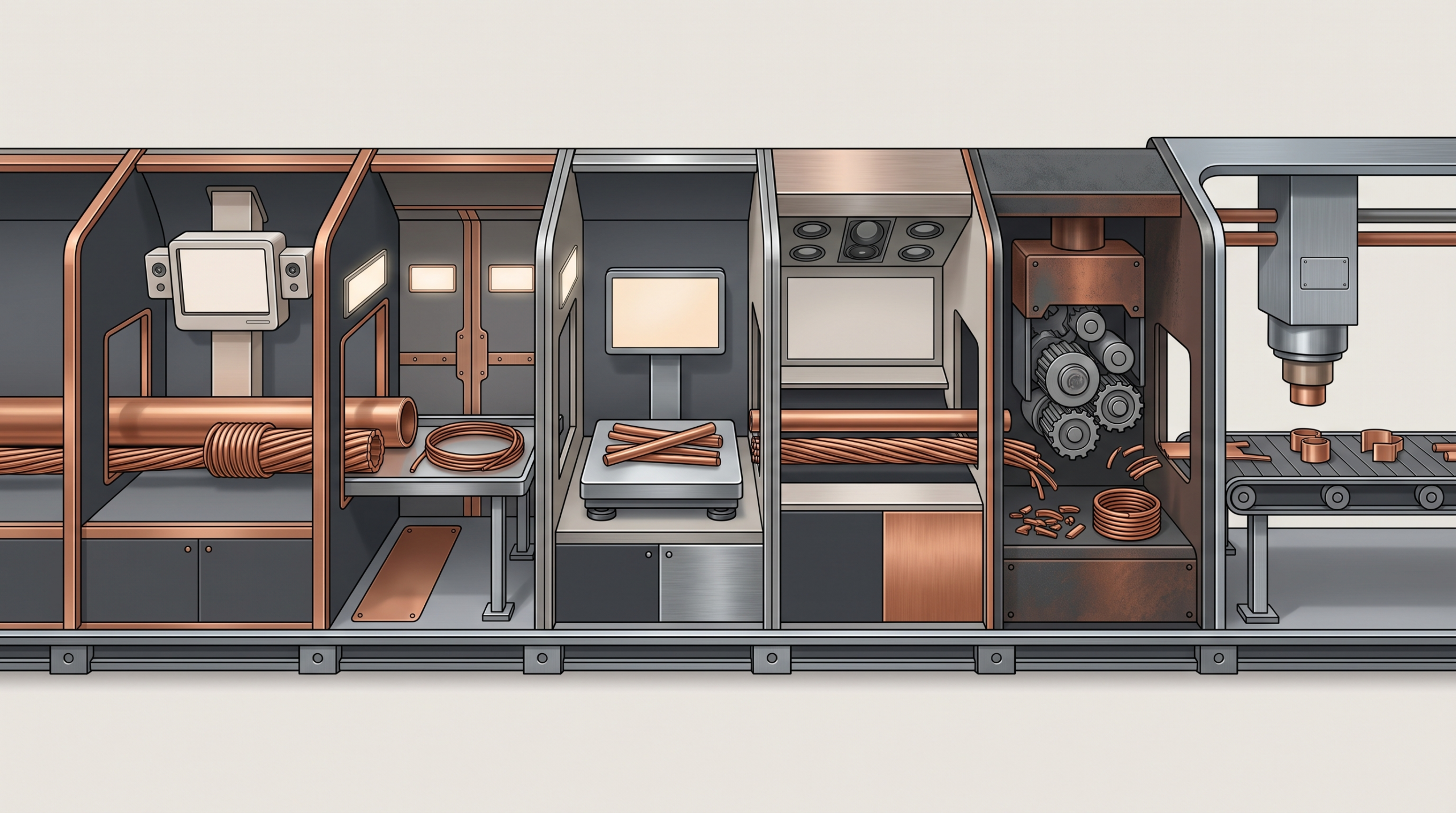
Copper may arrive at a recycler as clean pipe, insulated wire, a motor, plumbing fitting, mixed demolition material or part of an electronic product. Those are not interchangeable loads. Origin, safety, attachments and contamination determine whether material can enter an ordinary metal stream and what processing comes next.
A frozen first-party inventory presents Quick Scrap Metal as a buyer and recycler with services, about and contact routes. That provides business context, but current address, hours, accepted materials, identification, grading, payment and pricing practices must be confirmed on the live site or directly before a trip.
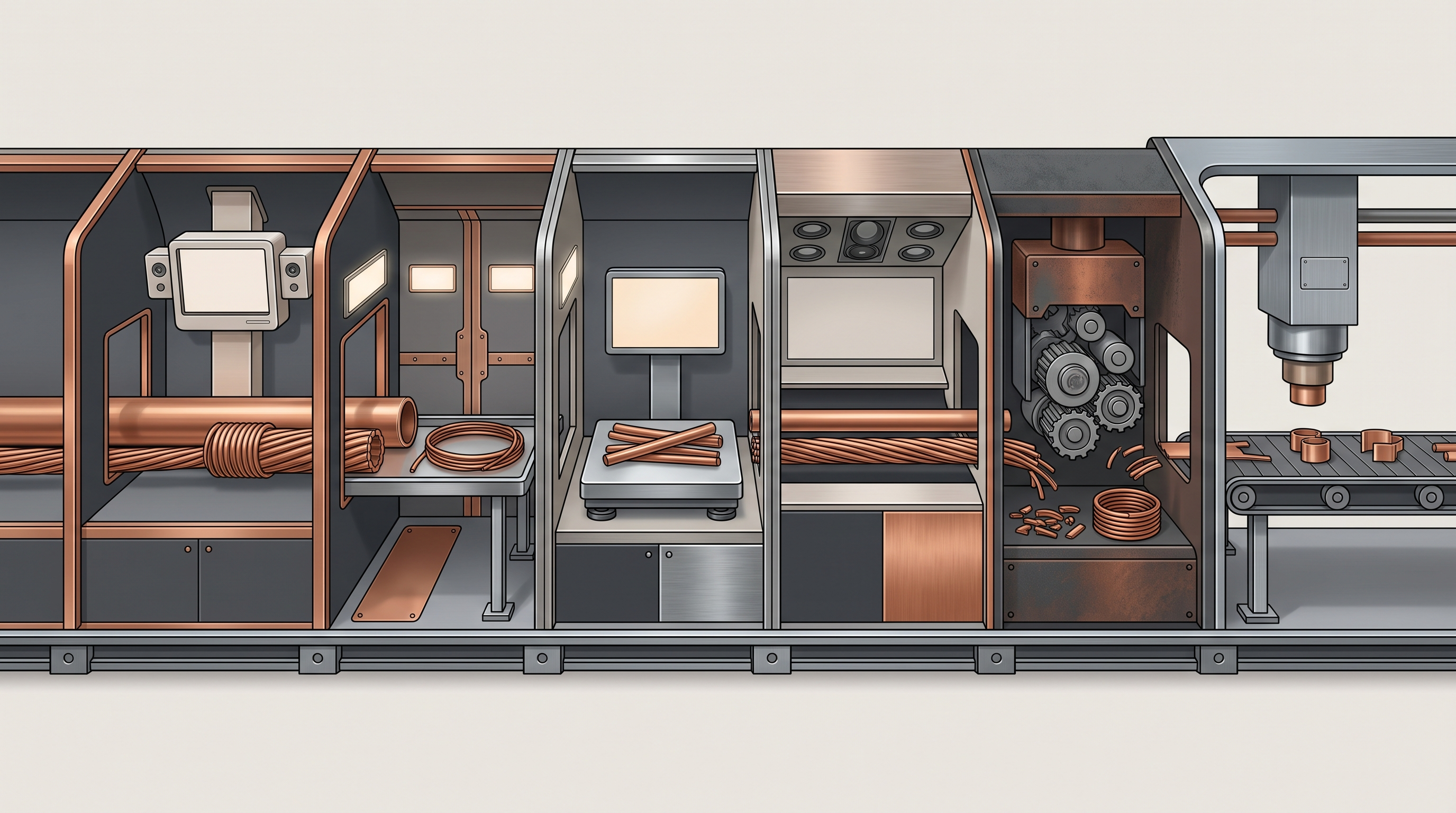
Stage 1 — Establish origin and safe removal
The first question is not “what grade is it?” but “where did it come from, who owns it and was it safely removed?” Keep invoices, renovation records, work orders, asset-release documents or other records appropriate to the source. Material marked for a utility, telecommunications provider, railway or public infrastructure deserves special scrutiny; possession is not proof of ownership.
Copper connected to a building system must be made safe by the appropriate qualified trade. Do not cut wire because a switch appears off, open a panel, release refrigerant, drain an unknown chemical system, puncture a sealed component or dismantle pressurized equipment to reach copper. The value of recoverable metal never justifies electrical shock, fire, chemical exposure or environmental release.
Stage 2 — Confirm that the recycler accepts the material
Send clear photos and a factual description before loading unusual material. State the source, approximate quantity, whether the copper is pipe, wire, winding, sheet or an attached component, and what else is present. Ask about current hours, vehicle access, identification, ownership documents, minimum or maximum quantities and how material is weighed.
Use Quick Scrap Metal’s live services route to see the current published scope, then use its contact page for a material-specific answer. A website category is not an acceptance guarantee. A yard may decline a load because of contamination, unsafe condition, restricted origin, mixed products, storage capacity or current policy.
| Material condition | Question before transport | Likely decision path |
|---|---|---|
| Clean known-origin copper offcuts | What category and documentation apply? | Ordinary scrap inquiry after live confirmation |
| Wire or cable with insulation | Is it accepted as-is, and what proof of origin is required? | Keep intact; do not burn or use unsafe stripping methods |
| Motor, transformer or mixed assembly | Is the complete unit accepted, or does it belong in another stream? | Qualified assessment of fluids, capacitors and other components |
| Computer or electronic device | Which approved electronics collection route applies? | Use a dedicated e-waste channel when required |
| Plumbing or HVAC component | Has it been safely decommissioned and cleared of fluids or refrigerant? | Qualified trade work before scrap transport |
| Burned, contaminated or unknown material | Can the yard legally and safely receive it? | Stop and obtain specialized waste guidance |
Stage 3 — Weighing, inspection and material categorization
At the receiving point, the recycler verifies the customer and load under its current policy, visually inspects the material and records a weight using the appropriate process. The material is then categorized by composition and condition. Attachments, solder, coatings, insulation, corrosion, mixed alloys and non-metal components can change the downstream path.
This is why two objects that both “contain copper” may not be treated the same way. A category is a material specification for processing, not a judgment about how hard someone worked to collect it. The yard’s live method, scale process and transaction record should be explained before completion. Retain the receipt and compare its description with what was delivered.
This article intentionally does not publish copper prices. Metal markets, category specifications, quantity, contamination and business terms change. A price snippet without its date, unit, currency, condition and buyer is not a dependable transaction estimate.
Stage 4 — Consolidation and downstream processing
Accepted material is kept with compatible streams until there is enough for efficient movement. Processing may include controlled mechanical size reduction, separation of ferrous attachments, density or sensor-based sorting and preparation to a downstream consumer’s specification. The exact route depends on the feedstock and facility.
At specialized plants, suitable copper-bearing feed may be melted and refined, while some clean streams can be remelted into alloy or manufacturing feedstock with less processing. Chemistry is checked so the resulting metal meets a target specification. The output can become rod, sheet, tube, alloy or components used in new products. The recycler at the first scale is one link in that larger industrial chain.
Environment and Climate Change Canada’s hazardous-waste classification guide illustrates an important distinction: clean, non-dispersible metal scrap is different from assemblies containing batteries, mercury switches, certain capacitors or hazardous contamination. The guide concerns cross-border rules, but the underlying decision is useful locally—condition and attached hazards can change the proper route.
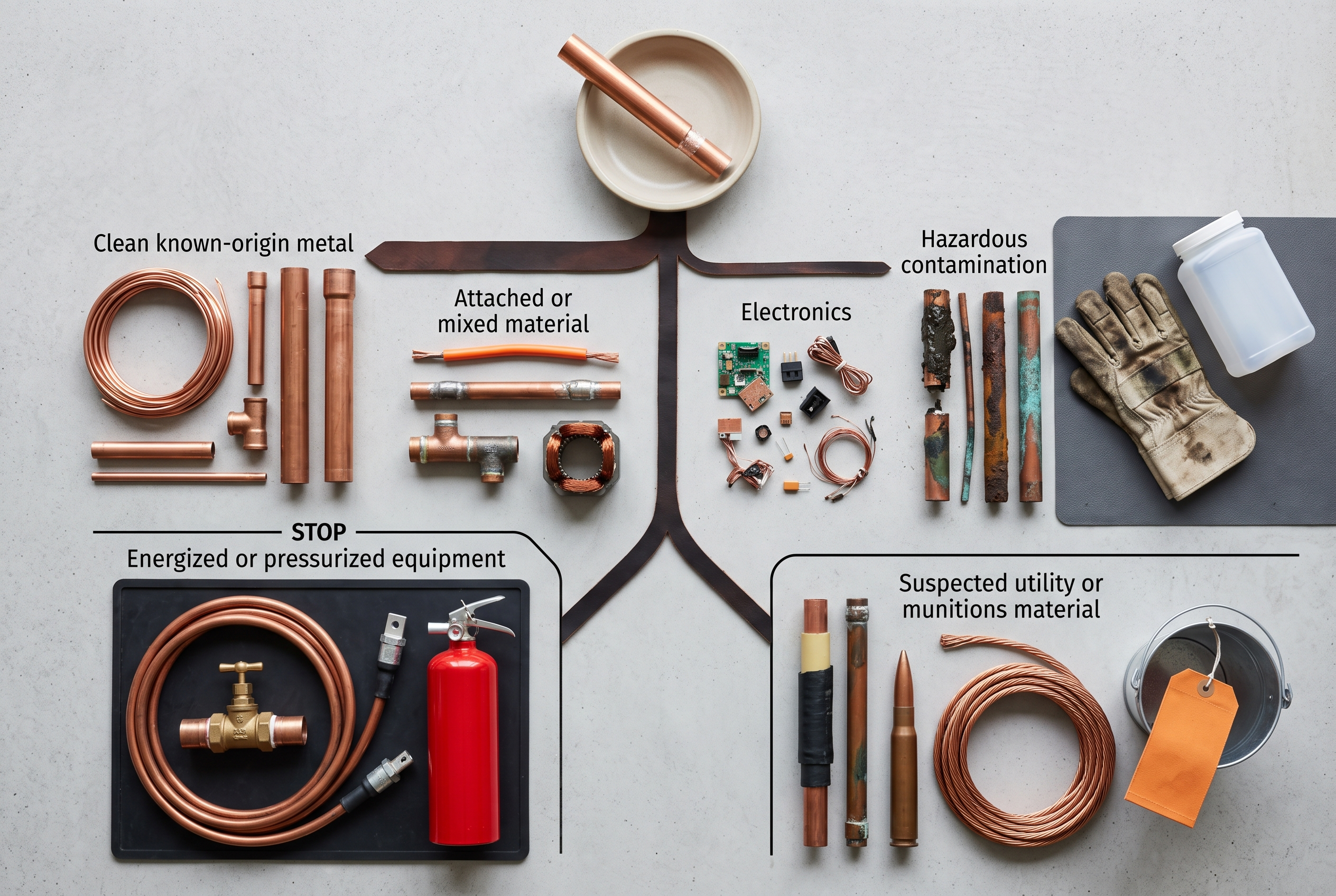
Copper content does not make every product ordinary scrap
Electronics may contain copper, batteries, circuit boards and other regulated materials. Ontario’s Electrical and Electronic Equipment regulation establishes producer-responsibility requirements and collection rules for covered products. A whole device may therefore belong in an approved electronics channel rather than being broken apart at home.
Other limits are practical and safety-based. Refrigeration and air-conditioning equipment can contain refrigerant and oil. Transformers or older electrical equipment may contain specialized fluids or capacitors. Plumbing components may contain water, chemicals or biological contamination. Dust, sludge, ash and fine powders are not equivalent to solid copper pipe. Contact an appropriate waste professional or qualified trade before moving an uncertain item.
Prepare a copper load without creating a hazard
- Document the source. Keep records that connect the material to the property, project or asset owner.
- Have systems decommissioned. Use the appropriate licensed or qualified trade for electrical, HVAC, plumbing or industrial equipment.
- Keep labels visible. Product and ownership markings help the recycler identify what it is seeing.
- Separate obvious safe streams. Keep clean offcuts apart from mixed assemblies only when they are already loose and safe to handle.
- Do not burn insulation. Burning creates fire, smoke and contamination hazards and may make material unacceptable.
- Do not chase “clean copper” through unsafe dismantling. Ask whether the yard accepts the intact item.
- Secure the load. Prevent sharp pipe, wire and heavy components from shifting during transport.
- Confirm the receiving plan. Know the entrance, hours, unloading instruction and documentation before departure.
Three examples show how the decision changes
A plumber has clean pipe offcuts from a documented project
The material has a clear source and is already separated from the system. The next step is to confirm the yard’s current category, identification and receiving process—not to polish or alter the offcuts for a guessed price.
A homeowner replaces an old air conditioner
The unit contains more than copper. Refrigerant and oil require qualified handling, and the complete appliance may have a dedicated recovery route. The homeowner should not cut coils or lines to create a scrap load.
A contractor finds heavy cable with unfamiliar utility markings
Pause. Confirm ownership and authorization with the asset owner and recycler before transport. Do not remove markings or process the cable. A high copper content does not override provenance concerns.
Common mistakes in copper recycling
- Driving to a yard based on an old material list or operating hour.
- Focusing on grade before proving safe removal and ownership.
- Burning insulation or using improvised chemical cleaning.
- Opening sealed, energized or pressurized equipment for copper.
- Mixing batteries, electronics, liquids or unknown powders with solid metal.
- Assuming all reddish metal is pure copper rather than an alloy or coated material.
- Using a commodity quote as if it were a local scrap payout.
- Discarding the transaction record before checking the material description and weight.
Frequently asked questions
Should I strip copper wire before recycling it?
Ask the recycler whether it accepts the wire intact. Do not burn insulation, work on connected cable or use unsafe tools or chemicals. Any preparation must be lawful, safe and appropriate to material you own.
Why does copper with attachments follow a different route?
Attachments change composition, processing effort and sometimes safety. Steel, insulation, solder, electronics, fluids or hazardous components must be separated or managed using suitable equipment and controls.
Can I recycle copper from an appliance?
Possibly, but the complete appliance may be the correct unit to recycle. Refrigerants, oils, capacitors, batteries and electronics can require qualified recovery or a dedicated program. Confirm before dismantling.
How do I know today’s copper price?
Contact the recycler with the exact material, condition and quantity. Ask for the unit, category, date and transaction terms. Do not treat a commodity-market quote or old search result as a guaranteed local payout.
Make the next call about the material, not just copper
A useful inquiry includes photos, source, condition, approximate quantity, attached components and any safety uncertainty. That gives the recycler enough context to say whether the material fits its ordinary stream or needs a different professional route.
Sources reviewed
- Quick Scrap Metal website, services, about and contact routes — frozen first-party business context requiring live confirmation.
- Environment and Climate Change Canada hazardous-waste classification guide — distinctions among clean metals, assemblies and contaminated waste.
- Ontario Electrical and Electronic Equipment regulation — producer-responsibility and collection context for covered electronics.
- Department of National Defence scrap-yard safety guidance — suspected munitions stop conditions.