
Last updated: October 2026
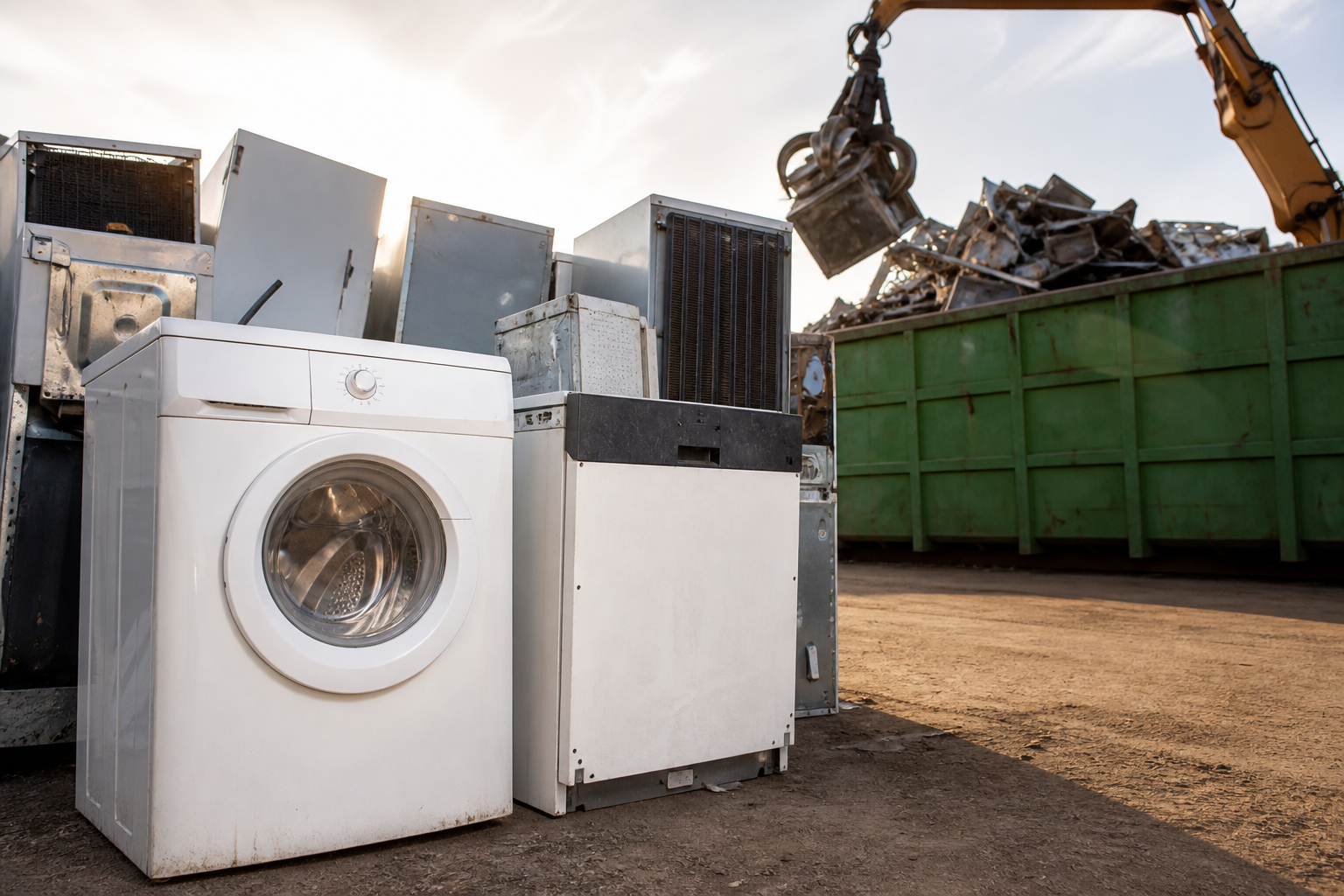
Old refrigerators, washers, dryers, ranges, microwaves, air conditioners, and other household equipment can take up valuable space. Many contain steel, aluminum, copper, brass, stainless steel, motors, or wiring that can enter established recycling streams. The practical challenge is knowing what to prepare yourself, what to leave intact, and whether a private scrap yard or a municipal program better fits your situation.
This guide explains how to recycle old appliances for cash without creating avoidable safety or environmental problems. It focuses on preparation, sorting, transport, questions to ask, and the differences between a paid scrap transaction and public recycling.
Cash recycling or municipal disposal?
The first decision is whether you want a private scrap transaction, convenient recycling, or a collection service. A scrap yard may weigh metal and pay according to the material category and current buying policy. A municipal depot is designed for public waste management: it may accept appliances for recycling, but it is not a cash-payout service and may apply disposal fees.
Private scrap recycling is usually the more relevant route when your goal is cash. Quick Scrap Metal is a local scrap yard at 407 Rexdale Blvd in Etobicoke, serving Toronto and the broader GTA. Its confirmed services include buying common metals such as copper, aluminum, steel, brass, nickel, and stainless steel, as well as responsibly recycling home appliances and electronics.
Toronto residents also have public options for unwanted appliances. The City’s accepted items at drop-off depots information identifies large and small appliances among accepted metal items, subject to site rules, capacity, and applicable fees. That route can be useful when payment is not the priority or when a private buyer does not accept a particular item.
Use a scrap yard when payment is the priority
Ask the yard whether it buys the complete appliance, pays only for certain separated materials, or uses a different category for appliances containing motors or compressors. Payment can vary with material type, weight, condition, and the facility’s current purchasing policy, so an online price guess is not a substitute for a direct confirmation.
Quick Scrap Metal emphasizes cash payments for scrap materials and accepts a broad range of ferrous and non-ferrous metals. Bring a clear description of the items, especially if they include refrigerators, freezers, air conditioners, dehumidifiers, or other sealed cooling equipment.
Use a municipal route when disposal is the priority
Public collection can be practical when an appliance is incomplete, mixed with household waste, or unsuitable for a cash buyer. Toronto’s oversized and metal-item guidance says doors should be removed from refrigerators, ovens, and other appliances before placing them out for collection. Follow the specific collection instructions rather than assuming that the preparation rules for curbside service are the same as those for a scrap yard.
Municipal pricing also matters. Toronto’s published depot information says metal and yard-waste loads below 20 kg are free, while loads above 20 kg can be charged for the full weight. Check current rules before making a trip because fees, accepted items, hours, and capacity can change.
What appliances commonly qualify for cash recycling?
Scrap yards commonly consider appliances with recoverable metal, but acceptance is facility-specific. Call before you dismantle anything or load a vehicle. A buyer may accept an item whole, direct it to an appliance stream, or ask you to separate particular materials.
- Large appliances: refrigerators, freezers, ranges, ovens, washers, dryers, dishwashers, and water heaters.
- Small and medium appliances: microwaves, range hoods, dehumidifiers, window air conditioners, portable air conditioners, and space heaters.
- Outdoor and workshop equipment: barbecues without propane tanks, lawn mowers, snow blowers, tools, and equipment with metal frames or motors.
- Metal fixtures: stainless sinks, faucets, shelving, pipes, hardware, and other mixed-metal household items.
- Electronics and components: computers, televisions, printed circuit boards, and certain electronic equipment, subject to the facility’s acceptance rules.
Appliances are not all equally valuable. A steel cabinet may be treated primarily as ferrous scrap, while accessible copper wire, aluminum, brass, or stainless steel may belong in separate categories. Do not promise yourself a specific payout until the material has been inspected and weighed.
Check the appliance before choosing a category
Look for labels, model information, and signs that the appliance contains a sealed cooling system. A refrigerator, freezer, dehumidifier, or air conditioner requires more caution than a dry steel range or washer. If an item contains liquid, oil, refrigerant, batteries, or damaged electrical parts, tell the receiving staff rather than hiding the condition.
Do not confuse “contains valuable metal” with “safe to dismantle.” The best cash-recycling preparation is usually clean, organized, and low-risk – not aggressive stripping that exposes fluids, pressure, sharp edges, or electrical hazards.
How to prepare old appliances safely
Preparation should make the load safer and easier to inspect. It should not involve opening sealed systems or using tools beyond your experience. Work in a dry, well-ventilated area, keep children and pets away, and stop if an appliance is unstable, leaking, damaged, or connected to an unknown power source.
Disconnect, empty, and clean
- Unplug the appliance and allow heated components to cool before moving it.
- Remove food, water, detergent, loose shelves, trays, and other contents.
- Wipe away obvious residue that could leak onto your vehicle or the receiving area.
- Remove detachable accessories only when they can be taken off without damaging a sealed system.
- Keep manuals, cords, and small parts together if the facility asks for the appliance to arrive complete.
Cleaning does not mean washing an appliance that contains electrical damage or exposed wiring. Avoid creating additional water or chemical hazards. If a unit is wet, leaking, or visibly damaged, describe that condition when you call.
Make doors, cords, and moving parts secure
Appliance doors can swing open during loading and unloading. Secure doors and loose panels in a way that can be removed by staff, and tie or tape cords so they do not trail across walkways. Do not permanently seal a door if the receiving facility needs to inspect the interior.
Use a dolly, straps, ramps, and a second person for bulky items. Keep your hands clear of pinch points, wear gloves and closed-toe footwear, and use eye protection when handling broken glass or sharp sheet metal. Never try to catch a falling appliance.
Leave hazardous components intact
Do not drill, crush, cut, burn, or torch an appliance to reach copper or other metals. In particular, do not puncture refrigerant lines, compressor housings, tanks, capacitors, batteries, or pressurized components. A small amount of extra sorting value is not worth an injury, fire, release, or rejected load.
For Ontario-specific handling questions, review the province’s O. Reg. 463/10 requirements for ozone-depleting substances and other halocarbons. The regulation addresses how refrigeration equipment containing refrigerant may be dismantled, recycled, or disposed of. Treat it as a reason to ask a qualified facility for instructions, not as permission to vent or dismantle a sealed system at home.
How to sort materials for better recycling
Sorting can speed up intake and help staff direct materials to the right stream. You do not need to strip every appliance. Separate only what is loose, obvious, and safe to handle, and ask the buyer whether it wants complete appliances or pre-sorted materials.
Separate ferrous and non-ferrous metal
A small magnet can help identify common ferrous steel and iron: if the magnet sticks strongly, the piece is likely ferrous. Aluminum, copper, brass, and many stainless-steel pieces are non-ferrous or weakly magnetic, but a magnet is only a quick screening tool and cannot establish a final grade.
- Ferrous steel and iron: appliance cabinets, frames, drums, brackets, and many fasteners.
- Aluminum: some panels, fins, housings, and lightweight components.
- Copper: reddish wire, tubing, windings, and some motor components.
- Brass: yellow-gold fittings, valves, and plumbing-style connectors.
- Stainless steel: sinks, panels, drums, and hardware; magnetic response varies by grade.
Place clean, loose materials in separate sturdy containers and label them plainly. Keep insulated wire together unless the facility specifically requests another preparation. Do not burn insulation off wire; burning creates toxic smoke and can damage the material.
Decide what to remove and what to leave
Plastic bins, glass shelves, wood trim, and loose packaging can often be separated from a metal appliance. However, removing every non-metal component is not always necessary and may make the appliance less stable. Ask whether the yard accepts the unit as-is before taking it apart.
Motors and compressors may contain recoverable metal but can also contain oil or connect to sealed systems. If removal requires cutting pipes, draining fluid, lifting heavy components, or exposing sharp edges, leave the component attached. A qualified facility can process it with the appropriate controls.
Protect connected and smart appliances
Some newer appliances connect to an app or store Wi-Fi credentials, usage history, or account information. Before recycling a smart washer, refrigerator, oven, thermostat, or hub, factory-reset the device, remove it from the associated app, and delete personal accounts where the manufacturer provides that option.
Remove memory cards, USB drives, labels showing an address, and add-on smart plugs or hubs. If you cannot confirm that personal data has been removed, ask the manufacturer or recycler how the electronic control board and connected components are handled.
What to do with refrigerators, freezers, and air conditioners
Cooling appliances require special attention because they can contain refrigerant and compressor oil. Do not vent refrigerant, cut lines, remove a compressor, or puncture a tank yourself. Keep the unit intact and tell the scrap yard exactly what it is before bringing it in.
Ontario provides a certificate and handling information for refrigerants. The practical takeaway for a household recycler is simple: use a facility that knows how to manage refrigerants and follow its instructions. Ask whether the site accepts the unit intact, whether it requires a refrigerant-related notice or preparation, and how the appliance should be transported.
Keep cooling appliances upright when the receiving facility recommends it, secure them against movement, and avoid dragging them over sharp surfaces. If the unit is leaking, damaged, or has already been opened, disclose that fact before loading it. Never place a refrigerant appliance in a fire, bury it, or leave it at an unauthorized location.
How to transport appliances and choose a drop-off site
Transport is part of safe recycling. A heavy appliance that is technically accepted can still create a hazard if it is unsecured, blocks the driver’s view, or requires unsafe lifting at the destination.
Build a stable load
- Use a pickup, van, trailer, or other vehicle with sufficient payload and tie-down points.
- Place heavy items low and distribute weight rather than stacking unstable appliances.
- Use ratchet straps, moving blankets, wheel chocks, and edge protection where appropriate.
- Keep doors, drawers, drums, and loose panels from opening during transit.
- Do not allow metal, glass, or cords to protrude into traffic lanes or pedestrian paths.
- Bring gloves and a basic way to identify sorted containers, but do not plan to dismantle hazardous components at the site.
If you need help moving an appliance from inside a home, ask the buyer whether household scrap removal or pickup is available. Quick Scrap Metal offers household scrap removal and scrap-car drop-off or pickup options as part of its broader service offering; confirm availability, scope, and any conditions before arranging a visit.
Call before you load
A short call can prevent a wasted trip. Confirm accepted appliance types, whether the item can arrive intact, whether payment is available, what identification is needed, and whether the site has special hours for appliances or electronics. Ask whether the facility wants loose metals separated or prefers complete appliances.
Also confirm the destination address and current hours. Quick Scrap Metal is located at 407 Rexdale Blvd in Etobicoke and serves customers across Toronto, Mississauga, Brampton, and the GTA. Its extended weekday hours and Sunday availability may help households plan a drop-off, but current intake rules should be confirmed before departure.
Compare a private buyer with a public depot
| Decision | Private scrap yard | Municipal depot or collection |
|---|---|---|
| Primary purpose | Buy recoverable scrap and recycle accepted materials | Manage public disposal and recycling |
| Payment | May pay for qualifying metal according to weight, category, and policy | Generally not a cash-payout route; fees may apply |
| Best first question | “Do you buy this appliance intact, and how should I prepare it?” | “Is this item accepted, and what are the current fees and collection rules?” |
| Cooling appliances | Confirm refrigerant handling before arrival | Follow the municipality’s separate instructions for hazardous or special materials |
| Convenience | Useful when cash and direct weighing are priorities | Useful when public disposal or scheduled collection is the priority |
How to improve the chance of a fair payout
There is no guaranteed price for an old appliance. The amount depends on what the facility can recover, how the material is classified, the item’s weight, contamination, and the buyer’s current policy. Avoid websites or posts that promise a fixed amount without knowing the appliance and location.
- Call with an accurate item list instead of describing everything as “metal.”
- Separate clearly identifiable copper, aluminum, brass, stainless steel, and steel when safe.
- Keep materials dry and free of food, trash, excessive dirt, and unrelated waste.
- Do not mix batteries, propane tanks, chemicals, or household hazardous waste with scrap metal.
- Ask whether the buyer weighs appliances separately from other scrap.
- Bring government-issued identification if the facility requires it for payment.
- Request an explanation of categories or deductions you do not understand before accepting the transaction.
Organized preparation helps the receiving team work faster, but it does not require risky dismantling. The safest approach is to maximize clarity and cleanliness while leaving sealed, pressurized, oily, or electrically dangerous parts for trained handling.
A practical drop-off checklist
Use this checklist before leaving home:
- Confirm that the chosen facility accepts each appliance, including any refrigerator or air conditioner.
- Ask whether the facility pays, charges a fee, or accepts the item only through a special program.
- Unplug, empty, and wipe appliances; remove loose contents and personal labels.
- Factory-reset connected appliances and remove memory cards, USB drives, and smart accessories.
- Separate safe, loose materials and label containers without burning or aggressively stripping wire.
- Leave refrigerant lines, compressors, tanks, batteries, and oily components intact.
- Secure doors, drawers, cords, and the full load with suitable straps.
- Bring identification, paperwork requested by the site, gloves, and a clear item list.
- Recheck the destination, hours, vehicle capacity, and unloading plan.
If an appliance is too heavy or awkward to move safely, do not improvise with an unsafe lift. Ask about pickup or removal services, or use a qualified mover. Responsible recycling begins before the vehicle leaves the driveway.
Frequently asked questions
Can I get cash for any old appliance?
No. Payment depends on the facility, appliance type, weight, material category, condition, and current buying policy. A municipal depot may recycle an appliance without paying you and may charge a disposal fee, while a private scrap yard may pay for qualifying recoverable metal. Confirm the specific item and payment policy before transport.
Should I remove copper from an appliance before recycling it?
Only remove material that is loose, accessible, and safe to handle without opening sealed systems or exposing fluids and electrical hazards. Do not cut refrigerant lines, drain compressor oil, burn wire insulation, or dismantle unstable equipment. When in doubt, bring the appliance intact and ask the receiving facility how it wants the material prepared.
How should I recycle an old refrigerator or air conditioner?
Keep it intact and contact a facility that can manage refrigerants. Do not vent, puncture, crush, or torch the sealed system, and disclose any damage or previous dismantling. Follow the facility’s transport instructions and Ontario’s requirements for equipment containing refrigerants.
Are Toronto municipal depots a cash option?
No. Toronto depots are public recycling and disposal options rather than private scrap buyers. They may accept large and small appliances, but fees, weight limits, capacity, and collection rules apply. If receiving cash is the goal, contact a private scrap yard and confirm its buying policy instead.
What should I ask a scrap yard before visiting?
Ask whether the exact appliance is accepted, whether it should arrive intact, how refrigerant equipment is handled, whether payment is available, what identification is needed, and whether any minimum load or special hours apply. Also confirm the current address and opening hours. These questions help prevent an unnecessary trip and reduce unsafe last-minute preparation.
Choose your safest recycling route
Prepare only what you can handle safely, keep hazardous systems intact, and confirm the facility’s rules before you move a bulky appliance. For a cash-oriented scrap option in Etobicoke and the GTA, contact Quick Scrap Metal with your item list and ask about acceptance, preparation, payment, and pickup details.