Yes, you may be able to recycle an old furnace for cash, but no fixed payout can be promised before the unit is identified, inspected, weighed, and graded. Keep the furnace whole unless qualified utility or HVAC work has made safe separation possible, then confirm acceptance, current rates, and transport details with Quick Scrap Metal before travelling. Related reading: Furnace Replacement Checklist: 7 Checks Before You Approve the Work.
Can You Recycle an Old Furnace for Cash?
You can often treat an old furnace as a source of recyclable metal, but whether the complete unit qualifies for payment depends on its materials, condition, preparation, and the yard’s current buying rules. A furnace is not valued as one standard product. Its steel cabinet, ducting, copper, aluminum, wiring, motor, and attached materials may be assessed differently.
Quick Scrap Metal buys scrap metal, home appliances, and electronics for cash on the spot at 407 Rexdale Blvd in Etobicoke. Before loading a bulky or partially dismantled furnace, contact the yard with its fuel type, condition, visible materials, and approximate size. Ask whether they currently accept the complete unit, separated components, or both.
What Parts of an Old Furnace May Affect Its Scrap Value?
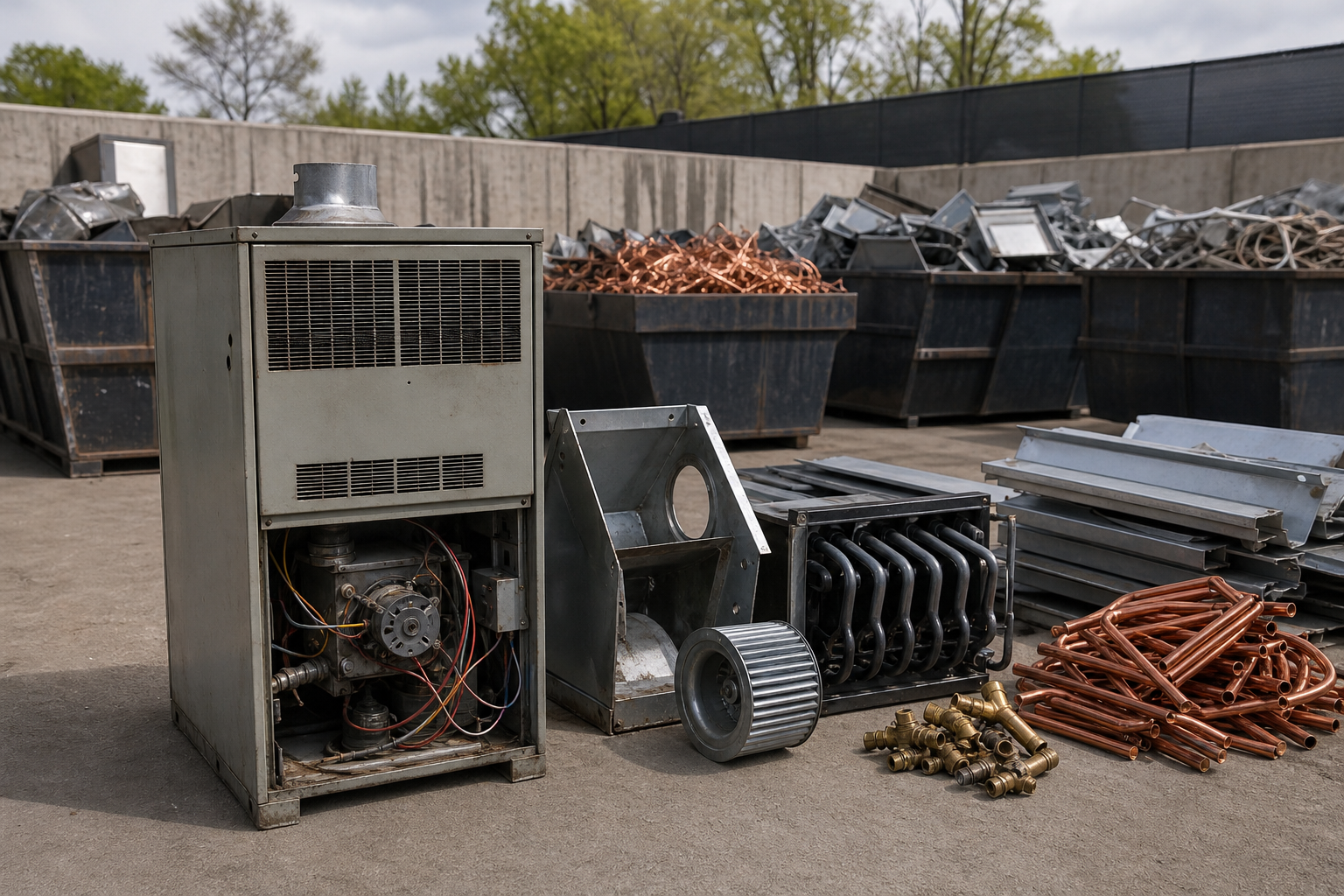
An old furnace commonly contains a mixture of ferrous metal, non-ferrous metal, electrical parts, insulation, coatings, and other attached materials. The exact construction varies by model and fuel system, so use the table as a sorting guide, not as a promise that every furnace contains each material or that every part receives a separate payout.
| Furnace component | What it may contribute | What to do before delivery |
|---|---|---|
| Steel cabinet and heat exchanger | Usually the main ferrous portion by weight. Grade, thickness, coatings, contamination, and attachments affect sorting. | Leave it intact unless a qualified professional has already made removal safe. Ask how the yard wants a complete cabinet handled. |
| Heating ducts and sheet metal | May be assessed as steel or another ferrous category, depending on construction and condition. | Separate loose duct sections only when safe to handle. Keep them together by material. |
| Copper tubing and fittings | Clean, separated copper may be assessed differently from copper attached to steel, insulation, solder, or other materials. | Do not cut connected lines as casual preparation. If safe copper is already loose, keep it separate and describe it before arrival. |
| Aluminum parts | Some furnaces include aluminum components or housings. Value depends on alloy, cleanliness, and current categories. | Do not dismantle the furnace solely to search for aluminum. Ask whether loose pieces should be sorted separately. |
| Insulated wiring and controls | Wiring may be assessed according to copper content, insulation, and condition. Controls may include mixed materials. | Keep wiring and controls together unless already detached and safe. Do not disturb damaged or unknown electrical connections. |
| Blower motor | A motor contains steel, copper, aluminum, and other parts. It may be handled as a motor or mixed-scrap category. | Leave it in place if removal requires heavy tools or awkward lifting. |
| Insulation, filters, plastic, and coatings | These materials may not have the same scrap value as recoverable metal and can affect contamination or handling. | Remove only loose, non-hazardous items that come away easily. |
| Attached fuel, refrigerant, or utility-related parts | These create an acceptance and safety question rather than a simple value opportunity. | Do not treat these connections as ordinary scrap preparation. Contact an appropriately qualified technician and confirm handling requirements before moving or dismantling the unit. |
The main pricing variables are metal type, grade, cleanliness, weight, preparation, contamination, and current market conditions. See the guide to scrap metal prices for how these factors work together.
If a qualified professional has already separated accessible copper tubing or wiring, keep those materials apart from the steel cabinet. The explanation of scrap copper prices shows why clean, separated copper may be assessed differently from mixed furnace material.
Should You Bring the Furnace Whole or Separate Parts First?
Bring the furnace whole when it is still connected, contains an unknown fuel or utility system, requires specialized tools, or would be difficult to move safely. Consider separating only loose, accessible, non-hazardous material when a qualified technician has completed the relevant disconnection work and the remaining parts can be handled without damage or injury.
- Keep it whole: The furnace is complete, connected, heavy, unstable, or unfamiliar to you.
- Sort loose parts: Material is already detached, identifiable, clean, and safe to move.
- Pause and ask first: The unit has fuel lines, refrigerant-related components, leakage, damaged wiring, pressure concerns, or an unusual design.
- Choose removal or professional handling: You cannot safely get the furnace out, load it, or secure it in a suitable vehicle.
Dismantling does not automatically create a better payout. Sorting may help identify clean copper or other non-ferrous material, but weigh that possible benefit against tools, labour, transport time, sharp edges, unstable sections, and the risk of damaging or contaminating the load.
Hypothetical example: A homeowner has a furnace that a technician has already disconnected and leaves several loose metal pieces behind. Separating those identifiable pieces could make sorting easier. If the cabinet still requires forceful cutting, awkward lifting, or removal of uncertain connections, keeping it intact and asking the yard how to present it may be more practical.
How Should You Prepare an Old Furnace Safely?
Prepare the furnace for scrap only after the relevant utility and equipment work is complete. If gas, oil, electrical, fuel, refrigerant, or another utility connection is present, do not treat it as casual dismantling work. Contact an appropriately qualified technician about the equipment and ask the yard what handling requirements apply.
Once the unit has been assessed and is safe to handle, remove loose rubbish or other non-hazardous items that come away without force. Keep identifiable parts together, protect sharp sheet-metal edges, and group detached copper, wiring, steel, and ducting where practical.
Stop preparation if you find leakage, pressure, an unknown connection, damaged wiring, unstable weight, fuel residue, or a component that requires force to remove. Arrange appropriate professional handling before transport or further dismantling.
For broader appliance preparation questions, use this guide to prepare an old appliance for recycling.
Furnace Transport Checklist: Is Drop-Off Practical?
A furnace is suitable for drop-off only when you can move and transport it without unsafe lifting, unstable loading, property damage, or interference with utility connections. A small passenger vehicle is rarely appropriate for a bulky furnace.
- Measure the furnace, doorways, stairs, loading space, and vehicle opening.
- Plan enough help or suitable lifting equipment for its weight and shape.
- Protect floors, walls, vehicle panels, and people from sharp sheet metal.
- Contain loose parts, fasteners, insulation, and duct sections.
- Use suitable restraints and prevent rolling, tipping, or shifting.
- Do not overload the vehicle or block the driver’s view or doors.
- Do not transport it while connected, leaking, smelling of fuel, or carrying exposed damaged wiring.
If the furnace is still installed, trapped in a difficult access route, or too heavy for your equipment, ask Quick Scrap Metal whether pickup or removal is currently available for this type and size of unit. Do not assume that pickup is available, free, or suitable for every furnace.
What Happens When You Sell a Furnace at an Etobicoke Scrap Yard?
The practical process starts with confirmation, not loading. Tell Quick Scrap Metal whether the furnace is complete or dismantled, what fuel or heating system it used, which parts are separated, and whether you plan to drop it off.
Before travelling, confirm furnace-specific acceptance, current rates, required identification or paperwork, and instructions for a bulky appliance. The general scrap-yard process for an accepted load usually includes these stages:
- Describe the load: Provide the furnace type, condition, completeness, visible materials, approximate dimensions, and transport plan.
- Confirm the visit: Check the yard’s current buying rules, rates, hours, identification or paperwork requirements, and bulky-load instructions.
- Prepare the material: Complete any appropriate professional work, sort safe loose parts, and secure the load.
- Arrive: Bring the accepted material to Quick Scrap Metal at 407 Rexdale Blvd in Etobicoke and follow the site’s intake directions.
- Identify and inspect: An accepted load may be reviewed by type, grade, cleanliness, condition, and contamination.
- Weigh categories: Separately identifiable materials may be weighed or assessed under the yard’s process.
- Review payment: Applicable on-the-spot payment follows the assessment of qualifying material.
Ask about current opening hours before setting out, since schedules can change and holiday hours may differ.
What Determines How Much an Old Furnace Is Worth?
There is no reliable furnace-specific cash figure until the unit is inspected and weighed. The assessment can reflect total weight, steel proportion, accessible non-ferrous metals, grade, cleanliness, attached non-metal material, contamination, preparation, and current market conditions.
A heavier cabinet does not automatically produce a higher offer if it carries substantial non-metal material or difficult attachments. A smaller unit may contain identifiable copper or other materials assessed separately. The actual combination matters more than age or brand.
Online calculators cannot establish the final payment because they do not inspect composition, condition, or net weight. Provide the furnace type, completeness, visible copper or aluminum, separated parts, approximate dimensions, and whether safe transport is possible.
Before You Leave: Furnace Recycling Checklist
- Photograph the furnace, labels, connections, and separated components.
- Identify whether it was gas, oil, electric, or another type.
- Arrange any appropriate professional work before moving or dismantling connected equipment.
- Remove only loose, non-hazardous items that need no force.
- Keep clearly identified materials separated where practical.
- Protect sharp edges and secure the load.
- Confirm whether the complete furnace or its components are currently accepted.
- Confirm current rates, hours, identification, paperwork, and bulky-load instructions.
- Choose drop-off only if the route, equipment, vehicle, and loading plan are safe.
- If the unit cannot be transported practically, ask whether pickup or removal is currently available and what terms apply.
Questions Homeowners Ask About Furnace Scrap
Can I scrap a furnace that is still connected to gas or oil?
A connected furnace should not be handled as ordinary scrap. Arrange appropriate professional disconnection first, then ask whether the disconnected unit is accepted and what preparation the yard requires.
Does an old furnace need to be taken apart before recycling?
No. Dismantling is not automatically required. A complete furnace may be easier to manage when connections are uncertain, while safe, identifiable loose metal may be easier to sort.
How do I know whether furnace pickup or drop-off is more practical?
Drop-off suits a disconnected, accessible, safely loaded unit. Ask Quick Scrap Metal whether pickup or another removal arrangement is currently available when the furnace is installed, bulky, difficult to lift, or inaccessible. Confirm availability and terms before making plans.
Can I get a furnace-specific price before bringing it to the yard?
You may receive general guidance after describing the furnace, but a final price requires inspection, classification, and weighing. Provide its type, condition, completeness, visible materials, dimensions, and transport situation.
Plan Your Next Step in Etobicoke
Photograph the furnace, arrange any required professional work, and contact Quick Scrap Metal with a clear description before loading it. Ask about current acceptance, rates, hours, paperwork, and whether pickup or removal is available for your unit, then review the company’s appliance recycling services when choosing your next step.