
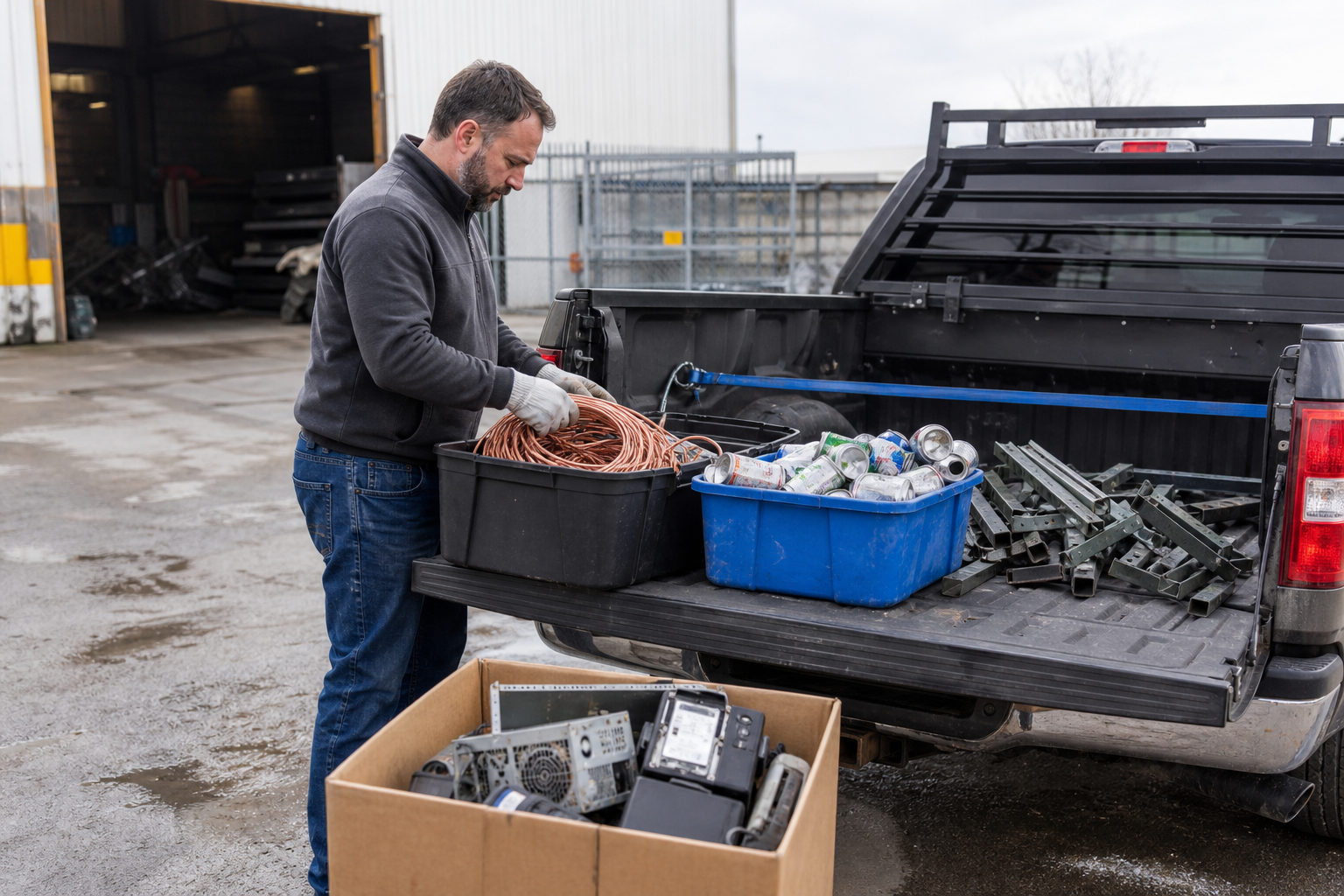
For a straightforward visit to a scrap yard in Etobicoke, bring your sorted metal, appliances, electronics, or automotive scrap, along with a secure way to transport it. Photo ID is a sensible precaution, while vehicle ownership documents may be useful for scrap cars. If your load is bulky, unusually heavy, mixed, or commercially sized, call ahead before you drive.
What to Bring to an Etobicoke Scrap Yard
Your best drop-off starts with knowing what is in the load. Make a short inventory before leaving home, then group items by material or type instead of placing everything together in one container.
| Load category | Examples to prepare | What to do before travelling |
|---|---|---|
| Non-ferrous metals | Copper, aluminum, brass, nickel, stainless steel, cables, and wire | Keep different metals separate where practical and remove obvious attachments if it can be done safely. |
| Ferrous metals | Steel, cast iron, rotors, plate, siding, and tin | Keep heavier pieces together and identify awkward or oversized items in advance. |
| Appliances | Washers, dryers, microwaves, dishwashers, ovens, stoves, range hoods, and air-conditioning units | Empty loose contents, protect doors or sharp edges, and confirm unusual or bulky appliances before arrival. |
| Electronics and e-waste | Computers, laptops, televisions, monitors, peripherals, PCBs, and players | Remove personal data from devices and keep small electronic parts contained. |
| Automotive scrap | Engines, motors, transmissions, radiators, auto cast, and scrap cars | Bring relevant vehicle information and confirm whether you are arranging drop-off or pickup. |
| Documents and supplies | Photo ID, ownership information when relevant, bins, straps, gloves, and a tarp | Keep documents accessible and secure the load before setting off. |
Quick Scrap Metal lists metals, appliances, electronics, and scrap cars among its accepted service categories. Acceptance can still depend on the item’s condition, size, quantity, or handling needs, so confirmation is worthwhile for anything outside an ordinary household or small trade load.
Metals You Can Bring

Common metals suitable for a drop-off include copper, aluminum, brass, nickel, stainless steel, steel, cast iron, cables, wire, radiators, engines, motors, transformers, and batteries. The business also lists items such as plate, extrusion, siding, heating ducts, cans, tools, and auto components.
Separate non-ferrous and ferrous materials
Non-ferrous metals generally include copper, aluminum, brass, nickel, and stainless steel. Ferrous materials include steel and iron-based items. Keeping these broad groups apart makes it easier to identify what you have and reduces unnecessary sorting at the yard.
Within each group, separate obvious categories when the effort is reasonable. For example, keep copper wire away from steel pieces, aluminum cans away from mixed steel, and brass fittings away from general household metal. Do not spend hours dismantling an item if doing so creates a safety risk.
Rates are market-based rather than fixed. Material type, grade, weight, demand, and preparation can affect the assessment, and no preparation method guarantees a particular payout. Clean, separated loads are generally easier to evaluate than mixed or contaminated loads.
Appliances and Electronics: What to Prepare First
For appliance recycling, the listed categories include washers, dryers, microwaves, dishwashers, ovens, stoves, range hoods, air-conditioning units, compressors, and related household equipment. Before loading, remove loose contents, detachable shelves, and items that could fall out during transport. Protect sharp edges and secure doors so they do not swing open.
For electronics recycling in Etobicoke, the listed materials include computers, laptops, televisions, monitors, Blu-ray and DVD players, keyboards, peripherals, printed circuit boards, and extension cords. Keep smaller electronics in sturdy boxes or bins rather than loose in a car or truck.
Check phones, computers, drives, and other devices for personal information before recycling them. Back up anything you need, sign out of accounts, and use an appropriate data-erasure process. This is a personal preparation step, not a claim about a particular yard data-destruction service.
Call before bringing an appliance or electronic item that is unusually large, damaged, incomplete, or difficult to move. It is also sensible to ask about refrigeration equipment, batteries, lead-containing parts, and other materials that may need specific handling.
Scrap Cars and Automotive Scrap
A few engines, motors, radiators, transmissions, or auto-cast pieces can usually be treated as a metal load. A complete scrap car is different because it involves a vehicle, ownership information, and transport or pickup arrangements.
Before a scrap-car visit, gather the vehicle’s basic details, including its make, model, approximate year, condition, and location. Bring vehicle ownership documentation when relevant, and ask what paperwork the yard wants before arranging the transaction. Do not assume that ordinary metal drop-off instructions apply to a complete vehicle.
Quick Scrap Metal states that it offers scrap-car drop-off or pickup options. Confirm which option is available for your vehicle, whether the car must be accessible, and how the handover will work. If the vehicle is not safely movable or is located in a difficult area, explain that when you call.
Documents and Identification to Bring
Bring photo ID as a precaution, particularly if you are selling valuable non-ferrous metal, representing another person, or bringing material on behalf of a business. Available information does not establish that government-issued photo ID is mandatory for every ordinary scrap-metal transaction, so treat it as sensible preparation rather than a universal rule.
For a scrap car, bring relevant ownership information and confirm the required paperwork in advance. For a business, contractor, or property cleanout, keep a simple record of the material source, load categories, approximate quantity, and any items that need special discussion.
It can also help to take photographs of unusual items before loading them. A quick picture gives the yard useful context when you call and helps you remember what is in a mixed household or renovation load.
How to Sort and Prepare Your Load
- Make an inventory. Write down the main categories, such as copper wire, aluminum, steel appliances, electronics, and automotive parts.
- Separate broad material groups. Keep ferrous metals apart from non-ferrous metals wherever practical.
- Remove obvious contamination. Take off loose plastic, packaging, dirt, or non-metal attachments when this can be done safely.
- Keep grades or types apart. Do not bury clean copper or aluminum in a container of mixed scrap.
- Contain small pieces. Use strong boxes, buckets, totes, or bins for wire, fittings, cans, circuit boards, and other loose parts.
- Identify difficult items. Set aside batteries, lead-containing pieces, large appliances, sharp objects, and oversized metal for a call-ahead discussion.
- Estimate the load. Note whether you are bringing a few bags, a trailer, a truckload, or a complete vehicle.
Preparation supports a smoother assessment because the yard can see what categories are present without first untangling everything. It may also help the load move faster, but it does not guarantee top scrap metal prices. Market conditions and the specific grade still matter.
Transport Checklist for a Safer Drop-Off
- Use a tarp or covered vehicle where practical to keep loose material contained and protect the load from weather.
- Secure bins, appliances, long pieces, and heavy components with suitable straps or restraints.
- Do not overload a car, trailer, or truck beyond its capacity.
- Keep sharp edges and protruding pieces away from passengers and prevent them from shifting during travel.
- Use sturdy gloves and suitable footwear when handling rough, sharp, or heavy material.
- Keep small parts in closed containers instead of loose on the vehicle floor.
- Tell the yard about oversized, unstable, awkward, or unusually heavy items before unloading.
These are general transport precautions, not a description of Quick Scrap Metal’s yard procedures. Follow posted instructions and staff directions when you arrive, and do not attempt to unload a dangerous or unstable item without asking how it should be handled.
When to Call Before You Visit
A quick call can prevent a wasted trip when the load is not a standard collection of sorted household metal. Contact the yard before travelling if you are bringing:
- A complete scrap car or requesting pickup.
- Large appliances, refrigeration equipment, or multiple bulky items.
- Batteries, lead-containing materials, or items with uncertain handling requirements.
- A very large commercial, demolition, contractor, or mixed load.
- Oversized beams, heavy machinery parts, transformers, or awkward shapes.
- Electronics in large quantities or devices containing business data.
Ask five practical questions: Is the material accepted in its current condition? Should it be separated or prepared in a particular way? What documents should I bring? Is drop-off or pickup more suitable? Are current rates or payment details available for this material?
Quick Scrap Metal Drop-Off Details in Etobicoke
Quick Scrap Metal is located at 407 Rexdale Blvd, Etobicoke, Ontario, M9W 6P8, near Highway 27 and Rexdale. The business serves Etobicoke, Toronto, Mississauga, Brampton, and the broader GTA.
| Day | Published hours |
|---|---|
| Monday to Friday | 8:00 a.m. to 7:00 p.m. |
| Saturday | 8:00 a.m. to 5:00 p.m. |
| Sunday | 9:00 a.m. to 5:00 p.m. |
The business states that it pays cash on the spot for qualifying scrap. Because rates depend on material type, grade, weight, demand, and preparation, ask about your specific load rather than relying on a fixed online price. Check the current hours before leaving, especially if you are travelling with a large load.
Final Checklist Before You Leave Home
- Have I identified the main materials in the load?
- Have I separated copper, aluminum, brass, steel, stainless steel, and mixed items where practical?
- Have I removed loose contents and protected appliance doors and sharp edges?
- Have I removed personal data from electronics?
- Have I packed photo ID and vehicle ownership information if relevant?
- Are small items boxed, and are heavy or loose pieces secured?
- Have I photographed or made notes about unusual items?
- Have I called about bulky appliances, batteries, scrap cars, commercial loads, or pickup?
- Have I checked the current opening hours before setting out?
Frequently Asked Questions
Do I need photo ID to sell scrap metal in Etobicoke?
Bring photo ID as a precaution, but do not assume it is a confirmed universal requirement for every ordinary scrap-metal transaction. Ask the yard about its current requirements if you are selling a large, valuable, commercial, or unusual load.
Should I separate copper, aluminum, brass, and steel?
Yes, separate them when practical. Keeping non-ferrous metals apart from ferrous steel and iron makes the load easier to assess and can reduce confusion between material categories. Do not dismantle items in a way that creates a safety risk.
Can I bring appliances and electronics to an Etobicoke scrap yard?
Quick Scrap Metal lists appliances, computers, televisions, monitors, peripherals, printed circuit boards, and other electronics among its accepted categories. Confirm unusually large, damaged, incomplete, or specialized items before travelling.
What documents should I bring when dropping off a scrap car?
Bring relevant vehicle ownership information and have the vehicle’s make, model, approximate year, condition, and location available. Confirm the paperwork and whether drop-off or pickup is appropriate before arranging the visit.
Should I call ahead before bringing a large or unusual scrap load?
Yes. Call about oversized metal, bulky appliances, batteries, lead-containing items, transformers, large commercial loads, mixed demolition scrap, and complete vehicles. Ask about acceptance, preparation, documents, unloading, and current pricing guidance.
Conclusion: Prepare the Load Before You Drive
The simplest Etobicoke scrap-yard visit involves a sorted, secure load of ordinary metals, appliances, electronics, or automotive parts. Bring photo ID as a precaution, carry vehicle documents when a car is involved, and call first whenever an item is bulky, unusual, hazardous to handle, or commercially sized.
Quick Scrap Metal accepts qualifying scrap at 407 Rexdale Blvd in Etobicoke, with published weekday, Saturday, and Sunday hours and cash-on-the-spot payments for eligible materials. For current details and to confirm your load before travelling, visit Quick Scrap Metal.